Grill Lid Thermometer Accuracy: The Real Temperature Gap and How to Close It
Your grill’s built-in thermometer is lying to you – and it’s costing you food.
When you cook raw meat over coals, a few degrees can make all the difference. You either get juicy ribs or dry leather. The core problem is placement: dome dials sit 6–8 inches above the cooking grate, measuring trapped ceiling air rather than the heat your food actually experiences. It rarely measures the heat exactly where the food sits.
Diese Lücke erklärt, warum Grilldeckelthermometer constantly drift, lag, or disagree with the actual grate temperature. Wind, cold weather, or a lopsided charcoal fire make the problem worse. The Hearth, Patio & Barbecue Association notes that 80% of North American adults own a grill or smoker. Yet the same industry data show that temperature control remains the leading cause of overcooked or unsafe backyard BBQs.
You need steady grate heat and safe internal meat temps. This guide explains how these built-in lid dials fail and how to avoid the most common, expensive BBQ mistakes.
Inhaltsverzeichnis
Part 1. Why Grill Lid Thermometers Are Inaccurate: 6 Root Causes
A built-in lid dial looks official. It isn’t always helpful. Most factory gauges use a bimetallic coil — two metals bonded together that twist at different expansion rates as temperature rises.
The design dates to the 19th century. It has a typical accuracy tolerance of ±5–10°F under controlled lab conditions, and significantly worse in a live fire environment. That design can work in a clean oven. A grill is messier – smoke, grease, wind, and uneven fire all get a vote.

Hier fangen die Probleme meist an:
- Der Platz ist für Lebensmittel ungeeignet. Heat rises, so the hottest air often sits near the top of the lid. Your steaks and ribs sit at the grill level. Independent tests and user measurements consistently document dome dial readings running 50–100°F above actual grate temperature during standard low-and-slow cooks.
- Calibration drift is permanent in most factory dials. After 20–30 heat cycles, the bimetallic spring’s elasticity degrades. Many factory units have no calibration screw; those that do rarely hold adjustment after another 10 cooks. Once a dial wanders, it wanders for good.
- Rauch und Fett verlangsamen alles. Inside a grill, vaporized fat forms a sticky layer everywhere. Vaporized cooking fat deposits a progressive creosote layer on the probe stem – a 1mm coating is enough to add 8–15 seconds of thermal lag per temperature reading, making the dial’s response effectively useless during active fire management.
- Das Wetter beeinträchtigt die Messwerte. Ein kalter Wind kann den Deckel des Grills stark abkühlen, während das Feuer noch brennt. Regen kühlt die Kuppel ab. Schnee beschleunigt diesen Prozess noch. Das Deckelthermometer ist am Deckel befestigt und nimmt daher einen Teil der Außentemperatur auf. Die angezeigte Temperatur kann daher niedriger sein als die tatsächliche Temperatur der Kohlen.
- The sensor sits outside the primary convection path. Grills atmen durch ihre Lüftungsschlitze. Je nach Position der Lüftungsschlitze und Deckelform kann der heißeste Luftstrom am Grillgut vorbeiströmen und durch den Abzug austreten, ohne den Thermometerfühler zu erreichen. Das Thermometer misst dann die Temperatur in einem ruhigen Bereich der Kuppel.
- Der Rost weist heiße und kalte Stellen auf. Holzkohle und Holz verbrennen nicht wie eine flache Herdplatte. Eine Seite kann heißer werden, die hintere Ecke hingegen kühl. Eine einzelne Zahl auf der Kuppel gibt nie die ganze Information. Sie kann Sie nicht warnen, wenn die linke Seite des Rosts kühl ist, während die rechte Seite glühend heiß ist.
A factory dome dial is not worthless – it tells you whether the fire is building or dying. What it cannot do is give you the ±5°F precision that separates a properly rendered brisket flat from a dry one. Use it as a rough sanity check, nothing more.
Bimetallic Coil vs. Platinum RTD: How the Sensors Compare
| Spec | Factory Bimetallic Coil | Platinum RTD (ProTemp S1) |
|---|---|---|
| Typical accuracy | ±5–10°F | ±0.9°F (±0.5°C) |
| Max rated temperature | ~600°F | 1,000°F |
| Drift after 30+ cycles | Significant; often uncorrectable | Negligible; self-stable |
| Response lag (creosote-coated) | 60–90 sec | Not applicable (sealed stem) |
| Calibration requirement | Periodic; often not possible | None required |
| Wireless connectivity | None | WiFi + Bluetooth dual-band |
Part 2. What the ProTemp S1 Actually Does Differently
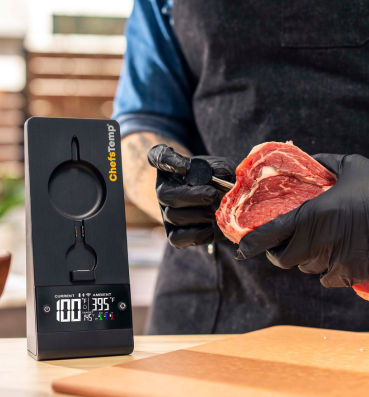
Before listing what the S1 does well, one limitation matters: the temperature control feature requires the separately sold Breezo V2 fan. The ProTemp S1 hub alone is a monitoring and alerting device. Buyers who expect plug-and-play automated fire control need to budget for both components
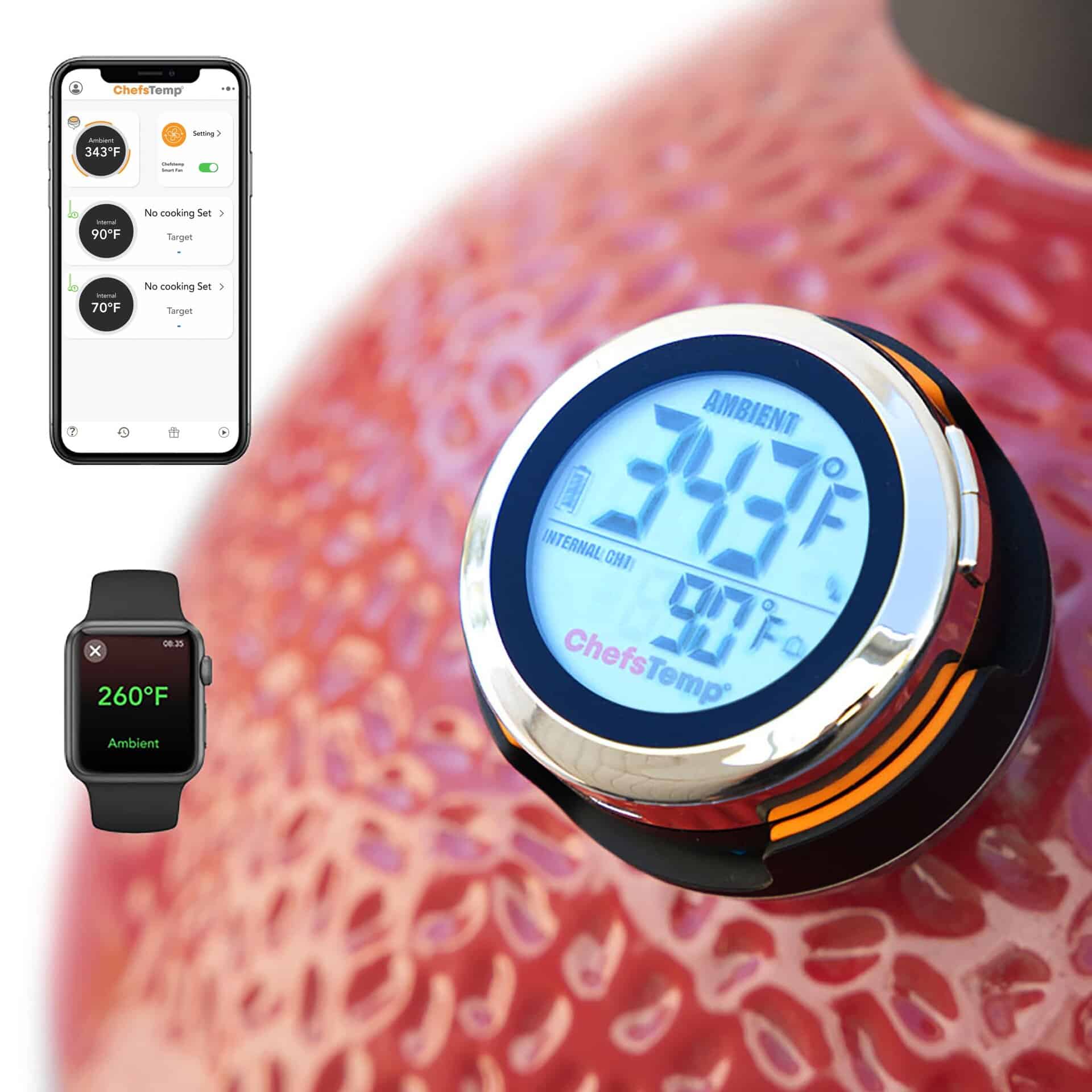
Ein unzuverlässiges Werksinstrument lässt sich problemlos durch moderne Smart-Technologie ersetzen. Viele Pitmaster tauschen heutzutage ihre alten Instrumente gegen spezielle Anzeigen aus. ProTemp S1 Patentierter intelligenter Grillthermometer-Hub. Dieses Upgrade gibt Ihnen die volle Kontrolle über das Feuer und Ihre Speisen.

Der Unterschied liegt darin, wie das Gerät die Wärme misst und mit Ihnen kommuniziert:
Platinum RTD Sensor: What the ±0.9°F Rating Means in Practice
The ProTemp S1 uses a platinum RTD (Resistance Temperature Detector) sensor rated at ±0.9°F accuracy. Unlike bimetallic coils, platinum RTD sensors maintain accuracy to ±0.1°C across the full temperature range and show negligible drift after years of thermal cycling – the same sensor class used in laboratory and industrial process control.
Platinum offers incredible stability at extreme temperatures. Because this unit accurately reads ambient temperatures up to 1000°F, you can easily hold a steady 225°F for low-and-slow BBQ. Later, you can crank the heat for high-temp searing or backyard pizza baking without ever destroying the sensor.
WiFi + Bluetooth Dual Connectivity: Why Both Channels Matter
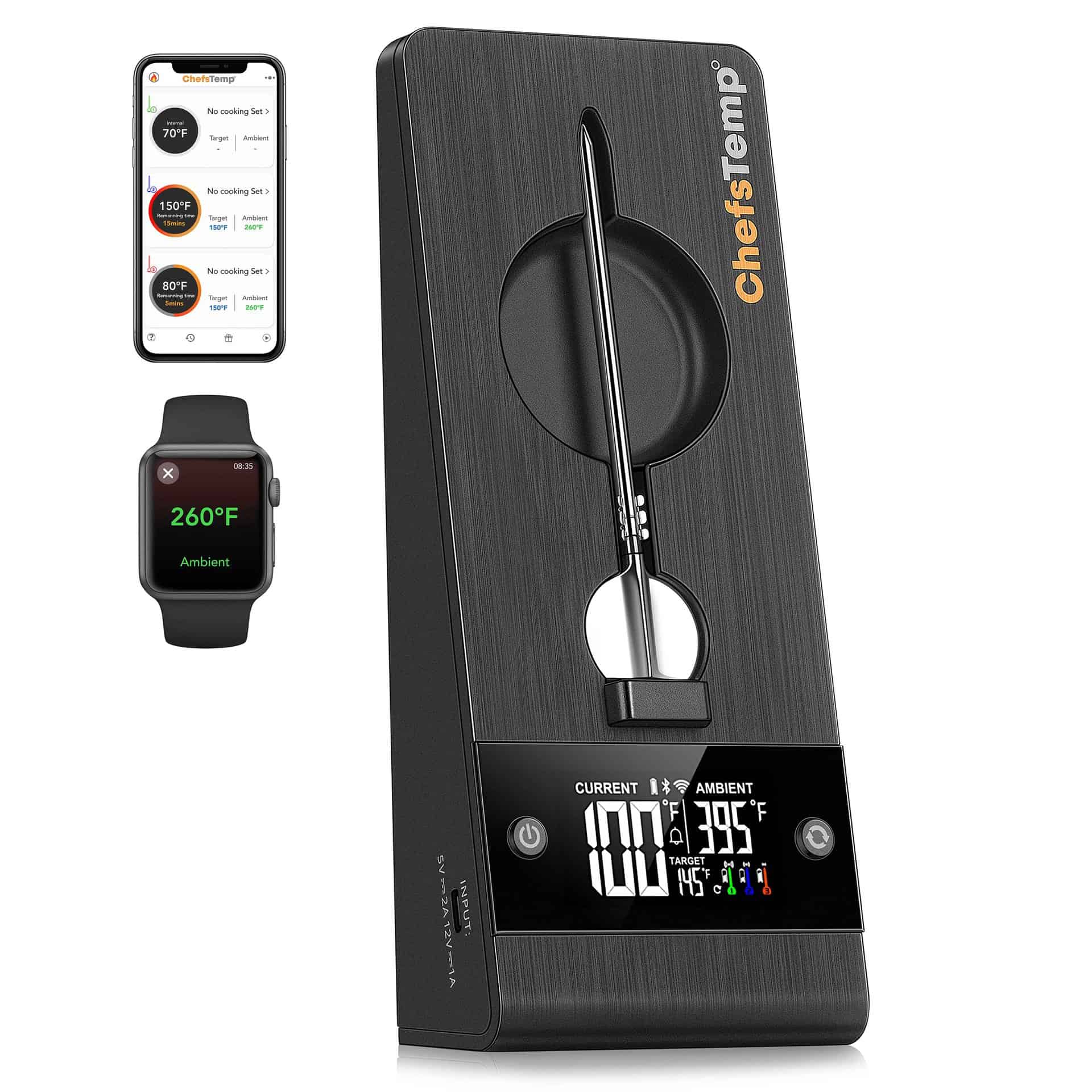
Sitting next to a hot smoker all day gets exhausting. The ProTemp S1 solves this with built-in Wi-Fi and Bluetooth connectivity. WiFi mode delivers alerts over your home network with unlimited range. If the router goes offline mid-cook, the S1 automatically falls back to Bluetooth — covering roughly 100 meters — so an overnight brisket is never left unmonitored because of a router reboot. You can step off the deck, entertain guests indoors, or even run to the store while still perfectly nailing a brisket.
Tracking Multiple Meats with Wireless Probes
Bei großen Grillfesten mit der Familie müssen Sie oft mehrere Fleischsorten gleichzeitig im Blick behalten. Ein hochwertiges Digitalthermometer mit Sonden macht diese Aufgabe zum Kinderspiel. Das ProTemp S1 unterstützt bis zu vier drahtlose Sonden. So können Sie beispielsweise eine dicke Schweineschulter, zwei Rippchenstränge und ein ganzes Hähnchen gleichzeitig überwachen.
Automating Airflow with the Breezo Fan
Die Kontrolle des Feuers selbst stellt eine weitere Herausforderung dar. Die manuelle Steuerung der Kohlenlüftung erfordert ständige Überwachung. Der ProTemp S1 harmoniert jedoch perfekt mit dem optionalen Breezo-Lüfter. Sinkt die Temperatur im Garraum, führt dieser Lüfter automatisch Sauerstoff zu. Diese automatische Luftstromregelung hält Ihren Smoker konstant auf der gewünschten Temperatur, ohne dass Sie die Lüftung manuell anpassen müssen.
Drop-In Installation: No Wiring, No Drilling, No Adapters (With One Caveat)
Finally, this system eliminates the clutter that ruins a good cooking experience. Messy wires often melt on hot grates and tangle easily. Because the ProTemp S1 is a 100% wireless hub, it simply mounts right into the empty hole on your lid, replacing your broken dial perfectly. This eliminates external power cables and probe wires from the grill exterior entirely.
One installation caveat: ProTemp S1 ships in three stem versions (Universal 7.8mm, BGE-specific 4.1mm, and short-stem 1.5-inch). Verify your grill’s gauge port diameter before ordering — the wrong stem version will not seat correctly.
Lesen Sie abschließend mehr dazu Wie man das beste Fleischthermometer auswählt. Es wird Ihre tägliche Kochroutine revolutionieren. Präzisionswerkzeuge verhindern trockene, übergarte Hähnchenbrüste und zähe, nicht durchgegarte Rippchen. Sie erzielen jedes Wochenende makellose, wiederholbare Ergebnisse.
Teil 3. How to Replace a Grill Lid Thermometer: Step-by-Step (Under 5 Minutes)
If you want better BBQ, start by throwing out the factory dial. Installing the best grill lid thermometer takes less than five minutes. For almost every standard grill on the market, you won’t need to fire up a drill or make any advanced modifications. Tools required: one pair of pliers or a 1-inch wrench, one damp cloth, and the ChefsTemp app (free, iOS and Android).
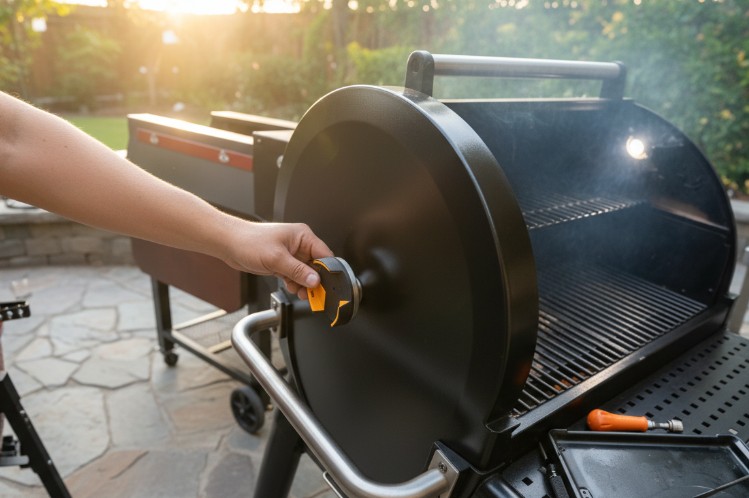
Der Vorgang ist denkbar einfach. Hier erfahren Sie genau, wie Sie Ihr altes Messgerät gegen einen modernen Smart Hub austauschen:
- Altes Zifferblatt entfernen: Öffnen Sie zunächst den Grilldeckel und schauen Sie hinter das werkseitig eingebaute Thermometer. Dort befindet sich eine einzelne Sicherungsmutter, die das alte Thermometer fixiert. Um diese Mutter zu lösen und abzuschrauben, benötigen Sie eine Zange oder einen Schraubenschlüssel. Sobald die Mutter entfernt ist, ziehen Sie das alte, ungenaue Deckelthermometer von außen gerade aus der Öffnung.
- Montagebereich reinigen: Over time, heavy smoke and vaporized fat build up on the inside of the lid. Wipe the mounting hole area with a cloth dampened in dish soap solution. Creosote residue around the port will prevent a flush seat and can cause air leaks that throw off ambient temperature readings.
- Installieren das Neue Nabe: Next, insert your ProTemp S1 hub into the existing hole, then slide the threaded stem into place. Reach under the lid and hand-tighten the provided locking nut. Hand-tighten only — no tools. Over-tightening the locking nut on a ceramic (BGE/Kamado Joe) lid can hairline-crack the ceramic around the port. On metal lids, finger-tight creates sufficient compression seal.
- Verbinde die App: Nehmen Sie nun Ihr Smartphone zur Hand. Laden Sie die ChefsTemp-App herunter und folgen Sie den kurzen Anweisungen auf dem Bildschirm, um Ihr neues Gerät per Bluetooth oder WLAN zu koppeln.
Das ist alles, was nötig ist. In nur wenigen Minuten haben Sie einen einfachen Gartengrill erfolgreich in eine ferngesteuerte Präzisionsgrillanlage verwandelt.
Teil 4. Four Techniques That Make Precision Thermometry Actually Work
Technologie hilft zwar, die gewünschte Temperatur zu erreichen, aber die richtige Technik ist nach wie vor das A und O für ein gelungenes BBQ. Selbst das beste smarte Grilldeckelthermometer der Welt nützt nichts, wenn das Feuer nicht richtig entfacht ist – das Grillgut wird darunter leiden. Hier sind vier wichtige Gewohnheiten, die Sie beim Anheizen Ihres neuen Holzkohlegrills beachten sollten:
- Errichten Sie ein Zwei-Zonen-Feuer: Two-zone fire management is the foundational technique that makes temperature control meaningful. Place all your lit coals in a tight pile on one side of the grill. Leave the other side empty. This simple setup gives you two distinct heat zones: a hot, direct-searing zone and a cooler, indirect-roasting zone. You can easily move the meat away from the fire to save it from burning.
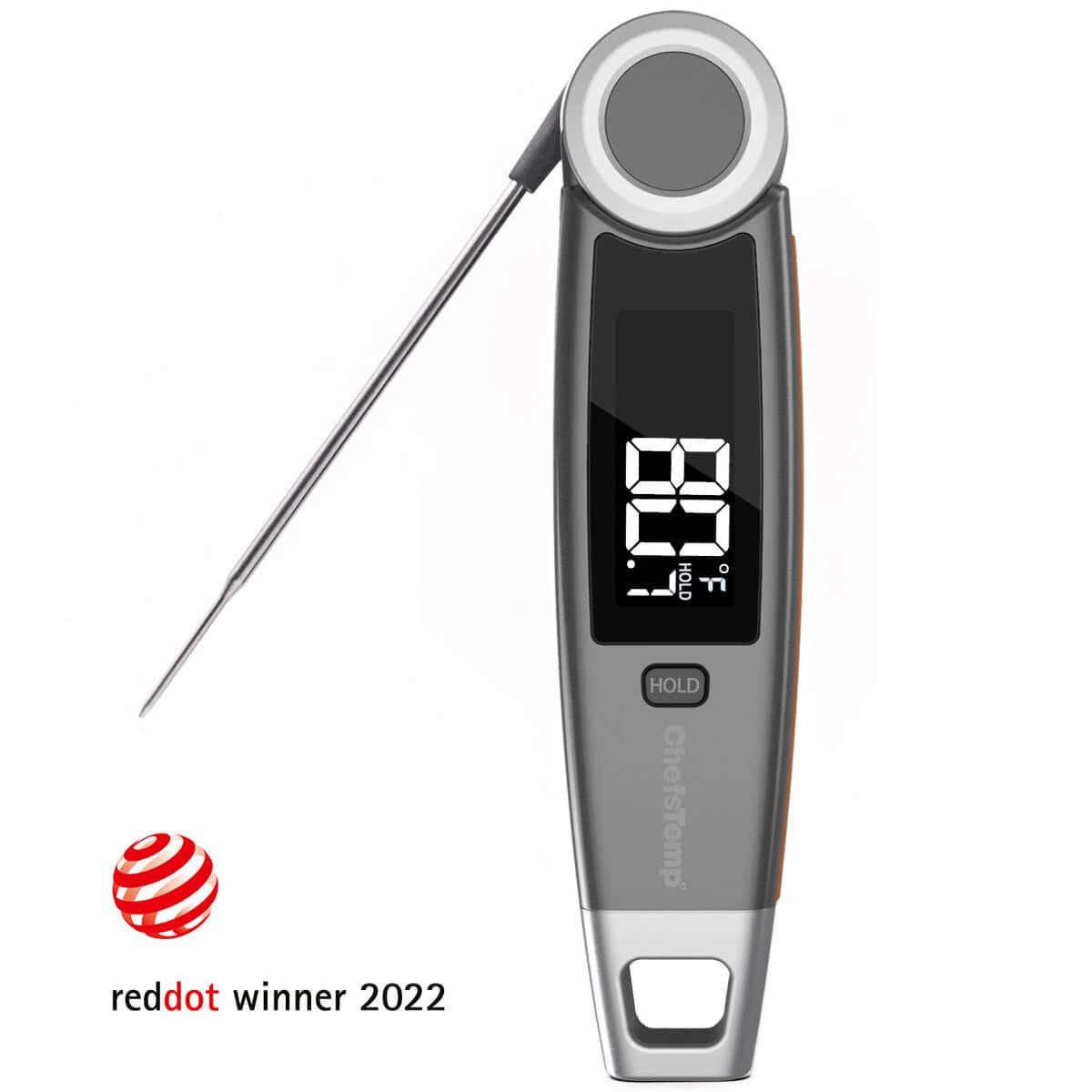
- Überprüfen Sie Ihre dünnen Schnitte: Während Ihre kabellosen Fühler die dickeren Stellen Ihrer Rinderbrust oder Schweineschulter überwachen, garen dünnere Ränder schneller. Tragen Sie daher immer ein zuverlässiges Sofortthermometer bei sich, um vor dem Servieren schnell die Temperatur zu überprüfen. Die Kontrolle der Ränder, der dünneren Muskelpartien und kleinerer Stücke wie Hähnchenflügeln stellt sicher, dass nichts trocken oder übergart wird.
- A USDA safe internal temperature reference: Poultry 165°F / Ground meats 160°F / Whole beef & pork steaks 145°F (3-min rest) / Fish 145°F.
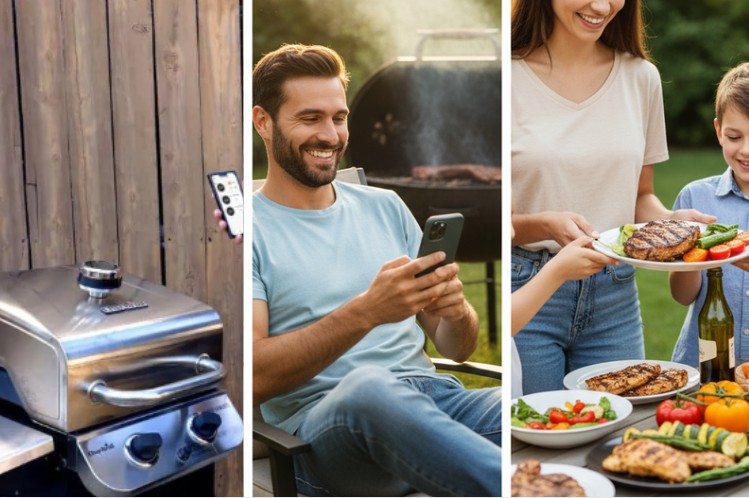
- Halten Sie den Grilldeckel geschlossen: Every time you open it, precious heat and flavorful smoke escape. Trust the ProTemp S1 app to tell you what is happening inside the cooker. As the old BBQ saying goes: “If you are looking, you aren’t cooking.” Every lid opening drops grate temperature by 30–50°F and requires 8–12 minutes to fully recover on a charcoal grill — time when your cook is stalled.
- Messung auf Rostebene: Die genaue Temperatur, bei der das Grillgut platziert wird, muss bekannt sein. Verbinden Sie Ihren Smart Hub mit einem digitalen Lebensmittelthermometer, das speziell für den Grillrost entwickelt wurde. Die Überwachung der Rosttemperatur zusätzlich zur Kerntemperatur des Fleisches gewährleistet präzise und sichere Garbedingungen.
Bewährte Methoden und intelligente Grillthermometer sorgen dafür, dass der Geschmack erhalten bleibt. Sie helfen Ihnen, rohes Fleisch zu vermeiden und stets perfekte Grillergebnisse zu erzielen. Sehen Sie auch die Testergebnisse eines preiswerten Deckelthermometers im Vergleich zu einer professionellen Kalibriersonde.
Teil 5. Schlussfolgerung
A cheap factory dial can easily ruin an expensive piece of meat. Standard grill lid thermometers cannot withstand bad weather, poor placement, or weak metal coils. Upgrading your setup changes everything. The ProTemp S1 fixes these exact frustrations. It delivers true platinum sensor precision, easy Wi-Fi monitoring, and multi-probe tracking.
A cheap factory dial is the fastest way to ruin an expensive brisket. Upgrading to a erstklassiges Kochthermometer ecosystem like the ProTemp S1 replaces analog guesswork with precise thermal data. By eliminating wire clutter and automating airflow, you stop babysitting the pit and start controlling it. Upgrade your hardware, and you secure flawless, repeatable barbecue every single weekend.
Teil 6. Häufig gestellte Fragen zu Grilldeckelthermometern
F: Sind die in Deckeln eingebauten Thermometer genau?
No. Independent measurements consistently show factory dome dials reading 50–100°F above actual grate temperature, due to sensor placement 6–8 inches above the cooking surface and the slow response characteristics of bimetallic coils. For reliable pit management, a dedicated grate-level probe is required.
F: Welches ist das zuverlässigste Grillthermometer?
The most reliable grill thermometers use platinum RTD sensors, which maintain accuracy to ±0.9°F across a 32–1,000°F range without calibration drift. Bimetallic coil gauges, the type found in most factory dome dials, degrade measurably after 20–30 heat cycles. For ambient grate monitoring, a platinum RTD hub paired with wireless food probes (such as the ProTemp S1 setup) currently represents the highest available accuracy class for consumer BBQ use.
F: Verwenden Köche Fleischthermometer beim Grillen?
Yes. Professional cooks rely on calibrated thermometers because internal meat temperature is the only reliable indicator of both food safety and target doneness. Cooking by time or touch cannot account for variable meat thickness, starting temperature, or ambient conditions. The USDA recommends reaching 165°F for poultry, 145°F for whole cuts of beef and pork, and 160°F for ground meats – targets that are only verifiable with a calibrated probe.
F: Warum funktionieren Grilldeckelthermometer manchmal nicht mehr?
Factory lid thermometers fail through three independent mechanisms:
- Creosote fouling: Grease deposits insulate the probe stem, adding 60–90 seconds of thermal lag.
- Bimetallic fatigue: the metal spring loses elasticity after repeated thermal cycles, causing permanent calibration drift.
- Moisture ingress: Condensation and rain corrode the internal coil, accelerating drift or causing total failure.
None of these failure modes are field-repairable on most factory units.
F: Was zeichnet ein gutes digitales Lebensmittelthermometer aus?
A high-quality digital food thermometer should meet four criteria: accuracy of ±1°F or better; response time under 3 seconds; waterproof housing rated IP65 or higher; and a temperature range of at least 32°F to 572°F for standard BBQ use. Wireless connectivity (Bluetooth or WiFi) is valuable for long smoking sessions where leaving the grill unattended is necessary. For ambient pit monitoring specifically, a platinum RTD sensor outperforms thermocouples at the precision and stability levels relevant to low-and-slow cooking.
Q: Can I use the ProTemp S1 without the Breezo fan?
Yes. The ProTemp S1 hub functions as a standalone ambient temperature monitor and wireless probe hub without the Breezo V2 fan. You gain precise dome temperature tracking, up to four wireless meat probe channels, and WiFi/Bluetooth remote alerts. Automated fire control — where the system adjusts your charcoal fire to maintain a target temperature – requires adding the Breezo V2 fan as a separate purchase.
Entdecken Sie weitere ChefsTemp-Produkte

Entdecke weitere Rezepte und lerne Küchentricks, indem du unserer Kochfamilie auf Facebook beitrittst.
Das könnte Ihnen auch gefallen: