Brisket Smoke Temp: How to Master Perfect BBQ with the ChefsTemp Breezo System
Getting smoked brisket right takes patience. It is a very tough cut from the cow’s chest. This muscle carries heavy loads, which stimulate the production of dense collagen. Low, slow heat melts that collagen into juicy gelatin.
Backyard fires are everywhere today. The Hearth, Patio & Barbecue Association reports that roughly 80% of North American homeowners own a grill or smoker. Yet, brisket still ruins weekends.
The USDA calls beef safe to eat at 145°F. Safe isn’t barbecue. Cooking tough cuts is like slowly melting ice. True tenderness only happens when the meat finally hits 200°F to 205°F. Surviving that long crawl is exactly why maintaining a steady, brisket-smoke temp matters.
Here is how to trim, smoke, and slice. Plus, you will see how the ChefsTemp Breezo System manages your fire automatically so you can relax.
Tabla de contenido
Part 1. Gathering Ingredients for a Classic Smoked Brisket
Great barbecue actually starts right at the butcher counter. Ask for a whole packer brisket. This massive cut carries both the lean flat and the thick, fatty point. Pay for USDA Choice or Prime beef if you can. That internal fat acts like a slow-release baster, keeping the meat from drying out over a long, slow fire.
Keep your rub really basic. You are cooking beef, not brewing a heavy chili. The meat is the star. Your rub acts like a picture frame, simply highlighting the edges. Building a proper crust takes just a few staples:
- Smear a paper-thin layer of yellow mustard to act as a binder.
- Mix one tablespoon per pound of both coarse black pepper and coarse kosher salt.
- Add a small pinch of garlic powder to a savory edge.
- Keep apple cider vinegar in a spray bottle to wet down dry spots.
Ultimately, wood smoke does the heavy lifting. The spices step aside.
Part 2. Essential Tools Needed to Nail Your Brisket Smoke Temp
Barbecue is unforgiving. Bad gear ruins expensive meat. Think of your smoker like a carpenter’s workbench; you need reliable tools before you start. Gather these essentials first:
- Smoker: Pellet, offset, or kamado grills all work.
- Wood: Oak, hickory, and pecan pair well with beef.
- Thermometer: Ignore that cheap factory dial on your lid.
- Wrapping: Keep pink butcher paper or heavy foil handy.
- Prep gear: Find a long knife and a massive board.
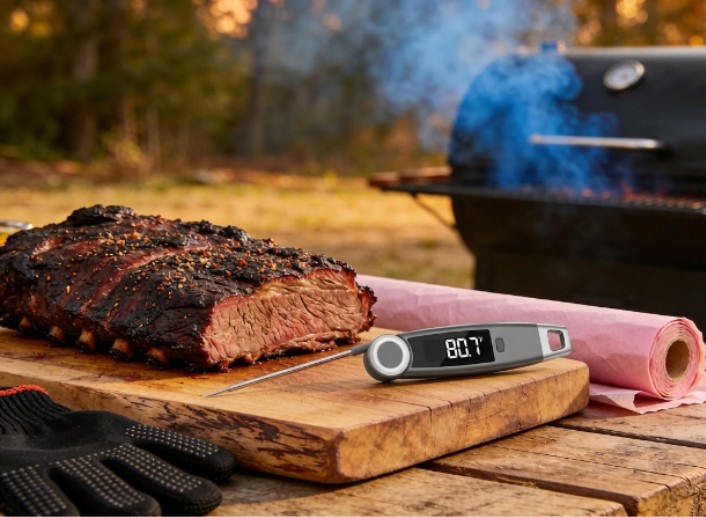
Maintaining a steady, brisket-smoke temp is everything. Opening the lid bleeds heat. That is exactly why super-fast instant-read meat thermometers matter. They grab the exact number in one second. You close the lid faster. The fire stays stable. The bark builds right.
Part 3. How to Select and Prepare Your Smoker for the Best Temp to Smoke Brisket
Airflow is everything. Treating your smoker like an afterthought ruins expensive meat. Ash acts like a chokehold on fire. When oxygen stops moving, temperatures swing wildly. You need a clean engine.
Run through this checklist every time:
- Scrub the metal grates clean.
- Empty the ash pan completely
- Fill a water pan and place it inside.
- Light your fuel, shut the lid, and walk away.
- Wait thirty minutes for the heat to settle.
Dialing in the fire matters. Most consider 225°F to 250°F the best temp to smoke brisket. Running at 225°F requires patience but builds a thick bark. Bumping up to 250°F saves hours without sacrificing tenderness.
Watch your exhaust stack. You want a whisper of thin, blue smoke. Thick, white clouds taste like harsh chemicals. Wait for the fire to breathe before adding any beef.
That moisture matters. The water pan does heavy lifting here. Humid air acts like a physical blanket. It carries heat efficiently, gently melting tough fibers without frying the delicate edges.
Part 4. How to Trim and Season Your Brisket Like a Pitmaster
Good trimming helps hot air flow smoothly around the meat. If you leave jagged edges, they will burn long before the thick center reaches the right brisket internal temp.
Always start with cold meat. Cold fat stays firm under your knife. Warm fat tears and makes a huge mess. Pull your beef straight from the fridge and get to work.
Follow these easy trimming steps:
- Lay the meat fat side up on a large board.
- Shave the top fat layer down to exactly one-quarter inch.
- Cut out the hard, waxy chunk of fat between the two muscles.
- Round off all sharp corners to prevent burning.
- Flip the meat over to slice away any tough silver skin.
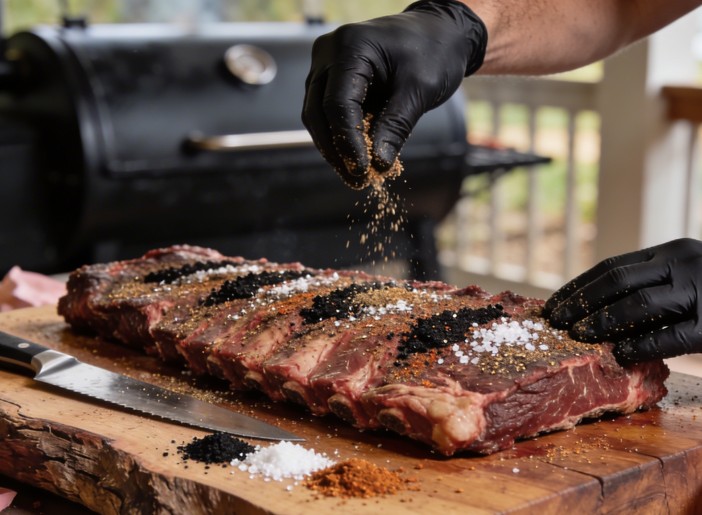
Smear a paper-thin layer of mustard across the entire cut. It acts purely as glue. Hold your shaker a full foot above the beef. Let the salt and pepper rain down. Dropping spices from up high prevents heavy, salty clumps. Coat every single edge. Leave the meat sitting on the counter for an hour. The salt works like a sponge. It pulls surface moisture out and drags that seasoning deep inside the muscle.
Part 5. Calculating Brisket Smoke Temp and Time: What the Numbers Really Mean
People always panic about the clock. Everyone wants to know when dinner happens. The honest answer? The meat decides, not the clock.
Use this basic guide for your brisket smoke temp and time:
Brisket Weight | Temp | Estimated Time |
10–12 lbs | 225°F | 12–15 hours |
12–14 lbs | 225°F | 14–18 hours |
14–16 lbs | 225°F | 16–22 hours |
10–12 lbs | 250°F | 10–12 hours |
12–14 lbs | 250°F | 12–15 hours |
Clocks lie. These numbers are just rough baselines. A freezing winter breeze easily adds 3 extra cooking hours. A breezy day will suck heat right out of your grill.
If your fire sits below the meat, place the fat side down to block the direct heat. Then, close the lid. Do not open it for three hours. Every peek bleeds heat, ruining your steady fire. Keep the lid closed.
After three hours, spritz with apple cider vinegar. Do this every hour. The wet surface grabs onto more smoke flavor and helps build a beautiful dark crust.
Part 6. The First Smoke Phase and the Best Temp to Wrap Brisket
Around the six-hour mark, something annoying happens. The brisket internal temp stops moving. The internal temperature suddenly flatlines right around 160°F. Pitmasters call this the stall. The beef is physically sweating. That evaporating moisture fights your fire, acting just like an air conditioner.
Many beginners panic here. They crank up the fire. Do not do this. High heat ruins your bark and dries out the meat. You can wait, or wrap it.
El best temp to wrap brisket usually hits between 165°F and 170°F. Check the bark first. Drag a fingernail across that dark crust. If the bark stays stuck to the meat, it is time to wrap.
Here is how different wraps change your cooking:
Método | Bark Result | Velocidad | Moisture |
Butcher Paper | Crispy, preserved | Moderate | Good |
Aluminum Foil | Softened, moist | Fastest | Excellent |
No Wrap | Thickest bark | Slowest | Lowest |
Most pros use two sheets of pink butcher paper. Wrap the meat tightly like a present. Put it right back on the smoker. Keep your fire steady. The paper traps steam, pushing the meat right through the stall.
Part 7. Hitting the Right Brisket Pull Temp, Rest, and Slicing Technique
Wrapped meat cooks faster. You are in the final stretch. Watch your brisket internal temp closely once it hits 195°F.
The perfect brisket pull temp lands between 200°F and 205°F. At 200°F, slide a thermometer into the thickest part of the meat. Ignore the digital screen. Feel for physical resistance. It should yield like warm butter. Feel the texture. The metal should glide in easily, just like warm peanut butter. When you feel zero resistance, you have reached the true brisket finish temp. Take the beef off the smoker right away.
Next, you must rest the meat. Slice it right now, and you ruin everything. Boiling juices will flood your cutting board, leaving the beef totally dry.
Follow these steps for a proper rest:
- Leave the meat tightly wrapped inside its butcher paper.
- Swaddle the whole package in an old bath towel.
- Put the bundle inside a dry cooler and shut the lid.
- Wait two to three hours before serving.
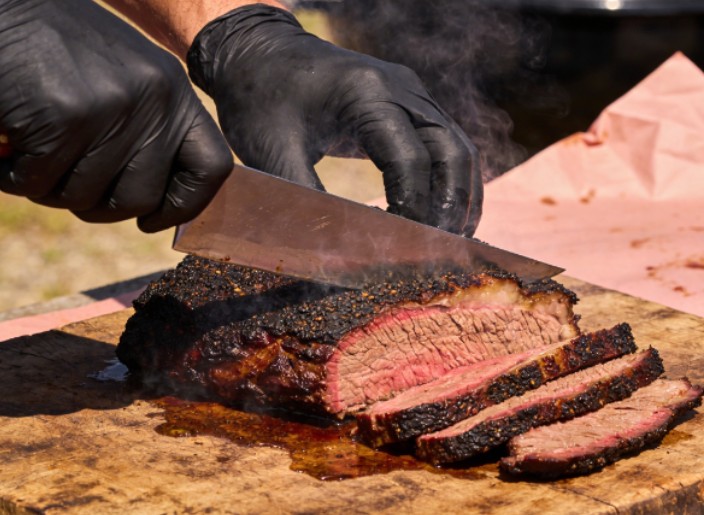
A good cooler acts like a thermos, trapping heat safely above 140°F. When it is time to eat, always slice against the grain. Aim for pencil-thick pieces. That exact thickness guarantees a tender, melting bite.
Part 8. Classic and Creative Sides to Serve with Smoked Brisket
Brisket is unapologetically heavy meat. It coats your mouth like warm butter. You need sharp, acidic contrasts to wake up your palate and balance the plate.
Build a menu that mixes heavy comfort with bright, snapping flavors. Treat your side dishes like palate cleansers:
- Serve vinegar coleslaw, cold dill pickles, and sweet pickled red onions to slice through the rich beef fat.
- Slide smoked baked beans and sweet corn directly onto the hot smoker grates.
- Provide creamy macaroni and cheese alongside warm jalapeño cheddar cornbread.
- Keep thick slices of white bread nearby to mop the plate.
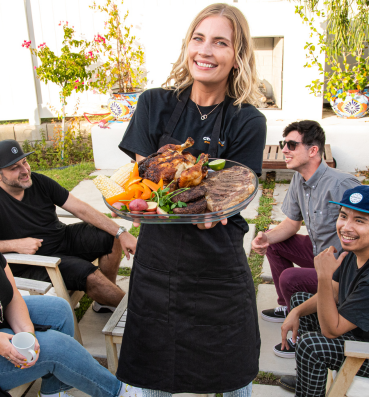
Feeding a big crowd requires variety. Mix dense starches with light, acidic crunches. Hit both ends of the spectrum, and everyone leaves the backyard happy.
Part 9. Master Brisket Smoke Temp Effortlessly with the ChefsTemp Breezo System
Managing a live fire for 15 hours is hard work. You naturally get tired or distracted. When you step away, your fire shifts. Those sudden temperature spikes ruin your meat’s crust and dry out the inside.
The ChefsTemp Breezo System solves this exact problem. It combines smart tools to manage the fire for you.
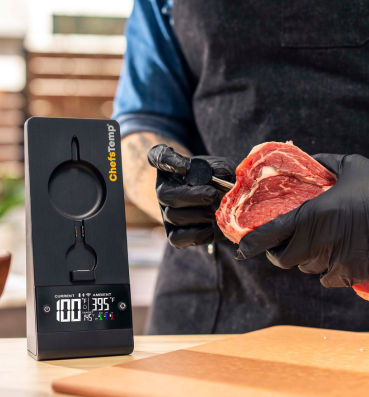
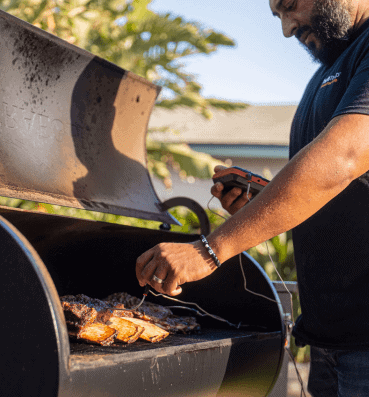
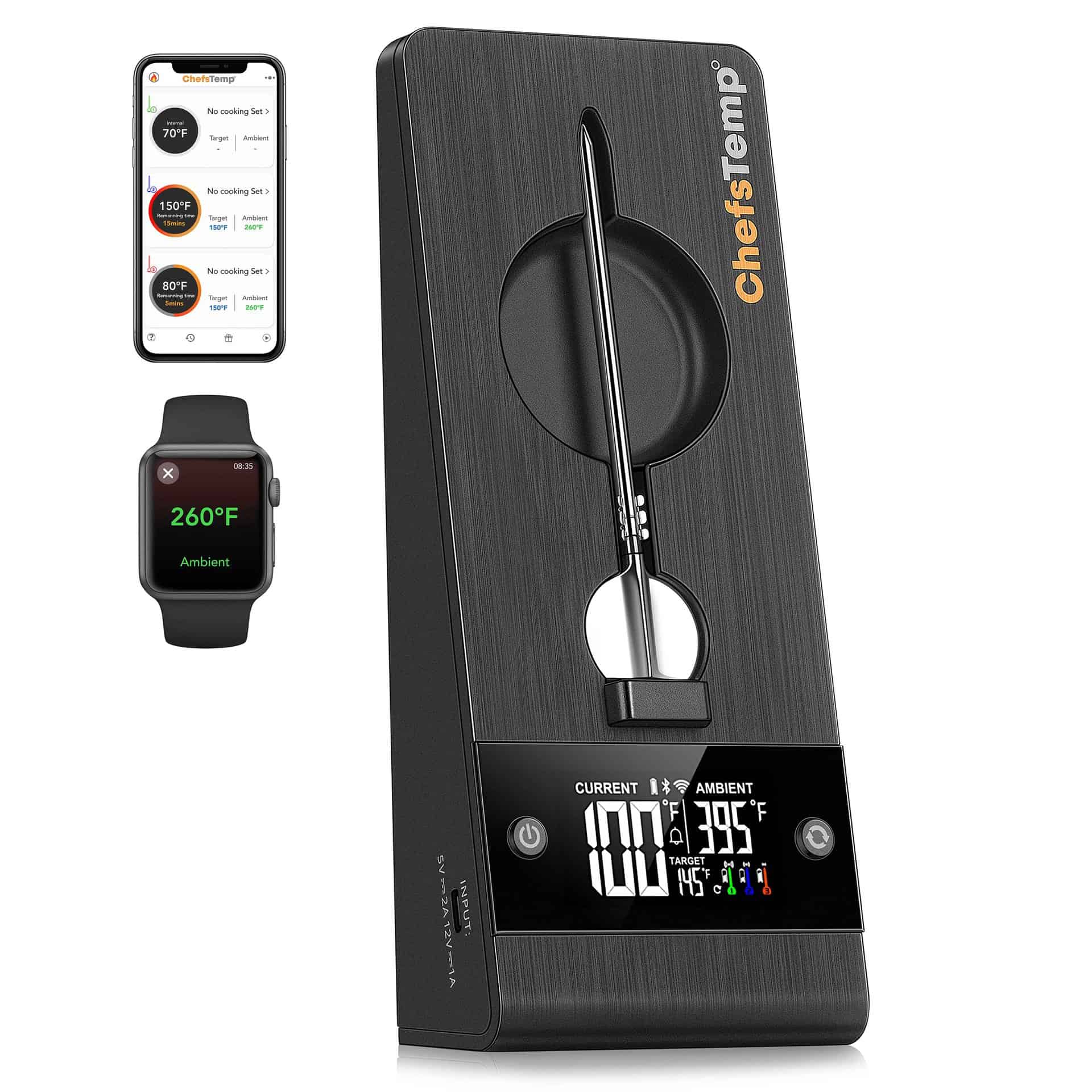
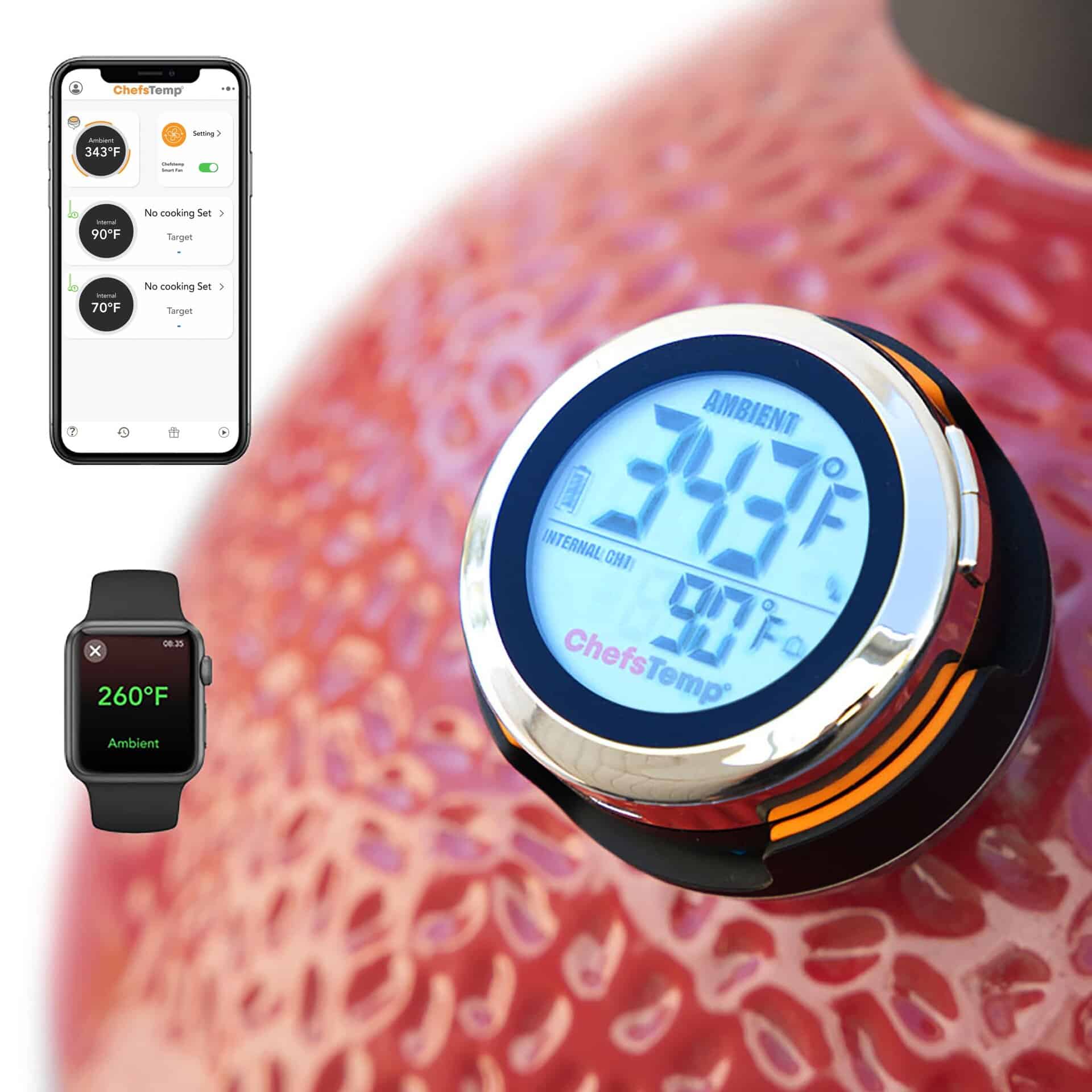
First, you need the ProTemp S1. This wireless meat thermometer acts like a digital babysitter. It monitors the fire and your brisket’s internal temperature simultaneously. If heat spikes, your phone buzzes.
Here is what makes this tool so reliable:
- High accuracy: It reads anywhere from -22°F to 572°F within half a degree.
- Tough design: The fully waterproof probe handles messy, daily use easily.
- Long battery life: A single charge lasts 24 hours. It survives overnight cooking.
- Quick setup: Grab your phone and watch how to install the ProTemp S1 on different grills or smokers.
Part 10. ChefsTemp Breezo Fan: Automated Airflow Control
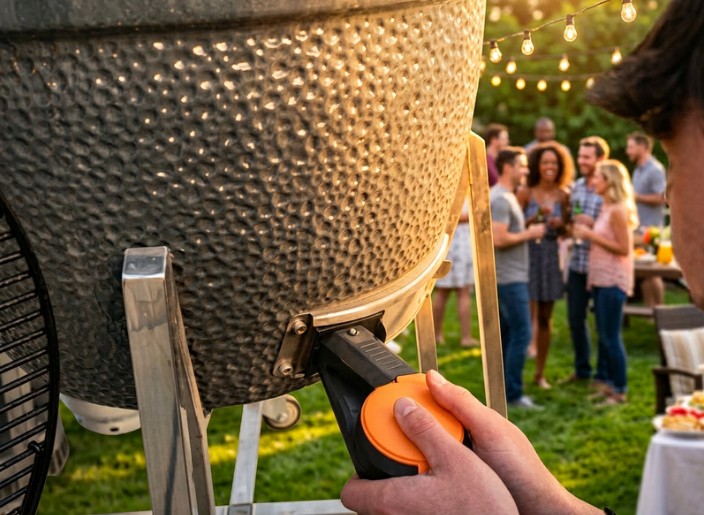
Next, pair your thermometer with the ChefsTemp Breezo Fan. This creates a fully automated fire manager. You clip the fan directly over the bottom air vent of your smoker.
The fan talks to the thermometer in real time to control the heat. It works like a bellows. When coals fade, it breathes fresh air into them. If the pit runs hot, it stops, starving the flames.
This smart loop locks in your target brisket smoke temp. The heat stays within a tight 5-degree window all day long. You never have to touch the dirty vents yourself.
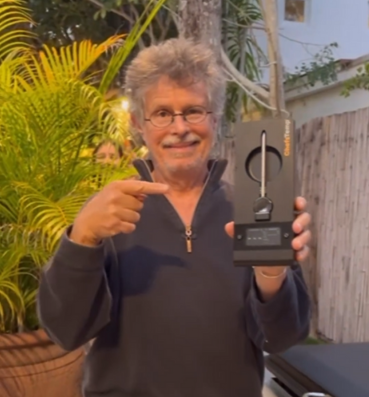
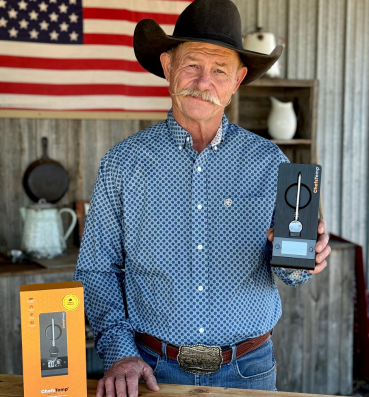
The system fits almost any rig. It easily attaches to basic kettle grills, heavy offset smokers, and thick ceramic kamados. Backyard beginners and seasoned pitmasters swear at it. Find out how experts run ProTemp S1 and Breezo Fan to get competition-level results on a Primo XL grill.
Part 11. Conclusion
Mastering your brisket smoke temp does not rely on luck. It simply takes good habits and smart tools. Lock the fire between 225°F and 250°F. Wrap once the brisket’s internal temperature hits the mark. Then wait. Always let the beef rest before slicing. Every single step changes your final result.
The ChefsTemp Breezo System makes this entire process much easier. A smart fan acts like cruise control for your fire. Steady heat matters. It is the only thing separating dry meat from legendary barbecue.
Part 12. FAQs about Brisket Smoke Temp
Q: What temp for smoked beef brisket?
Lock the smoker between 225°F and 250°F. Patience pays off here. That lazy heat slowly dissolves stubborn muscle fibers into rich gelatin. As the beef crawls toward that 200°F to 205°F window, magic happens. You finally hit true tenderness, miles beyond basic food-safety standards.
Q: Why is my brisket at 200 degrees but still tough?
High heat alone guarantees nothing. Rushing the fire acts exactly like microwaving a tough roast. If the beef hits 200°F too fast, the stubborn collagen cannot melt. Trust hands over digital screens. If your thermometer probe hits physical resistance, leave the meat right on the smoker.
Q: How long will a 15-pound brisket take to smoke at 225 degrees?
Barbecue ignores clocks. Expect a massive 15-pound brisket to cook for 18 to 22 hours at 225°F. That breaks down to roughly 90 minutes per pound. A freezing night stretches that even further. Start the night before. Give yourself a strict two-hour buffer for rest.
Q: Is brisket more tender at 195°F or 205°F?
Pulling beef off at 195°F leaves it stubbornly chewy. The inner tissues are only half-melted. Push the fire to 205°F instead. Those final ten degrees act like a slow simmer. They completely dissolve tough collagen, creating that famous buttery, pull-apart texture everyone expects from barbecue.
Q: What temperature is brisket done?
Thermometers only provide a baseline. The majority of briskets typically end between 200°F and 205°F. However, feeling is far more important. Look into the thickest area. It should pass right through, like soft butter pierced by a warm skewer. Examine each muscle. The whole plate is ruined by tough BBQ.
Descubra otros productos ChefsTemp

Descubre más recetas y aprende trucos de cocina uniéndote a nuestra familia de cocina en Facebook.
También te puede interesar: