Grill Temperatures Chart: The Complete Guide to Mastering Your BBQ Heat
Backyard cooking has changed. People buy nicer grills, better charcoal, and more gadgets. According to Verified Market Research, the global BBQ grill market is expected to grow to USD 7.78 billion by 2032. Money is helpful, but it doesn’t solve the primary issue of wandering heat. Burgers burn, chicken dries out, and steaks fall short because a lid dial may read one number while the grate runs hotter or colder.
This guide keeps things simple. It shows the grill temperatures that fit common meats, from low-and-slow smoke to a fast sear. It also explains how to measure the real temperature where the food sits, and when a smart thermometer can take some babysitting off your hands at night.
Tabla de contenido
Part 1. How Hot Should the Grill Be? Best Grill Temperatures for Different Meats
Different foods need completely different heat levels. You must match your food to the right heat zone. High heat quickly sears thin cuts of meat. Meanwhile, low heat slowly breaks down tough tissues in large roasts. Learning these basic rules will instantly transform your backyard cookouts.
What Temperature to Grill Burgers
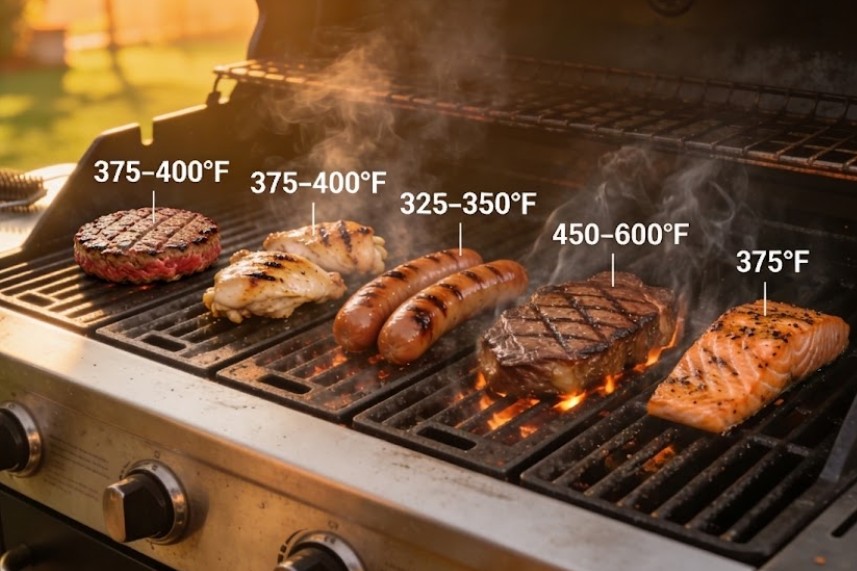
Neighbors always ask exactly what temperature to grill burgers so they do not dry out. Treat the grates like a hot iron skillet. Aim right for 375°F to 400°F. It hits the sweet spot. That medium-high blast sears a hearty, brown crust. The inside stays dripping with juice. Expect standard beef patties to finish in eight to ten minutes. Remember to flip the meat only once to keep it from falling apart.
Perfect Grill Chicken Temperature
Finding the ideal grill chicken temperature stops you from serving dry, stringy poultry. You need a steady medium-high heat of 375°F to 400°F for wings and thighs. Whole birds, however, require a lower medium heat of 325°F to 350°F. This gentler heat ensures the thickest parts reach a safe 165°F inside. Consequently, the skin renders its fat and turns crispy without burning black.
Ideal Grill Temperature for Sausage
The best grill temperature for sausage is 325°F to 350°F. Sausages contain a lot of fat packed into delicate casings. If you use high heat, that internal fat boils instantly. This rapid boiling bursts the casing, dumps grease into the flames, and triggers massive flare-ups. Instead, medium heat gently cooks the pork. All those delicious juices stay trapped inside for a perfect bite.
Heat Requirements for Steak
Steaks demand high heat between 450°F and 600°F. This intense blast of fire triggers the Maillard reaction. This natural process creates that savory, dark crust on the beef. You only need a couple of minutes per side here. The center is tender medium-rare. Searing steaks over extreme heat brings steakhouse-quality dining right to your patio.
Heat Requirements for Fish
Due to the extreme delicacy of seafood proteins, fish requires special attention. The ideal temperature for planked fish is 375°F. Steaks of swordfish or tuna, for example, can withstand high cooking temperatures up to 450°F without any problems. You absolutely must oil your grates well before placing seafood down. Fish skin forms a strong connection with hot, dry metal. When you turn the fish on a clean, well-oiled grate, it releases smoothly.
Mastering these specific heat levels takes the guesswork out of your meal prep. You protect your expensive groceries from ruin and guarantee great flavor.
Part 2. The Six Key Temperatures of Grilling on Our Grill Temperature Chart
Mastering the fire means knowing your zones. Keep this grill temperature chart nearby. Live fires constantly fight the weather. Cold winds rip heat from thin steel kettles, chewing through charcoal. Heavy roasts also cook much more slowly than thin steaks. Always adjust your timing to match.
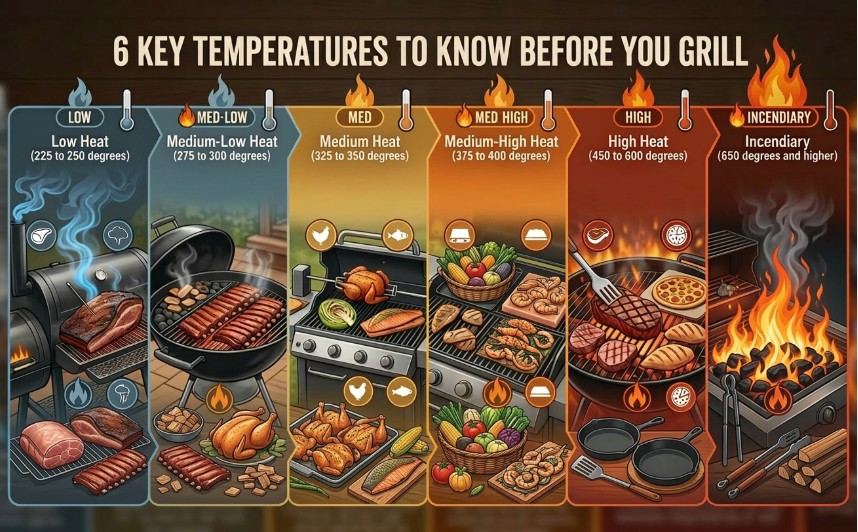
Low Heat (225 to 250 degrees)
This precise heat zone defines real smoking and authentic barbecue. You use this low heat exclusively for huge, tough cuts like brisket, ribs, and pork shoulder. The very low smoker temp slowly melts tough collagen down into rich, sticky gelatin over time. This chemical breakdown takes several hours and requires patience. Yet the long wait yields incredibly tender, pull-apart meat that melts in your mouth.
Medium-Low Heat (275 to 300 degrees)
Medium-low heat sits right between slow smoking and regular oven roasting. This specific zone works perfectly for both true barbecue and indirect grilling. You will find this exact heat level great for cooking ribs and pork butt. Running your pit at 275°F speeds up your overall cooking time a bit. Most importantly, the meat retains its natural moisture without drying out the crusty bark on the outside.
Medio Heat (325 to 350 degrees)
Medium heat gives you amazing versatility for everyday outdoor cooking. You use this reliable zone for direct grilling, indirect cooking, and smoke-roasting. This middle-of-the-road heat level handles pork loin, whole chickens, and whole fish beautifully. It also perfectly softens up large, dense vegetables. For example, you can slowly roast whole heads of cabbage or large onions over medium heat until they turn incredibly sweet and tender.
Medium-High Heat (375 to 400 degrees)
Consider medium-high heat to be your everyday workhorse. It quickly forms a crust while allowing the thick core to catch up. Use salt slabs or planked salmon in this warm zone. The thighs of chicken enjoy it. Vegetables are hearty as well. At 400°F, fresh zucchini and thick bell peppers blister beautifully.
High Heat (450 to 600 degrees)
High heat demands your undivided attention at the grill. You use this intense blast of fire only for direct grilling over open flames. This incredibly hot grill temp is exactly what you need for steaks, chops, pizza, and thin chicken breasts. Everything cooks in just a matter of minutes at this level. You must stay close to the flames to stop your dinner from burning.
Incendiary Heat (650 degrees and higher)
Incendiary heat creates those premium, steakhouse-quality crusts everyone loves. You reach this extreme, raging heat through direct grilling or specialized infrared burners. This absolute top-end temperature is meant strictly for searing expensive steaks and thick chops. You leave the meat on the grates for only 1 or 2 minutes per side. Any longer exposure than that will completely incinerate your expensive food into dry ash.
Mastering these six specific zones takes the mystery out of fire management. You will know exactly how hot your fire needs to be before you even strike a match.
Part 3. How to Gauge Grill Temperatures Accurately
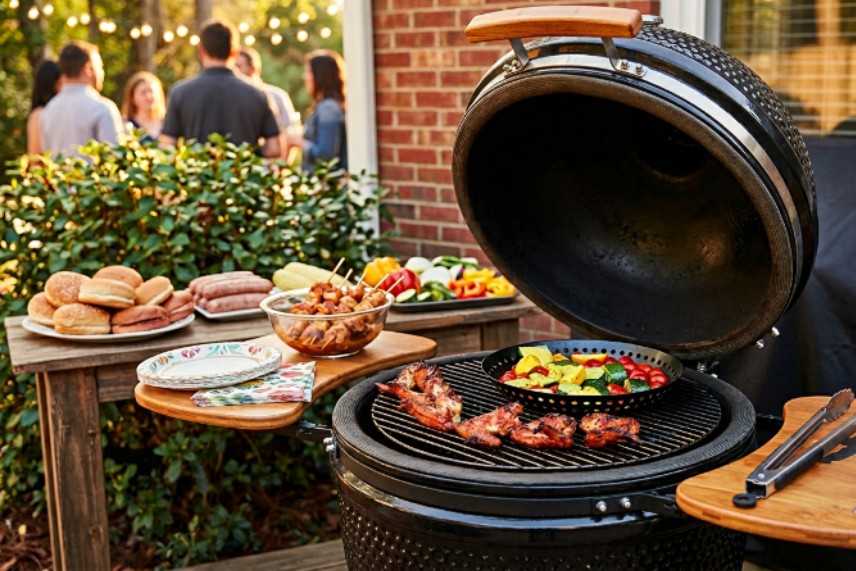
Knowing your target heat means absolutely nothing if you cannot measure it accurately. The whole environment inside your cooker changes completely based on the heat level. At low temperatures, wood smolders softly and releases clean, blue smoke. At high heat, dripping fat hits the hot coals and instantly vaporizes, flavoring the meat.
You must understand exactly what happens inside your pit to master this cooking process. For expert advice on understanding these heat dynamics, read these strategies to know your temperature.
Many traditional grills still use cheap bi-metal dials installed right in the lid. Sadly, these factory dials constantly trick backyard cooks. They only measure the hot air pooling at the very top of the metal dome. They completely fail to check the air down at the grate where your food actually cooks. In reality, your grate temperature often runs 50°F hotter or cooler than the dome dial claims.
Here are a few practical ways to gauge your heat properly:
- Use a digital grate probe: Clip a high-quality digital sensor right next to your meat. This tool shows the exact cooking environment for smoking a large Sunday brisket for your family.
- Try the quick hand test: Hold your bare palm roughly five inches above the hot metal grates. If you must pull your hand away in just 2 seconds, you have extreme heat ready to sear thick steaks.
- Watch your smoke color: Thick, billowing white smoke means your fire is desperately short of oxygen. Conversely, thin, pale blue smoke indicates your airflow is perfectly tuned for slow-cooking delicate pork ribs.
To refine your backyard technique even further, find tips for getting the right temperature on your grill. Using highly accurate tools guarantees you never serve raw or ruined food to your guests again. Ultimately, measuring your heat correctly prepares you for the next critical step of controlling the fire itself.
Part 4. How to Control Temperature on Different Grills
Every cooking device handles heat differently. You must change your approach based entirely on your specific fuel source. Wood, gas, and charcoal all act in highly unique ways. Learning these exact differences gives you total command over your fire.
Managing charcoal grill temperature
Controlling the temperature of your charcoal grill requires excellent oxygen management. Fire breathes oxygen to survive. Open the bottom intake vents to feed the coals with more air. This quickly increases your heat. Conversely, you partially close those vents to choke the fire and reduce the heat. Furthermore, the weather changes everything outside. A cold, harsh wind pulls heat right out of your metal kettle. As a result, you burn much more fuel to keep the heat steady.
Managing Gas and smoker temp
Gas grills use simple knobs to adjust flame size instantly. However, holding a perfectly steady smoker temp for 12 straight hours proves very tough on traditional offset rigs. Strong wind gusts can easily blow out low flames or make wood fires spike violently. Even modern wood pellet smokers struggle because cheap factory sensors fluctuate wildly. You need better, faster tools to keep a flat temperature line.
Managing Oven Grill Temperatures
Your indoor kitchen also requires precise monitoring. An oven grill temperature often misses the actual dial setting by 25°F or more. Kitchen ovens cycle their heating elements on and off constantly. This action creates rolling waves of heat instead of a flat line. Therefore, always use a secondary digital probe to verify the actual ambient temperature before baking delicate food.
Smart Solutions for Perfect Heat Control
Chasing temperatures all day exhausts seasoned pitmasters. Managing a live fire with a cheap factory dial feels like driving blindfolded. Tech finally caught up.
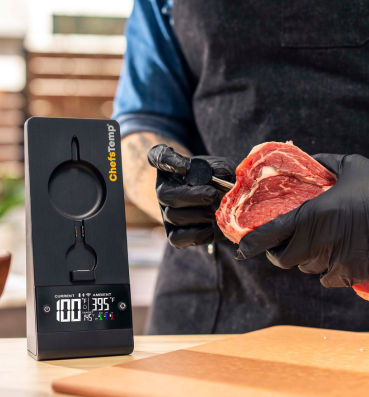
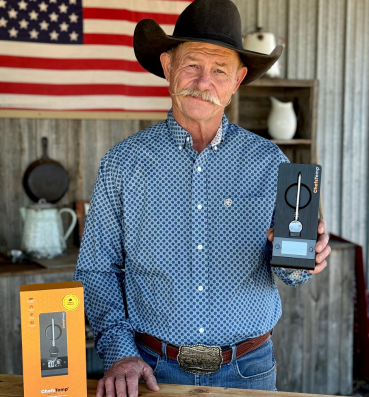
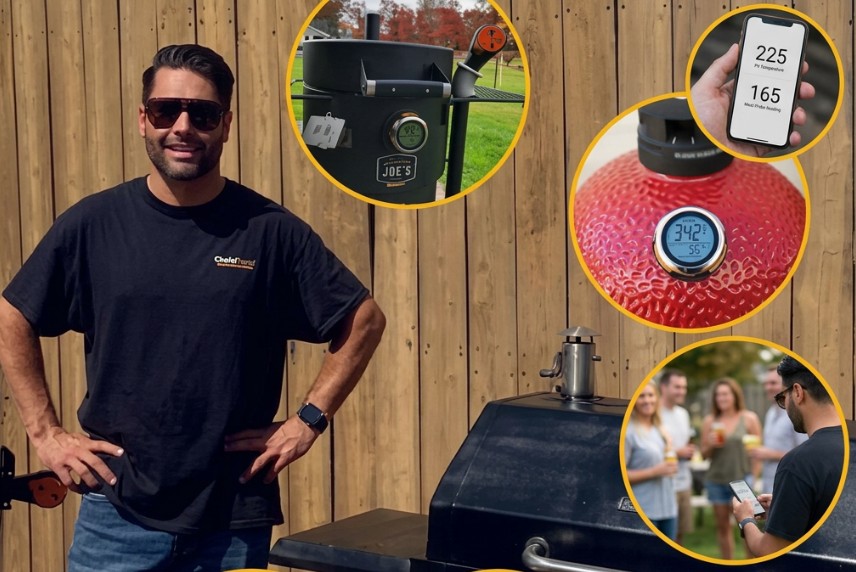
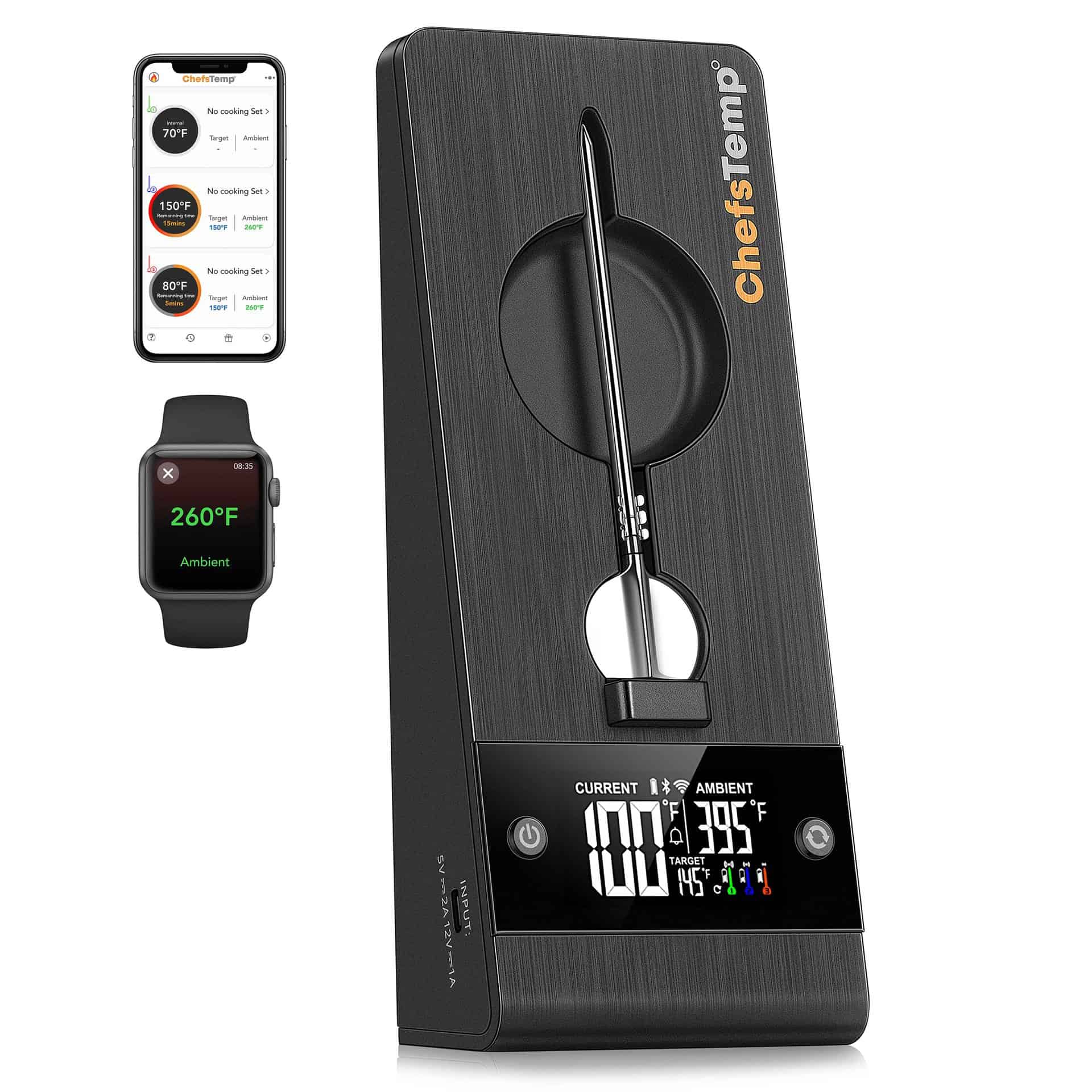
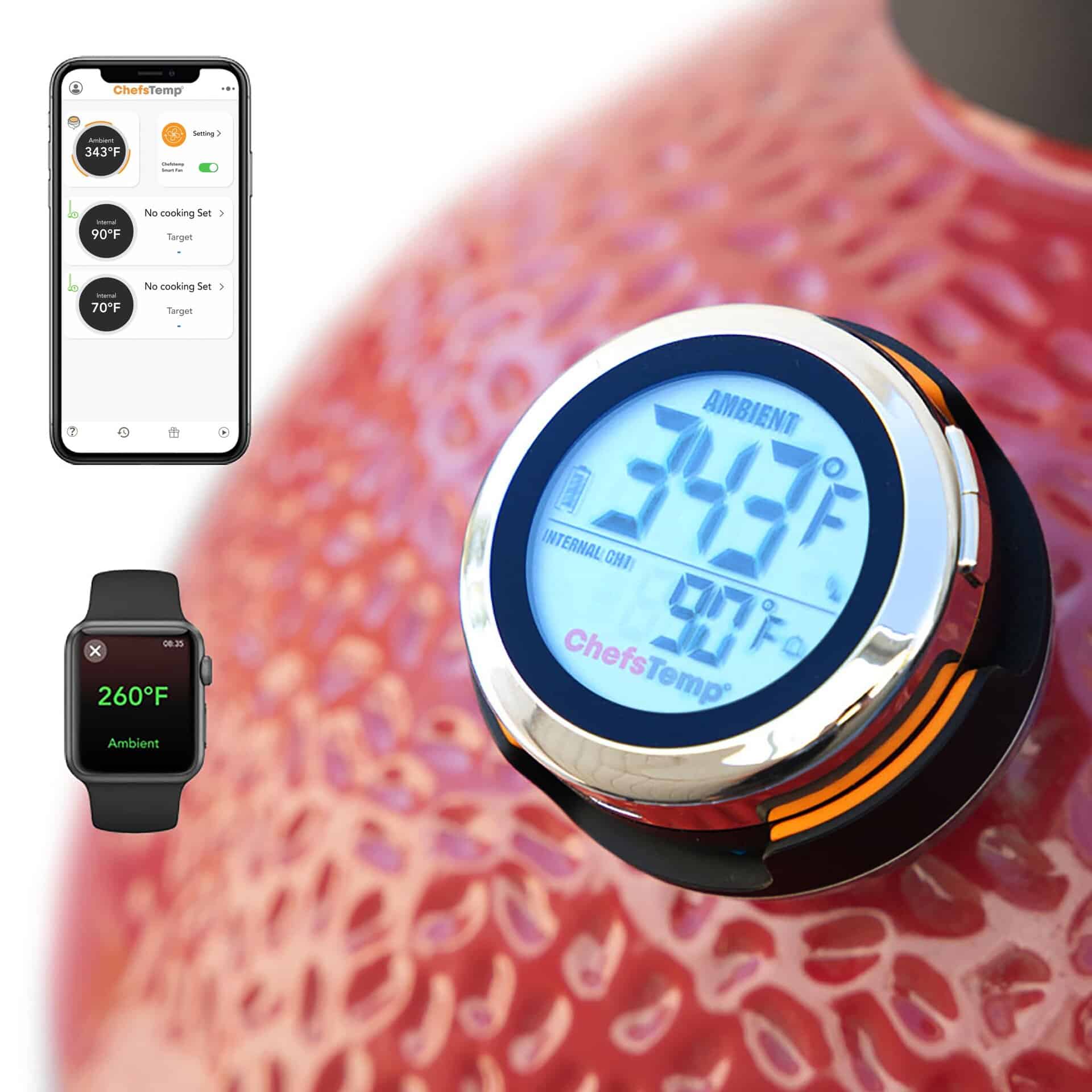
El Centro de termómetro con indicador inteligente para parrilla patentado ProTemp S1 acts like cruise control for your smoker. It mounts right where your old dome dial used to sit. The setup stays entirely wireless and clean.
- Built-in Wi‑Fi/Bluetooth for remote pit-temp monitoring on your phone (and Apple Watch).
- Commercial-grade platinum sensor rated up to 1000°F for high-heat searing or low-and-slow control.
- Supports up to 4 wireless probes, allowing you to track multiple meats simultaneously.
- Optional Breezo Fan compatibility for automatic airflow control to hold a steady target temp.
BBQ gear continues to evolve as the global grill market grows. You can see this amazing system in action right now. Watch to know how ProTemp S1 + Breezo on Kamado Master Hot & Fast + Low & Slow Temp Control operates flawlessly.
Parte 5. Conclusión
Mastering your grill temperatures permanently solves the painful problem of serving dry, burnt, or undercooked food. Guessing the heat always leads to ruined meals and frustration. Fortunately, learning the six key heat zones builds a rock-solid foundation for your backyard success.
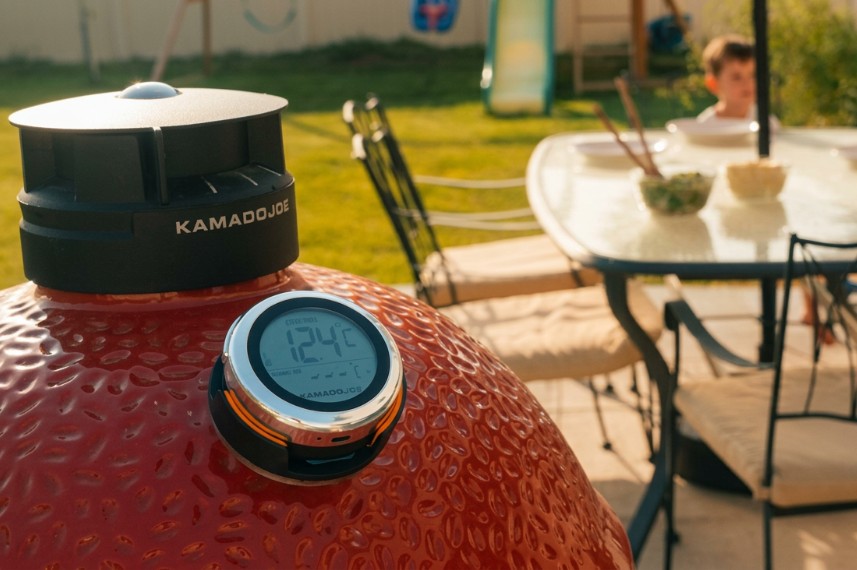
Innovative technology from ChefsTemp removes that manual guesswork completely. The ProTemp S1 Smart Grill Gauge instantly upgrades any standard kettle into an advanced smart cooker. This handy device gives everyday cooks true commercial-grade accuracy. You easily gain remote monitoring, real-time data, and automatic airflow control. Equip your smoker with ChefsTemp today and completely dominate your next family barbecue.
Part 6. FAQs about Grill Temperatures
Q: What are grill temperatures?
Grill temperatures can be thought of as the particular local climate confined within your cooking space. It has a huge, variable range. A tough pork shoulder is slowly brought to tenderness over 12 long hours at 225°F. On the other side, a thick ribeye is seared in minutes by a raging 650°F heat. The precise way your meal behaves on the grates depends on the temperature.
Q: Why do grill temperatures matter?
The grill determines the entire meal’s temperature. Heat the fire too much. You get a cold, dangerous center and a highly burned outside. Keep it too cool. The meat turns into shoe leather as it slowly dries. Dinner is safe to eat when the precise goal temperature is met. It also creates that delicious crust that everyone fights over.
Q: How do I measure the temperature of my grill?
Forget the cheap, factory-dialed stamp on the lid. It only measures the hot air pooling up near the roof. Your food sits lower on the heavy metal. You need a digital probe resting directly next to the meat. Upgrading to a smart tool like the ProTemp S1 puts commercial platinum sensors to work right where they count.
Q: How to tell if a grill is hot enough?
Old-school pitmasters rely on the classic hand test. Hold your bare palm roughly five inches above the grates. If you have to yank it away in two seconds, that fire is screaming hot. It works well in a pinch. Still, guessing ruins expensive grocery runs. Rely on a calibrated digital thermometer to verify the real numbers.
Q: Why does my grill temperature keep fluctuating?
Live fires are completely at the mercy of their environment. Opening the heavy lid constantly lets trapped heat escape. Cheap charcoal burns in unpredictable, frustrating waves. A sudden gust of wind acts exactly like a blacksmith’s bellows. It feeds the coals unexpected blasts of oxygen that instantly spike the heat.
Q: Does the weather affect the temperature of my charcoal grill?
Yes, cold winter rain pulls heat straight through thin metal kettles. Freezing winds force you to burn twice as much fuel to hold a steady baseline. You spend all afternoon unthinkingly adjusting the vents. Hooking up an automatic blower fan takes over that job and stops those endless temperature swings.
Descubra otros productos ChefsTemp
Descubre más recetas y aprende trucos de cocina uniéndote a nuestra familia de cocina en Facebook.
También te puede interesar: