Grill Lid Thermometer Accuracy: The Real Temperature Gap and How to Close It
Your grill’s built-in thermometer is lying to you – and it’s costing you food.
When you cook raw meat over coals, a few degrees can make all the difference. You either get juicy ribs or dry leather. The core problem is placement: dome dials sit 6–8 inches above the cooking grate, measuring trapped ceiling air rather than the heat your food actually experiences. It rarely measures the heat exactly where the food sits.
Cet écart explique pourquoi thermomètres pour couvercles de barbecue constantly drift, lag, or disagree with the actual grate temperature. Wind, cold weather, or a lopsided charcoal fire make the problem worse. The Hearth, Patio & Barbecue Association notes that 80% of North American adults own a grill or smoker. Yet the same industry data show that temperature control remains the leading cause of overcooked or unsafe backyard BBQs.
You need steady grate heat and safe internal meat temps. This guide explains how these built-in lid dials fail and how to avoid the most common, expensive BBQ mistakes.
Table des matières
Partie 1. Why Grill Lid Thermometers Are Inaccurate: 6 Root Causes
A built-in lid dial looks official. It isn’t always helpful. Most factory gauges use a bimetallic coil — two metals bonded together that twist at different expansion rates as temperature rises.
The design dates to the 19th century. It has a typical accuracy tolerance of ±5–10°F under controlled lab conditions, and significantly worse in a live fire environment. That design can work in a clean oven. A grill is messier – smoke, grease, wind, and uneven fire all get a vote.

C'est généralement là que les problèmes commencent :
- L'emplacement n'est pas adapté à la nourriture. Heat rises, so the hottest air often sits near the top of the lid. Your steaks and ribs sit at the grill level. Independent tests and user measurements consistently document dome dial readings running 50–100°F above actual grate temperature during standard low-and-slow cooks.
- Calibration drift is permanent in most factory dials. After 20–30 heat cycles, the bimetallic spring’s elasticity degrades. Many factory units have no calibration screw; those that do rarely hold adjustment after another 10 cooks. Once a dial wanders, it wanders for good.
- La fumée et la graisse ralentissent tout. Inside a grill, vaporized fat forms a sticky layer everywhere. Vaporized cooking fat deposits a progressive creosote layer on the probe stem – a 1mm coating is enough to add 8–15 seconds of thermal lag per temperature reading, making the dial’s response effectively useless during active fire management.
- La météo perturbe la lecture. Un vent froid peut refroidir le couvercle métallique pendant que le feu crépite. La pluie refroidit le dôme. La neige le refroidit encore plus vite. Le thermomètre du couvercle étant fixé à celui-ci, il est influencé par la température extérieure. Il peut donc afficher une température inférieure à celle réelle des braises.
- The sensor sits outside the primary convection path. Les barbecues sont ventilés. Selon la position de la ventilation et la forme du couvercle, le flux d'air le plus chaud peut passer à côté des aliments et s'échapper par l'orifice d'évacuation sans atteindre la tige du thermomètre. Le cadran finit par mesurer la température dans une zone moins chaude du dôme.
- La grille présente des zones chaudes et des zones froides. Le charbon et le bois ne brûlent pas comme sur un brûleur plat. Un côté peut chauffer davantage, tandis que le coin arrière peut rester froid. Un simple chiffre sur le dôme ne donne jamais une image complète. Il ne peut pas vous avertir si le côté gauche de votre grille est froid alors que le côté droit est brûlant.
A factory dome dial is not worthless – it tells you whether the fire is building or dying. What it cannot do is give you the ±5°F precision that separates a properly rendered brisket flat from a dry one. Use it as a rough sanity check, nothing more.
Bimetallic Coil vs. Platinum RTD: How the Sensors Compare
| Spec | Factory Bimetallic Coil | Platinum RTD (ProTemp S1) |
|---|---|---|
| Typical accuracy | ±5–10°F | ±0.9°F (±0.5°C) |
| Max rated temperature | ~600°F | 1,000°F |
| Drift after 30+ cycles | Significant; often uncorrectable | Negligible; self-stable |
| Response lag (creosote-coated) | 60–90 sec | Not applicable (sealed stem) |
| Calibration requirement | Periodic; often not possible | None required |
| Wireless connectivity | None | WiFi + Bluetooth dual-band |
Partie 2. What the ProTemp S1 Actually Does Differently
Before listing what the S1 does well, one limitation matters: the temperature control feature requires the separately sold Breezo V2 fan. The ProTemp S1 hub alone is a monitoring and alerting device. Buyers who expect plug-and-play automated fire control need to budget for both components
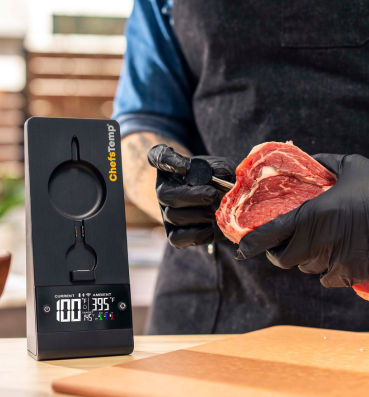
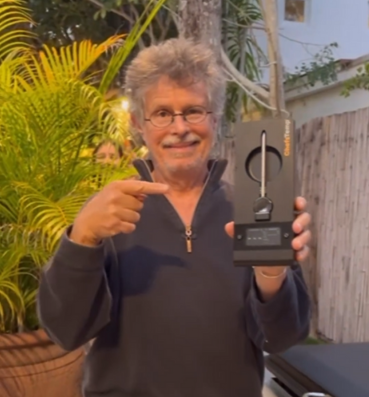
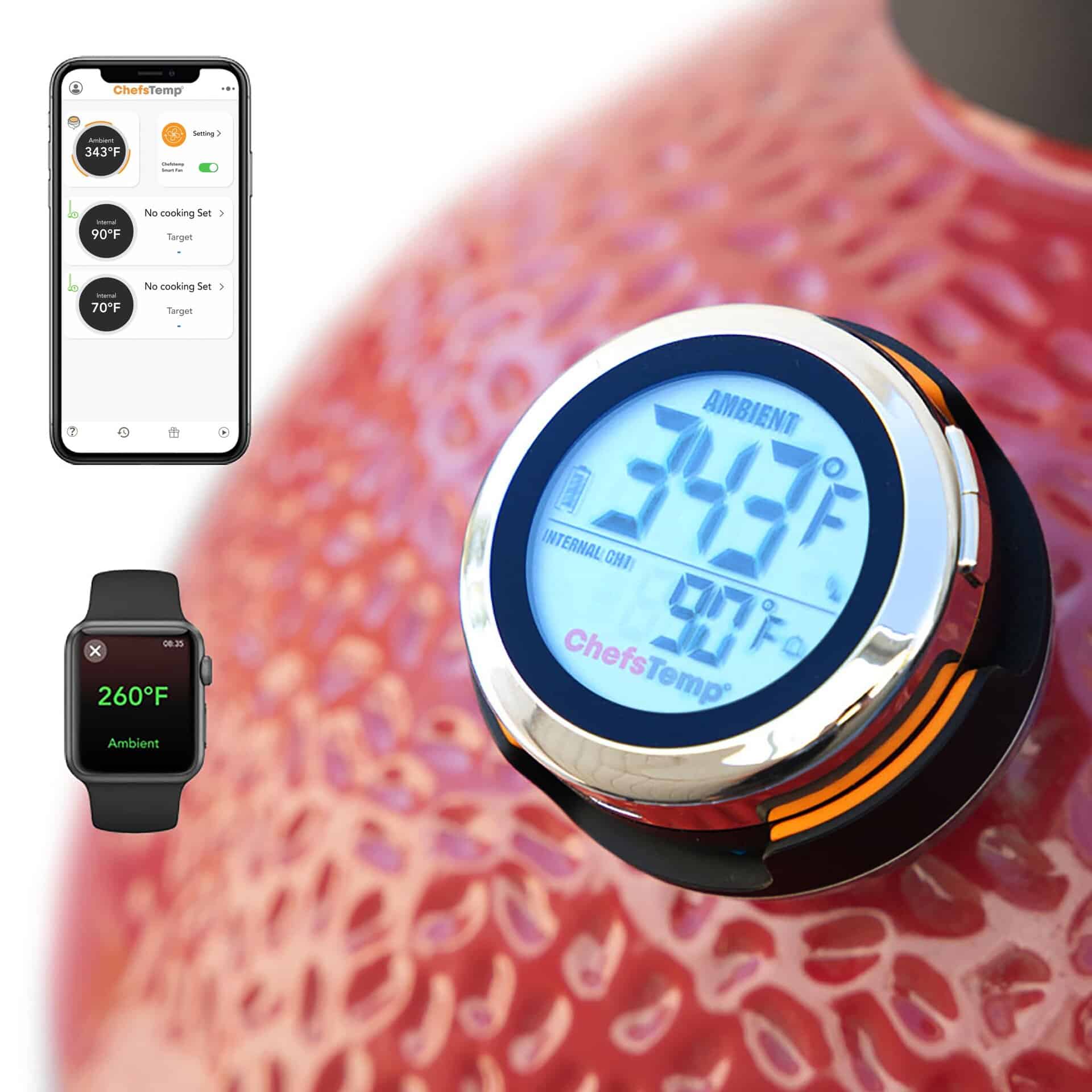
Vous pouvez facilement remplacer un cadran d'origine peu fiable par une technologie intelligente moderne. Aujourd'hui, de nombreux chefs de barbecue retirent leurs anciens indicateurs et installent un modèle spécialisé. ProTemp S1, centre de mesure et thermomètre intelligent breveté pour barbecue. Cette mise à niveau vous offre un contrôle total sur le feu et vos aliments.

La différence réside dans la manière dont l'outil mesure la chaleur et communique avec vous :
Platinum RTD Sensor: What the ±0.9°F Rating Means in Practice
The ProTemp S1 uses a platinum RTD (Resistance Temperature Detector) sensor rated at ±0.9°F accuracy. Unlike bimetallic coils, platinum RTD sensors maintain accuracy to ±0.1°C across the full temperature range and show negligible drift after years of thermal cycling – the same sensor class used in laboratory and industrial process control.
Platinum offers incredible stability at extreme temperatures. Because this unit accurately reads ambient temperatures up to 1000°F, you can easily hold a steady 225°F for low-and-slow BBQ. Later, you can crank the heat for high-temp searing or backyard pizza baking without ever destroying the sensor.
WiFi + Bluetooth Dual Connectivity: Why Both Channels Matter
Sitting next to a hot smoker all day gets exhausting. The ProTemp S1 solves this with built-in Wi-Fi and Bluetooth connectivity. WiFi mode delivers alerts over your home network with unlimited range. If the router goes offline mid-cook, the S1 automatically falls back to Bluetooth — covering roughly 100 meters — so an overnight brisket is never left unmonitored because of a router reboot. You can step off the deck, entertain guests indoors, or even run to the store while still perfectly nailing a brisket.
Tracking Multiple Meats with Wireless Probes
Lors de grands barbecues familiaux, il est souvent nécessaire de surveiller la cuisson de plusieurs protéines simultanément. Un thermomètre numérique de haute qualité, équipé de plusieurs sondes, simplifie cette tâche. Le ProTemp S1 prend en charge jusqu'à 4 sondes sans fil. Vous pouvez ainsi suivre la cuisson d'une épaule de porc, de deux travers de porc et d'un poulet entier en même temps.
Automating Airflow with the Breezo Fan
La maîtrise du feu représente un autre défi. La gestion manuelle des aérations à charbon exige une surveillance constante. Cependant, le ProTemp S1 s'associe parfaitement au ventilateur Breezo (en option). Lorsque la température du fumoir baisse, ce ventilateur injecte automatiquement de l'oxygène dans la chambre de combustion. Ce contrôle automatique du flux d'air maintient votre fumoir à la température souhaitée sans aucun réglage manuel des aérations.
Drop-In Installation: No Wiring, No Drilling, No Adapters (With One Caveat)
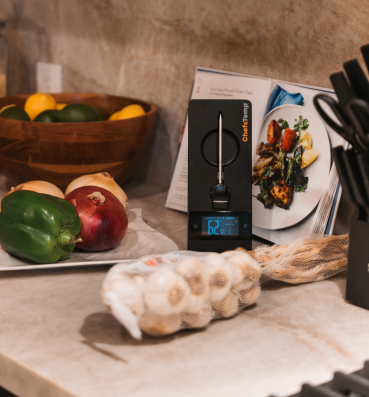
Finally, this system eliminates the clutter that ruins a good cooking experience. Messy wires often melt on hot grates and tangle easily. Because the ProTemp S1 is a 100% wireless hub, it simply mounts right into the empty hole on your lid, replacing your broken dial perfectly. This eliminates external power cables and probe wires from the grill exterior entirely.
One installation caveat: ProTemp S1 ships in three stem versions (Universal 7.8mm, BGE-specific 4.1mm, and short-stem 1.5-inch). Verify your grill’s gauge port diameter before ordering — the wrong stem version will not seat correctly.
En fin de compte, lisez la suite pour Comment choisir le meilleur thermomètre à viande. Il transformera votre routine culinaire quotidienne. Ses outils de précision vous garantissent des blancs de poulet secs et trop cuits, ainsi que des côtes levées dures et insuffisamment cuites. Vous obtiendrez des résultats impeccables et constants chaque week-end.
Partie 3. How to Replace a Grill Lid Thermometer: Step-by-Step (Under 5 Minutes)
If you want better BBQ, start by throwing out the factory dial. Installing the best grill lid thermometer takes less than five minutes. For almost every standard grill on the market, you won’t need to fire up a drill or make any advanced modifications. Tools required: one pair of pliers or a 1-inch wrench, one damp cloth, and the ChefsTemp app (free, iOS and Android).
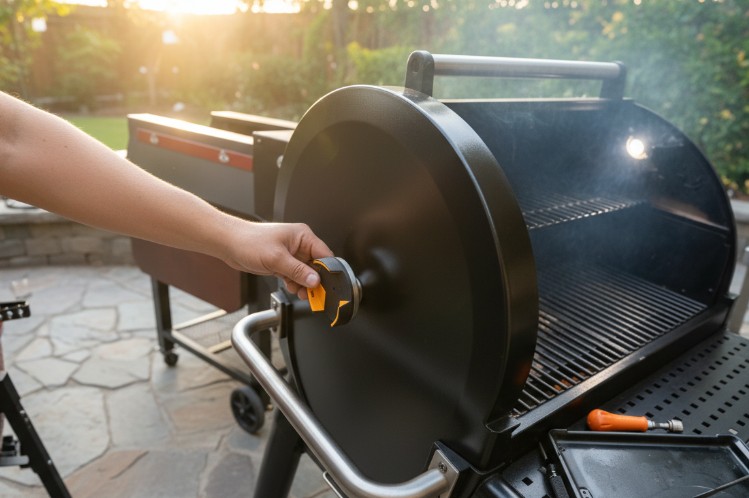
Le processus est incroyablement simple. Voici comment remplacer votre ancien indicateur par un hub intelligent moderne :
- Retirez l'ancien cadran : Commencez par ouvrir le couvercle du barbecue et regardez derrière le dôme du thermomètre d'origine. Vous verrez un écrou qui maintient l'ancien thermomètre en place. Pour le desserrer et le dévisser, utilisez une pince ou une clé plate. Une fois l'écrou retiré, retirez l'ancien thermomètre, désormais imprécis, de son logement par l'extérieur.
- Nettoyer la zone de montage : Over time, heavy smoke and vaporized fat build up on the inside of the lid. Wipe the mounting hole area with a cloth dampened in dish soap solution. Creosote residue around the port will prevent a flush seat and can cause air leaks that throw off ambient temperature readings.
- Installer le Nouveau Moyeu: Next, insert your ProTemp S1 hub into the existing hole, then slide the threaded stem into place. Reach under the lid and hand-tighten the provided locking nut. Hand-tighten only — no tools. Over-tightening the locking nut on a ceramic (BGE/Kamado Joe) lid can hairline-crack the ceramic around the port. On metal lids, finger-tight creates sufficient compression seal.
- Connectez l'application : Enfin, sortez votre smartphone. Téléchargez l'application ChefsTemp et suivez les instructions à l'écran pour connecter votre nouvel appareil via Bluetooth ou Wi-Fi.
C'est tout ce qu'il faut. En quelques minutes seulement, vous avez transformé avec succès un simple barbecue de jardin en une machine de barbecue de précision télécommandée.
Partie 4. Four Techniques That Make Precision Thermometry Actually Work
La technologie vous aide certes à atteindre la température souhaitée, mais une bonne technique reste la base d'un barbecue réussi. Vous pouvez avoir le meilleur thermomètre connecté pour couvercle de barbecue au monde, mais si votre feu est mal allumé, vos aliments en pâtiront. Voici quatre habitudes essentielles à adopter lorsque vous utilisez votre barbecue au charbon de bois amélioré :
- Construisez un feu à deux zones : Two-zone fire management is the foundational technique that makes temperature control meaningful. Place all your lit coals in a tight pile on one side of the grill. Leave the other side empty. This simple setup gives you two distinct heat zones: a hot, direct-searing zone and a cooler, indirect-roasting zone. You can easily move the meat away from the fire to save it from burning.
- Vérifiez vos coupes fines : Vos sondes sans fil permettent de cuire les parties les plus épaisses de votre poitrine de bœuf ou de votre épaule de porc, tandis que les parties plus fines cuisent plus rapidement. Ayez toujours un thermomètre de cuisson instantané fiable sur vous pour vérifier rapidement la cuisson avant de servir. Contrôler la cuisson des bords, des muscles plus fins et des petites pièces comme les ailes de poulet vous assure que rien ne sera sec ou trop cuit.
- A USDA safe internal temperature reference: Poultry 165°F / Ground meats 160°F / Whole beef & pork steaks 145°F (3-min rest) / Fish 145°F.
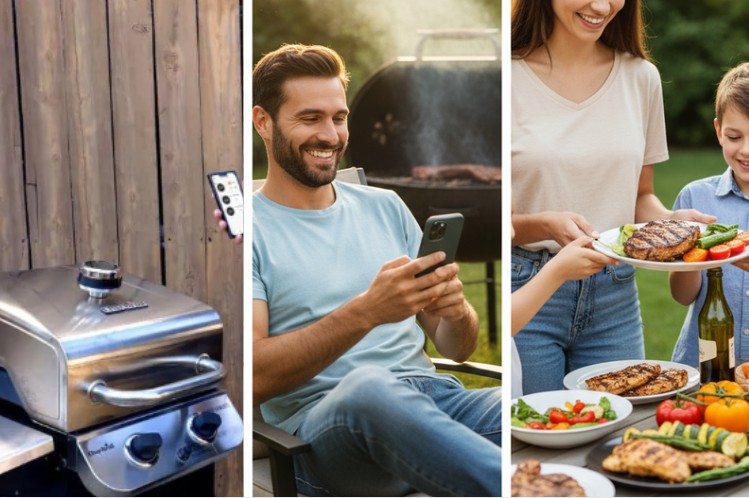
- Gardez le couvercle du gril fermé : Every time you open it, precious heat and flavorful smoke escape. Trust the ProTemp S1 app to tell you what is happening inside the cooker. As the old BBQ saying goes: “If you are looking, you aren’t cooking.” Every lid opening drops grate temperature by 30–50°F and requires 8–12 minutes to fully recover on a charcoal grill — time when your cook is stalled.
- Mesurer au niveau de la grille : Il est essentiel de connaître la température précise à laquelle les aliments sont placés. Connectez votre hub intelligent à une sonde de thermomètre alimentaire numérique spécialement conçue pour la grille de cuisson. Le contrôle de la température de la grille, en plus de celle à cœur de la viande, garantit des conditions de cuisson optimales et sûres.
Des méthodes éprouvées et des thermomètres à viande intelligents garantissent la préservation des saveurs. Ils vous aident à éviter la cuisson à cœur et à servir systématiquement un barbecue impeccable. Regardez aussi Résultats des tests d'un thermomètre de couvercle bon marché comparés à ceux d'une sonde d'étalonnage professionnelle.
Partie 5. Conclusion
A cheap factory dial can easily ruin an expensive piece of meat. Standard grill lid thermometers cannot withstand bad weather, poor placement, or weak metal coils. Upgrading your setup changes everything. The ProTemp S1 fixes these exact frustrations. It delivers true platinum sensor precision, easy Wi-Fi monitoring, and multi-probe tracking.
A cheap factory dial is the fastest way to ruin an expensive brisket. Upgrading to a thermomètre de cuisine de qualité supérieure ecosystem like the ProTemp S1 replaces analog guesswork with precise thermal data. By eliminating wire clutter and automating airflow, you stop babysitting the pit and start controlling it. Upgrade your hardware, and you secure flawless, repeatable barbecue every single weekend.
Partie 6. FAQ sur les thermomètres pour couvercles de barbecue
Q : Les thermomètres intégrés aux couvercles sont-ils précis ?
No. Independent measurements consistently show factory dome dials reading 50–100°F above actual grate temperature, due to sensor placement 6–8 inches above the cooking surface and the slow response characteristics of bimetallic coils. For reliable pit management, a dedicated grate-level probe is required.
Q : Quel est le thermomètre de barbecue le plus fiable ?
The most reliable grill thermometers use platinum RTD sensors, which maintain accuracy to ±0.9°F across a 32–1,000°F range without calibration drift. Bimetallic coil gauges, the type found in most factory dome dials, degrade measurably after 20–30 heat cycles. For ambient grate monitoring, a platinum RTD hub paired with wireless food probes (such as the ProTemp S1 setup) currently represents the highest available accuracy class for consumer BBQ use.
Q : Les chefs utilisent-ils des thermomètres à viande pour les grillades ?
Yes. Professional cooks rely on calibrated thermometers because internal meat temperature is the only reliable indicator of both food safety and target doneness. Cooking by time or touch cannot account for variable meat thickness, starting temperature, or ambient conditions. The USDA recommends reaching 165°F for poultry, 145°F for whole cuts of beef and pork, and 160°F for ground meats – targets that are only verifiable with a calibrated probe.
Q : Pourquoi les thermomètres des couvercles de barbecue cessent-ils de fonctionner ?
Factory lid thermometers fail through three independent mechanisms:
- Creosote fouling: Grease deposits insulate the probe stem, adding 60–90 seconds of thermal lag.
- Bimetallic fatigue: the metal spring loses elasticity after repeated thermal cycles, causing permanent calibration drift.
- Moisture ingress: Condensation and rain corrode the internal coil, accelerating drift or causing total failure.
None of these failure modes are field-repairable on most factory units.
Q : Qu'est-ce qui fait un bon thermomètre alimentaire numérique ?
A high-quality digital food thermometer should meet four criteria: accuracy of ±1°F or better; response time under 3 seconds; waterproof housing rated IP65 or higher; and a temperature range of at least 32°F to 572°F for standard BBQ use. Wireless connectivity (Bluetooth or WiFi) is valuable for long smoking sessions where leaving the grill unattended is necessary. For ambient pit monitoring specifically, a platinum RTD sensor outperforms thermocouples at the precision and stability levels relevant to low-and-slow cooking.
Q : Can I use the ProTemp S1 without the Breezo fan?
Yes. The ProTemp S1 hub functions as a standalone ambient temperature monitor and wireless probe hub without the Breezo V2 fan. You gain precise dome temperature tracking, up to four wireless meat probe channels, and WiFi/Bluetooth remote alerts. Automated fire control — where the system adjusts your charcoal fire to maintain a target temperature – requires adding the Breezo V2 fan as a separate purchase.
Découvrez les autres produits ChefsTemp

Découvrez plus de recettes et apprenez des astuces de cuisine en rejoignant notre communauté culinaire sur Facebook.
Vous pourriez aussi aimer :