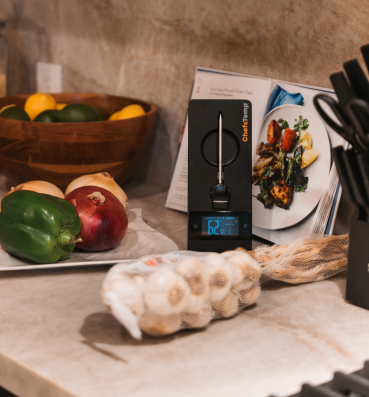
...
Thermomètre numérique de précision pour les cuisines professionnelles et la sécurité alimentaire.
What Is the Fish Internal Temperature

A Definitive Guide for Fish Internal Temperature: Science, Safety, & Perfection

Achieving the perfect cook on fish fillets can be especially tricky, as they can go from perfectly restaurant-grade to dry and chalky in an instant. While most cooks use some visual cue to tell whether the protein is done and safe to eat (and, in the case of seafood, tender), the most reliable method without relying on chance or guesswork is to measure the fish internal temperature. This guide breaks down the ideal temperature for fish and other seafood, explains how to measure it accurately, and offers a comprehensive temperature chart for popular seafood varieties to help you achieve perfect results every time.

Part 1. Safe & Healthy Cooking Temperature for Fish & Seafood

Understanding why the fish cooking temperature is important requires considering both food safety and molecular biology.

The Food Safety Argument

To eliminate harmful bacteria and parasites, the USDA recommends cooking all seafood to a safe fish cooking temperature of 145°F (62.8°C). Hitting this minimum target ensures that common aquatic pathogens are completely destroyed, which is especially critical when serving vulnerable individuals, young children, or the elderly.

The Culinary Reality: Science and Texture

From a culinary standpoint, however, cooking fish to 145°F can cause its delicate, collagen-light muscle fibres to contract aggressively, squeezing out moisture and leaving the meat dry and tough. To preserve moisture, tenderness, and healthy fats, many chefs prefer to remove the seafood from the heat at a slightly lower internal temperature and let carryover cooking finish the job perfectly.

Part 2. How to Check Fish Internal Temperature Accurately

Relying on “feel” or sight is risky when it comes to seafood. Because fish cook extremely fast, you need a precise tool that can give you an immediate reading without damaging the delicate structure of the meat.
When checking betta fish temperature, insert the probe into the thickest part of the fillet. Avoid the bones, as they heat faster than the meat and can give a false reading. For thin fillets, insert the probe horizontally, since inserting from the top may not submerge the sensor deep enough.
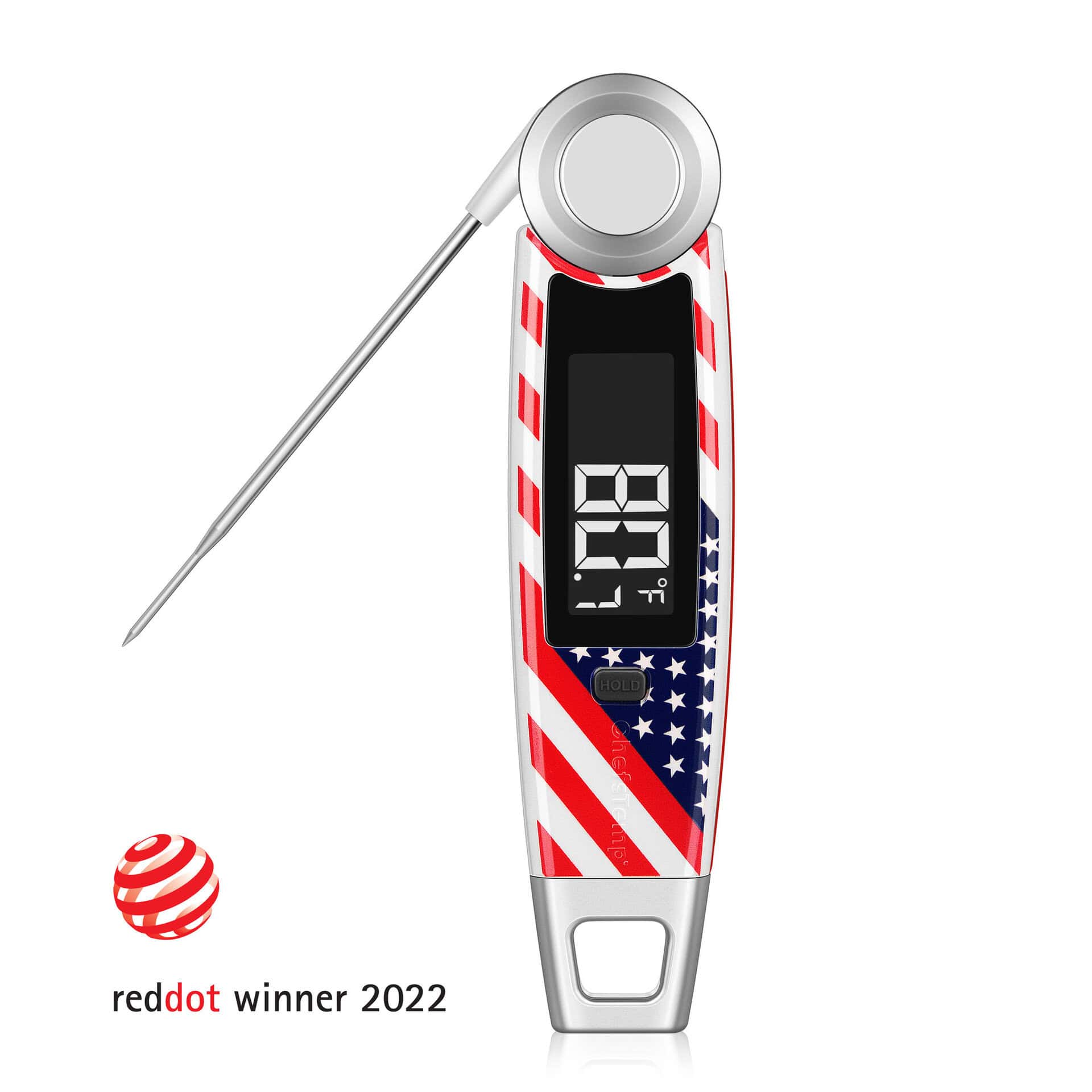
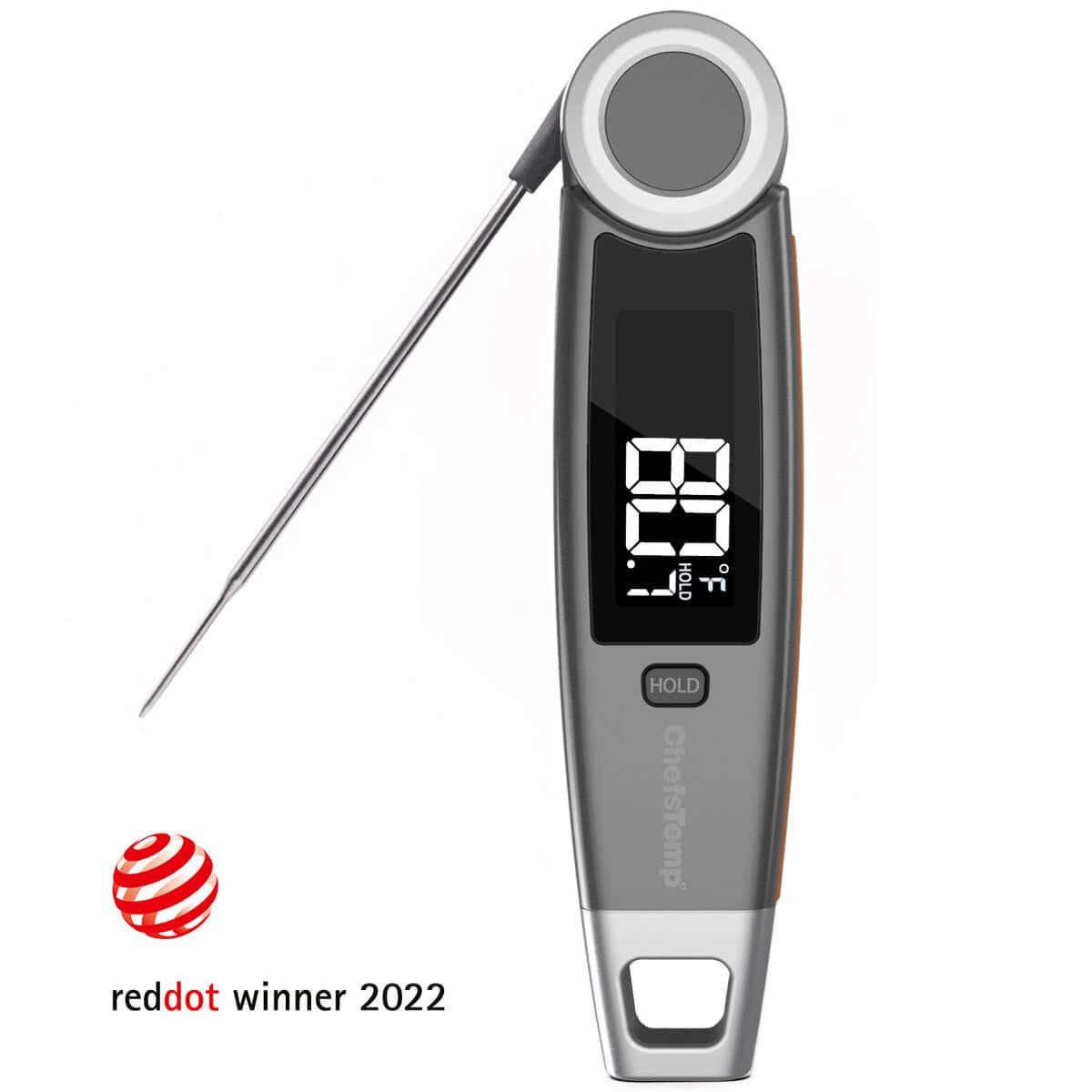
Speed and precision matter. We recommend the ChefsTemp Finaltouch X10. This thermometer excels at handling the challenges of cooking fish.

Key Highlights for Fish Cooking:

  • Rapid-Response and Precision: Fish moves from raw to dry in a minute. The Finaltouch X10 delivers temperature readings in 1 second, so you catch the perfect moment before carryover cooking sets in.
  • Advanced Accuracy: ±0.5°F accuracy makes your cooking tastier and healthier, especially for fish and seafood that require higher temperatures.
  • Flexible Probe Angle: The Finaltouch X10 has a rotating probe (up to 270 degrees). This is essential for fish. You can easily insert the probe horizontally into the side of a fillet or a scallop while it is cooking. You do not have to awkwardly manoeuvre near the heat.
  • Durability and Clarity: With a motion-activated backlit display and a waterproof (IP67) rating, it resists splashes and the messy environment of seafood preparation.
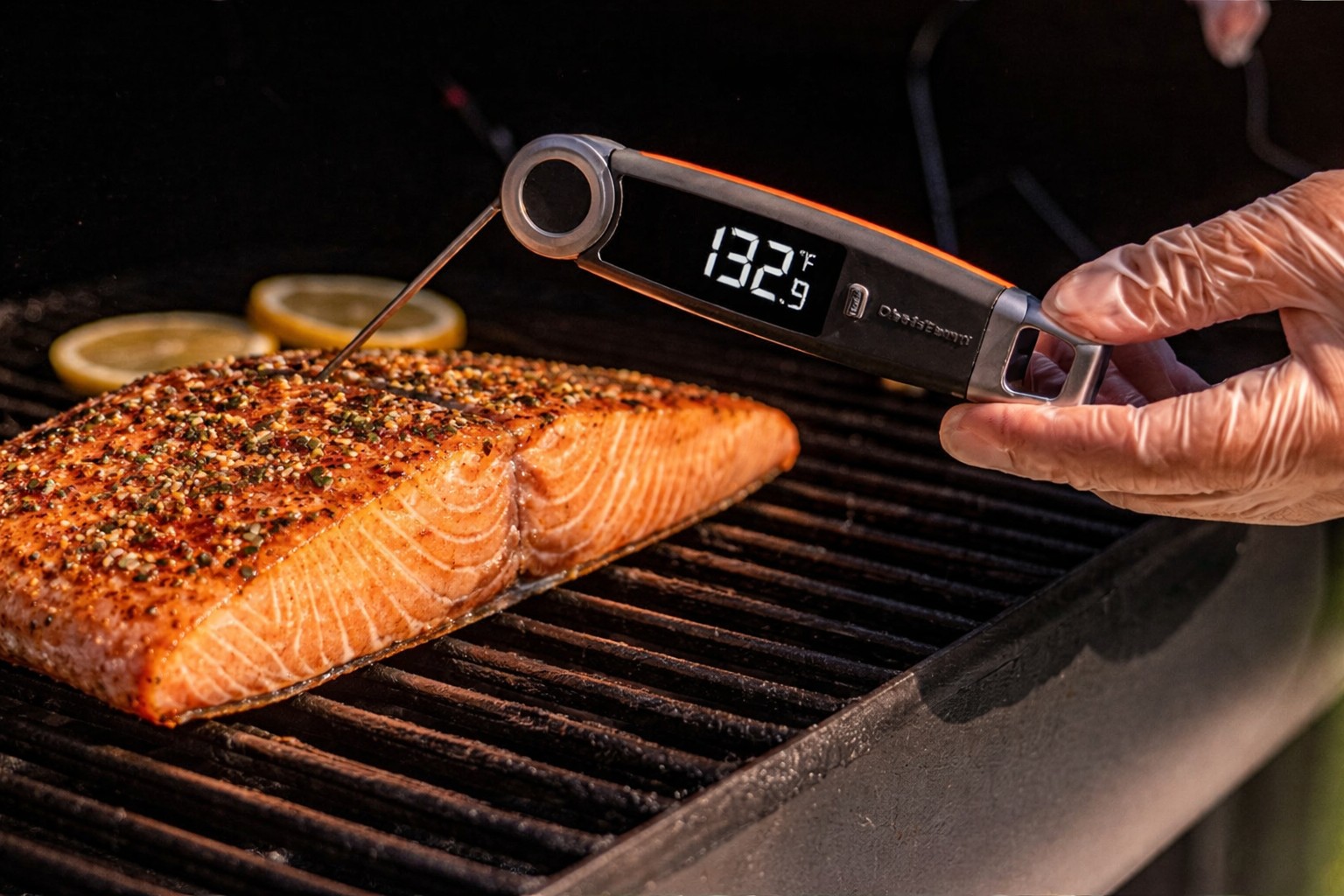
ChefsTemp Finaltouch X10 monitor salmon temperature

Using a fast and accurate thermometer eliminates guesswork and helps you remove fish from the heat at the intended temperature. Besides, check out this fish temperature chart to better help your fish cooking process.

Part 3. The Most Complete Fish Internal Temperature for Cooking

This is the core temperature guide for cooking popular seafood. It balances the official USDA safety guidelines (145°F) with the culinary reality preferred by many chefs (slightly lower temperatures) to optimise texture. When looking at the “Most Suitable Temperature,” the lower number typically reflects a culinary “medium” preference (moist, tender), while the 145°F reflects the USDA minimum standard.

1. Salmon

Salmon is a rich, fatty fish that is particularly prone to drying out if overcooked, as evidenced by the formation of white albumin. It’s one of the most popular fish, known for its distinct flavour and high Omega-3 content, and is available in varieties like King, Sockeye, and Atlantic.
  • Most Suitable Temperature: 125°F to 135°F (52°C to 57°C) for the best texture (145°F for USDA safety).
  • Required Cooking Time: Approximately 10–15 minutes, depending on thickness and method.
  • Methods that can be cooked: Pan-seared, baked, grilled, poached, or slow-roasted.
  • Methods to determine if it is cooked: The centre is still slightly translucent, and the flesh flakes into large sections when gently pressed.
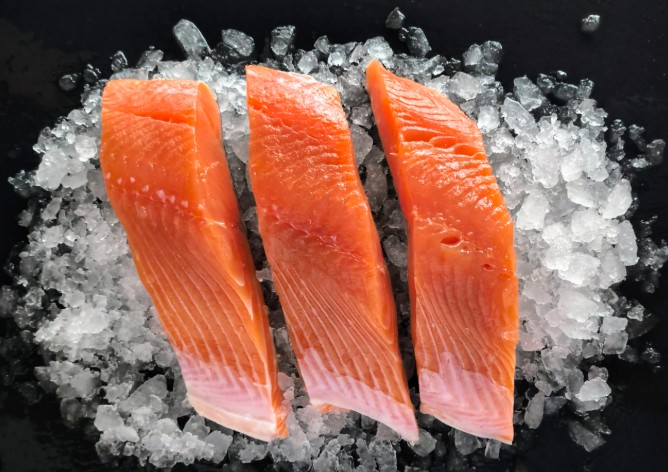
Salmon for cooking

Conseil : Cliquez ici pour en savoir plus smoked salmon temperatures si cela vous intéresse.

2. Halibut

Halibut is a lean whitefish with firm, mild-flavoured meat. Because it is lean, the fish will become dense and chalky very quickly if its temperature exceeds the target. This is a massive flatfish found in cold northern waters, offering thick, firm, flaky white fillets.
  • Most Suitable Temperature: The cooked fish temperature should be 130°F to 135°F (54°C to 57°C) to maintain moisture (145°F for USDA safety).
  • Required Cooking Time: 12–18 minutes, depending on fillet thickness.
  • Methods that can be cooked: Baked, pan-seared, grilled (on a plank or heavy foil), or poached.
  • Methods to determine if it is cooked: The flesh has lost its translucency entirely and resists a light touch but still feels moist rather than dense.
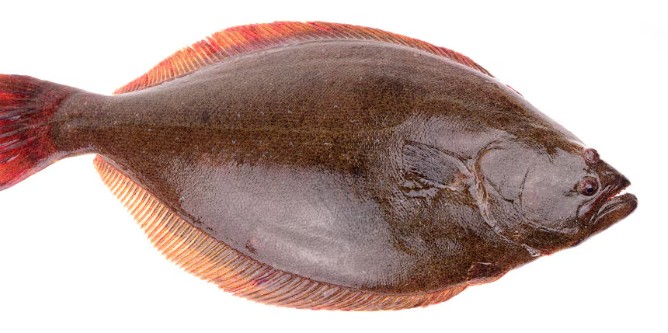
Halibut for cooking

Conseil : Cliquez ici pour en savoir plus Comment griller du flétan si cela vous intéresse.

3. Lobster

Lobster is a luxury item where proper cooking temperature is paramount; undercooked lobster tail can have a dynamic, unpleasant texture, while overcooked lobster becomes rubbery and tough. It’s a clawed crustacean valued for its sweet, rich tail and claw meat.
  • Most Suitable Temperature: 135°F to 140°F (57°C to 60°C) internal temperature in the centre of the tail meat (145°F for USDA safety).
  • Required Cooking Time: Varies greatly by method, generally 1–1.5 minutes per ounce of total weight when boiling.
  • Methods that can be cooked: Steamed, boiled, or grilled (usually split in half first).
  • Methods to determine if it is cooked: The shell is bright red, and the tail meat is completely opaque white throughout (no translucent spots).
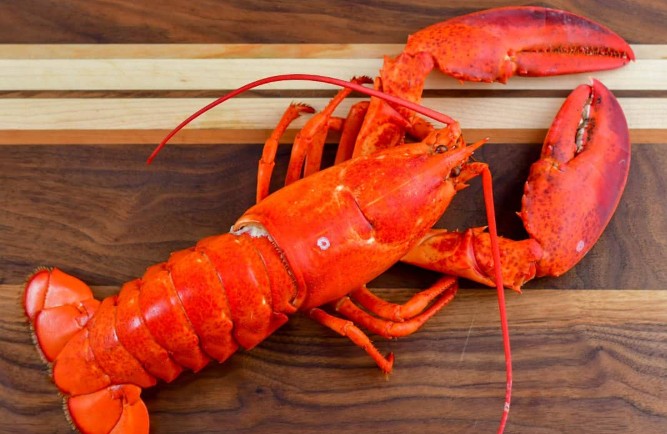
Lobster on table

4. Scallops

Scallops are essentially pure protein muscle and cook incredibly fast; the fish cooking temperature window for a scallop is mere seconds. It is a bivalve mollusc where the edible portion is the adductor muscle, known as “seafood candy” for its sweet flavour and delicate texture.
  • Most Suitable Temperature: 115°F to 120°F (46°C to 49°C) centre temperature to achieve a tender “medium” cook (145°F for USDA safety).
  • Required Cooking Time: Very short, typically 2–3 minutes total for a pan-sear.
  • Methods that can be cooked: Pan-seared (most common), grilled on skewers, or baked.
  • Methods to determine if it is cooked: They are firm to the touch on the exterior, but the centre is slightly warm and opaque, not raw and cold.
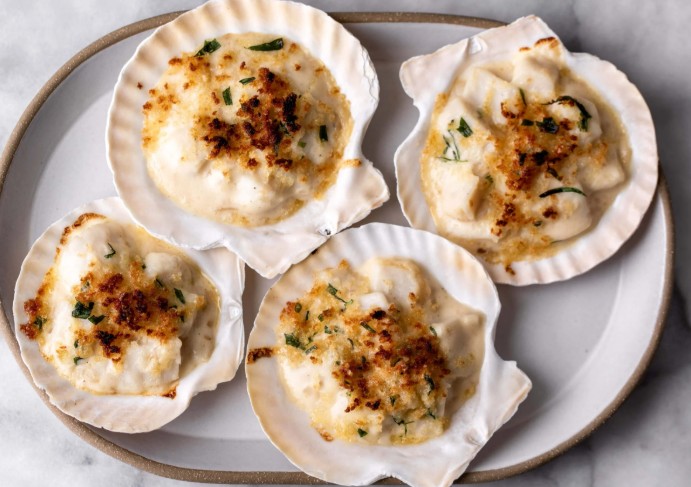
Scallops in the dish

Tip: Click here to read more about a delicious scallop recipe si cela vous intéresse.

5. Crevettes

Like scallops, shrimp are a very lean protein and will turn tough and rubbery if overcooked, which happens rapidly due to their high surface-area-to-volume ratio. This is the most consumed seafood in many countries, available in numerous sizes and varieties.
  • Most Suitable Temperature: 120°F to 125°F (49°C to 52°C) internal temperature for the plumpest texture (145°F for USDA safety).
  • Required Cooking Time: 3–5 minutes, depending on size and method.
  • Methods that can be cooked: Sautéed, grilled, boiled/poached (for shrimp cocktail), or baked.
  • Methods to determine if it is cooked: They have curled into a loose “C” shape and have lost all translucency, turning an opaque pink/white throughout.
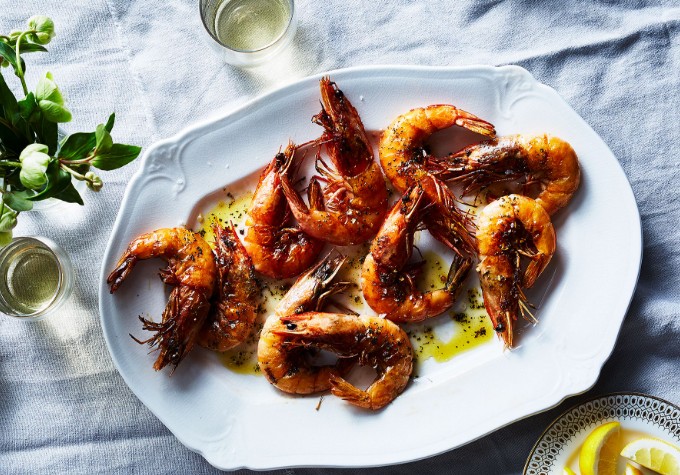
Shrimp in the dish

6. Tuna (Ahi/Bluefin/Yellowfin)

Tuna, especially Ahi (Yellowfin) or Bluefin, is a unique fish with “steak-like” qualities that is often served raw (sushi) or seared (extremely rare). A fast-swimming predatory fish with very warm blood, offering deep red, meaty, and oily flesh.
  • Most Suitable Temperature: 115°F (46°C) internal temperature (cool to warm red centre) for a “rare” to “medium-rare” cook (145°F for USDA safety).
  • Required Cooking Time: Extremely short when searing, often only 1–2 minutes per side over very high heat.
  • Methods that can be cooked: Pan-seared or grilled (on high heat).
  • Methods to determine if it is cooked: The exterior is seared grey/brown, while the centre remains distinct, warm red or dark pink.
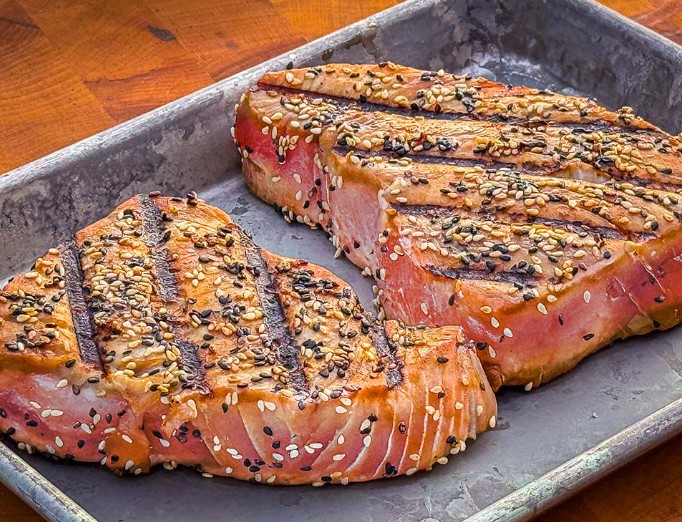
Cooked tuna

Conseil : Cliquez ici pour en savoir plus sur ideal temp for tuna steak si cela vous intéresse.

7. Cod

Cod is the prototypical “flaky whitefish” and is more forgiving than lean fish like halibut, though it still suffers if severely overcooked. It’s classic Atlantic and Pacific cold-water whitefish, valued for its mild flavour and large, tender flakes.
  • Most Suitable Temperature: the cod’s internal temperature should be between 130°F and 135°F (54°C to 57°C) for the most tender flakes (145°F for USDA safety).
  • Required Cooking Time: 10–15 minutes, depending on thickness.
  • Meat can be cooked using the following methods: baking, pan-frying/battering, poaching, or searing.
  • Methods to determine if it is cooked: check that it has turned completely opaque and can be broken apart into large, distinct flakes with gentle pressure.
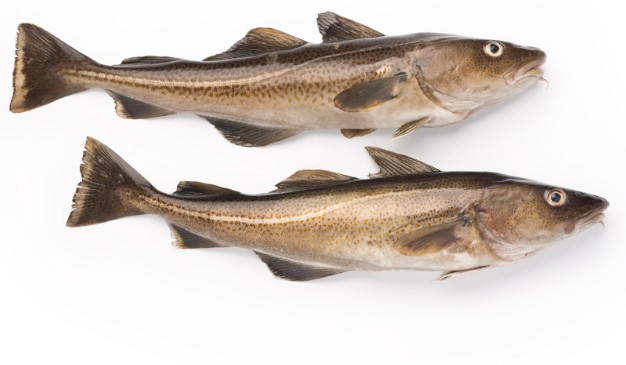
Cod's temperature

Part 4. FAQs of Fish Cooking Temperature

What temperature should fish be cooked to?

The ideal cooking temperature for fish depends on the type of fish and your preferred texture. However, for food safety, the USDA recommends a minimum internal temperature of 145°F (63°C).
At this temperature, the flesh is opaque and separates easily with a fork. Many chefs and home cooks, however, prefer lower temperatures for certain species to maintain moisture and a buttery texture.

How to know if the fish is fully cooked?

The simple answer is yes, but for most chefs and seafood enthusiasts, 135°F (57°C) is the “sweet spot” for perfectly cooked fish. The determination of whether it is “done” really comes down to whether you are focusing on culinary texture or on USDA freezing/food safety guidelines. Thus, using an accurate instant thermometer is necessary to monitor the fish cooked temperature.

Do fish need to rest after cooking?

Yes, fish does benefit from resting, but the process is much shorter and more delicate than resting a thick steak or a roast. Because fish have very little connective tissue and lose heat rapidly, the “rules” for resting are slightly different.

Conclusion

Creating an ideal fish dish involves following strict safety standards and also understanding the fish’s molecular structure. Combining these with the ChefsTemp Finaltouch X10 and understanding the ideal fish internal temperatures for the different fish species allows for no overcooked fish. Repeated high-quality seafood is about following the correct data and achieving the ideal fish temperatures.
Laissez un commentaire

Découvrez les autres produits ChefsTemp

Thermomètre numérique à viande pour une mesure précise de la température de cuisson.
Thermomètre à viande à lecture instantanée ChefsTemp Finaltouch X10, un modèle professionnel de haute qualité

$69.99

(140 avis client)
1. Thermomètre à viande intelligent sans fil avec contrôle par application pour une cuisson précise.
ProTemp 2 Plus – Thermomètre à viande sans fil à sonde à aiguille avec contrôleur de température

$149.99 $267.99Plage de prix : $149.99 à $267.99

(3 avis client)
Thermomètre à viande numérique précis avec application de contrôle sans fil pour une cuisson et des grillades précises.
ProTemp S1, centre de mesure et thermomètre intelligent breveté pour barbecue

$99.99 $117.98Plage de prix : $99.99 à $117.98

(21 avis client)
Retour en haut