The Ultimate Guide to Pie Internal Temperature: Stop Guessing, Start Measuring
Pie Internal Temperature
It is frustrating to take a gorgeous golden pie out of the oven, cut it, and discover the inside is watery and underbaked. We tend to use visual signals, such as a well-browned crust, to assess doneness, while ignoring the thermal processes occurring inside. Fundamentally, baking is an accurate, heat-based chemical reaction. Although establishing the correct pie-baking temperature is key, surface appearance can be misleading. To achieve correct starch thickening, impeccable texture, and complete food safety, there is only one scientifically sure way: measuring the pie internal temperature precisely.
Sommario
Why You Should Stop Relying on the “Golden Crust” Illusion
I would take pies out of the oven as soon as the crust appeared golden brown, and cut into a watery mess hours later. The following is the ugly truth: the oven’s heat penetrates the exterior. A light pastry crust will always bake significantly more quickly than a thick, heavy pastry.
When such crust is nearly hot enough to make your mouth water, there may be barely anything warm in the middle of it. Baking itself depends entirely on the ability to achieve specific thermal conditions that trigger the desired chemical reactions, such as starch gelatinization to thicken fruit juices or protein coagulation to form custards. Such a lovely exterior tells us nothing whatever about these interior responses. The only way I can be certain that the filling has actually transformed is by testing it with a digital thermometer.
The Ultimate Chart: Target Temperatures by Pie Type
I have a quick reference list in my kitchen before I get into the details of any of my recipes. It describes the precise pie internal temperature needed by various fillings and the real science of why that particular number is important.
Pie Internal Temperature Quick Reference Chart
| Pie Category | Specific Pie Types | Target Internal Temperature | Key Scientific Reason |
| Torte di frutta | Apple, Cherry, Berry | 195°F – 200°F (90°C – 93°C) | Starch gelatinization (thickening) |
| Custard Pies | Pumpkin, Sweet Potato | 170°F – 175°F (77°C – 79°C) | Egg protein coagulation |
| High-Sugar Pies | Pecan, Maple | 200°F (93°C) | Sugar/protein setting |
| Savory Pies | Chicken Pot Pie, Meat | 165°F (74°C) | USDA food safety standard |
| Cheesecake Pies | Ricotta, Cream Cheese | 150°F (65°C) | Preventing cracks from over-coagulation |
| Meringue | Lemon Meringue (Topping) | 160°F (71°C) | Safe egg white consumption |
| Egg-Based Savory | Quiche | 165°F (74°C) | Egg and ingredient food safety |
Apple Pie Internal Temperature (The Starch Magic)
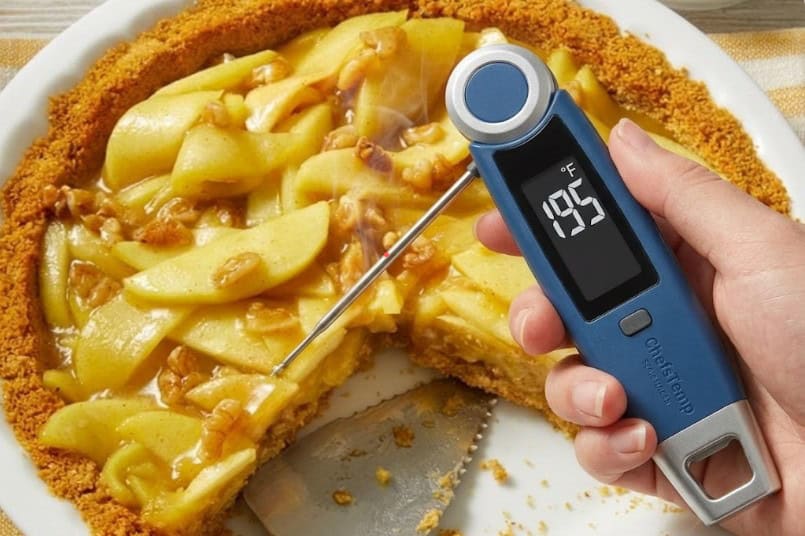
Apple Pie Internal Temperature
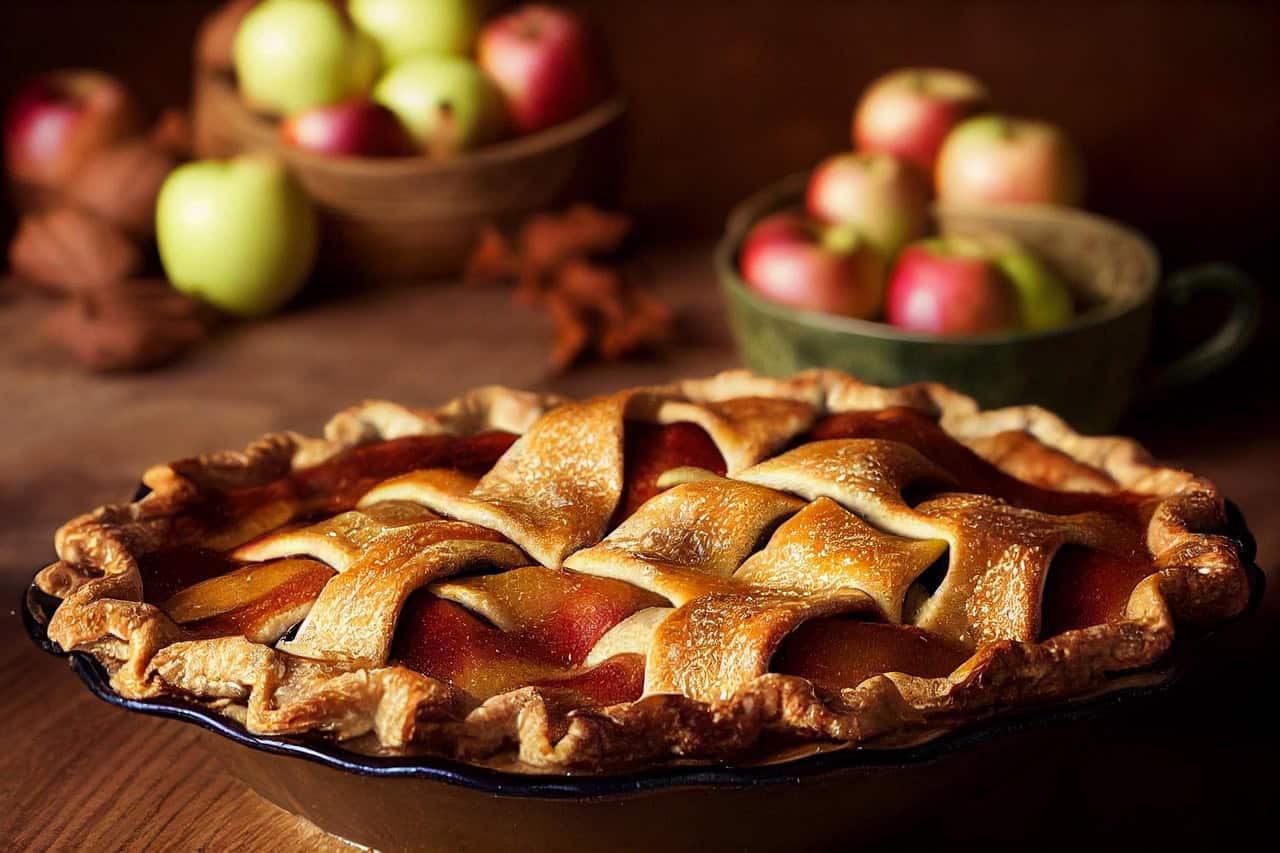
I would also receive the dreaded fruit soup whenever I divided an apple pie, regardless of how long I had baked it. It is not just about turning it any longer in the oven; it is about reaching the specific apple pie internal temperature of 195°F to 200°F (90°C – 93°C).
This is what really occurs beneath that crust: the thickeners we depend on, be it flour, cornstarch, or tapioca, will not absorb liquid all by themselves. They need to be activated by a process known as starch gelatinization. Until that almost-boiling point, the starch granules remain inactive. However, when the center reaches 195 F, the granules explode and absorb the surrounding fruit juices, forming a thick, shiny syrup in a flash. Taking the pie out at 180°F results in a wet mess. This particular temperature helps me keep the bottom crust dry, and once I notice that number, I take it out.
Pumpkin Pie Internal Temperature (Avoiding the Cracks)
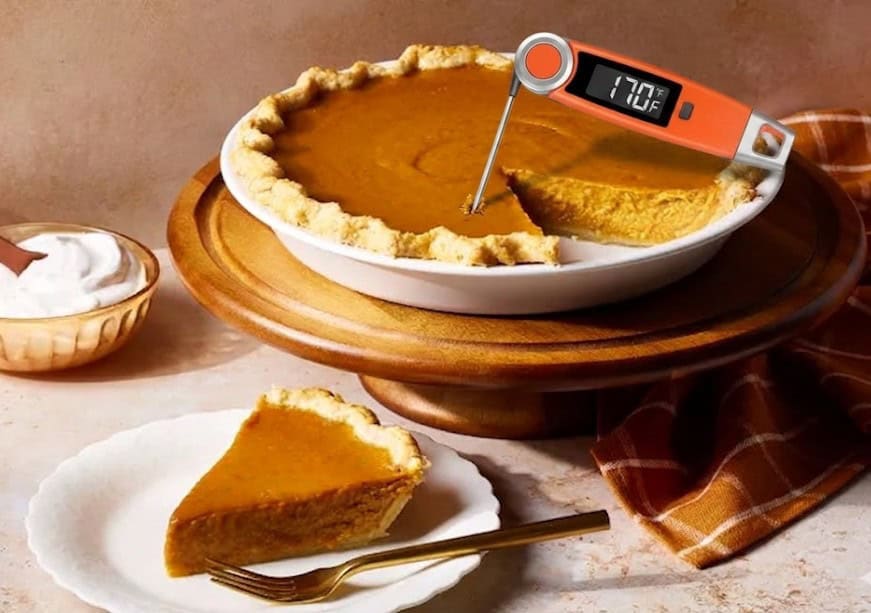
Pumpkin Pie Internal Temperature
Pumpkin pie is really a baked custard, and by thinking of it as such, I have totally eliminated my holiday baking panic. The optimal temperature for pumpkin pie is 170°F to 175°F (77°C to 79°C).
The egg proteins form a stable, smooth network at this particular range. But when I let the temperature rise above 180°F, all is lost. Proteins tighten and curdle excessively, squeezing out the moisture (resulting in weeping) and tearing apart, leaving a huge, unsightly fissure running down the middle of the pie. I have been relying on the jiggle test, which is highly subjective and inconsistent. The carryover cooking prevents burning by removing the bake at 170°F, leaving the rest of the cooking to the pie while it cools on the counter. This ensures the perfect and smooth texture with no cracks whatsoever.
Chicken Pot Pie Internal Temperature (Food Safety First)
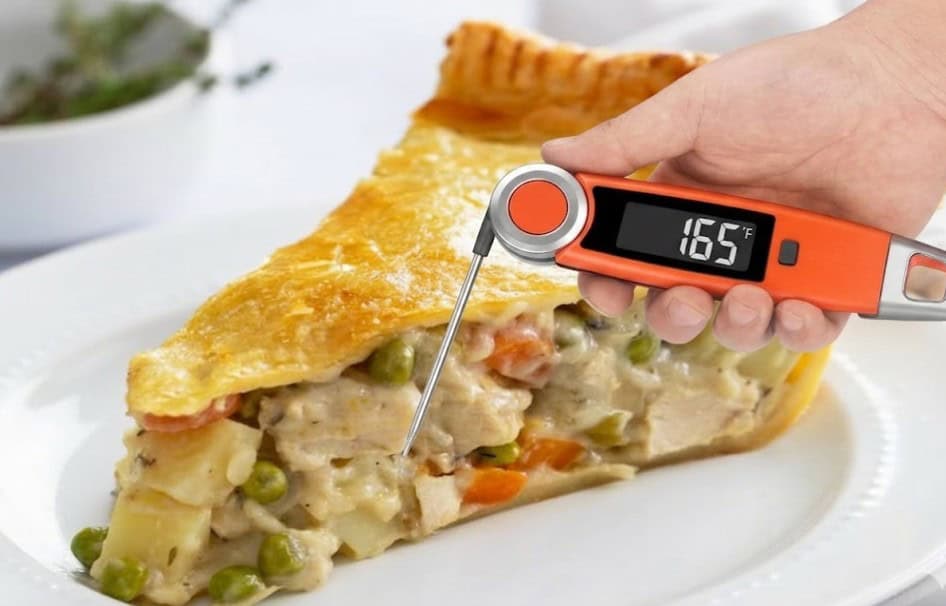
Chicken Pot Pie Internal Temperature
In the case of meat, I do not play guess. The minimum internal temperature required by chicken pot pie should be 165°F (74°C).
Pies are very thick. Be it baking one or reheating a thick, frozen meat pie, they are notorious for getting cold spots. An unsafe interior can be so easily disguised by a piping-hot, browned crust. The safe minimum internal temperature standards of the USDA suggest that all poultry mixtures should be heated to 165°F , which immediately kills dangerous bacteria such as Salmonella. My thermometer is always thrust right into the very center–the thickest, deepest part of the filling. I have found out the unpleasant experience of a cold center spoiling an otherwise pleasant meal. Reaching this number is not merely about making the gravy rich and bubbly, but it is the minimum standard to keep my family and guests safe.
Internal Temperature for Pecan Pie (The Sugar Factor)
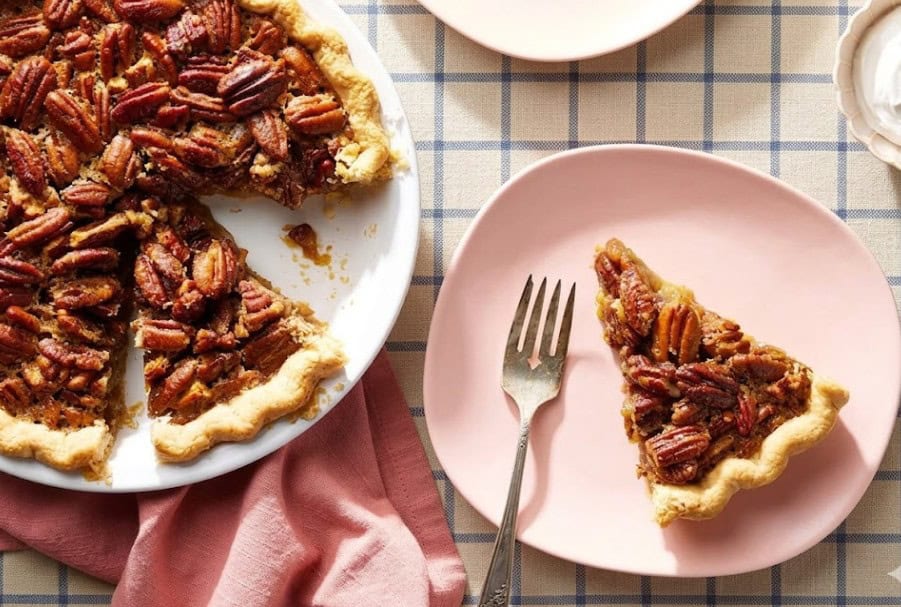
Torta di noci pecan
Most of the time, I could not understand why my pecan pie filling would dribble all over the plate when my pumpkin pies would set up well, both of which use eggs. It all boils down to the sugar. Pecan pie has a surprisingly high target internal temperature of 200°F (93°C).
It is made with corn syrup and dissolved sugars, which physically interfere with the egg proteins, preventing them from bonding easily. Due to the high sugar concentration, the proteins require much more heat energy to coagulate and solidify. When I draw a pecan pie out at 170°F, the sugar syrup has not reached the point where it will solidify when it cools. Waiting until the center reaches 200°F exactly ensures that the filling cools into a just-sliceable, gooey, yet stable consistency without turning into a liquid puddle.
The “Probe Hole” Dilemma (And How to Fix It)
I fully understand why so many bakers are unwilling to use a thermometer. You have spent hours carefully stitching a lovely lattice crust or flattening a luscious pumpkin stuffing, the very last thing you want to do is to cut a colossal, hideous hole in your masterpiece. To add to that, opening the oven door until a slow thermometer reaches the right temperature lets valuable heat escape, and in a moment the sensitive pastry will fall.
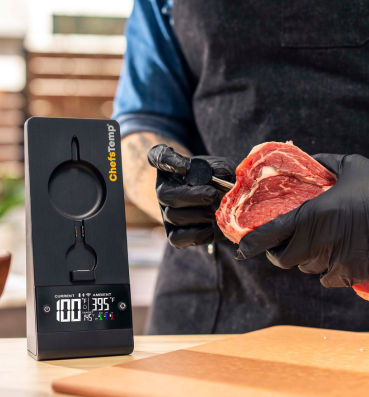
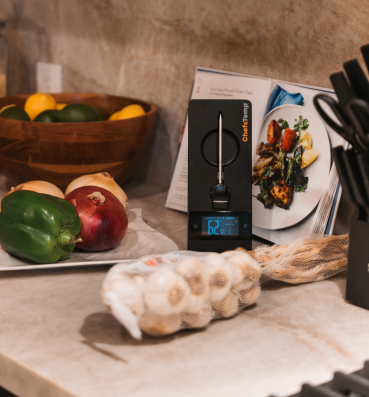
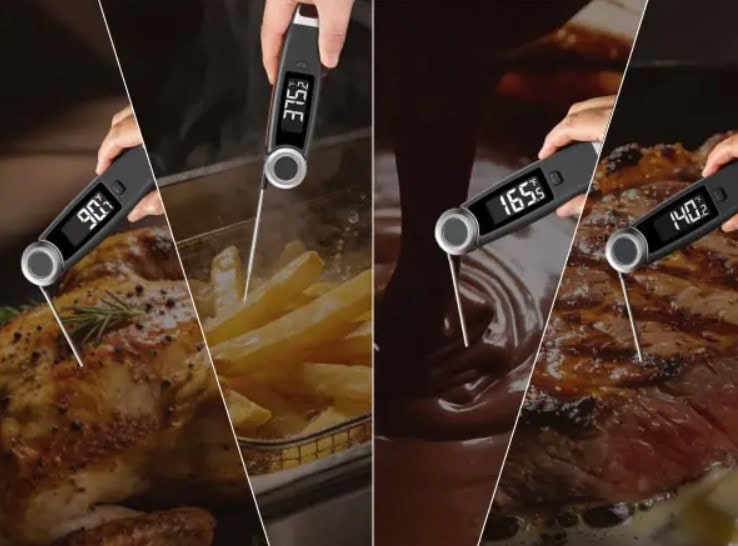
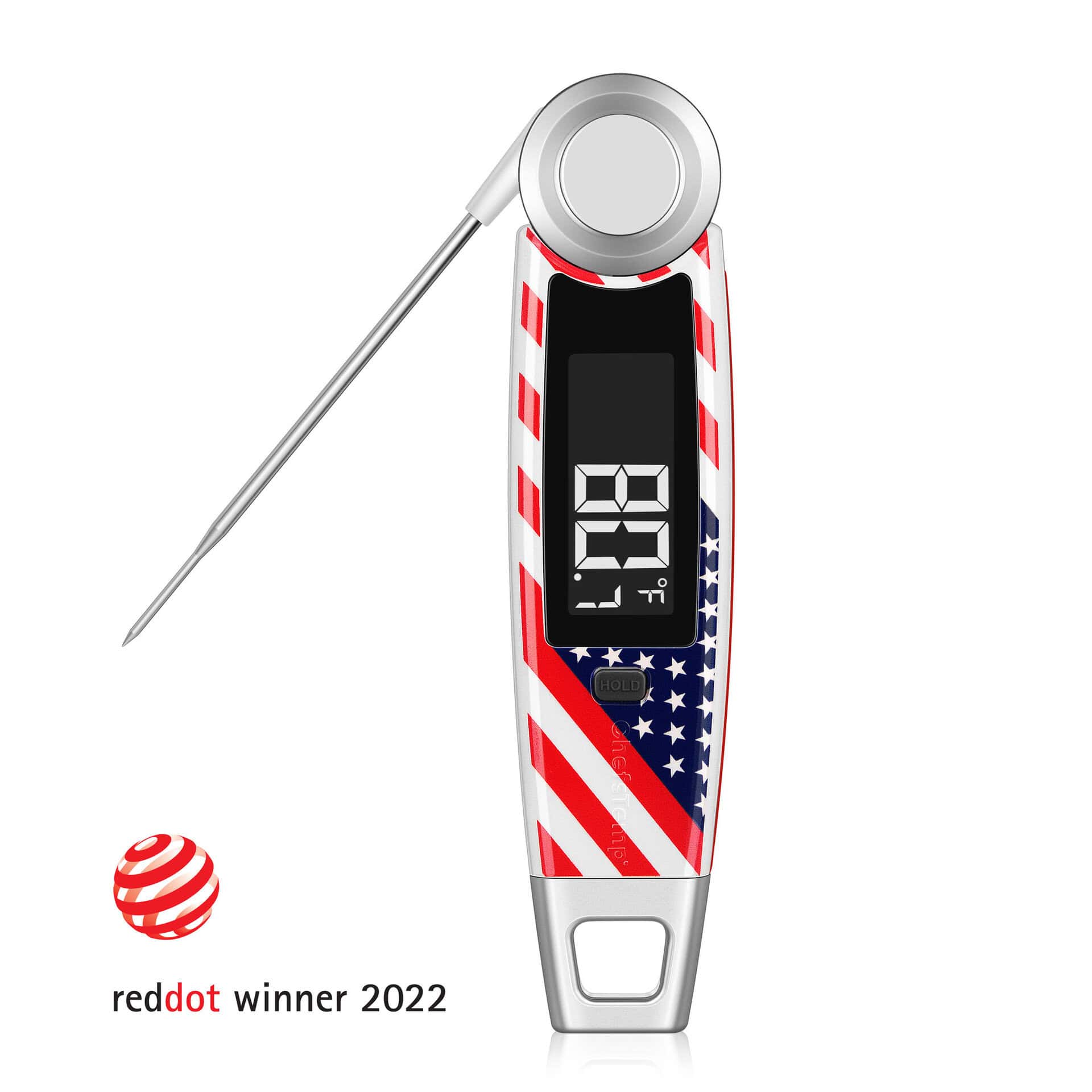
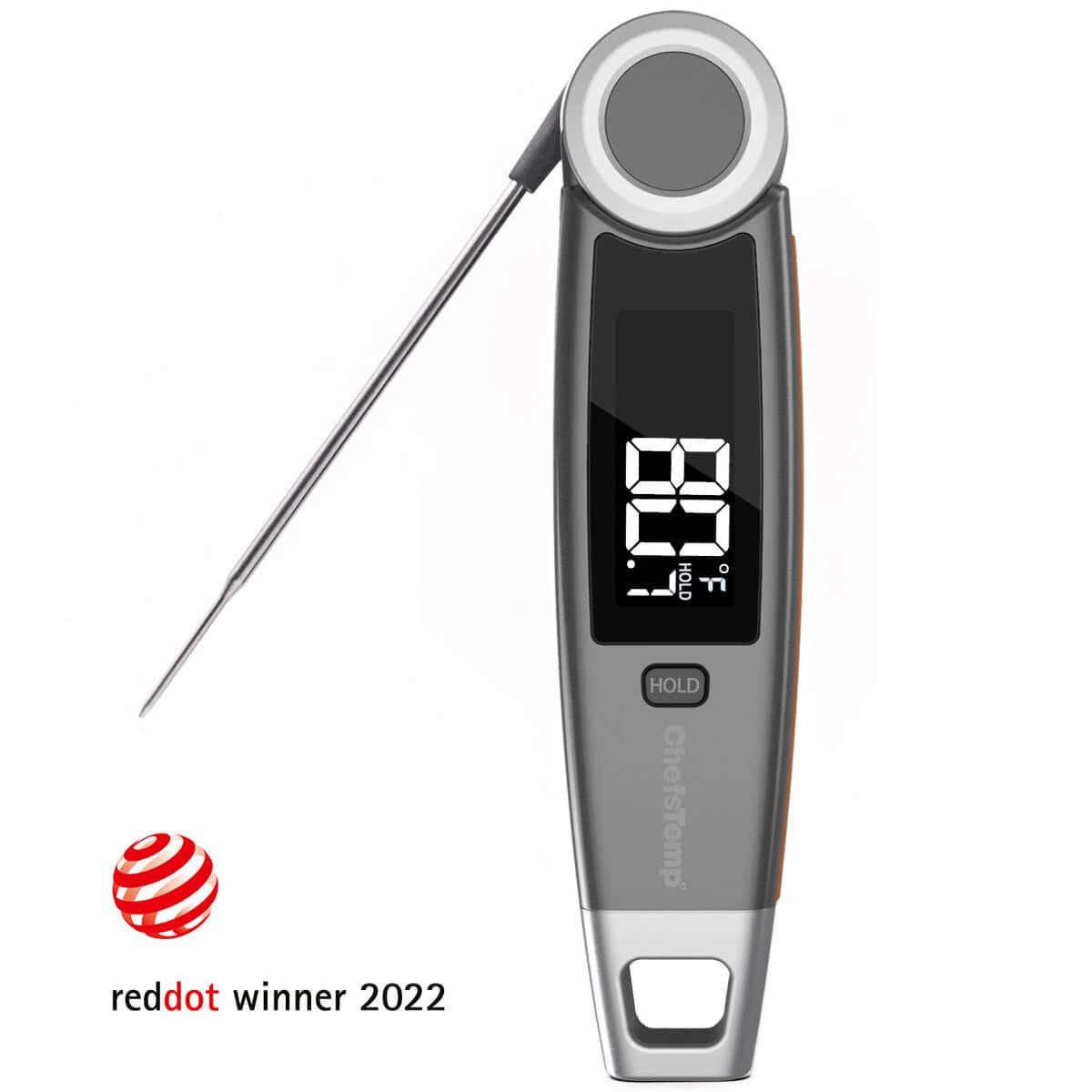
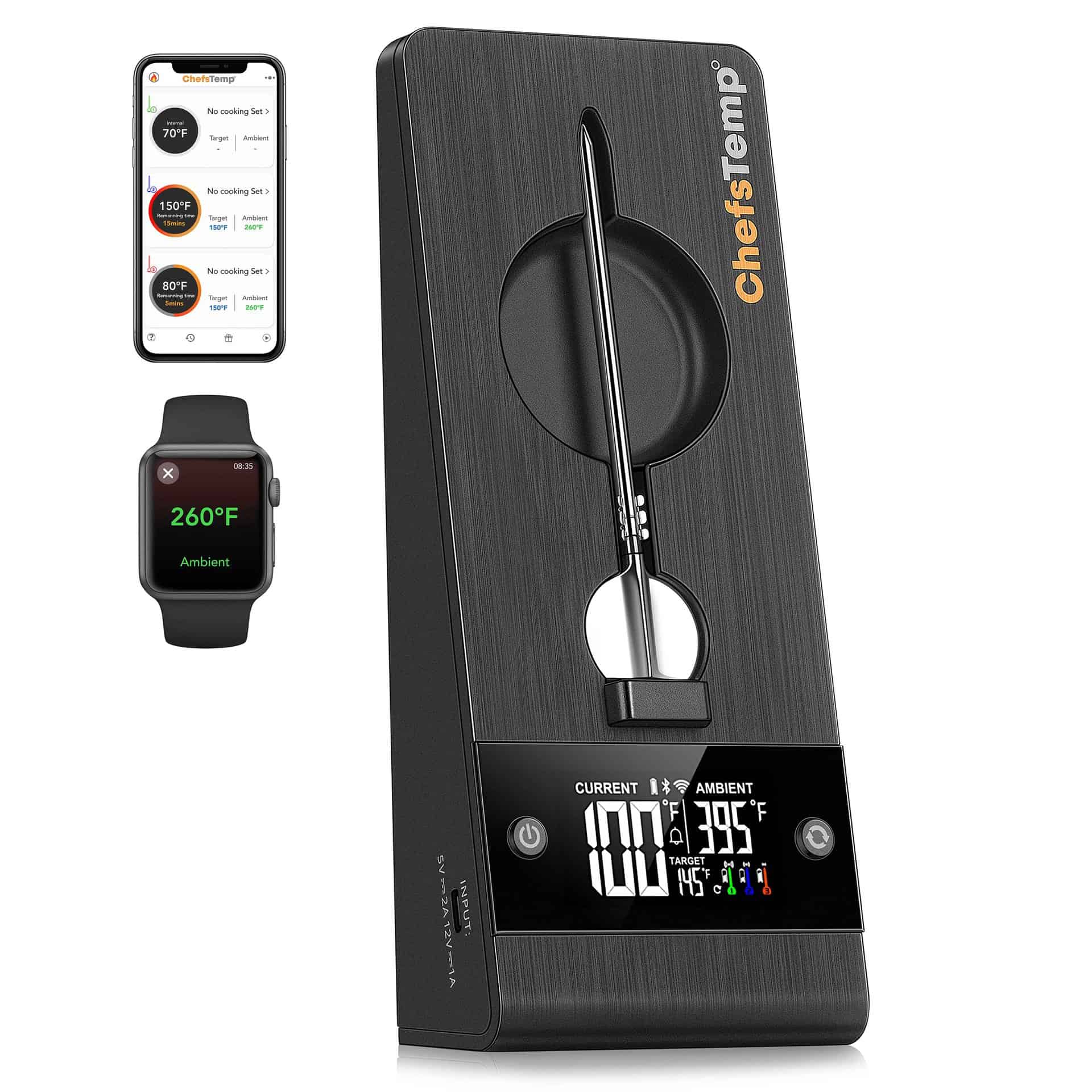
I was reluctant to check the pie internal temperature merely because I did not want to spoil the appearance. Although I tend to use a smart wireless meat thermometer for heavy, fatty cuts, delicate pastries require the utmost delicacy. This is the very reason why I am currently baking with ChefsTemp Finaltouch X10. It has a very slender needle probe of 4.55mm that slides easily through pastry vents or directly into custards, leaving an almost invisible puncture.
Better still, it provides a lightning-fast 1-second reading. I can even shoot in, retrieve the precise amount, and close the oven door in a jiffy to maintain a stable baking atmosphere. Want to know more about the dangers of surface readings? Get acquainted with the reasons why your grill thermometer is not telling you everything in Why Your Grill Thermometer Doesn’t Tell the Whole Story.
ChefsTemp Finaltouch X10
Pro Tips: Temperature Matters Before and After Baking
Thermal control does not simply occur inside the oven. I have had experience that the temperature control begins at the prep counter and stops at bringing up leftovers the following day.
The 37°F Rule for Flaky Crusts
I also used to have trouble with thick, hard pastry crusts because I knew my dough was just too hot. The only sure way to have beautiful, flaky layers is to ensure that the fat is completely solid when it goes into the hot oven.
Also, I put my ice water and cubed butter in my thermometer when mixing. My strict rule? Maintain the ingredients at a temperature below 37°F (3°C). At this cold temperature, the butter is rock-hard and will not smear into the flour too soon. When these separate, chilly fat pockets finally melt during baking, they quickly release steam, driving the dough far apart to form ideal, crisp, shatteringly flaky layers.
Reheating Leftover Pies Perfectly
Nothing is more lamentable than putting in the masterpiece of yesterday, and heating it by the microwave to a rubbery, gooey substance. When reheating a pie in the oven (usually at a gentle 300°F), I handle it with as much precision as during the initial baking.
The idea is to heat the slice to the point where the filling doesn’t re-cook, which would reduce the fruit to mush and the savory meat to dryness. I just poke at the center rather than making a guess. Drawing the pie out just as the center reaches 120°F to 130°F (49°C – 54°C) will ensure that the slice is also pleasantly warm, aromatic, and, texture-wise, as amazing as on day one.
FAQ About Pie Internal Temperature
Q1: What internal temperature should a pie be cooked to?
It all depends on the filling, and I change my target. Fruit pies should be heated to 195°F–200°F to harden. The custard and pumpkin pies will be set at 170°F without cracking, whereas any savory meat pie must reach 165°F to ensure food safety.
Q2: What temperature is an apple pie done?
An apple pie is perfectly done right when its center hits 195°F – 200°F (90°C – 93°C). This is the very thermal window I have been waiting for, as it means the starches have completely gelatinized, leaving me with a thick, gooey filling rather than a watery soup.
Q3: How do you tell if a pie is fully cooked?
I never just go by the color of the crust. The surest way that I know of would be to probe the very center with a quick, ultra-thin thermometer to determine the pie internal temperature. To get more technologically oriented food tips, our entire guide on WiFi Meat Thermometers and Smart Cooking.
Conclusione
Baking beautifully marries art with hard science. I’ve learned firsthand that pinpointing the exact temperature to cook pies is the ultimate secret to avoiding those frustrating kitchen disasters. By simply trusting these specific target numbers for every unique filling, I finally stopped second-guessing my oven and started guaranteeing perfect, sliceable textures every single time. Equip your kitchen with a fast, precise thermometer, leave the outdated guesswork behind, and get ready to bake your most spectacular pies this season.
Scopri altri prodotti ChefsTemp

Scopri altre ricette e impara trucchi di cucina unendoti alla nostra famiglia di cuochi su Facebook.
Potrebbe anche interessarti: