Waarom moet vlees tot een minimale kerntemperatuur worden gegaard?
Vleesproducten zoals kip, varkensvlees, rundvlees en lamsvlees zijn rijk aan voedingsstoffen die je lichaam nodig heeft. Enkele van deze voedingsstoffen zijn eiwitten, ijzer, jodium, zink en vitamine B12. Vanwege hun aard en herkomst bevatten ze echter ook bacteriën zoals E. coli, Salmonella, Campylobacter en Listeria monocytogenes die ernstige voedselvergiftigingen kunnen veroorzaken. Daarom is het belangrijk om... Verhit het vlees tot een minimale interne temperatuur..
Hoewel voedingsdeskundigen zeggen dat vlees veilig is om te eten als het lang genoeg op de juiste temperatuur wordt verhit (omdat dit schadelijke bacteriën doodt), kunnen verschillende soorten vlees, formaten, snitten en bereidingsmethoden verschillende minimale kerntemperaturen en gaartijden vereisen.
Inhoudsopgave
Waarom moet vlees tot een minimale kerntemperatuur worden gegaard?
De Wereldgezondheidsorganisatie (WHO) stelt dat de meeste bekende ziektekiemen gedood kunnen worden bij temperaturen boven 65 °C (149 °F).
Alle soorten bacteriën hebben specifieke omgevingen en optimale temperaturen nodig om te gedijen. De meeste pathogene bacteriën en virussen kunnen worden gedood door ze tijdens het koken slechts enkele minuten te verhitten tot 74 °C (165 °F) of hoger.
Dit komt doordat hitte de structuur van bacteriën verstoort, waardoor ze niet meer kunnen functioneren of zich vermenigvuldigen. Koken doodt ook de meeste ziektekiemen die via voedsel worden overgedragen, zoals salmonella (een bacterie die vaak voorkomt in rauw gevogelte en eieren en diarree en braken kan veroorzaken).
Bij het koken van voedsel moet het echter wel volledig door en door verhit worden – dit is waar het bij 'kerntemperatuur' om gaat, en die kun je alleen meten met een voedselthermometer.
Rauw vlees en gevogelte moeten tot minimaal 63 °C (145 °F) verhit worden voor hele stukken of biefstukken van varkens-, lams- en kalfsvlees. Gehakt daarentegen moet tot 71 °C (160 °F) verhit worden en gevogelte tot 74 °C (165 °F).
Restjes of opgewarmd voedsel moeten tot minimaal 74 °C (165 °F) worden verhit en binnen een paar uur na het bereiden in een goed afgesloten bakje in de koelkast worden bewaard om bacteriegroei te voorkomen.
Tip: Klik hier om een te krijgen nauwkeurige thermometer met directe aflezing Voor geavanceerde regeling van de interne temperatuur van vlees.

Hoe bereid je vlees op de juiste manier?
Hier is een korte handleiding. naar veilig koken verschillende soorten en stukken vlees.
145°F (63°C): Rundvlees (biefstuk of braadstuk), kalfsvlees, lamsvlees, karbonades, schapenvlees, varkensvlees, ham, wild (biefstuk of braadstuk), bizonvlees (biefstuk of braadstuk), vis (zalm, tonijn, zeebaars, kabeljauw, enz.) en schaaldieren.
160°F (71°C): De meeste verse vleessoorten, zoals rundergehakt, lamsgehakt, bizongehakt en wildgehakt, en verse of rauwe ham.
165°F (74°C): Gevogelte, wild gevogelte, gemalen gevogelte, ham (voorgekookt en opnieuw opgewarmd)
Als u vers rundvlees, varkensvlees, lamsvlees, kalfsvlees, eland of hert bereidt, Of het nu om elandvlees gaat of niet, dit zijn de temperaturen die je moet onthouden voor de juiste gaarheid: 71°C (160°F) voor medium. en 77°C (170°F) voor goed doorbakken.
Er zijn momenten (of soorten eiwitten) waarop je de interne temperatuur niet met een thermometer kunt meten. Voorbeelden hiervan zijn krabben, kreeften, garnalen en sint-jakobsschelpen. In dat geval moet je ze koken tot het vlees ondoorzichtig of parelwit is. Voor mosselen, oesters en venusschelpen geldt: kook ze tot de schelpen opengaan.
Je kunt er een opplakken Vleestemperatuurgrafiek met magneet op de koelkast of grill om de temperatuur op elk moment te controleren.
Hoe meet je de temperatuur van vlees?
Zelfs de beste chefs in de meest prestigieuze restaurants met Michelinsterren hebben vleesthermometers in hun keuken. Dit komt omdat het, tenzij je infraroodzicht hebt, onmogelijk is om de interne temperatuur van het vlees te bepalen of vast te stellen of het gaar is door er alleen maar naar te kijken, te ruiken en te proeven.
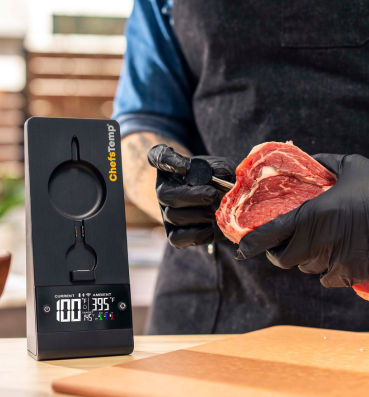
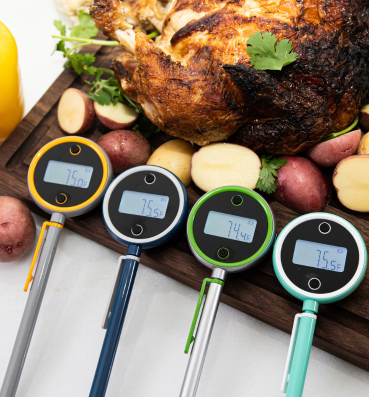
Gebruik een vleesthermometer om de kerntemperatuur van het vlees te bepalen.
Om een vleesthermometer te gebruiken, steekt u de sonde in het dikste gedeelte van het vlees, vlak voor het einde van de bereidingstijd, voordat het vlees naar verwachting gaar is. De punt van de sonde mag het bot, vet of kraakbeen niet raken.
Bij hamburgerpatties en kipfilets steek je de thermometer door de zijkant van het vlees. Als je met meerdere stukken vlees werkt, controleer dan de temperatuur van elk stuk om er zeker van te zijn dat het goed gaar is.
Laat het vlees na het koken minstens drie minuten rusten voordat u het snijdt of eet. Dit noemen we de "rusttijd". Tijdens deze periode behoudt het vlees zijn temperatuur (of stijgt deze nog iets) om schadelijke bacteriën te doden.
Bij stukken vlees zoals biefstuk zorgt het laten rusten ervoor dat de sappen zich herverdelen, waardoor het vlees sappiger en malser wordt. Als je het vlees direct na het koken snijdt, lopen de sappen eruit, waardoor het vlees bruin en te gaar wordt. Tien minuten rusten is een algemene richtlijn. Maar voor dikkere stukken vlees is een langere rusttijd nodig, namelijk 5 minuten per centimeter dikte.

Hoe kom ik aan een vleesthermometer?
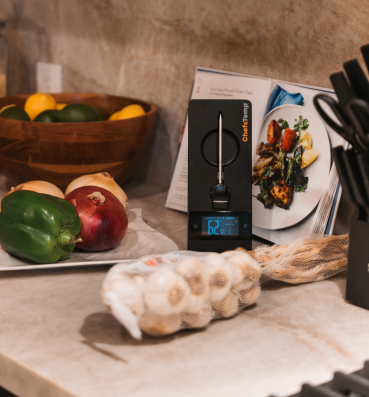
Net als de meeste kookbenodigdheden zijn vleesthermometers verkrijgbaar bij lokale winkels, bouwmarkten en doe-het-zelfzaken, en natuurlijk online. Het is echter goed om te weten dat er verschillende soorten voedselthermometers bestaan., elk ontworpen voor specifieke kookmethoden en voedingsmiddelen.. Hieronder vind je de vier meest voorkomende soorten voedselthermometers:
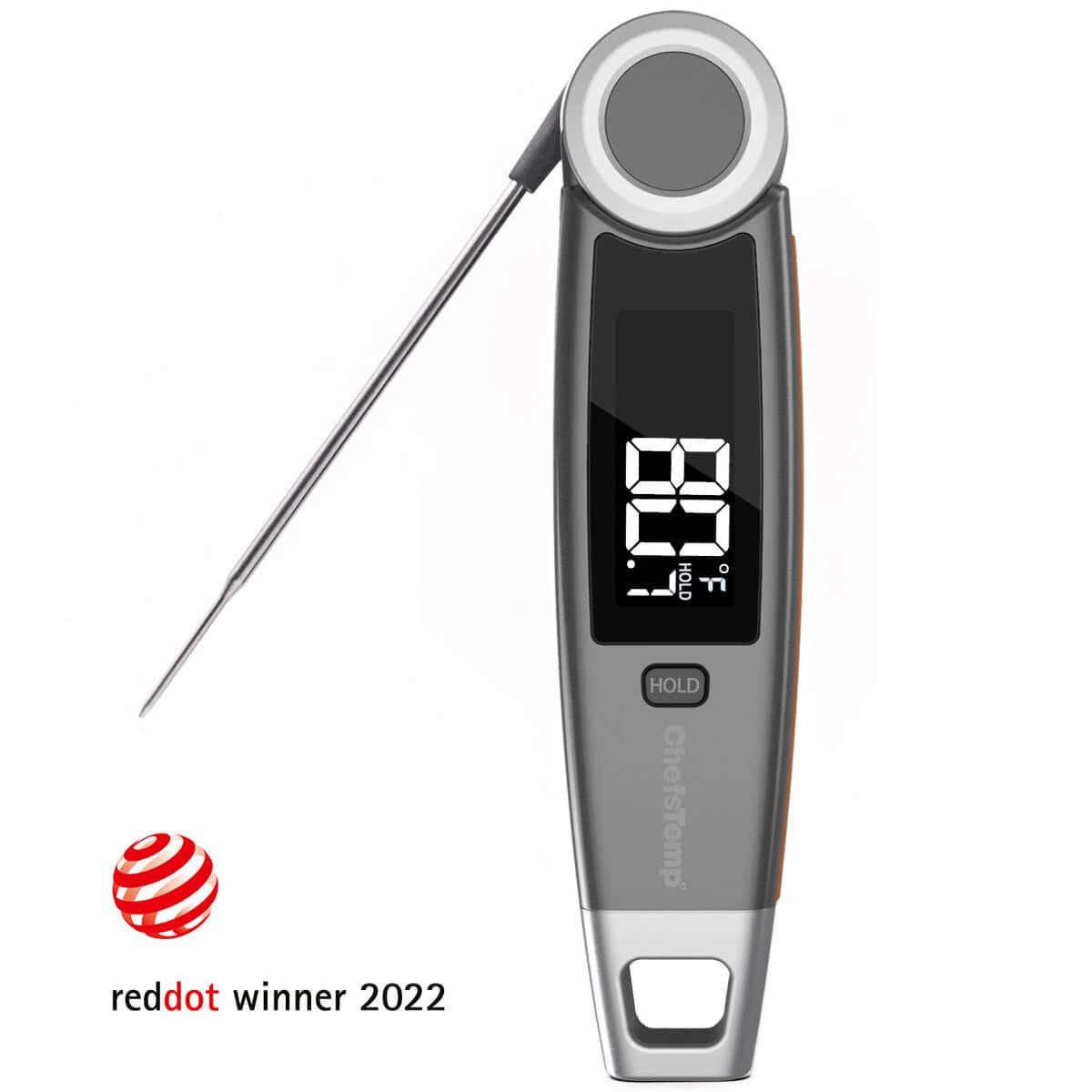
Digitale thermometers met directe aflezing – Om dit type thermometer te gebruiken, steekt u hem ongeveer een halve centimeter in het vlees terwijl het gaart. Deze thermometer kan binnen 10 seconden een nauwkeurige meting geven.
- Wijzerbare thermometers met directe aflezing – Om dit type thermometer te gebruiken, steekt u de sonde in het dikste gedeelte van het vlees, tot een diepte van 5 tot 6,5 centimeter. In tegenstelling tot het vorige type kan deze thermometer niet in het voedsel blijven zitten tijdens het koken. Deze thermometer geeft de temperatuur al binnen 15 tot 20 seconden weer.
- Ovenbestendige thermometers Zoals de naam al doet vermoeden, kunnen deze thermometers in de oven blijven terwijl het vlees gaart. Steek de sonde 5 tot 6,5 centimeter diep in het dikste gedeelte van het vlees. De thermometer geeft binnen twee minuten een nauwkeurige meting.
- Pop-up thermometers – Dit type thermometer wordt vaak aangetroffen bij gevogelte en kan zelfs bij kip of kalkoen worden meegeleverd. Zoals de naam al doet vermoeden, komt hij omhoog wanneer het vlees de veilige, minimale interne temperatuur heeft bereikt.
Houd er rekening mee dat niet alle thermometers hetzelfde zijn. Hoewel de prijs niet de doorslaggevende factor is voor de kwaliteit, geldt, zoals met de meeste dingen in het leven, dat je krijgt waar je voor betaalt als je op zoek bent naar een goedkope vleesthermometer. Dat gezegd hebbende, hoef je niet veel geld uit te geven voor een goede vleesthermometer. Het beste wat je kunt doen, is zelf onderzoek doen en recensies lezen van de thermometers die je wilt kopen.
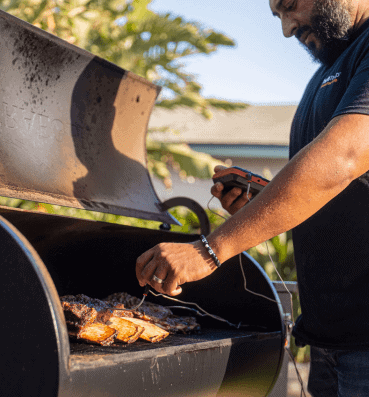
Houd bij de aanschaf van een vleesthermometer ook rekening met het soort vlees en de bereidingswijze die u gewoonlijk gebruikt. Als u regelmatig barbecuet, is het verstandig te investeren in hoogwaardige, robuuste thermometers die voor meerdere doeleinden geschikt zijn, omdat deze langer meegaan.
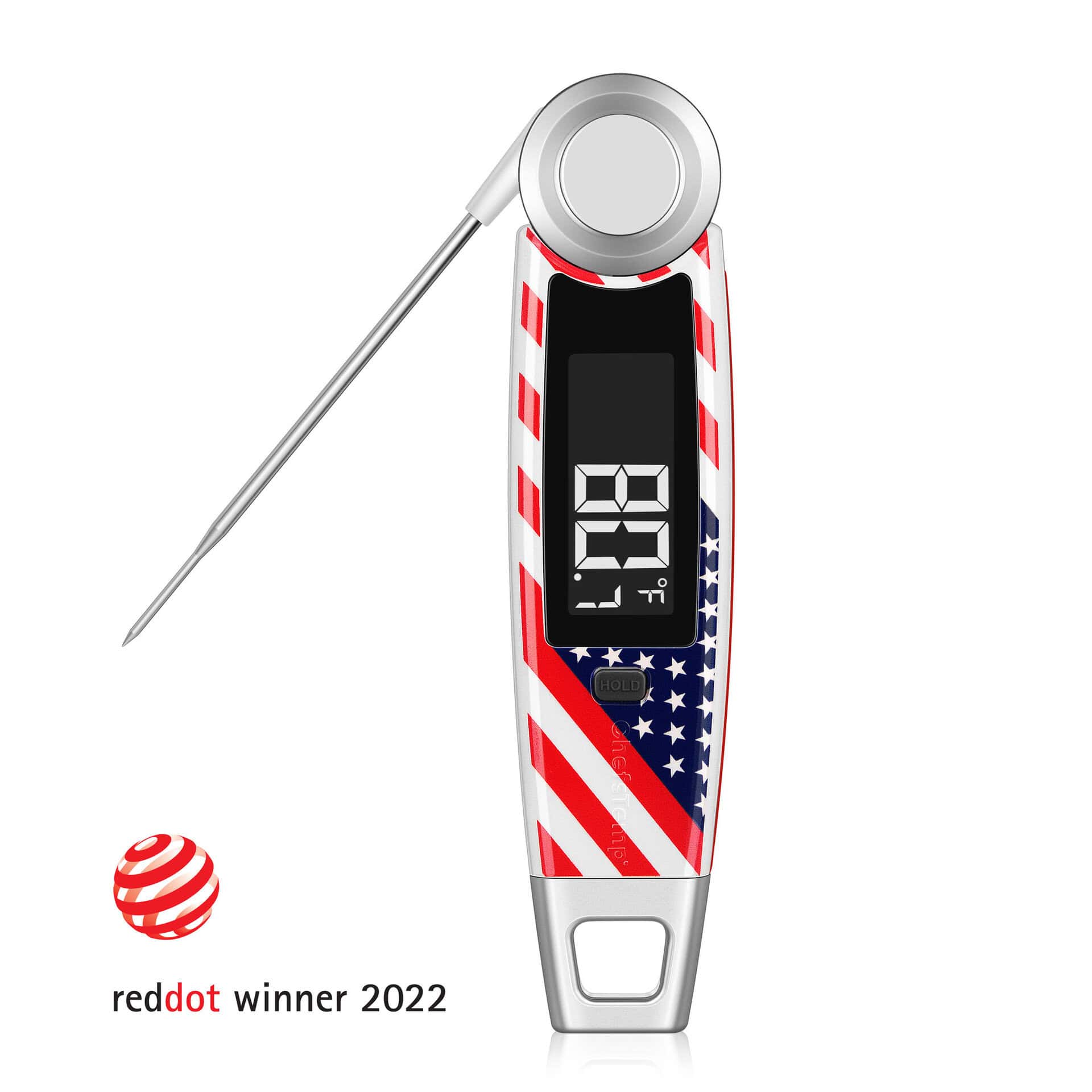
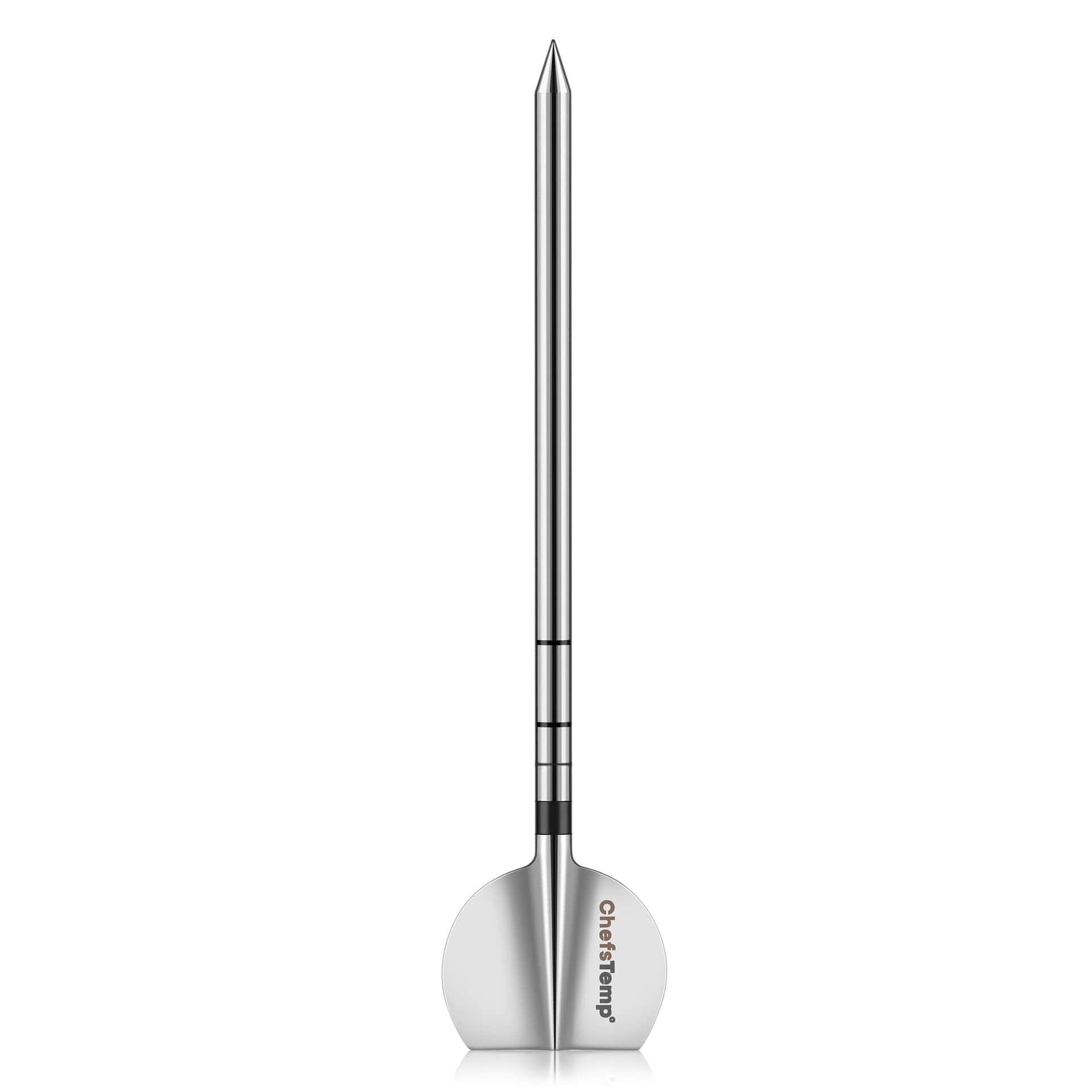
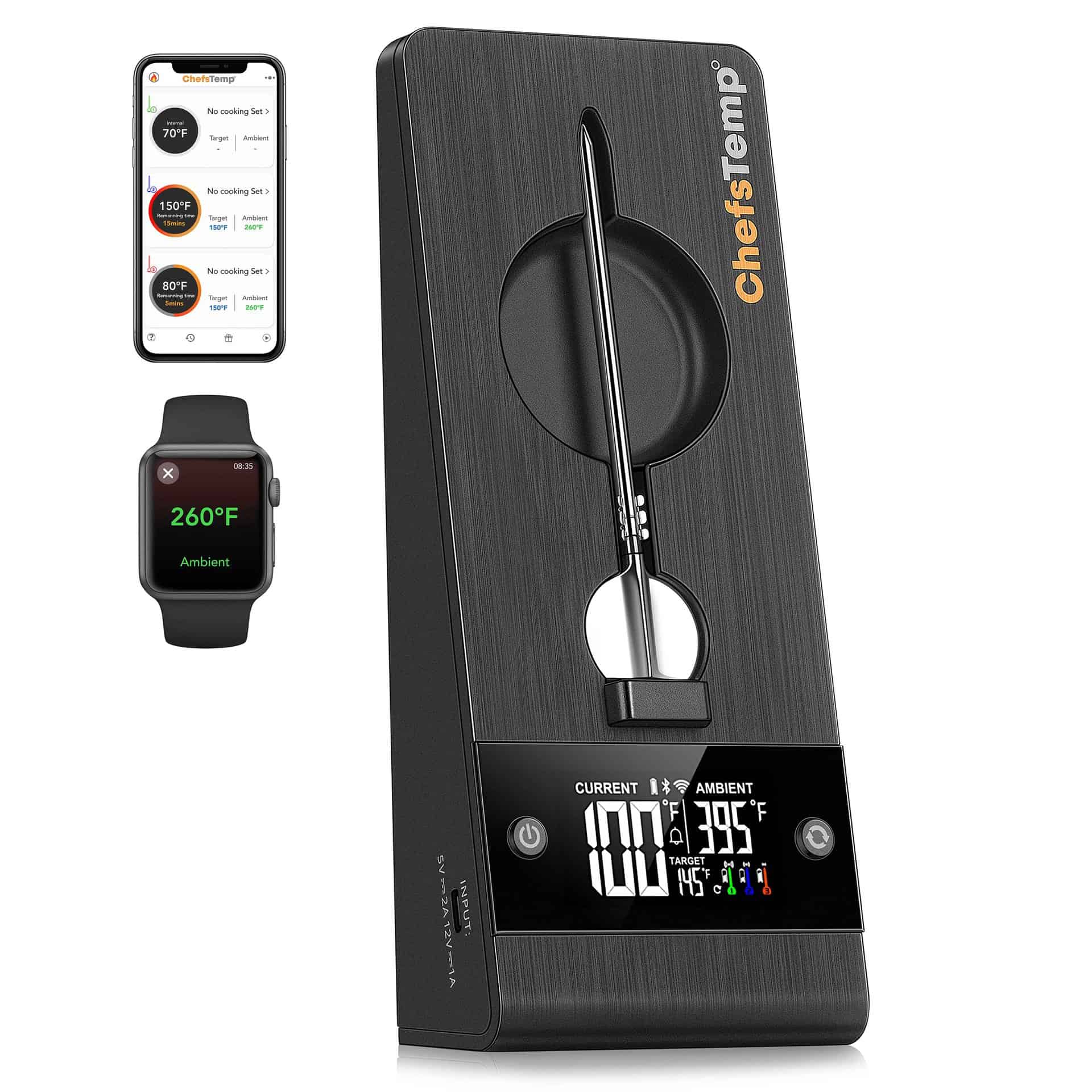
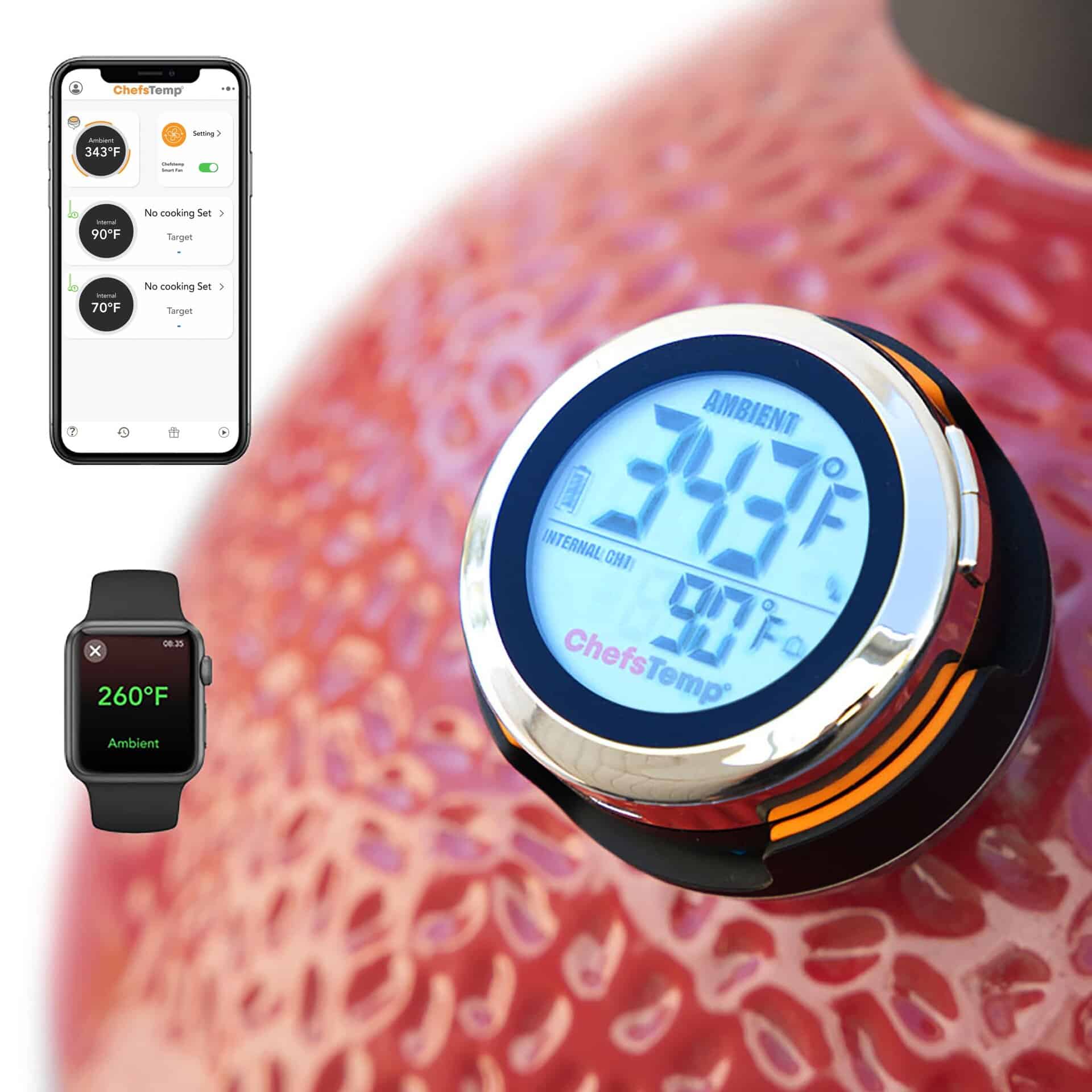
Ontdek andere ChefsTemp-producten

Ontdek meer recepten en leer keukentrucs door lid te worden van onze kookcommunity op Facebook.
Dit vind je misschien ook interessant: