Grill Temperature Chart: Exact BBQ Heat for Burgers, Chicken, Steak, and Fish
Backyard cooking has changed. People buy nicer grills, better charcoal, and more gadgets. According to Verified Market Research, the global BBQ grill market is projected to reach USD 7.78 billion by 2032, which helps explain why more cooks are upgrading from guesswork to measured temperature control.
Money is helpful, but it doesn’t solve the primary issue of wandering heat. Burgers burn, chicken dries out, and steaks fall short because a lid dial may read one number while the grate runs hotter or colder.
This guide gives you the target grill temperature for each food, explains why lid dials mislead, and shows how to measure heat where the food actually cooks. It shows the températures du gril Ce guide propose des méthodes de cuisson adaptées à toutes les viandes, du fumage lent à basse température à la saisie rapide. Il explique également comment mesurer la température réelle des aliments et quand un thermomètre intelligent peut vous faciliter la tâche la nuit.
Table des matières
Partie 1. What Grill Temperature Should You Use for Each Food?
Different foods need different heat zones, and the right setting depends on thickness, fat content, and cooking method. You must match your food to the right heat zone. High heat quickly sears thin cuts of meat. Meanwhile, low heat slowly breaks down tough tissues in large roasts. Learning these basic rules will instantly transform your backyard cookouts.
Burger Grill Temperature
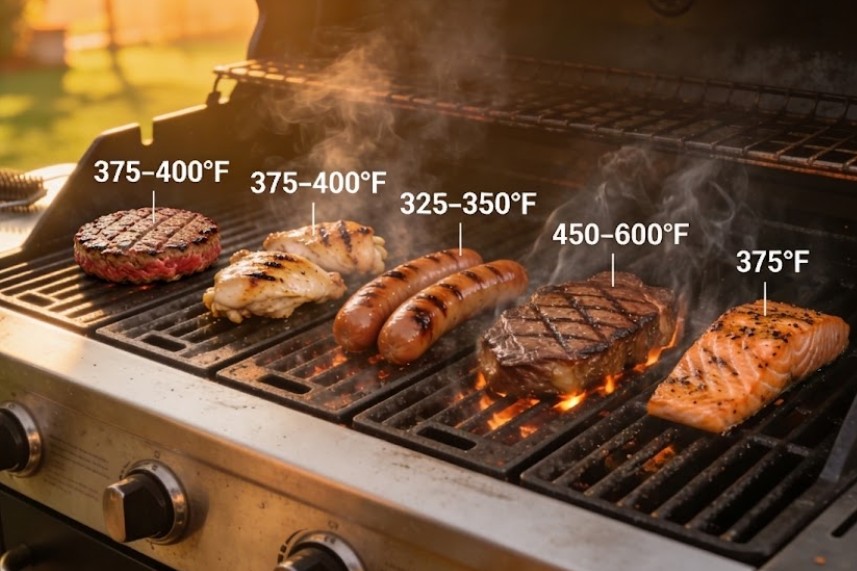
Neighbors always ask exactly what temperature to grill burgers so they do not dry out. Treat the grates like a hot iron skillet. Set the grill to 375°F to 400°F for burgers. That range sears the outside quickly while keeping the center juicy. It hits the sweet spot. That medium-high blast sears a hearty, brown crust. The inside stays dripping with juice. Most standard beef patties finish in about 8 to 10 minutes, depending on thickness and grill flare-ups. Remember to flip the meat only once to keep it from falling apart.
Chicken Grill Temperature
Finding the ideal grill chicken temperature stops you from serving dry, stringy poultry. You need a steady medium-high heat of 375°F to 400°F for wings and thighs. Whole birds, however, require a lower medium heat of 325°F to 350°F. Use 165°F internal temperature as the safety target for poultry. Consequently, the skin renders its fat and turns crispy without burning black.
Sausage Grill Temperature
The best grill temperature for sausage is 325°F to 350°F. Sausages contain a lot of fat packed into delicate casings. High heat can split sausage casings before the center is fully cooked, so medium heat is the safer choice. This rapid boiling bursts the casing, dumps grease into the flames, and triggers massive flare-ups. Instead, medium heat gently cooks the pork. All those delicious juices stay trapped inside for a perfect bite.
Steak Grill Temperature
Steaks demand high heat between 450°F and 600°F. That temperature range supports a fast sear and helps build Maillard browning on the surface. This natural process creates that savory, dark crust on the beef. You only need a couple of minutes per side here. The center is tender medium-rare. Searing steaks over extreme heat brings steakhouse-quality dining right to your patio.
Fish Grill Temperature
Due to the extreme delicacy of seafood proteins, fish requires special attention. The ideal temperature for planked fish is 375°F. Steaks of swordfish or tuna, for example, can withstand high cooking temperatures up to 450°F without any problems. Oil both the fish and the grates lightly so the skin releases cleanly without tearing. Fish skin forms a strong connection with hot, dry metal. When you turn the fish on a clean, well-oiled grate, it releases smoothly.
Maîtriser ces niveaux de chaleur précis vous permet de préparer vos repas sans approximations. Vous préservez ainsi vos aliments précieux et garantissez une saveur exceptionnelle.
Partie 2. The 6 Main Grill Temperature Zones
Maîtriser le feu, c'est connaître ses zones. Gardez cela à l'esprit. température du gril carbonisationÀ proximité, les feux de bois luttent constamment contre les intempéries. Les vents froids arrachent la chaleur des fines marmites en acier, consumant le charbon de bois. Les rôtis épais cuisent également beaucoup plus lentement que les steaks fins. Adaptez toujours le temps de cuisson en conséquence.
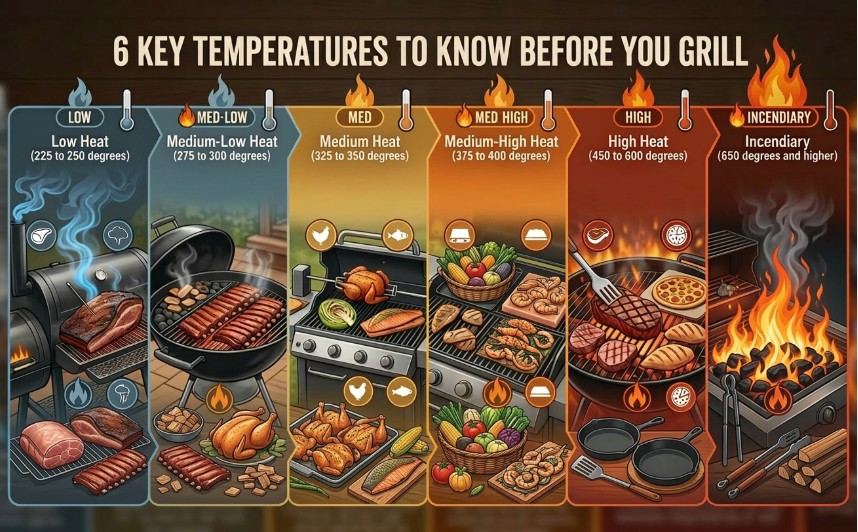
225°F to 250°F: Low-and-slow smoking
Use this range for brisket, pork shoulder, and ribs when you want steady smoke and long cook times. You use this low heat exclusively for huge, tough cuts like brisket, ribs, and pork shoulder. The very low température du fumoir La viande, qui transforme lentement le collagène dense en une gélatine riche et onctueuse, est le fruit d'une longue digestion. Ce processus chimique prend plusieurs heures et exige de la patience. Mais cette longue attente permet d'obtenir une viande incroyablement tendre, qui se détache facilement et fond dans la bouche.
275°F to 300°F: Faster smoking and indirect cooking
La cuisson à feu moyen-doux se situe entre le fumage lent et la cuisson traditionnelle au four. Cette température est idéale pour le barbecue traditionnel et la cuisson indirecte. Elle est particulièrement adaptée à la cuisson des travers de porc et de l'épaule de porc. Maintenir votre fumoir à 135 °C (275 °F) accélère légèrement la cuisson. Surtout, la viande conserve son moelleux naturel sans que la croûte ne se dessèche.
325°F to 350°F: Everyday grilling and roasting
La chaleur moyenne offre une polyvalence exceptionnelle pour la cuisine extérieure au quotidien. Cette zone de cuisson fiable convient parfaitement aux grillades directes, à la cuisson indirecte et au fumage. Ce niveau de chaleur intermédiaire permet de cuire à merveille le filet de porc, les poulets entiers et les poissons entiers. Il permet également d'attendrir parfaitement les gros légumes denses. Par exemple, vous pouvez rôtir lentement des choux entiers ou de gros oignons à feu moyen jusqu'à ce qu'ils deviennent incroyablement fondants et sucrés.
375°F to 400°F: Burgers, chicken pieces, and vegetables
Utilisez une chaleur moyenne-élevée au quotidien. Elle permet de former rapidement une croûte tout en laissant le temps à la chair de cuire. Cuisinez des tranches de saumon salées ou cuites sur une planche à cette température. Les cuisses de poulet s'y marient à merveille. Les légumes aussi sont excellents. À 200 °C (400 °F), les courgettes fraîches et les poivrons épais grillent magnifiquement.
450°F to 600°F: Steaks, chops, pizza, and fast searing
La chaleur intense exige toute votre attention au barbecue. Utilisez cette flamme puissante uniquement pour griller directement sur les flammes nues. Cette chaleur est incroyablement forte. température du gril C'est exactement ce qu'il vous faut pour les steaks, les côtelettes, les pizzas et les filets de poulet. Tout cuit en quelques minutes seulement à ce niveau. Il est indispensable de rester près des flammes pour éviter que votre repas ne brûle.
650°F and above: Extreme searing only
La chaleur intense permet d'obtenir ces croûtes croustillantes et savoureuses, dignes des meilleurs restaurants. On atteint cette température extrême grâce à la cuisson directe sur le gril ou à des brûleurs infrarouges spécialisés. Cette température maximale est exclusivement réservée à la saisie de pièces de viande de qualité, comme les steaks et les côtes épaisses. Il faut laisser la viande sur la grille seulement une à deux minutes de chaque côté. Une cuisson plus longue réduirait vos aliments en cendres.
Once you know these six zones, it becomes much easier to match the food to the fire. You will know exactly how hot your fire needs to be before you even strike a match.
Partie 3. How to Measure Grill Temperature Correctly
Connaître la température cible ne sert à rien si on ne peut pas la mesurer avec précision. L'atmosphère à l'intérieur du fumoir change complètement en fonction de la température. À basse température, le bois se consume doucement et dégage une fumée bleue et pure. À haute température, la graisse qui s'écoule entre en contact avec les braises et se vaporise instantanément, parfumant ainsi la viande.
Pour maîtriser ce processus de cuisson, vous devez comprendre précisément ce qui se passe à l'intérieur de votre fumoir. Pour des conseils d'experts sur la compréhension de ces dynamiques thermiques, consultez ces ressources. stratégies pour connaître sa température.
Many grills still rely on bimetal lid dials, but those gauges measure dome air, not the grate where food cooks. Sadly, these factory dials constantly trick backyard cooks. They only measure the hot air pooling at the very top of the metal dome. They completely fail to check the air down at the grate where your food actually cooks. In many grills, grate temperature can differ from the lid reading by 50°F or more.
Voici quelques méthodes pratiques pour bien évaluer votre température :
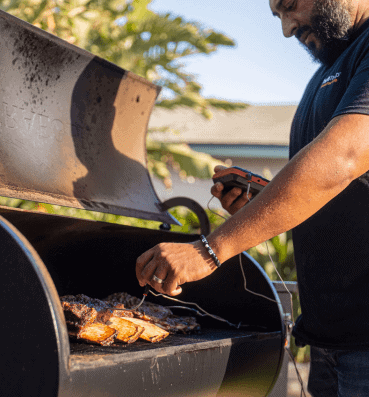
- Use a digital grate probe clipped at grate level, close to the food but not touching it. This tool shows the exact cooking environment for smoking a large Sunday brisket for your family.
- Use the hand test only as a rough heat check, not as a measurement tool. If you must pull your hand away in just 2 seconds, you have extreme heat ready to sear thick steaks.
- Thin blue smoke usually signals cleaner combustion, while thick white smoke often means the fire needs more air. Conversely, thin, pale blue smoke indicates your airflow is perfectly tuned for slow-cooking delicate pork ribs.
Pour perfectionner encore davantage votre technique de jardinage, Trouvez des conseils pour obtenir la température idéale sur votre gril. L'utilisation d'outils de haute précision vous garantit de ne plus jamais servir d'aliments crus ou avariés à vos invités. Enfin, une mesure précise de la chaleur vous prépare à l'étape cruciale suivante : la maîtrise du feu.
Partie 4. How to Control Temperature on Charcoal, Gas, and Indoor Grills
Chaque appareil de cuisson réagit différemment à la chaleur. Il est donc essentiel d'adapter votre technique en fonction du combustible utilisé. Bois, gaz et charbon de bois réagissent chacun de manière très spécifique. Comprendre ces différences vous permettra de maîtriser parfaitement votre feu.
Charcoal Grills
Controlling the temperature of your charcoal grill requires excellent oxygen management. Fire breathes oxygen to survive. Open the bottom vents to raise heat, and close them gradually to reduce it. This quickly increases your heat. Conversely, you partially close those vents to choke the fire and reduce the heat. Furthermore, the weather changes everything outside. A cold, harsh wind pulls heat right out of your metal kettle. As a result, you burn much more fuel to keep the heat steady.
Gas Grills and Smokers
Gas grills respond quickly to knob changes, but wind and uneven burners can still create hot and cool spots. However, holding a perfectly steady smoker temp for 12 straight hours proves very tough on traditional offset rigs. Strong wind gusts can easily blow out low flames or make wood fires spike violently. Even modern wood pellet smokers struggle because cheap factory sensors fluctuate wildly. You need better, faster tools to keep a flat temperature line.
Indoor Ovens
Your indoor kitchen also requires precise monitoring. Many home ovens run hotter or cooler than the set dial, sometimes by 25°F or more. Kitchen ovens cycle their heating elements on and off constantly. This action creates rolling waves of heat instead of a flat line. Therefore, always use a secondary digital probe to verify the actual ambient temperature before baking delicate food.
Des solutions intelligentes pour une maîtrise parfaite de la chaleur
Passer ses journées à gérer la température épuise même les maîtres du barbecue les plus expérimentés. Maîtriser un feu de bois avec un simple thermostat d'origine, c'est comme conduire les yeux bandés. La technologie a enfin rattrapé son retard.
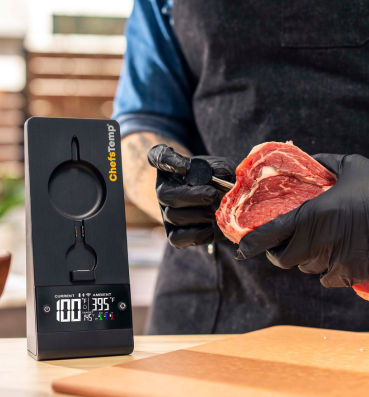
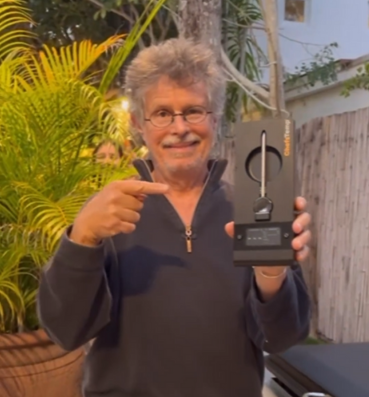
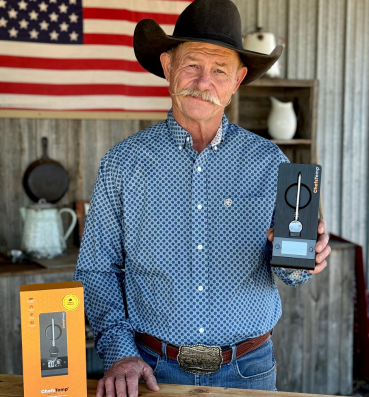
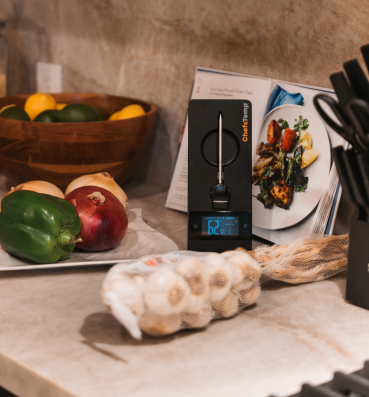
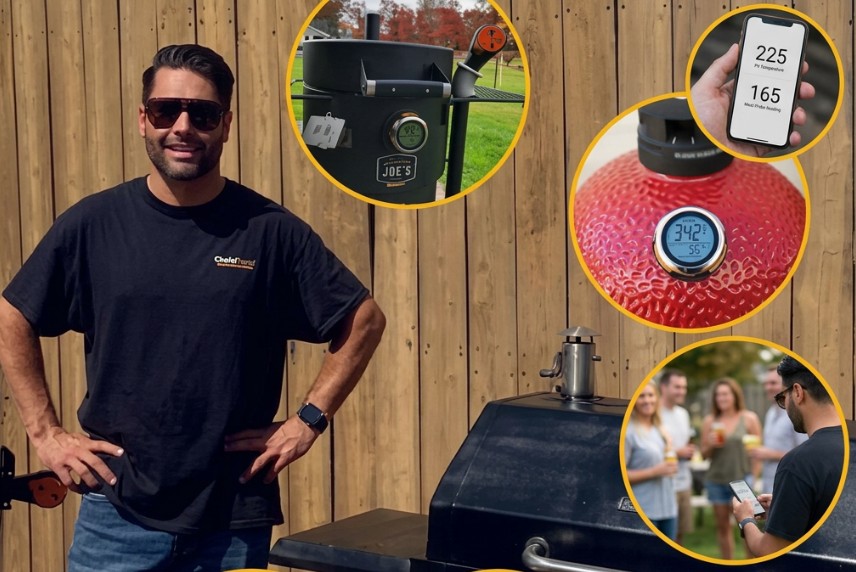
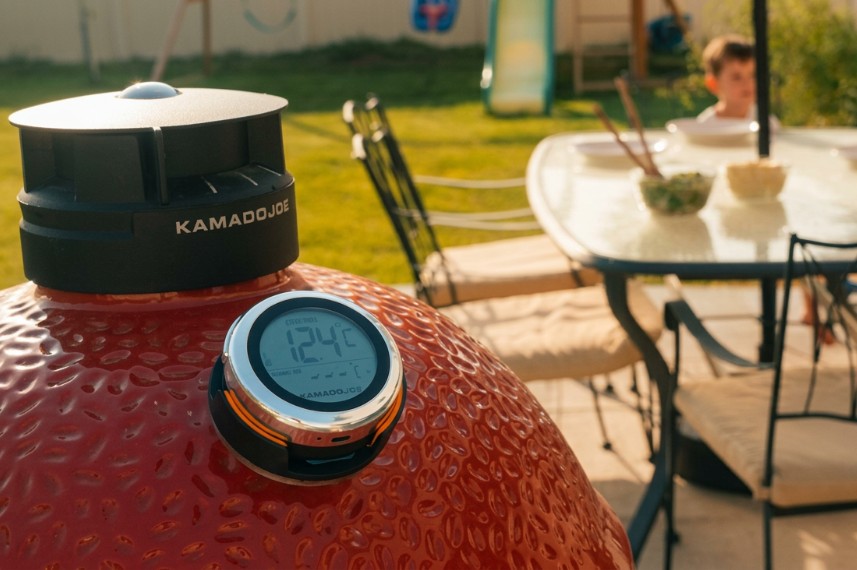
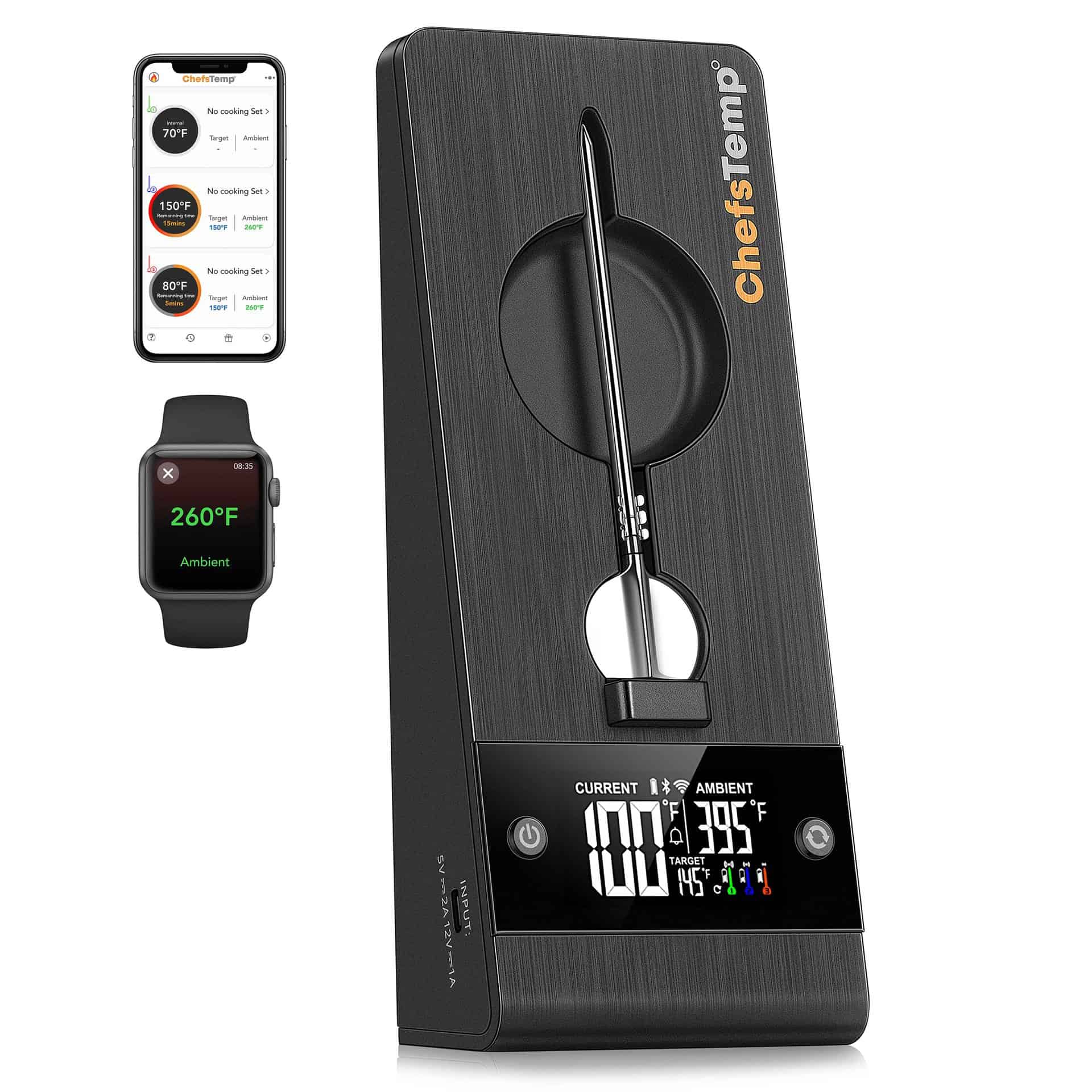
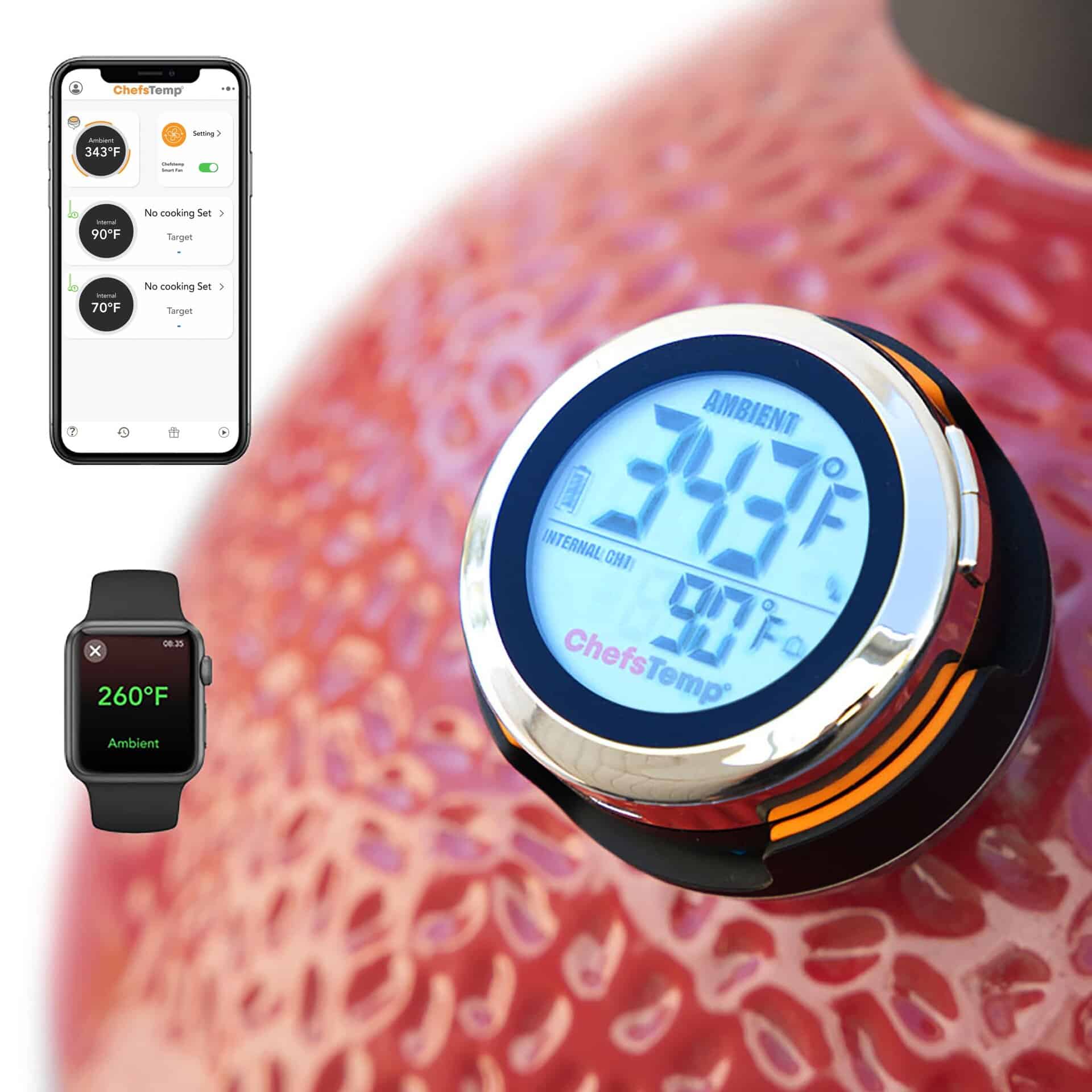
Le ProTemp S1 is a Patented Smart Grill Gauge Thermometer Hub that monitors grate temperature and supports automatic airflow control when paired with the Breezo fan. It mounts right where your old dome dial used to sit. The setup stays entirely wireless and clean.
- Built-in Wi‑Fi and Bluetooth let you monitor pit temperature from a phone, and alerts can also appear on supported Apple Watch setups.
- A platinum sensor rated for temperatures up to 1000°F gives the unit enough range for both low-and-slow cooking and high-heat searing.
- Supports up to 4 wireless probes, which is useful when you want to track several cuts at once.
- Optional Breezo Fan pairing adds automatic airflow control, which matters most on long charcoal cooks.
Les équipements pour barbecue continuent d'évoluer au rythme de la croissance du marché mondial des grillades. Découvrez ce système incroyable en action dès maintenant. Regardez pour en savoir plus. Comment ProTemp S1 + Breezo sur Kamado Master Contrôle de température Hot & Fast + Low & Slow Fonctionne parfaitement.
Part 5. Bottom Line
Knowing your target temperatures helps you avoid dry, burnt, or undercooked food. Guessing the heat always leads to ruined meals and frustration. Fortunately, learning the six key heat zones builds a rock-solid foundation for your backyard success.
Innovative technology from ChefsTemp removes that manual guesswork completely. The ProTemp S1 can improve temperature tracking on compatible grills, but the grill itself still determines how evenly heat moves across the grate. This handy device gives everyday cooks true commercial-grade accuracy. You easily gain remote monitoring, real-time data, and automatic airflow control. Equip your smoker with ChefsTemp today and completely dominate your next family barbecue.
Partie 6. FAQ sur les températures du gril
Q : Quelles sont les températures du gril ?
Grill temperature is the heat inside the cooking chamber, usually measured at grate level or near the food. It has a huge, variable range. A tough pork shoulder is slowly brought to tenderness over 12 long hours at 225°F. On the other side, a thick ribeye is seared in minutes by a raging 650°F heat. The precise way your meal behaves on the grates depends on the temperature.
Q : Pourquoi la température du gril est-elle importante ?
Grill temperature matters because too much heat can burn the outside before the inside is done, while too little heat can leave food dry or unsafe. Dinner is safe to eat when the precise goal temperature is met. It also creates that delicious crust that everyone fights over.
Q : Comment mesurer la température de mon gril ?
Use a grate-level digital probe. Lid dials are useful only for rough trends, not exact cooking control. Your food sits lower on the heavy metal. You need a digital probe resting directly next to the meat. Upgrading to a smart tool like the ProTemp S1 puts commercial platinum sensors to work right where they count.
Q : Comment savoir si un gril est suffisamment chaud ?
A hand test can give you a rough feel for heat, but a thermometer gives the only reliable reading. If you have to yank it away in two seconds, that fire is screaming hot. It works well in a pinch. Still, guessing ruins expensive grocery runs. Rely on a calibrated digital thermometer to verify the real numbers.
Q : Pourquoi la température de mon gril fluctue-t-elle constamment ?
Temperature swings usually come from lid opening, airflow changes, wind, fuel quality, or uneven burn patterns. Cheap charcoal burns in unpredictable, frustrating waves. A sudden gust of wind acts exactly like a blacksmith’s bellows. It feeds the coals unexpected blasts of oxygen that instantly spike the heat.
Q : La météo a-t-elle une incidence sur la température de mon barbecue au charbon de bois ?
Yes. Wind, rain, and cold air can pull heat from the cooker and make fuel burn less efficiently. You spend all afternoon unthinkingly adjusting the vents. Hooking up an automatic blower fan takes over that job and stops those endless temperature swings.
Q: Why does my grill say 400°F but food cooks unevenly?
Because that reading is from the lid, not the grate. The actual cooking surface may be significantly hotter or cooler due to airflow and fuel distribution. Always measure at grate level for accuracy.
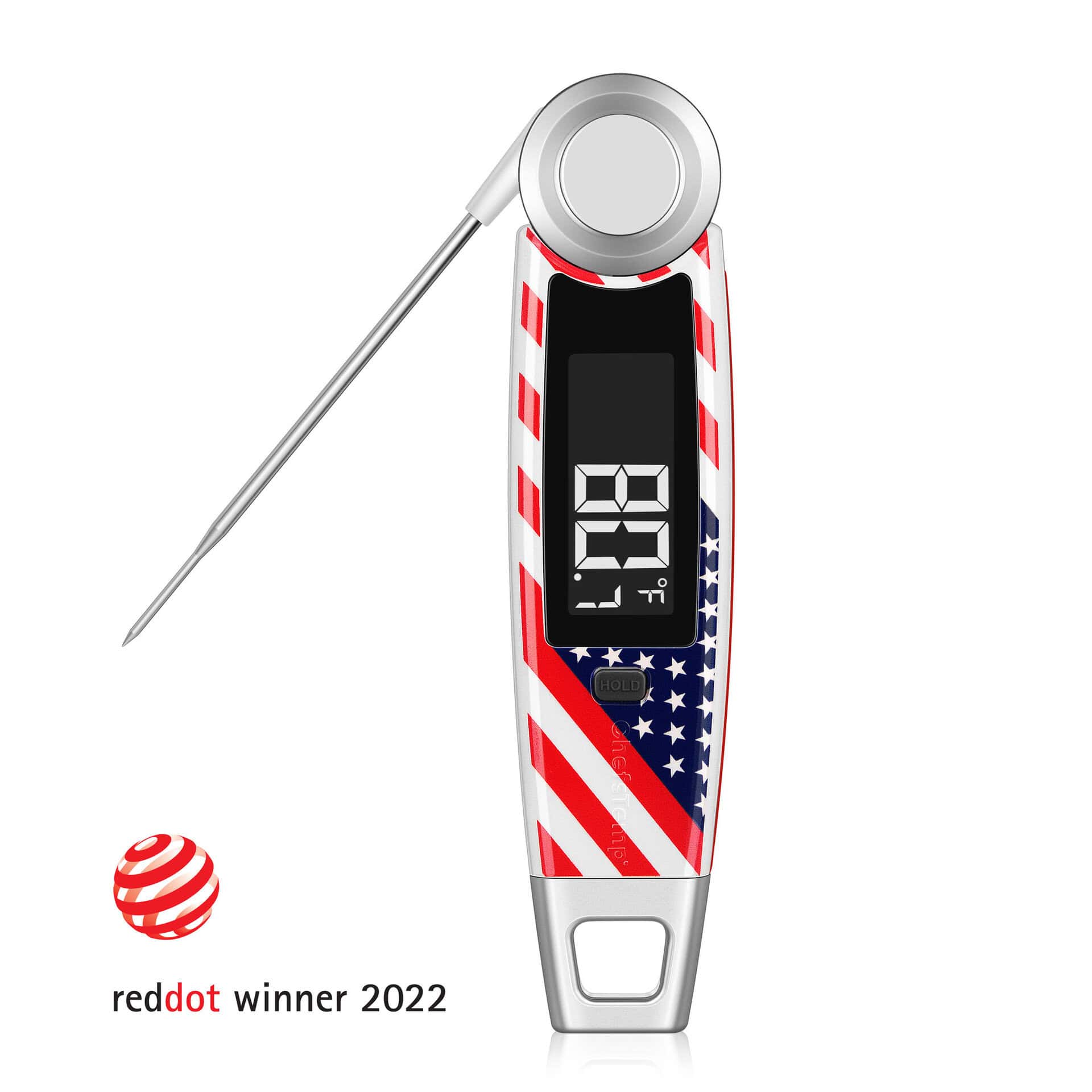
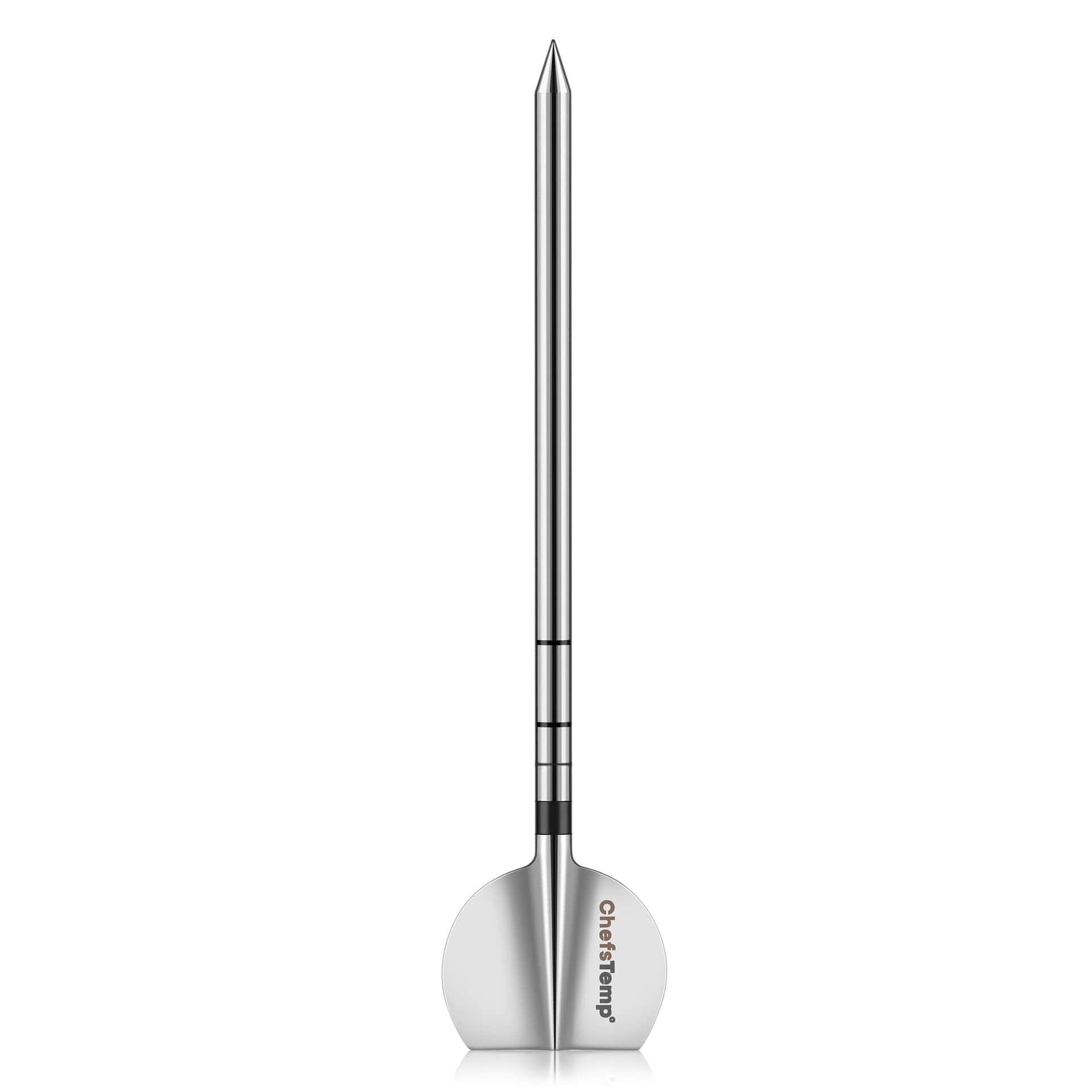
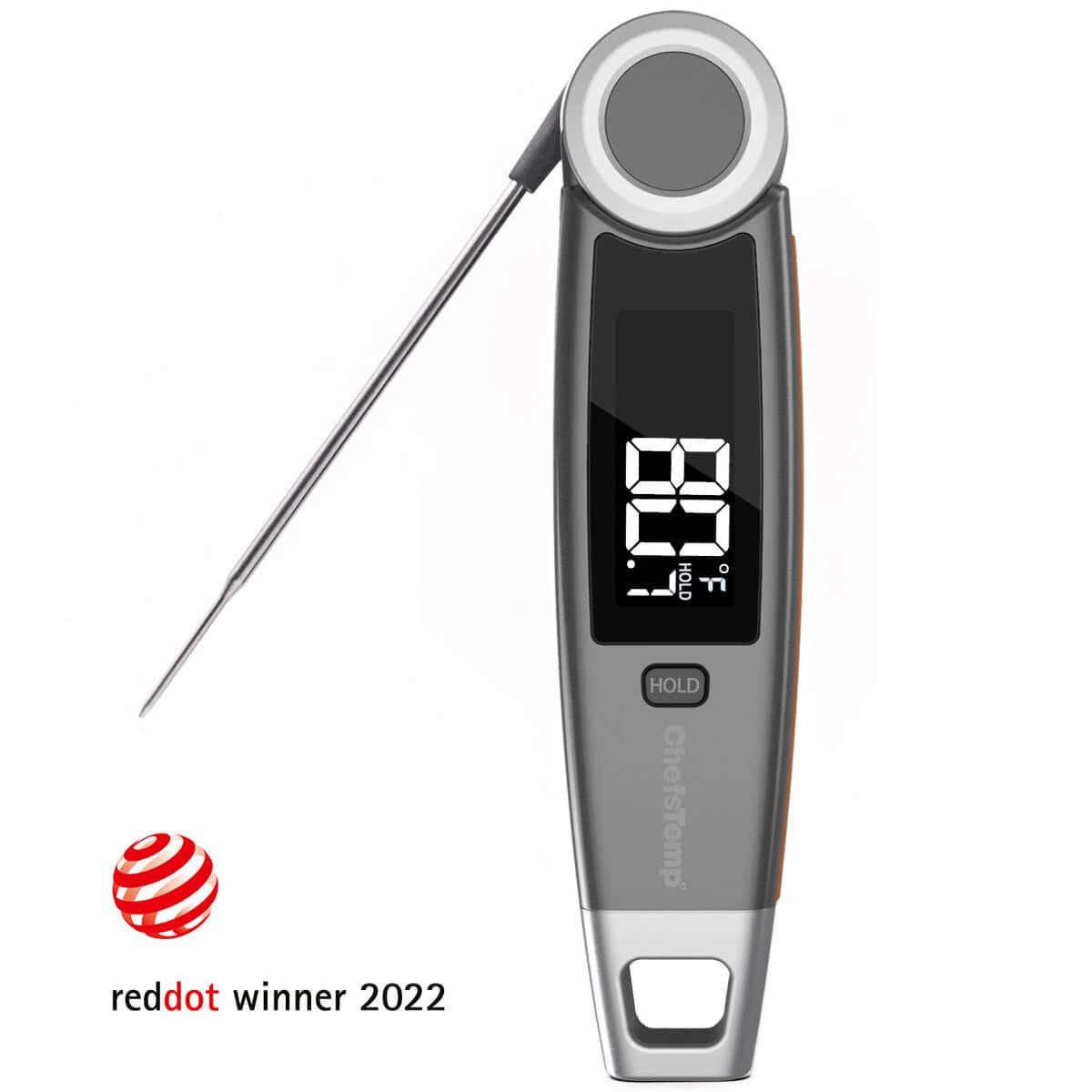
Découvrez les autres produits ChefsTemp

Découvrez plus de recettes et apprenez des astuces de cuisine en rejoignant notre communauté culinaire sur Facebook.
Vous pourriez aussi aimer :