FireBoard 2 Drive vs ThermoWorks Signals: The Ultimate Showdown
Short Answer: In the FireBoard 2 Drive vs. ThermoWorks Signals debate, FireBoard wins on cloud data analysis and a 30-hour battery. ThermoWorks Signals with Billows delivers rugged, physical controls and a massive 46 CFM fan for leaky smokers. For a fully cord-free setup on tightly sealed Kamado grills, the ChefsTemp ProTemp S1 offers a wireless Platinum RTD alternative.
A 16-hour brisket requires precision: you must push past the evaporative-cooling stall at 165°F and render the intramuscular fat perfectly at 203°F. Standard bimetallic dials and cheap termometri digitali routinely drift by 30 degrees under prolonged heat stress, ruining expensive cuts of meat.
To guarantee steady ambient pit temperatures around 225°F, serious pitmasters rely on automatic temperature controllers. Today, we are settling the definitive FireBoard 2 Dive vs Thermoworks Signals debate. Both systems manage your fire via attached fans, but they operate on fundamentally different design philosophies. Let’s break down the data to find the right automated smart grill thermometer for your specific smoker.
Part 1. FireBoard 2 Drive vs ThermoWorks Signals Billows: Review & First Impressions
Pull either of these premium BBQ tools out of the box, and their build quality is immediately apparent. They are engineered to endure overnight cooks, heavy smoke, and sudden weather changes. But the true test of the FireBoard vs ThermoWorks matchup comes at 3:00 a.m., when your pit drops 40 degrees, and you need the system to correct itself without manual intervention.
FireBoard 2 Drive: Key Strengths
Any serious FireBoard 2 Drive review must highlight its dominance in data logging. The FireBoard 2 Drive is built for the analytical pitmaster. The app captures every micro-fluctuation in temperature, logging it to the cloud for post-cook analysis via CSV export.
At the grill, the hardware is highly refined. The display remains readable in harsh sunlight. Crucially, the built-in 12V fan port allows the blower to plug directly into the unit’s side without a bulky adapter.
- Battery Life: Up to 30 hours of internal battery life for marathon sessions.
- Capacity: Supports up to 6 simultaneous probe ports.
- Hardware: Direct 20 CFM fan connection eliminates the need for adapter cables.
- Software: Unmatched cloud data logging and session history.
FireBoard 2 Drive: Real-World Limitations
The friction point in the FireBoard 2 Drive vs. Thermoworks Signals comparison is the FireBoard’s physical interface. The unit relies on a single multi-function button. If your phone is dead and you need to adjust an alarm at the pit, navigating nested menus with a single button while wearing greasy gloves is a frustrating, clumsy experience.
ThermoWorks Signals + Billows: Key Strengths
IL ThermoWorks Signals Billows combination is an industrial-grade shop tool. It offers 4 channels (one pit, three meat), but its distinct advantage is its physical interface. Dedicated buttons let you adjust alarms and target temperatures directly on the device.
The performance gap widens when looking at fan power. The Billows fan pushes a massive 46 CFM, whereas the standard FireBoard fan moves 20 CFM. If you run a large offset smoker with poor seals and significant air leaks, the Billows fan has the raw power to stoke the fire and recover heat rapidly after you open the lid.
- Capacity: 4 total channels (1 pit, 3 meat).
- Interface: Physical buttons for immediate, phone-free control.
- Airflow: The 46 CFM Billows fan delivers rapid heat recovery.
- Durability: IP66 splash-proof rating for rugged outdoor use.
ThermoWorks Signals: Real-World Limitations
The fatal flaw of the ThermoWorks Signals Billows setup is power management. The unit requires constant tethering to a 12V USB-C power outlet to run the high-draw fan. If your smoker is at the back of your yard, you must run an extension cord or invest in a bulky portable power station. Furthermore, its internal battery lasts up to 16 hours—half the FireBoard’s capacity.
Part 2. ChefsTemp ProTemp S1: The Wireless Concession
Most serious cooks who have run both the FireBoard 2 Drive and ThermoWorks Signals Billows eventually arrive at the same complaint: by the time you have routed a power cable for the fan, laid out 4 corded meat probes, and found a spot for the controller unit, your kamado lid looks like a cable management panel from a server rack.
The ChefsTemp Termometro intelligente per griglia ProTemp S1 does not eliminate that problem on every cooker. Its Breezo V2 fan delivers lower CFM than the Billows, and it has no spreadsheet export to match the FireBoard 2 Drive’s data depth. If your primary cooker is a large-format offset smoker with significant air leaks, neither of those trade-offs makes sense. ThermoWorks Signals Billows remains the functionally correct choice for that use case.
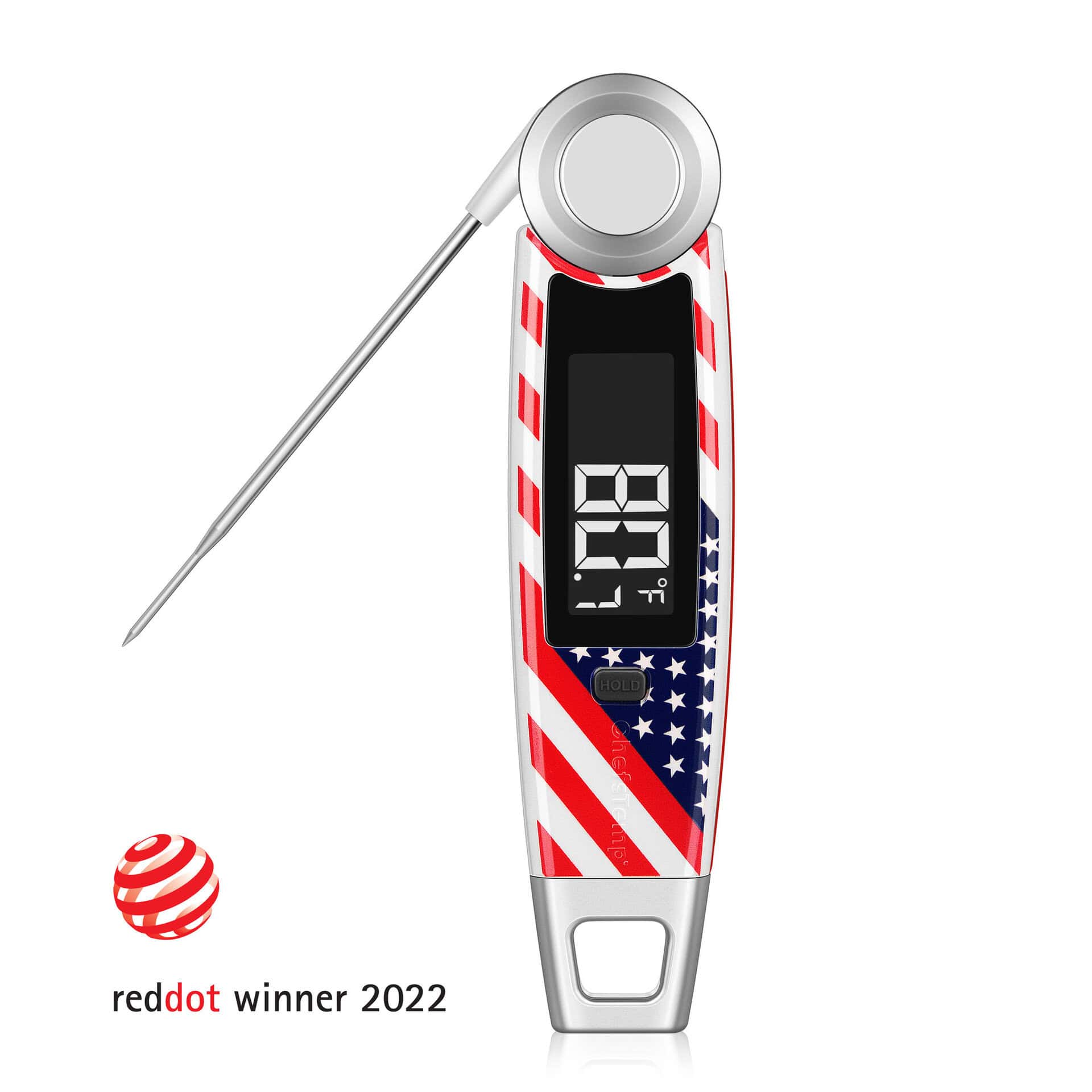
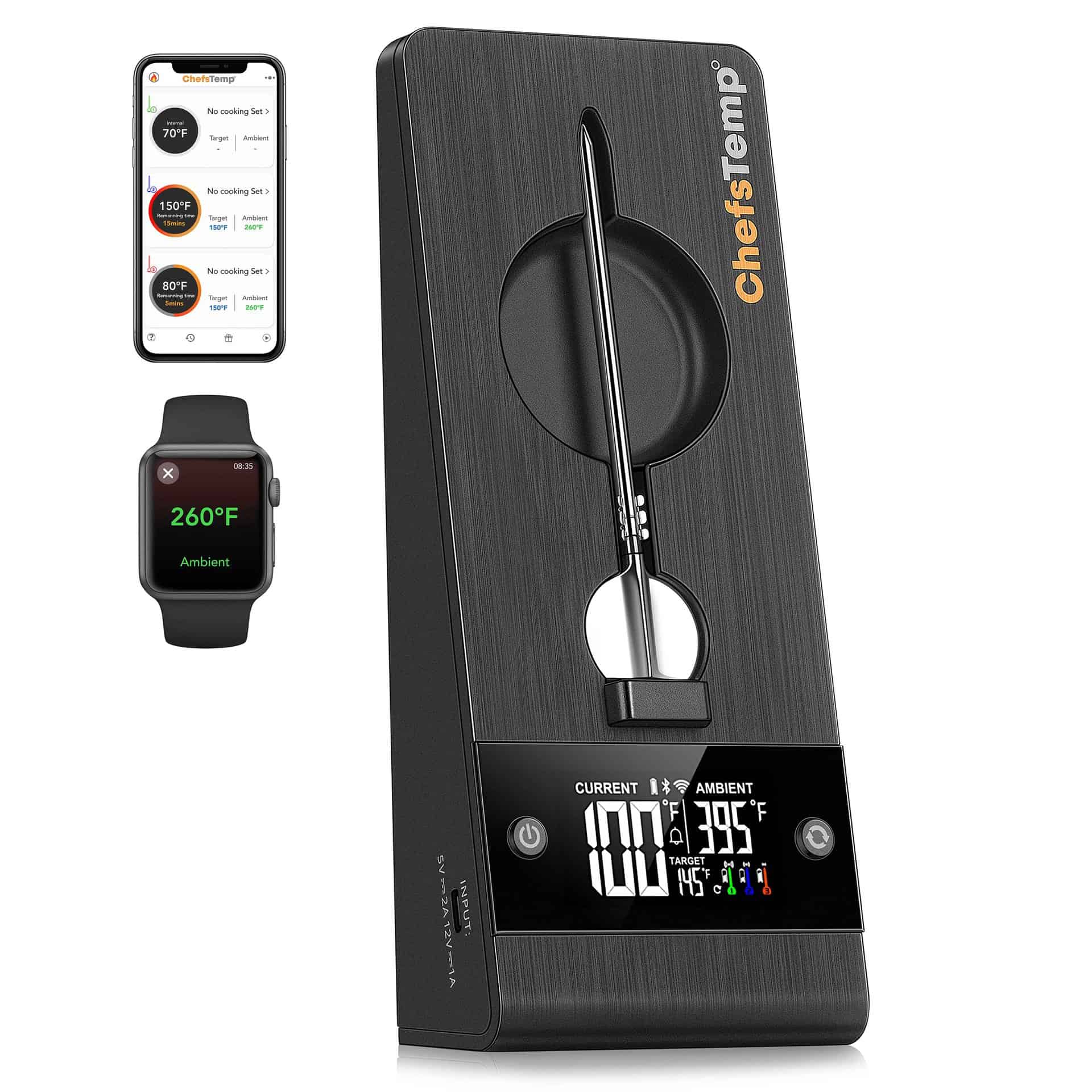
Where the Reddot Winner in 2022, ProTemp S1, makes a genuine argument on tightly sealed Kamado and ceramic cookers, such as Big Green Egg, Primo, and Kamado Joe. On those grills, a 46 CFM fan is genuinely excessive, cord pinching under a heavy ceramic lid is a real probe-damage risk, and the overnight battery life gap between this unit (up to 300 hours in Bluetooth mode) and ThermoWorks Signals (13–16 hours) becomes a legitimate operational consideration.
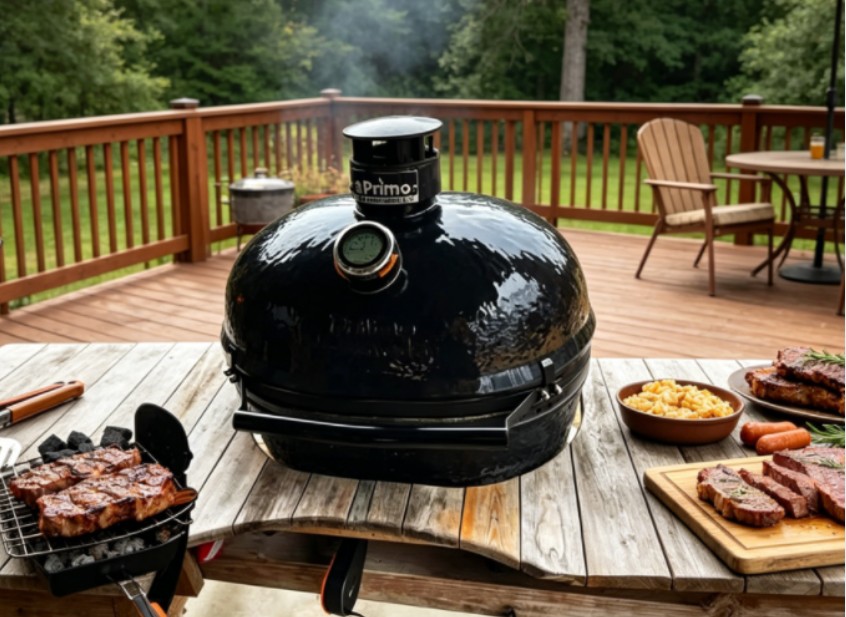
Primo Ceramic Grill: Backyard BBQ Perfection
The Rise of Wireless Smart Hubs
The most immediate problem with most kamado setups is the dome thermometer. Factory-installed bimetallic dials are notoriously inaccurate under sustained heat: independent testing consistently shows a drift of 20–40°F after prolonged use at smoking temperatures. On a cook targeting 225°F, that means your dial could read correctly while your actual grate temperature sits anywhere between 185°F and 265°F. This range produces meaningfully different results on a pork shoulder.
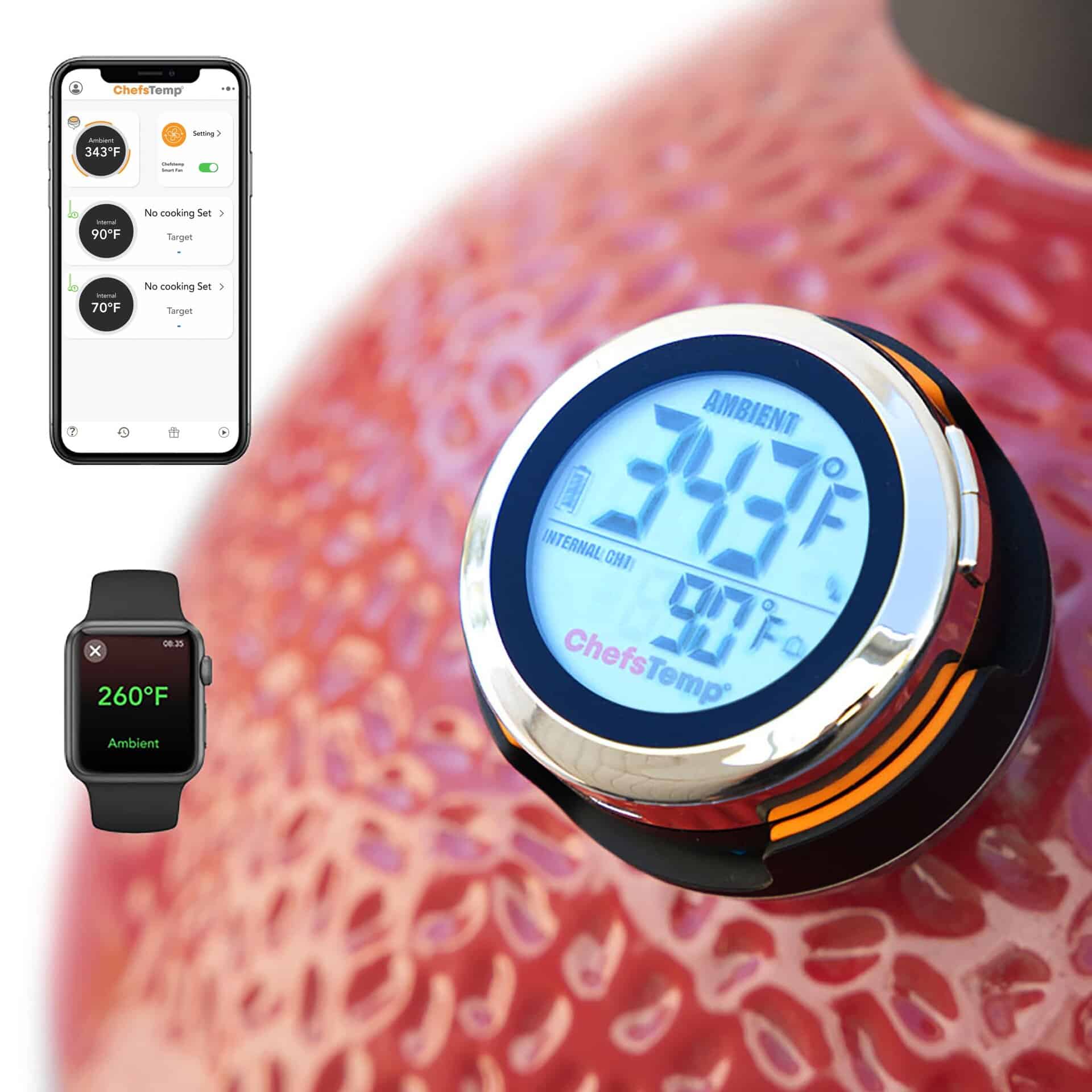
The ProTemp S1 mounts directly into the dome vent port, replacing the factory dial entirely. Its Platinum RTD sensor is rated to ±1°F (±0.5°C) accuracy and handles temperatures up to 1000°F. In practice, this means the temperature reading you see on your phone reflects what is actually happening at the grate level, not what a degraded bimetallic spring approximates.
Seamless Fan Integration
The operational difference that separates the ProTemp S1 from both the FireBoard 2 Drive and ThermoWorks Signals Billows is straightforward: there are no cables between the hub, the fan, and the probes. On a kamado, this matters more than it sounds.
Picture a typical overnight cook: pork butt at 10 p.m., target temperature 250°F, lid closed. With a traditional corded setup, 4 probe cables exit through the lid gasket; each is a potential air-leak point and a stress-fracture risk on a heavy ceramic lid that opens and closes dozens of times.
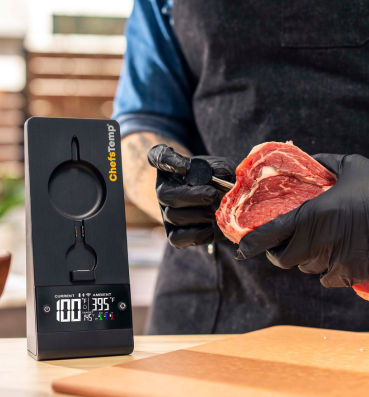
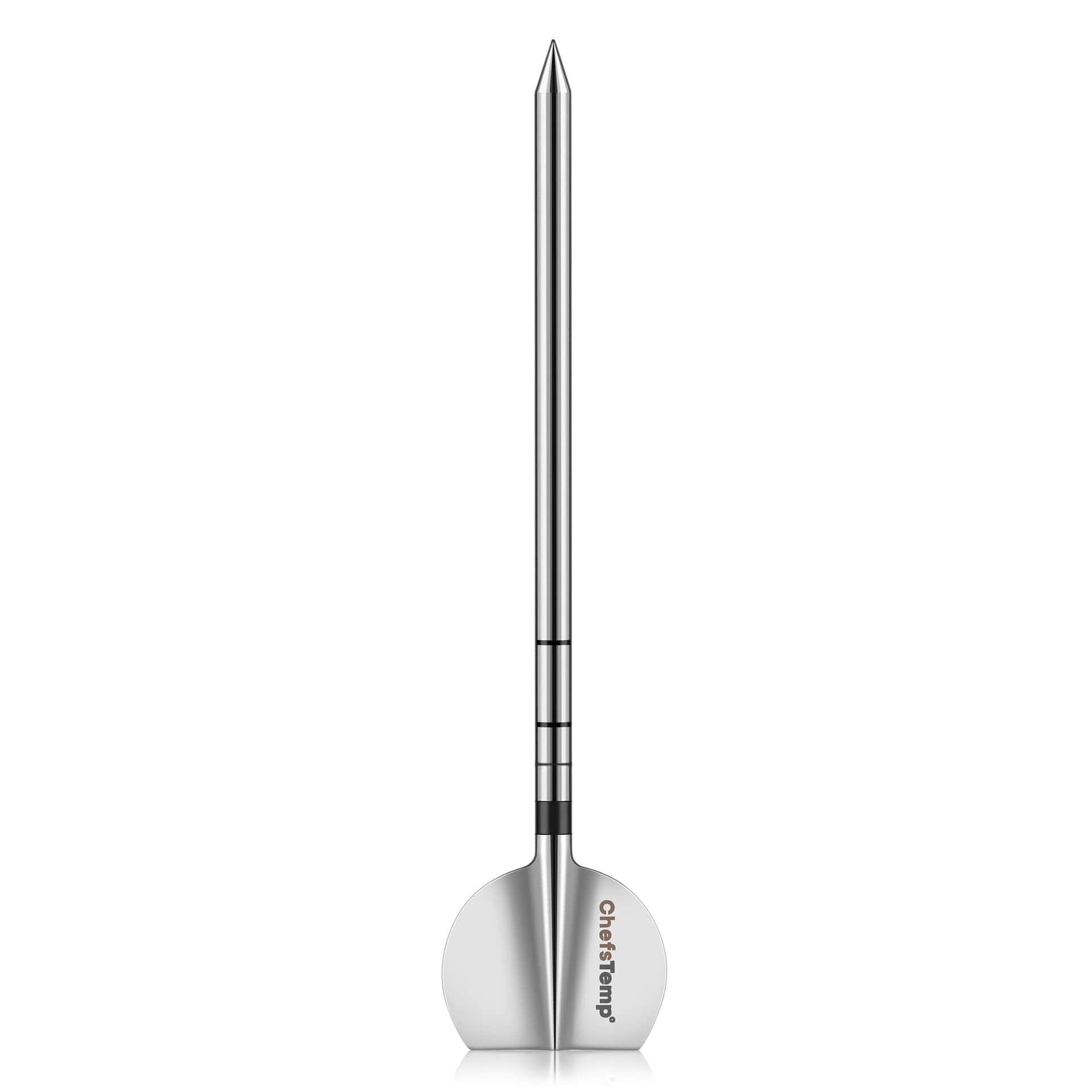
The ProTemp S1 avoids this entirely. It features 4 wireless meat probes that transmit via Bluetooth to the hub; the hub pushes data to your phone over Wi-Fi, and the Breezo V2 fan pairs with the hub wirelessly. You open and close the lid without managing a single cable. Watch how professionals master temp control with ProTemp S1 + Breezo on Kamado.
The practical trade-offs are worth stating plainly:
- Fan Output: The Breezo V2 delivers lower CFM than the Billows. On a sealed kamado, this is sufficient. On a leaky offset, it is not.
- Data Export: The ProTemp S1 does not support CSV or spreadsheet exports. If you log cook data for competition analysis, this is a disqualifying limitation.
Wireless Meat Probes and Range
Once the ProTemp S1 hub connects to your home Wi-Fi network, temperature monitoring is distance-agnostic. A cook running a 12-hour brisket can check both pit and meat temperatures from inside the house, run errands, or, more practically, sleep through the night with alerts set for temperature deviations, rather than waking up every 90 minutes to check the cooker in person.
Bluetooth range governs probe-to-hub communication; Wi-Fi handles hub-to-phone. In a typical suburban backyard setup where the hub is within 30 feet of the router, this architecture is reliable. The system’s ceiling is its probe count: four wireless probes cover most kamado scenarios but fall two channels short of the FireBoard 2 Drive’s 6-probe capacity for high-volume competition cooks.
The Spec Showdown: FireBoard 2 Drive vs ThermoWorks Signals vs ProTemp S1
| Caratteristica | FireBoard 2 Drive | ThermoWorks Signals + Billows | ChefsTemp ProTemp S1 + Breezo V2 |
| Probe Channels | 6 corded | 4 corded | Up to 4 wireless |
| Fan CFM | 20 CFM (Drive G3 Blower) | 46 CFM (Billows) | Lower CFM; suited for sealed kamado only |
| Durata della batteria | ~30 hours | 13–16 hours | 40 hrs (Wi-Fi mode); 300 hrs (Bluetooth only) |
| Sensor Accuracy | ±0.7°F (±0.4°C) | ±1.8°F at food-safe temps | ±1°F (±0.5°C) via Platinum RTD |
| Connettività | Wi-Fi + Bluetooth | Wi-Fi + Bluetooth | Wi-Fi + Bluetooth |
| Wire-Free Use | No, corded probes; fan cables into unit | No, Billows requires USB-C wall outlet | Yes, fully wireless probes and fan |
| On-Device Controls | Single multi-function button | Multi-button; full alarm control without phone | Digital display; app-primary for full control |
| Best Use Case | Competition / multi-protein data logging | Large-format or leaky offset smokers | Tightly sealed kamado and ceramic cookers |
Part 3. Which Smart Grill Thermometer Should You Buy?
There is no universal right answer here. The best BBQ cooking thermometer depends entirely on how you cook, what you cook on, and whether a tangle of cables genuinely bothers you. Three very different types of pitmasters will each walk away, preferring a different BBQ cooking thermometer.
The Data-Obsessed Competitor already knows who they are. They keep a cooking journal. They screenshot their temperature graphs. If that sounds familiar, the FireBoard 2 Drive is your system. With 6 simultaneous probes, deep cloud logging, and spreadsheet export, it’s the most analytical Bluetooth meat thermometer on the market. Nothing else comes close for pure data depth.
The durability seeker needs something that works without a phone in hand. Greasy fingers. Windy afternoons. A massive offset smoker that bleeds heat through every seam. That is where ThermoWorks Signals earns its keep.
The physical buttons respond to taps even through thick gloves, and the 46 CFM Billows fan is powerful enough to bring a leaky cooker back to temperature quickly. One caveat worth knowing up front: if your pit is more than 15 feet from a power outlet, running Billows becomes complicated. It needs a USB-C power source to operate.
The modern, clutter-free pitmaster is tired of managing cables. They want to set a target temperature, walk inside, and check their phone. The ChefsTemp ProTemp S1 is built for a genuinely clean setup on tight, sealed cookers like Kamado and ceramic grills.
You can finally put together the perfect grill station without a single cord in sight. That said, if you run a large, leaky offset smoker that demands serious airflow to stay stable, the ThermoWorks Signals remains a powerful call.
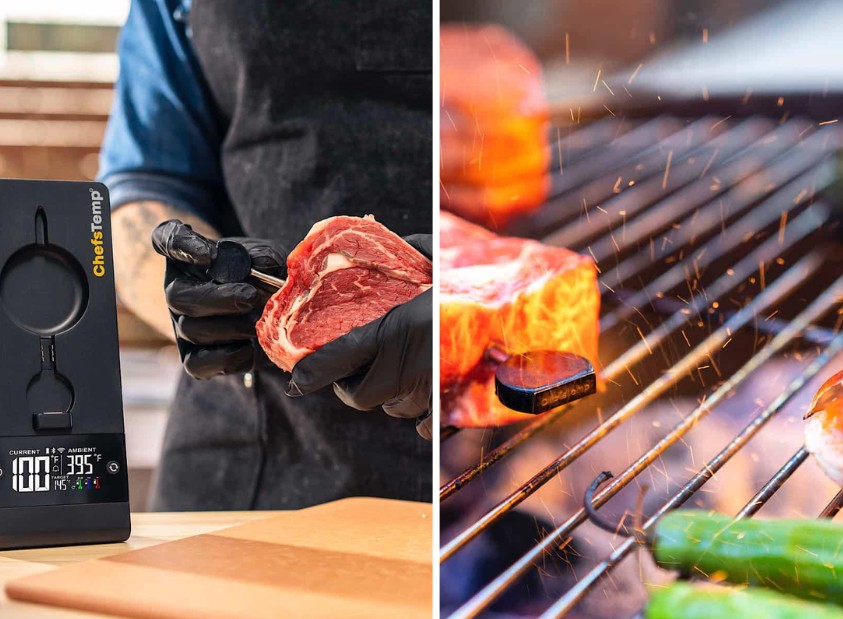
ChefsTemp Smart Thermometers: Precision Grilling for Weekend BBQ
Part 4. The Bottom Line
FireBoard 2 Drive vs ThermoWorks Signals: both are excellent digital thermometers, and both are corded. A feature that remains the most-cited real-world complaint across pitmaster forums and subreddits. A good BBQ cooking thermometer changes that entirely.
The ChefsTemp ProTemp S1 takes a different path, using Platinum sensors and a wireless fan to eliminate cables without sacrificing accuracy. Whether you are planning a 12-hour smoke or pulling together a last-minute BBQ recipe on a Saturday afternoon, pick the BBQ thermometer that matches your pit and can handle the heat.
Part 5. FAQs about BBQ Cooking Thermometer
Q: How accurate should a BBQ cooking thermometer be?
The FireBoard 2 Drive vs ThermoWorks Signals differ on this spec: FireBoard 2 Drive measures ±0.7°F; ThermoWorks Signals measures ±1.8°F in the 32–248°F range. Both exceed the USDA’s practical safety threshold, but the FireBoard’s tighter sensor is the better choice for precision competition cooks where a 1°F margin matters.
Q: Can I use a BBQ temperature controller on any grill?
These controllers are built specifically for charcoal and wood smokers, including Kamado-style, drum, and gravity-fed units. They manage the fire by forcing oxygen into the bottom vent. Do not buy them for gas or pellet grills, as pellet cookers already use built-in augers to control their heat automatically.
Q: What is the advantage of a fan-controlled BBQ cooking thermometer?
A fan eliminates the need to adjust vents manually. The smart hub constantly monitors ambient heat; when the pit cools, it triggers the blower to stoke the fire. This steady oxygen flow stops massive heat spikes and keeps your brisket cooking evenly during overnight sessions.
Q: What features should I look for in the best meat thermometer?
Prioritize these 5 specs in this order: sensor accuracy of ±1°F or better, battery life of 20+ hours for overnight cooking, fan CFM matched to your cooker’s airtightness, on-device controls for use without a smartphone, and cloud logging for cook-to-cook data analysis. The FireBoard 2 Drive and ThermoWorks Signals Billows each satisfy 4 of these 5 criteria. They fail at different ones.
Q: Are expensive BBQ cooking thermometers worth it?
Yes, premium models quickly pay for themselves. Cheap gauges force you to guess, which often leads to ruined, expensive cuts of meat. High-end units provide commercial-grade sensors, durable waterproofing, and dependable wireless alerts. High-end sensors dramatically reduce cooking failures, which matters most when you are smoking a Wagyu brisket for over 14 hours.
Scopri altri prodotti ChefsTemp

Scopri altre ricette e impara trucchi di cucina unendoti alla nostra famiglia di cuochi su Facebook.
Potrebbe anche interessarti: