How Do You Use a Grill Temperature Controller to Manage Your Charcoal Grill?Draft Post
The smart grill market is booming. Experts at Verified Market Reports expect it to hit USD 3.2 billion by 2033. This proves that home cooks want easy, high-tech meals.
A grill temperature controller is the best way to handle this because it takes the guesswork out of outdoor cooking. Using a traditional charcoal smoker is normally hard and requires constant attention.
We know that oxygen feeds the fire, which makes the coals burn hotter. However, if you have too much oxygen, the fire burns the food rapidly. On the other hand, too little oxygen snuffs out the flame entirely.
To fix this, a digital controller acts as an automated assistant. It monitors the internal heat and adjusts airflow instantly. This smart grill temperature controller saves you from constantly opening and closing vents. Now, you get restaurant-quality barbecue at home. Upgrade your grilling setup today to make your next family feast effortless.
Sommario
Part1: Why is Controlling Your Grill Temperature Important?
Hitting the right heat is the secret to a perfect meal. Consistent heat makes your food taste better and cooks evenly every time. Controlling your grill temperature prevents mistakes, ensuring your meat stays juicy and full of flavor without any effort.
Steady heat helps tough meat turn tender. When you cook in a charcoal barbecue grill smoker, going slow is vital. This gives the tough parts of the meat time to soften up. For example, the fat in a brisket melts at 160°F (71°C), making the meat juicy. If the heat gets too high, the meat can get tough and dry.
Most pros keep the temperature between 225°F (107°C) and 275°F (135°C) for long cooks. Controlling your grill temperature with a good thermometer helps you catch these heat changes early. This way, you can fix the fire before the meat gets ruined.
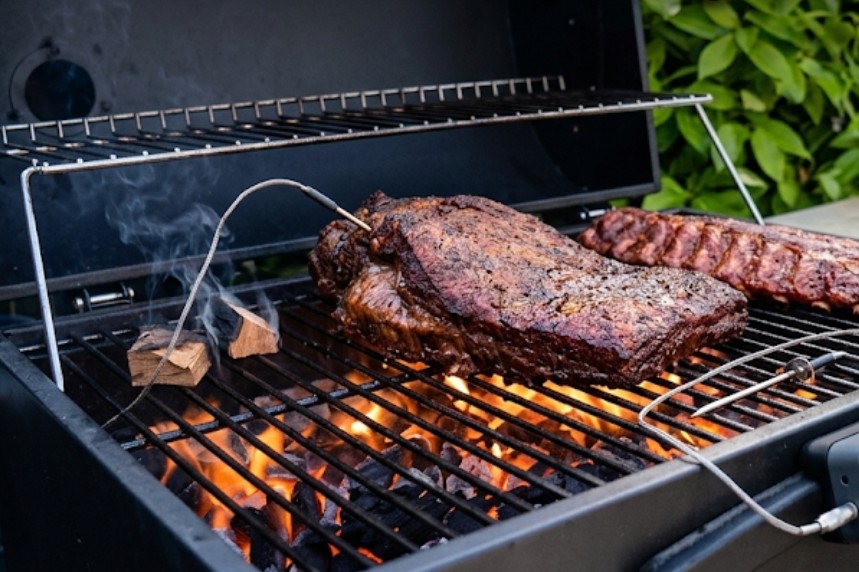
Later, you can use higher heat to get a crispy crust. This browning starts above 300°F (149°C) and adds a great roasted flavor. Many people cook low to achieve tenderness, then turn up the heat at the very end.
Steady air also stops grease fires. If fat drips onto hot coals too fast, the flames can flare up. This burns the outside and leaves a bitter taste. While some grill temperature control tips focus on gas, venting is even more important for charcoal grill smokers.
Make use of these easy habits:
- Keep the lid closed to hold the heat.
- After making tiny adjustments to the vents, give the temperature 5 to 10 minutes to settle.
- Watch the drip pan while cooking for a long time.
- Place a water pan with warm water over the coals. This keeps the heat steady and adds moisture, helping the smoke stick to your meat better.
Steady temperature turns barbecue from guesswork into repeatable, proud-to-serve food. It’s one reason smart grilling gear is growing fast in the market.
Part 2: How Grill Temperature Controllers Work as a Smoker Blower
A charcoal smoker can maintain consistent heat without you constantly monitoring the vents, thanks to grill temperature controllers. They function as a clever assistant, supplying air when the fire requires it and withdrawing when it does not.
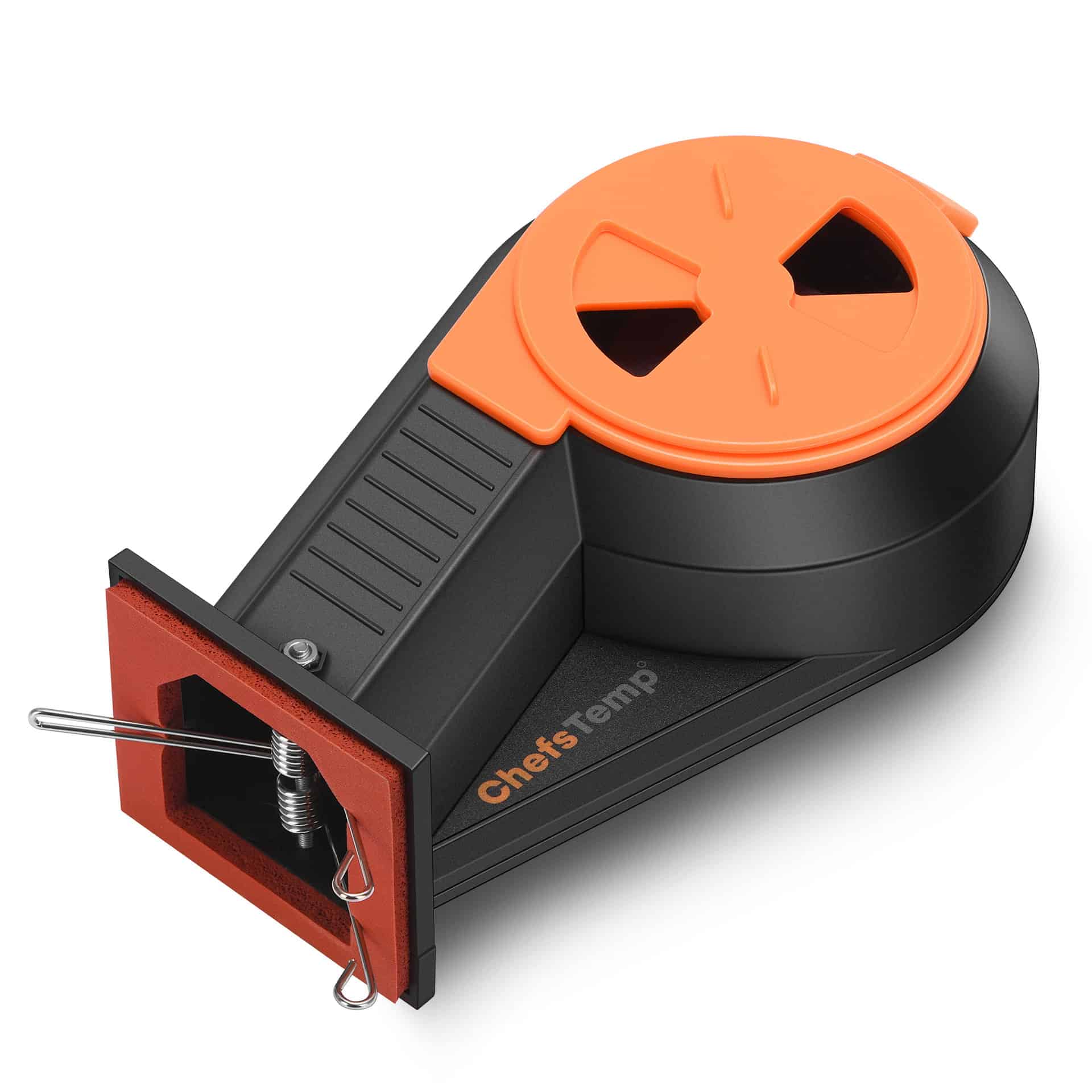
The cooker’s bottom vent, where air typically enters, is where a grill controller is first installed. When the pit temperature drops, a small BBQ fan, like ChefsTemp Breezo V2, blows air onto the coals to boost the fire. Once the heat reaches your goal, the fan stops, allowing the fire to settle.
The controller repeats this on-and-off cycle for hours. This keeps your heat steady and stops the temperature from swinging up and down. Because a small sip of air often retains temperature better than a full blast, look for variable fan speeds for optimal control.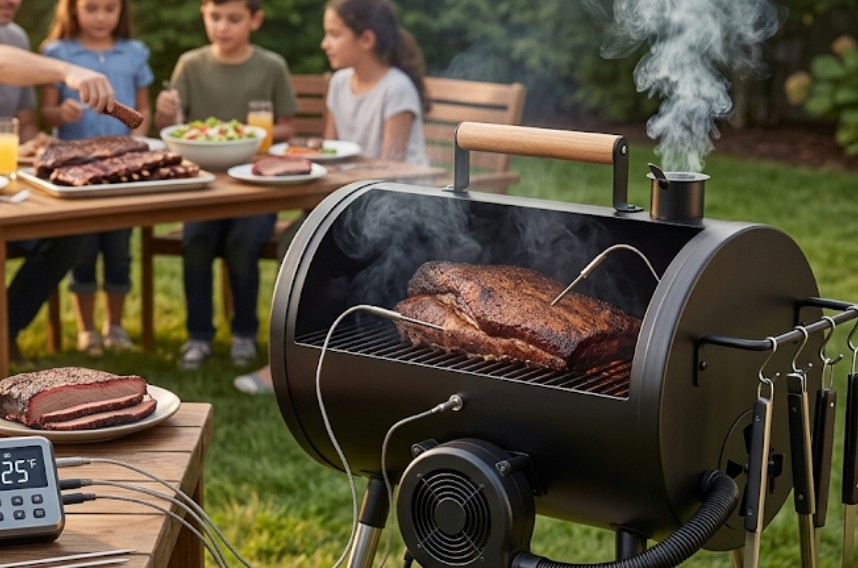
Using controlled airflow saves your charcoal because the fire only gets extra air when it needs it. Depending on the weather or how often you open the lid, you can cook for a long time on just one load of fuel.
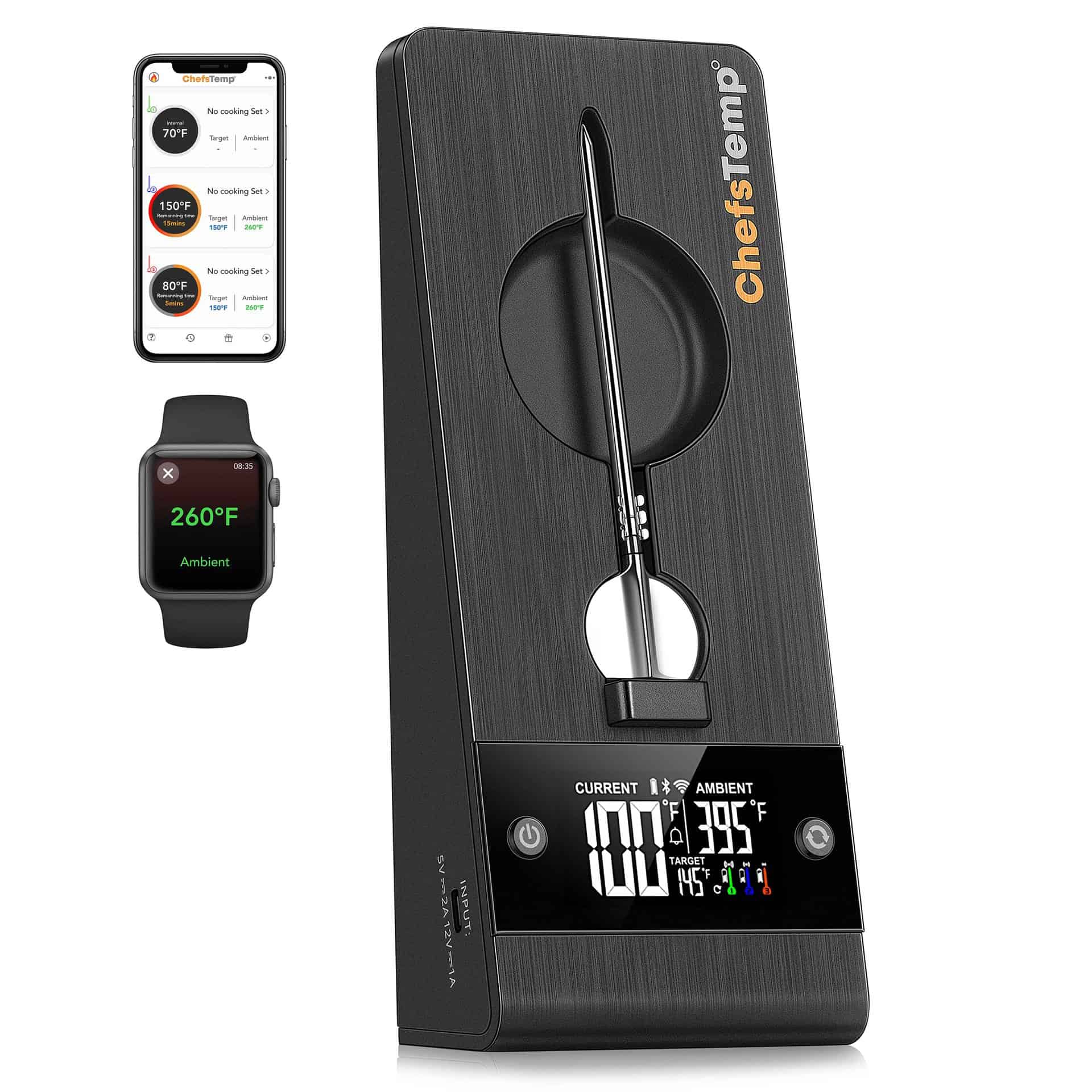
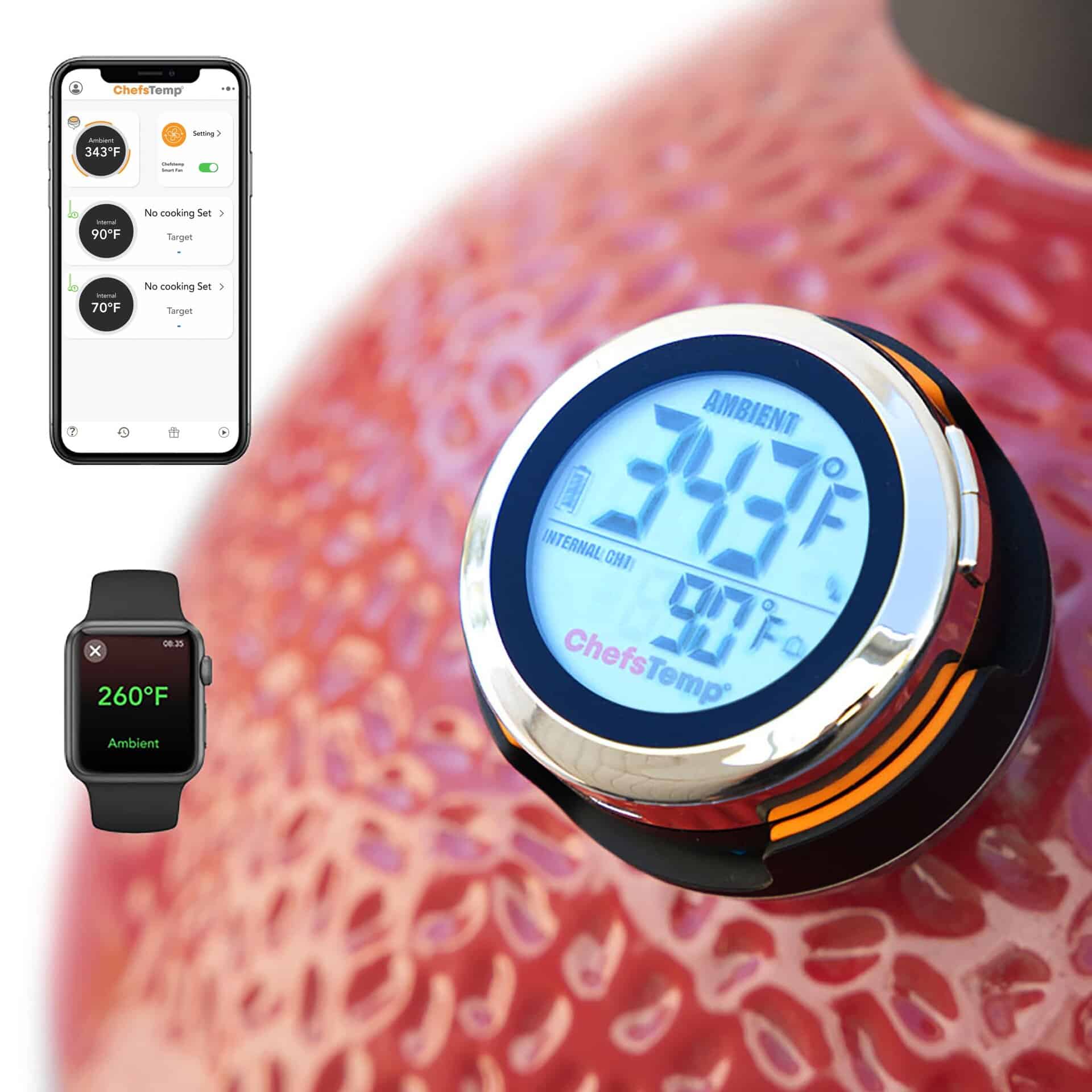
You can use Bluetooth or Wi-Fi to link a BBQ temp controller to your phone. It monitors the meat probe and pit readings. The app lets you set goals and receive notifications when the food is finished or the temperature changes. You can stay inside while the fire remains steady or unwind with friends with this remote control.
Quick buying checklist:
- Check that the fan fits your specific vent.
- Pick a unit with at least two probes to track both the grill and the meat.
- Look for alarms that are simple to hear and have different fan speeds.
- Take rain resistance and battery vs. wall power into account.
- Try the app before you buy; it should be stable and easy to read.
Done right, a controller keeps the fire calm – so your smoker behaves, your timing improves, and the cook feels a lot less stressed.
Part 3. How to Control the Temperature on a Charcoal Grill Accurately
Accurate controller temps start with one thing: probe placement. When the probe sits in the wrong spot, your numbers look right, but your food cooks wrong.
First, remember that a BBQ grill and smoker have hot and cool zones on the same grate. So, clip your ambient (pit) probe 1–2 inches away from the meat, at grate height. Also, keep the tip in the open air, because touching meat or a wet surface can pull the reading down and cause the controller to overheat the pit.
Use these placement rules:
- The probe should not be placed near heavy metal walls or grate bars.
- Avoid the outer edges where heat climbs the walls.
- Do not put the sensor over a direct flame, glowing coals, or a heat diffuser gap.
To find your cooker’s hot spots, try a biscuit test. Place plain biscuits across the grate and see which ones brown first. Always place your probe right where the food sits, not just in the hottest area.

In a charcoal vertical smoker, heat rises and changes at every level. Put your sensor on the same rack as your meat. Trust the grate probe that comes with your controller instead of a dome thermometer. The air near the lid is often much hotter than the air near your meat.
Finally, lock in consistency:
- Before you assess temperatures, let the pit run for 15 to 20 minutes.
- Re-check the probe clip after moving grates or adding water pans.
- If you cook on two racks, use a multi-probe setup to watch both zones.
As more people buy connected temperature controllers, the use of multi-probe tools is rising alongside the broader smart-grilling trend.
Part 4. How to Adjust Your Charcoal Grill’s Temperature Manually vs. Automatically
When deciding how you control the temperature on a charcoal grill, learning to adjust it manually helps you master the heat. Once you know how to move the air, using an automatic controller becomes much easier. Let’s break down both methods.
Managing vents manually
The bottom vent (intake) is your gas pedal. Allowing air to enter makes the flames burn hotter. The cooker’s top vent draws air through it as exhaust. Together, they mold your body’s heat.
Use the following tips when making manual changes:
- Low heat (250°F–350°F): Keep both vents one-quarter open.
- Medium heat (350°F–450°F): Open the vents halfway.
- High heat (450°F–550°F): Open the vents fully.
As you learn your charcoal grill with a thermometer, you will find its sweet spots. For more ideas, read How to get the right temperature on your BBQ.
Controlling temperature in big green egg cookers
Ceramic cookers need extra care. To control the heat in a Big Green Egg, use the bottom draft door and the top lid vent. The thick ceramic walls hold heat very well. If the fire gets too hot, it takes a long time to cool down.
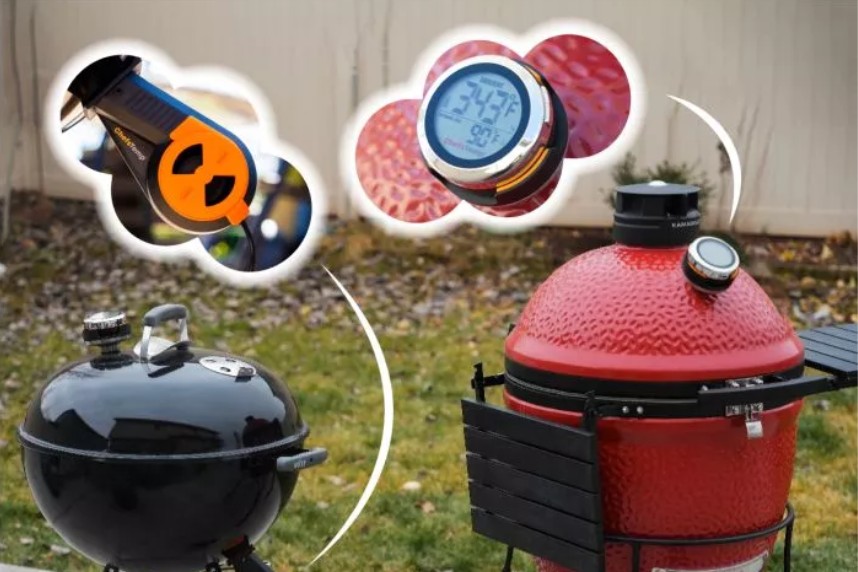
To reach a steady 392°F (200°C) to 446°F (230°C), open the bottom door one-quarter and keep the top vent fully open. For baking pizzas at 482°F (250°C), open the bottom door wide. Always move the vents in small steps and wait 15 minutes for the heat to settle.
Whether you use a controller or manual vents, keep the lid shut. Opening the lid lets heat out and cold air in, which makes the controller fan blow hard and over-stoke the fire. A closed lid means an even cook, every time.
Part 5. How Breezo V2 Helps with Charcoal Grill Temperature Outcomes
The Breezo V2 is built for one main job: keeping your charcoal cooker steady without you having to chase the vents. More backyard cooks are moving toward app-guided heat control, underscoring why grill temperature controllers like this are becoming popular.
The ChefsTemp Breezo V2 BBQ Temperature Control Fan works like a smart blower, mounting at your lower vent. The fan for smokers supplies oxygen to the pit to wake the coals when the temperature decreases. The cooker then turns off to prevent the flames from getting too hot once it reaches your desired temperature. By using a 5V DC motor to regulate airflow, the Breezo V2 can withstand temperatures up to 500°F (260°C).
Key setup details for Breezo V2:
- Adapter opening: 1.49 × 0.94 inches (38 × 24mm), suitable for a variety of kamados and kettles.
- Tight seal at the intake to reduce air leaks.
- App-based target setting so that the fan can hold steady heat.
- The kit includes two Kamado-style mounting plates and high-temperature aluminum tape to fit Big Green Egg, Kamado Joe, and Weber Smokey Mountain.
See it running here: Breezo on Kamado: Master Hot & Fast + Low & Slow Temp Control
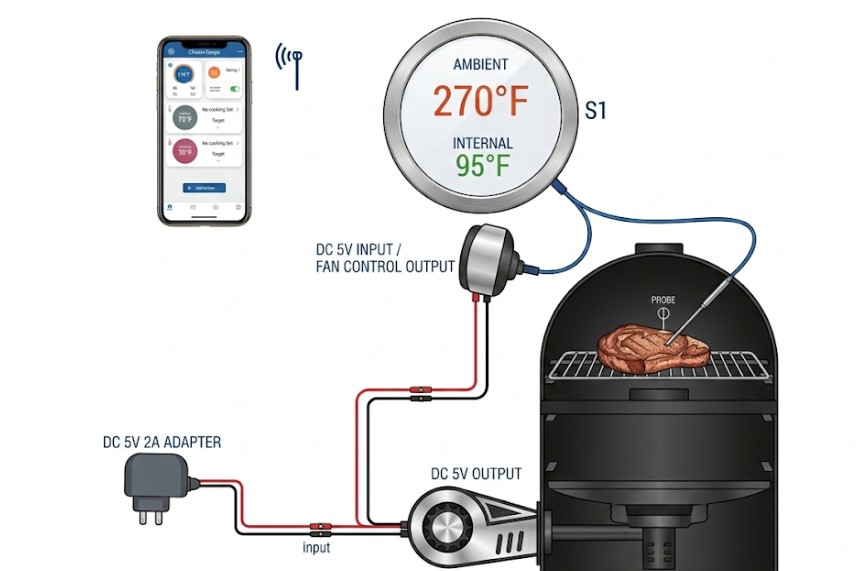
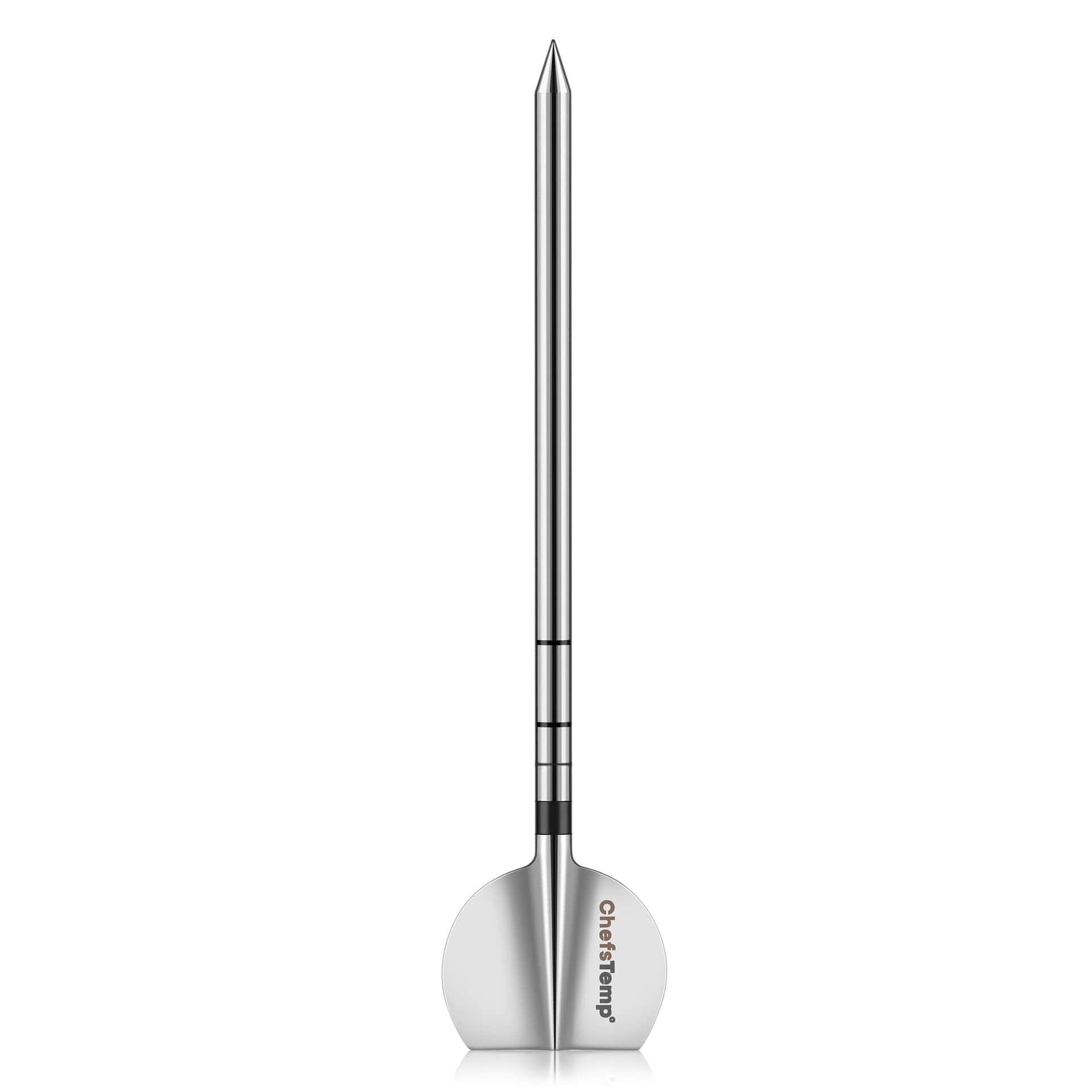
Breezo V2 can link into the ProTemp ecosystem. It may be wirelessly connected to the ProTemp S1 wireless meat thermometer and USB-C connected to the ProTemp 2 Plus. Using in-app timers and firmware updates helps you stay on track.
Stable temperatures, fewer surprises, and more leisure time are the true benefits. Dry meat and significant temperature fluctuations are common results of manually managing a charcoal fire.
Parte 6. Conclusione
Hand-managing a charcoal fire can result in significant temperature fluctuations, dry meat, and excessive supervision. A grill temperature controller quickly resolves those issues. It takes over the airflow to keep the heat exactly where you want it.
ChefsTemp offers smart tools, like Breezo V2, to make cooking easier. This fan connects to ProTemp sensors, which give both home cooks and pros spot-on control. Whether you smoke brisket or sear steaks, ChefsTemp gear delivers hands-free perfection.
Part 7. FAQs about Grill Temperature Controller
Q: How does a grill temperature controller actually work?
A grill temperature controller uses a digital probe on the grate to check the pit heat. If the temperature drops, the unit turns on a small fan at the bottom vent. This fan blows air over the coals to automatically restore the heat.
Q: Can I use a controller on any grill?
Most temperature controllers are compatible with many charcoal- and wood-fired cookers. For example, units like the Breezo V2 use adapter plates measuring 1.49 × 0.94 inches (38 × 24mm) that attach to common Kamados and Kettles.
Q: Does a grill temperature controller reduce the smoky flavor?
No, it keeps the heat steady, so wood smolders instead of catching fire. This slow burn produces thin blue smoke, lending a sweet taste. It prevents the bitter flavor caused by thick white smoke.
Q: Is it okay to leave the grill temperature controller outside?
You should not leave the main unit outside all the time. Metal probes handle high heat, but the plastic box and fan motor get ruined by rain. When you finish cooking, turn off the fan and store the controller indoors.
Q: Does closing the vent on a charcoal grill make it hotter?
No, closing the vents makes the grill cooler. A charcoal fire needs oxygen to burn. When you shut the bottom draft door or the top exhaust, you block the airflow. This chokes the coals and cools the pit. Doing this will eventually put the fire out completely.
Q: How do I keep a charcoal grill at 225°F (107°C)?
First, set up for indirect cooking using unlit coals. Add a few lit briquettes to start a slow fire. Close the bottom and top vents until they are only 1/8 to 1/4 open. This small airflow helps you keep a steady 225°F (107°C).
Q: Is a charcoal grill hotter with the vents open or closed?
A charcoal grill gets much hotter when the vents are wide open. Opening the bottom vent lets in the most oxygen. Opening the top vent pulls air through the firebox fast. This makes the fire burn hot, reaching 450°F (232°C) and 550°F (288°C).
Q: How to get the right cooking temperature for a charcoal barbecue?
To begin, use the proper amount of fuel. For searing, use more coals; for low heat, use fewer. The top vent manages minor adjustments. For major alterations, use the lower vent. Once you have made any vent modifications, check your digital grate probe.
Scopri altri prodotti ChefsTemp
Scopri altre ricette e impara trucchi di cucina unendoti alla nostra famiglia di cuochi su Facebook.
Potrebbe anche interessarti: