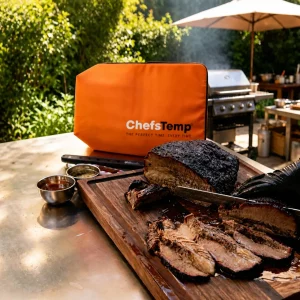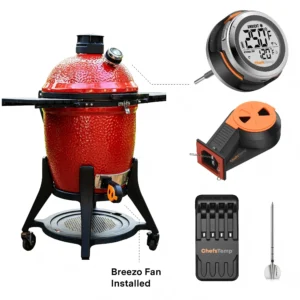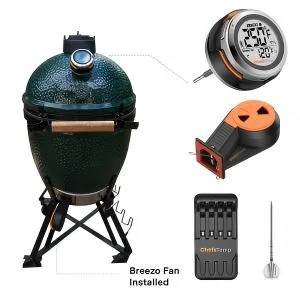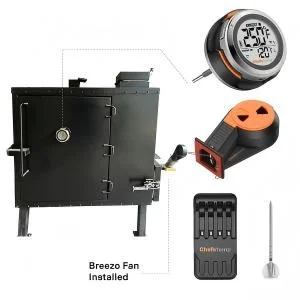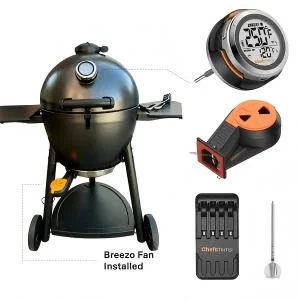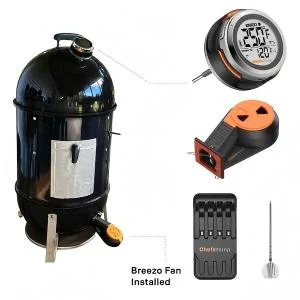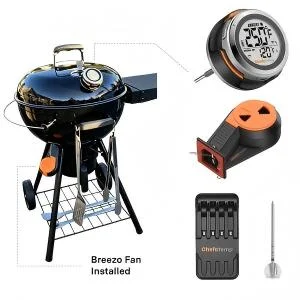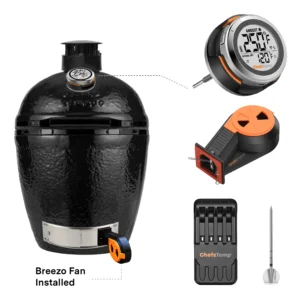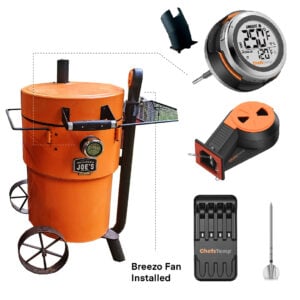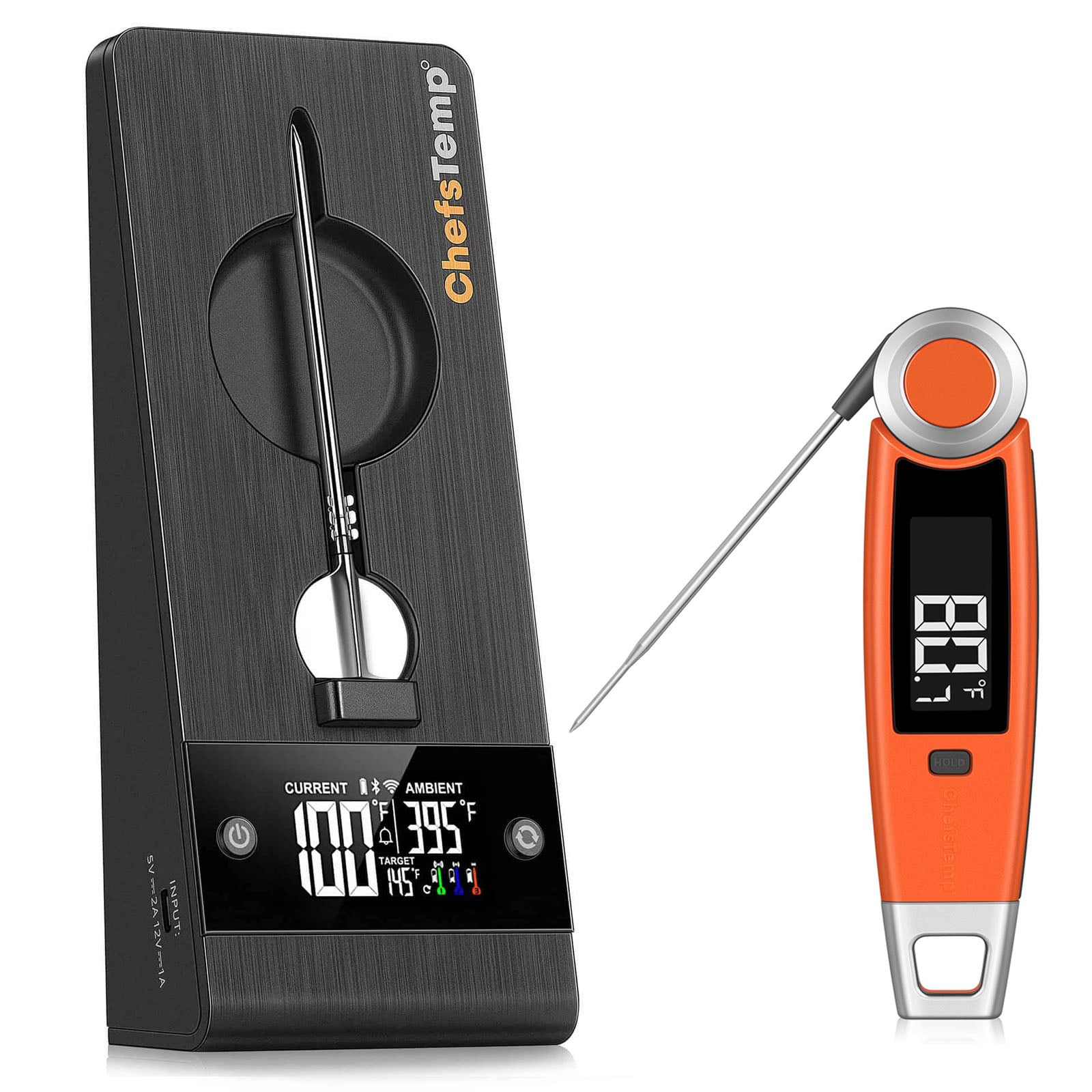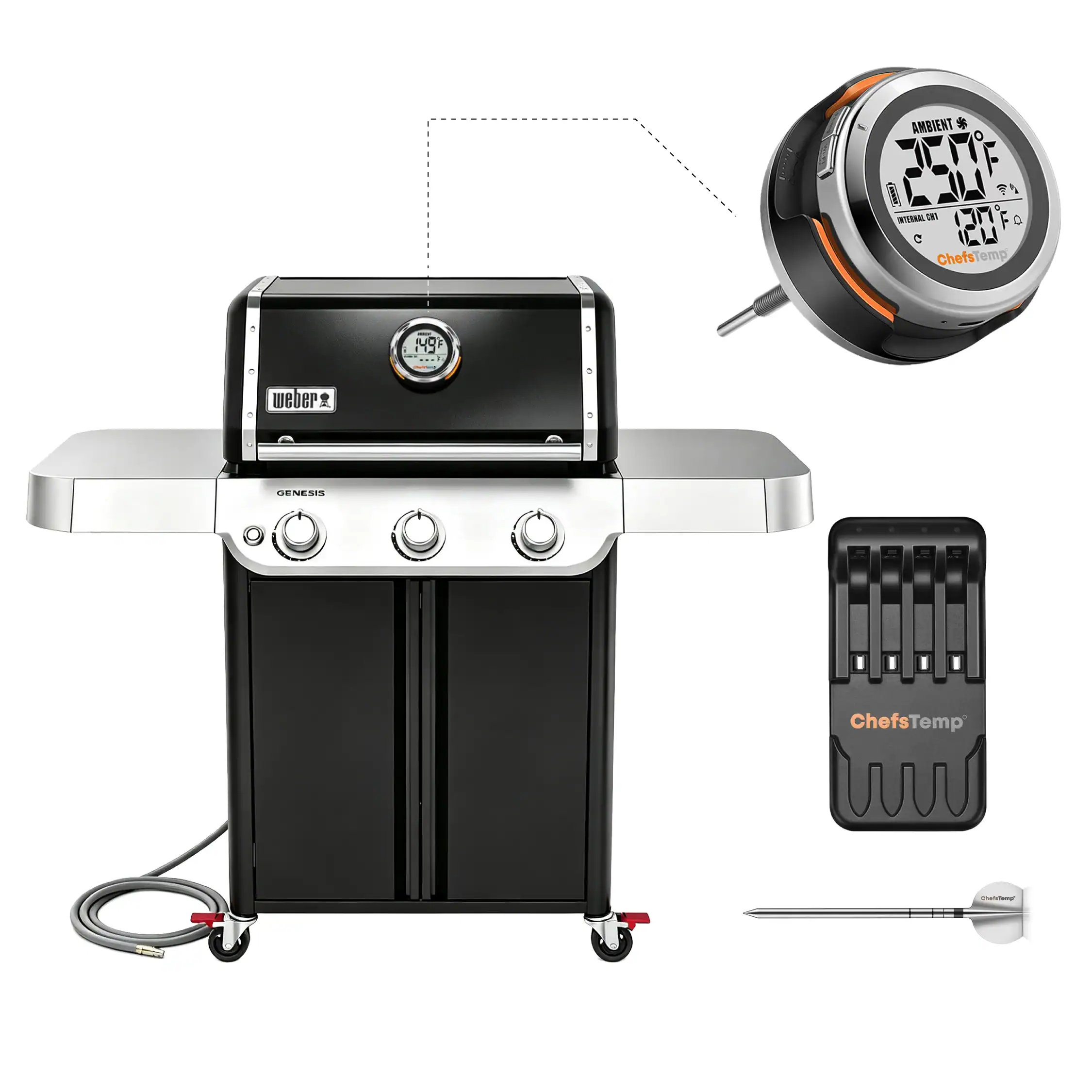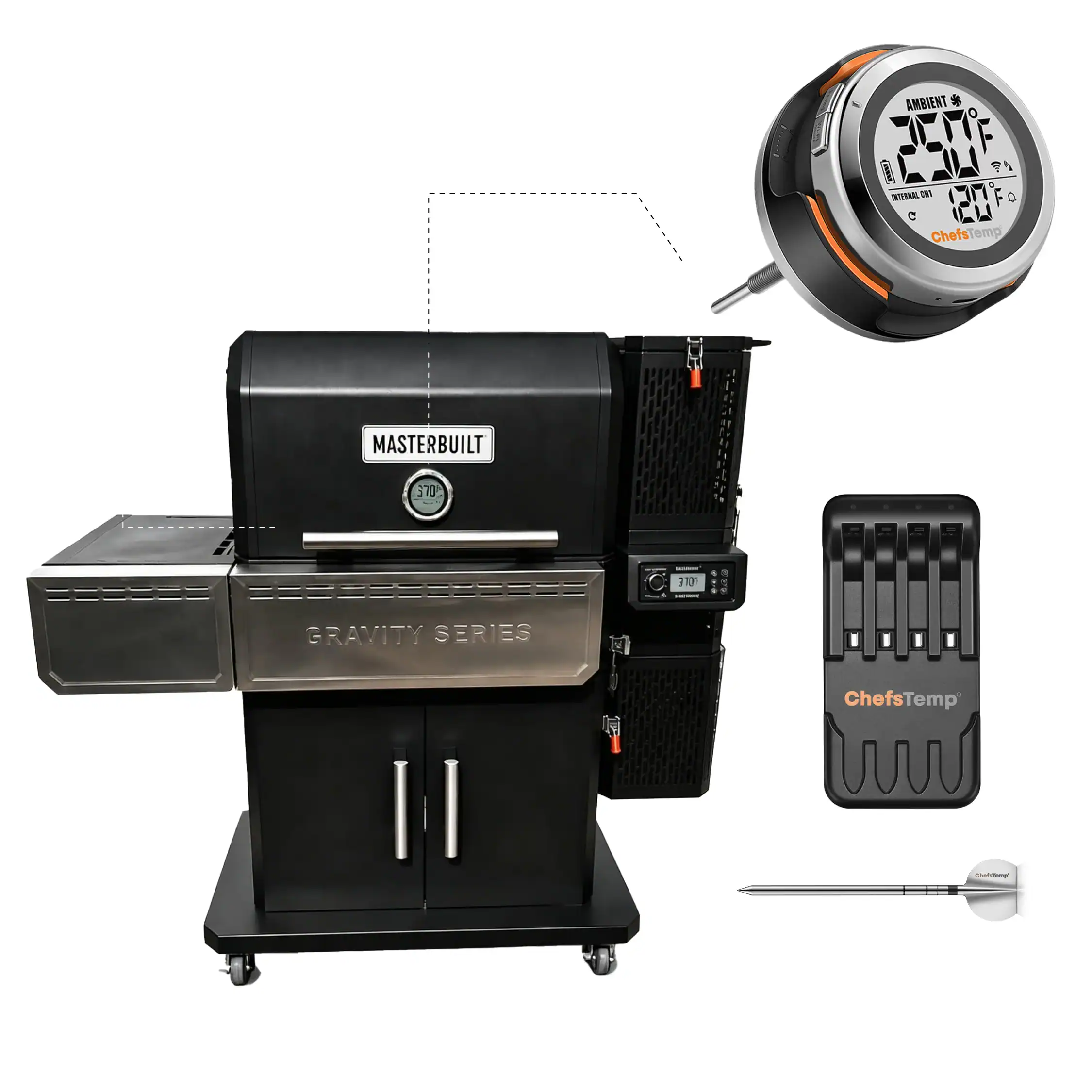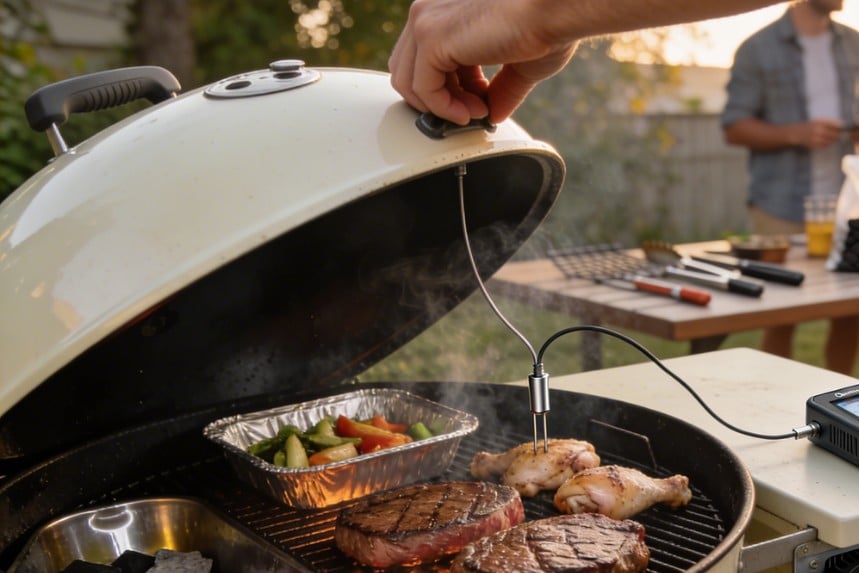
Managing temperature on a charcoal grill is one of the biggest challenges for beginners and even experienced pitmasters.
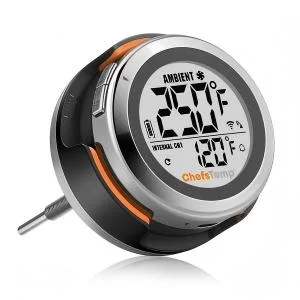
A grill temperature controlleris an automated device that regulates charcoal or wood-fire heat by controlling a blower fan at the bottom vent. It uses a digital pit probe to monitor grate-level temperatures, then automatically increases or decreases airflow to hold your target temperature – eliminating the need to manually adjust vents during long cooks.
In this guide, you’ll learn exactly how to use a BBQ temperature controller step by step, how it works, and how to keep your charcoal grill stable at 225°F–275°F for perfect results.
Part1: Why is Controlling Your Grill Temperature Important?
Hitting the right heat is the secret to a perfect meal. Consistent heat makes your food taste better and cooks evenly every time. Controlling your grill temperature prevents mistakes, ensuring your meat stays juicy and full of flavor without any effort.
Steady heat helps tough meat turn tender. When you cook in a charcoal barbecue grill smoker, going slow is vital. This gives the tough parts of the meat time to soften up. For example, collagen in a brisket begins converting to gelatin at around 160°F (71°C), making the meat juicy. However, for brisket to reach full tenderness, the internal temperature needs to climb to 195–205°F (91–96°C) – a standard recommended by the USDA and most pitmasters.
Most professional pitmasters maintain a low-and-slow range of 225°F–275°F (107°C–135°C), which is widely considered optimal for smoking meats. Controlling your grill temperature with a good thermometer helps you catch these heat changes early. This way, you can fix the fire before the meat gets ruined.
Quick Answer: To maintain steady BBQ temperature, control airflow, keep the lid closed, and use a temperature controller or thermometer to stay within 225°F–275°F
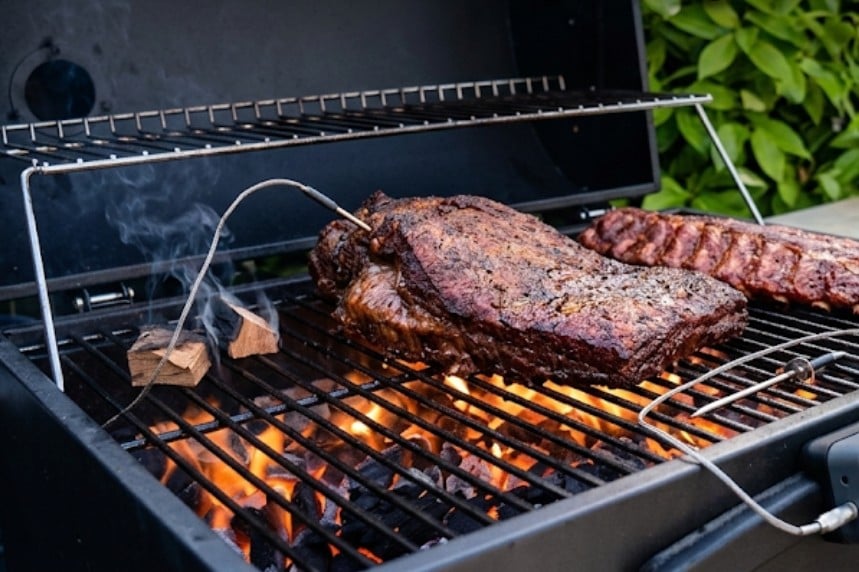
Later, you can use higher heat to develop a crispy crust. The Maillard browning reaction begins around 280°F (138°C), while a true caramelized crust typically requires 350°F (177°C) or above. Many pitmasters cook low and slow first, then crank the heat for the final 30 minutes.
Steady air also stops grease fires. If fat drips onto hot coals too fast, the flames can flare up. This burns the outside and leaves a bitter taste. While some temperature control tips apply to gas grills, grill temperature control tips for charcoal and wood-fire smokers is uniquely critical, where airflow is the only way to regulate heat without adding or removing fuel.
Make use of these easy habits:
- Keep the lid closed to hold the heat.
- After making tiny adjustments to the vents, give the temperature 5 to 10 minutes to settle.
- Watch the drip pan while cooking for a long time.
- Place a water pan with warm water over the coals. This keeps the heat steady and adds moisture, helping the smoke stick to your meat better.
Steady temperature turns barbecue from guesswork into repeatable, proud-to-serve food. It’s one reason smart grilling gear is growing fast in the market.
Part 2: How Grill Temperature Controllers Work as a Smoker Blower
A charcoal smoker can maintain consistent heat without you constantly monitoring the vents, thanks to grill temperature controllers. They function as a clever assistant, supplying air when the fire requires it and withdrawing when it does not.
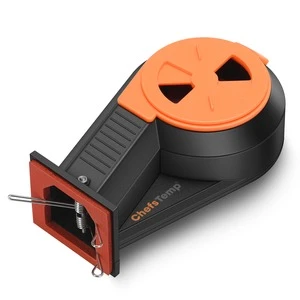
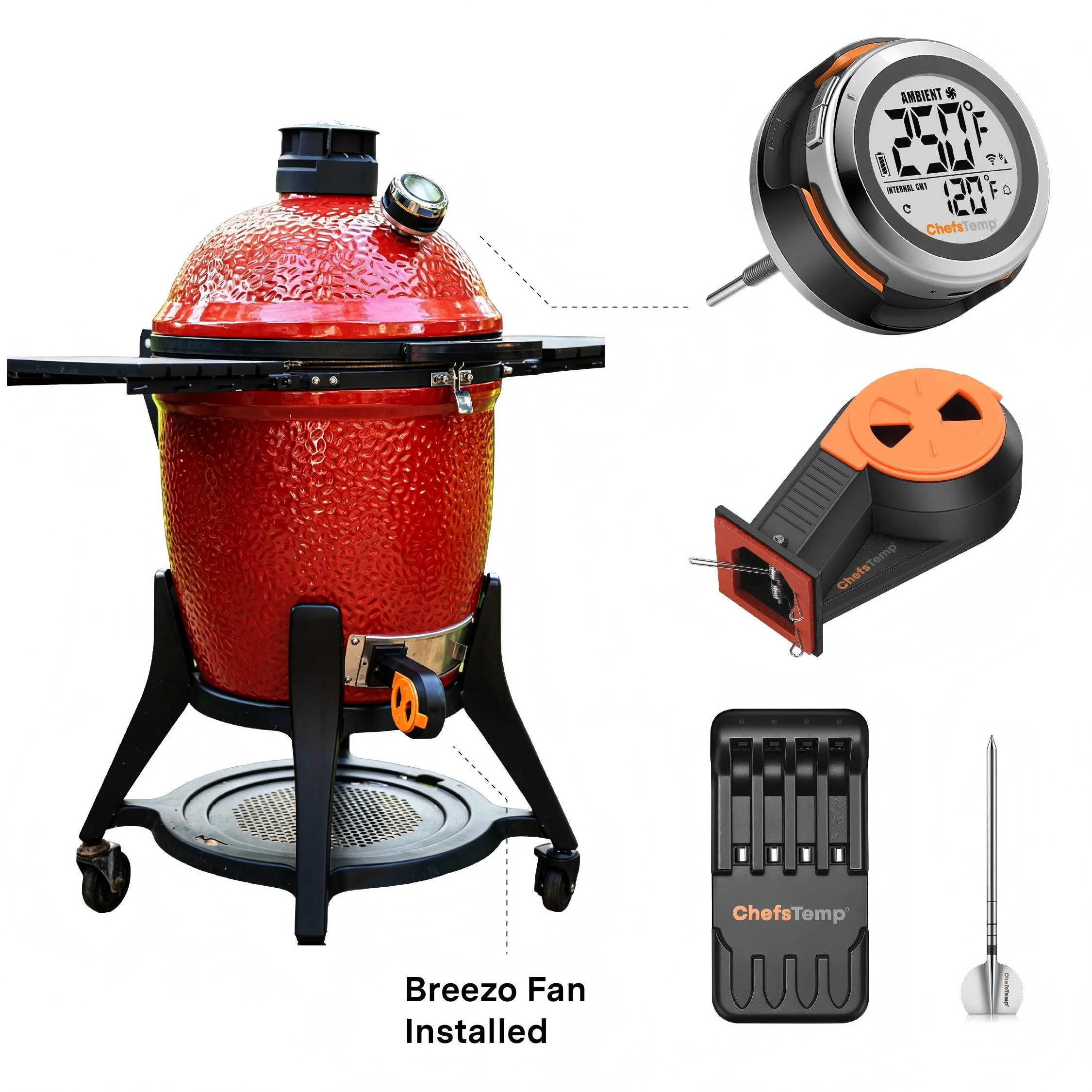
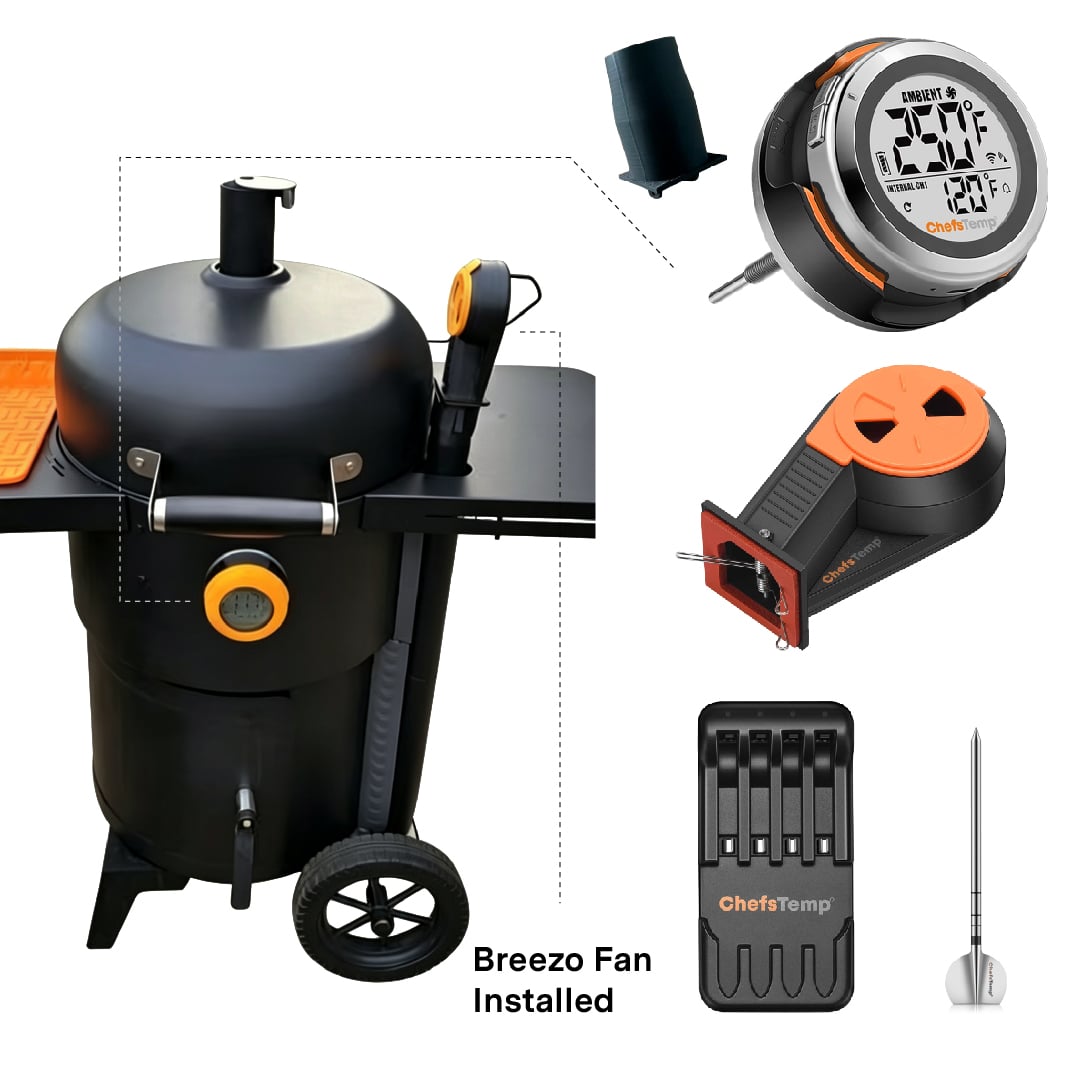
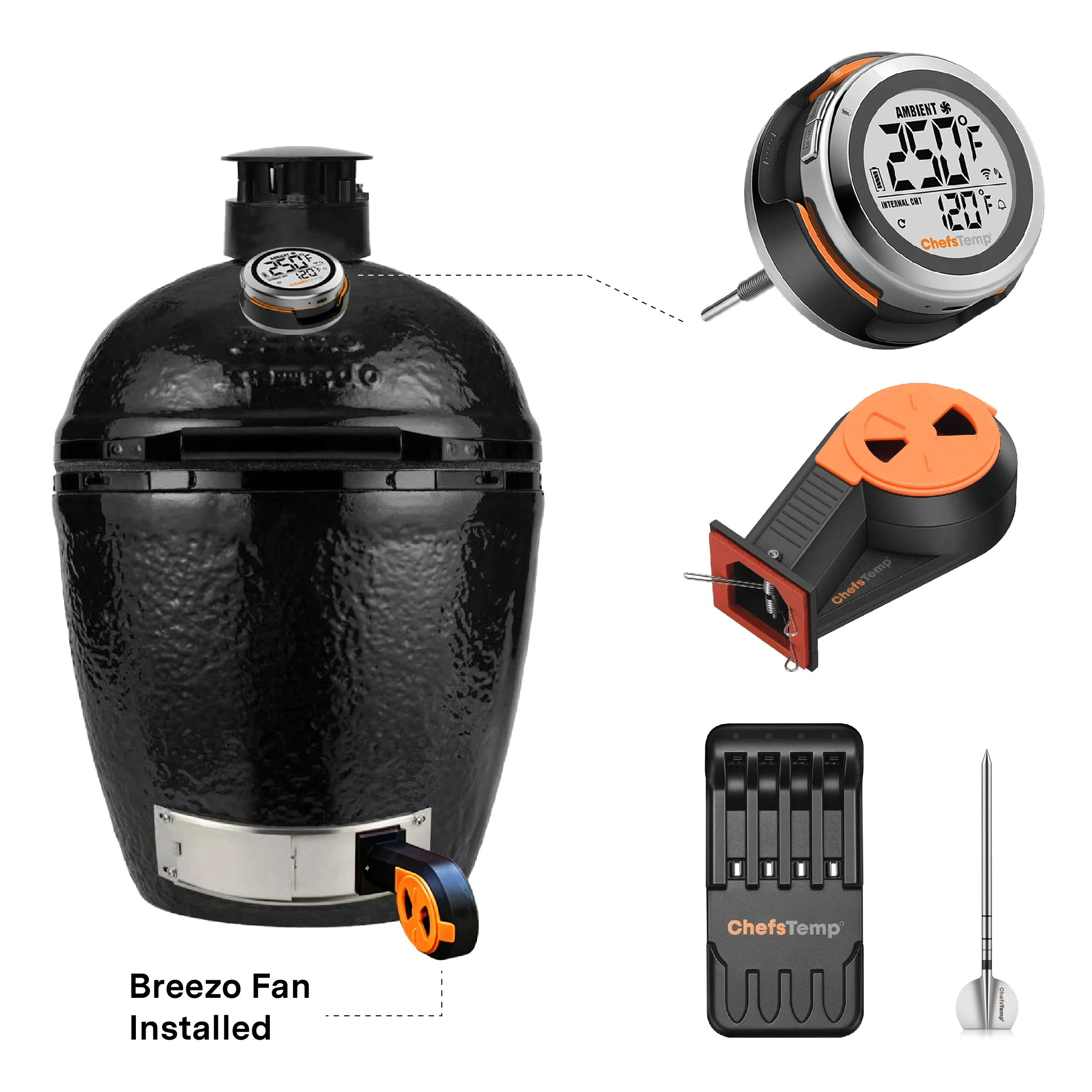
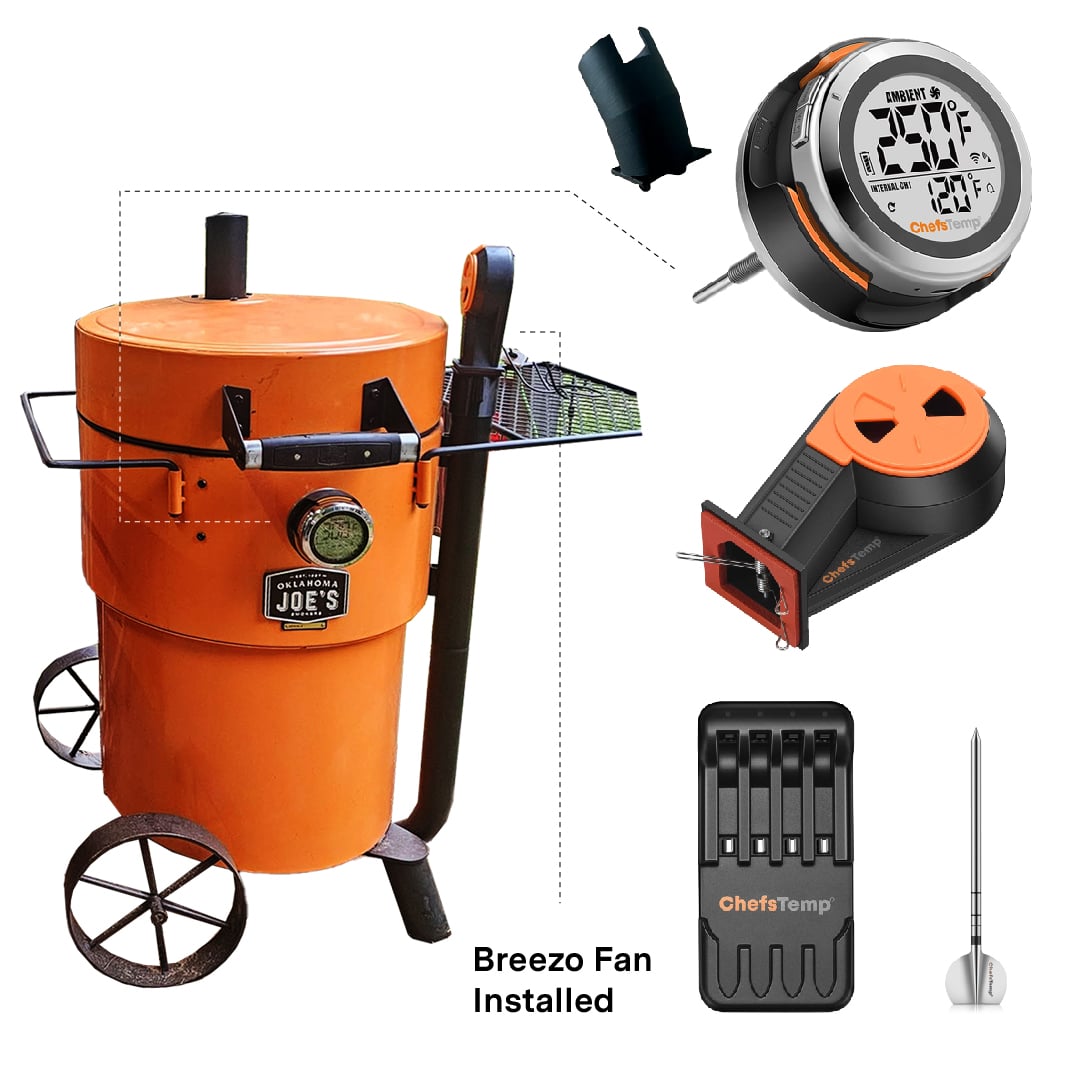
The controller’s fan mounts directly to the cooker’s bottom vent (the intake). But remember: a controller can only add air; it cannot cool the grill down. When the pit temperature drops, a small BBQ fan, such as the ChefsTemp Breezo V2, blows air onto the coals to boost the fire. Once the heat reaches your goal, the fan stops, allowing the fire to settle.
The controller uses a feedback loop (similar to PID control in engineering), continuously comparing the actual temperature to the target temperature and adjusting airflow accordingly. This keeps your heat steady and stops the temperature from swinging up and down. Because a small sip of air often retains temperature better than a full blast, look for variable fan speeds for optimal control.
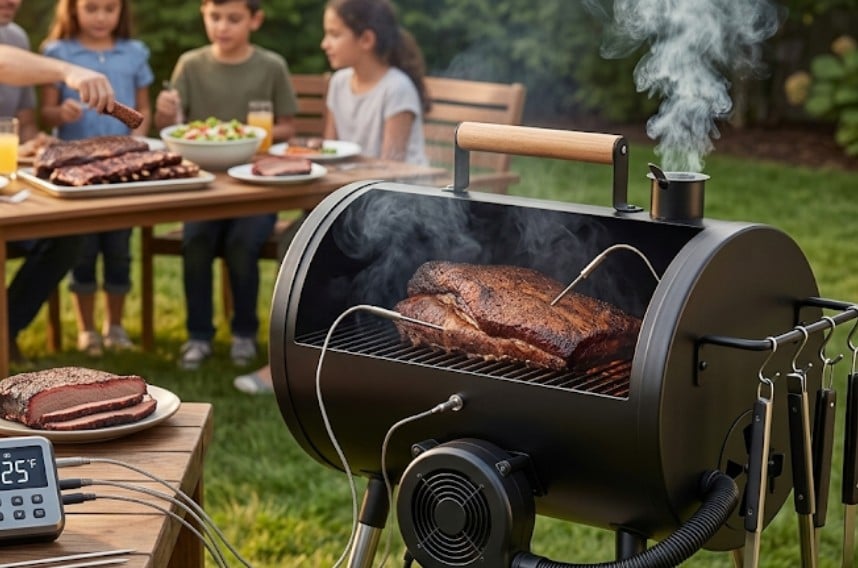
Using controlled airflow saves your charcoal because the fire only gets extra air when it needs it. Depending on the weather or how often you open the lid, you can cook for a long time on just one load of fuel.
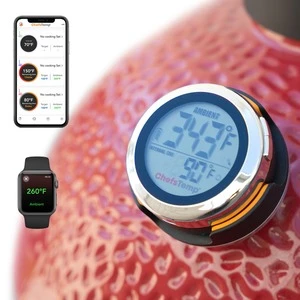
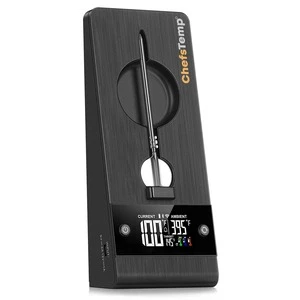
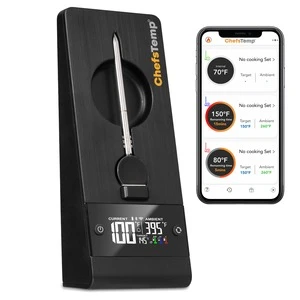
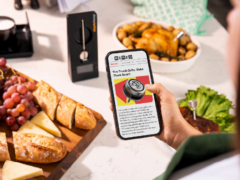
You can use Bluetooth or Wi-Fi to link a BBQ temp controller to your phone. It monitors the meat probe and pit readings. The app lets you set goals and receive notifications when the food is finished or the temperature changes. You can stay inside while the fire remains steady or unwind with friends with this remote control.
Quick buying checklist:
- Confirm the fan adapter fits your specific vent size (check millimeter measurements)
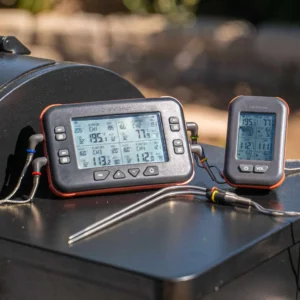
- Choose at least two probes — one for the pit, one for the meat
- Look for WiFi models if you want remote monitoring beyond Bluetooth range (~100 ft)
- Check grill compatibility: Big Green Egg, Kamado Joe, Weber Kettle, offset smoker
- Compare battery vs. wall power — battery units give placement freedom
- Verify rain and heat resistance ratings (IP54 or higher)
- Test the app on iOS and Android before buying; stability matters on long overnight cooks
- Set a budget: basic dial units start at ~USD 70; WiFi systems run USD 130–300
Done right, a controller keeps the fire calm – so your smoker behaves, your timing improves, and the cook feels a lot less stressed.
Part 3. Charcoal Grill Temperature Control: Probe Placement for Accurate Readings
Step-by-step accurate temperature setup:
- Place the ambient probe at grate level, 1–2 inches from the meat
- Ensure the probe is not touching metal or food
- Start the fire and stabilize for 15–20 minutes
- Set your controller target temperature
- Monitor and avoid opening the lid frequently
Accurate controller temps start with one thing: probe placement. When the probe sits in the wrong spot, your numbers look right, but your food cooks wrong.
First, if you lit all your charcoal at once, no controller can save you. Always use the Minion Method (lighting a few coals to slowly ignite the rest) alongside your controller. Additionally, remember that a smoker has hot and cool zones.
Use these placement rules:
- The probe should not be placed near heavy metal walls or grate bars.
- Avoid the outer edges where heat climbs the walls.
- Do not put the sensor over a direct flame, glowing coals, or a heat diffuser gap.
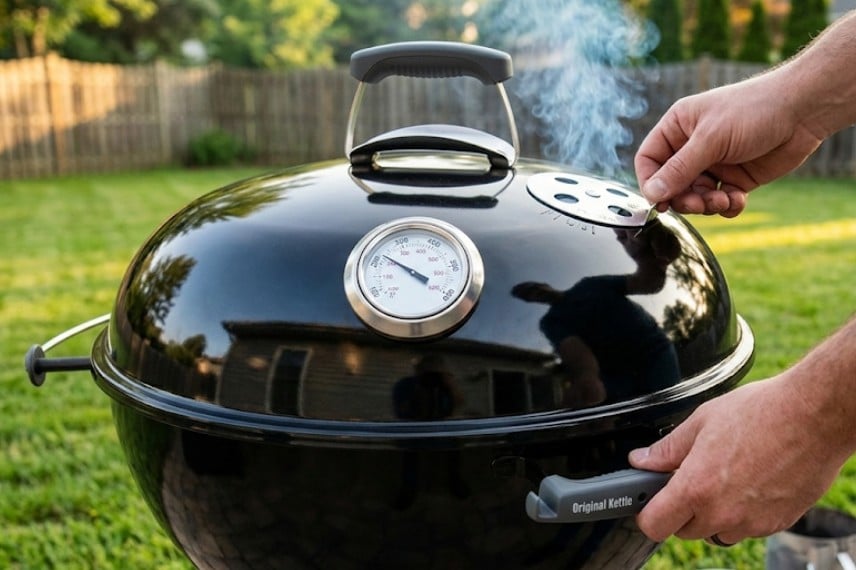
In a charcoal vertical smoker, heat rises and changes at every level. Put your sensor on the same rack as your meat. Trust the grate probe that comes with your controller instead of a dome thermometer. The air near the lid is often much hotter than the air near your meat.
Finally, lock in consistency:
- Before you assess temperatures, let the pit run for 15 to 20 minutes.
- Re-check the probe clip after moving grates or adding water pans.
- If you cook on two racks, use a multi-probe setup to watch both zones.
As more people buy connected temperature controllers, the use of multi-probe tools is rising alongside the broader smart-grilling trend.
Part 4. How to Adjust Your Charcoal Grill’s Temperature Manually vs. Automatically
When deciding how you control the temperature on a charcoal grill, learning to adjust it manually helps you master the heat. Once you know how to move the air, using an automatic controller becomes much easier. Let’s break down both methods.
If you already know how to manage a Kamado manually, the more useful question may be when assisted temperature control is actually worth using. See our guide, Do You Really Need a Kamado Temperature Controller?, for a practical look at manual vs. assisted control during daytime, long, and overnight cooks.
Managing vents manually
The bottom vent controls oxygen intake, which directly affects combustion intensity and heat output. Allowing air to enter makes the flames burn hotter. The cooker’s top vent draws air through it as exhaust. Together, they mold your body’s heat.
Use the following vent settings as a starting guide:
- Low & slow / Smoke zone (225°F–275°F): Both vents 1/8 to 1/4 open
- Low heat (250°F–350°F): Both vents 1/4 open
- High heat (450°F–550°F): Both vents fully open
Your specific grill model may behave differently – treat these as starting points and adjust in small steps.
As you learn your charcoal grill with a thermometer, you will find its sweet spots. For more ideas, read How to get the right temperature on your BBQ.
Controlling temperature in big green egg cookers
Ceramic grills like the Big Green Egg retain heat extremely well, making them slower to cool down once overheated.
For stable cooking:
- 400°F+: open both vents wider gradually
- 225°F–275°F: bottom vent barely open, top vent slightly open
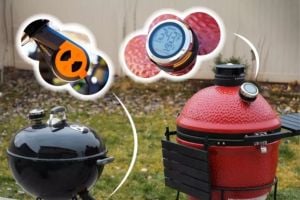
To reach a steady 392–446°F (200–230°C) in a Big Green Egg, open the bottom draft door one-quarter and keep the top vent halfway open. For pizza-level heat at 482°F (250°C), open the bottom door to three-quarters and the top vent fully. Always make adjustments in small increments and wait 10–15 minutes between changes – the thick ceramic walls retain heat and respond slowly.
Quick guide: manual vent settings for charcoal grills
| Target Cooking Style | Target Temp Range | Bottom Vent (Intake) | Top Vent (Exhaust) |
| Low & Slow (Smoking) | 225°F – 275°F | Barely open (1/8 inch) | 1/4 open |
| Roasting (Poultry/Pork) | 325°F – 375°F | 1/4 to 1/2 open | 1/2 open |
| Hot & Fast (Searing) | 450°F – 600°F+ | Fully open | Fully open |
Note: Always allow 15 minutes for temperatures to stabilize after making a vent adjustment before changing it again.
Whether you use a controller or manual vents, keep the lid shut. Opening the lid lets heat out and cold air in, which makes the controller fan blow hard and over-stoke the fire. A closed lid means an even cook, every time.
Part 5. How Breezo V2 Helps with Charcoal Grill Temperature Outcomes
If you want to stop manually adjusting vents completely, upgrading to an automated draft fan like the Breezo V2 is the ultimate solution. More backyard cooks are moving toward app-guided heat control, underscoring why grill temperature controllers like this are becoming popular.
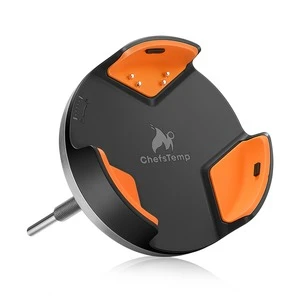
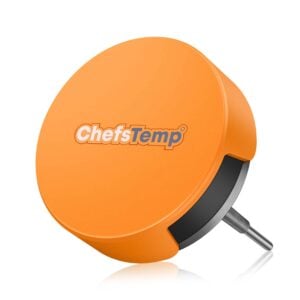
The ChefsTemp Breezo V2 BBQ Temperature Control Fan works like a smart blower, mounting at your lower vent. The fan for smokers supplies oxygen to the pit to wake the coals when the temperature decreases. The cooker then turns off to prevent the flames from getting too hot once it reaches your desired temperature. By using a 5V DC motor to regulate airflow, the Breezo V2 can withstand temperatures up to 500°F (260°C).
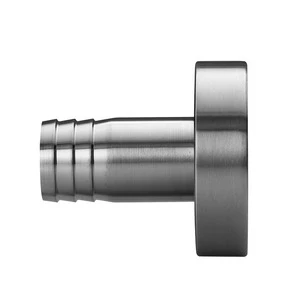
The ChefsTemp Breezo V2 mounts at the lower vent and operates with a 5V DC motor. It handles ambient intake temperatures up to 500°F (260°C) at the fan inlet and connects wirelessly to the ProTemp S1 via Bluetooth – no cables between the fan and controller.
Key setup details for Breezo V2:
- Fan outlet opening: 1.49 × 0.94 in (38 × 24mm)
- Compatible grills: Big Green Egg (S/M/L/XL), Kamado Joe (Classic/Big Joe), Primo Oval, Weber Smokey Mountain 18″/22″
- Tight seal at the intake to reduce air leaks.
- App-based target setting so that the fan can hold steady heat.
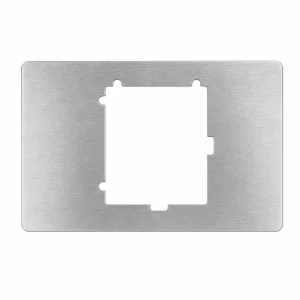
- The kit includes two Kamado-style mounting plates and high-temperature aluminum tape to fit Big Green Egg, Kamado Joe, and Weber Smokey Mountain.
See it running here: Breezo on Kamado: Master Hot & Fast + Low & Slow Temp Control
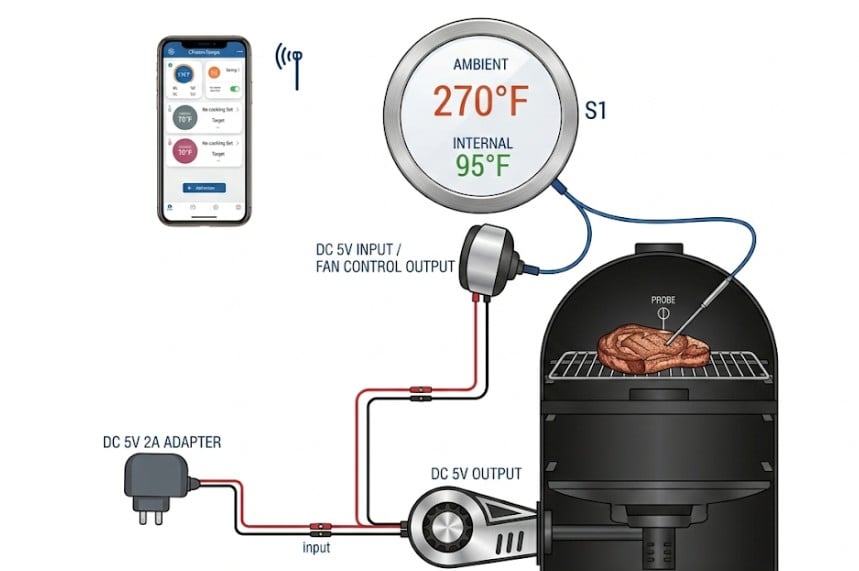
Compared to manual vent control, devices like Breezo V2 automate airflow adjustments, reducing temperature swings and improving consistency – especially for beginners.
Stable temperatures, fewer surprises, and more leisure time are the true benefits. Dry meat and significant temperature fluctuations are common results of manually managing a charcoal fire.
Part 6. Key Takeaway: Why You Need a Charcoal Grill Temperature Controller
- Eliminates the “Yo-Yo” Effect: Stops the temperature from constantly spiking and crashing.
- Saves Fuel: Efficient oxygen delivery means a single load of charcoal can burn for 15+ hours.
- Overnight Freedom: Allows you to sleep through a brisket smoke without setting a 2:00 AM alarm to check the fire.
Hand-managing a charcoal fire can result in significant temperature fluctuations, dry meat, and excessive supervision. A grill temperature controller quickly resolves those issues. It takes over the airflow to keep the heat exactly where you want it.
ChefsTemp offers smart tools, like Breezo V2, to make cooking easier. This fan connects to ProTemp sensors, which give both home cooks and pros spot-on control. Whether you smoke brisket or sear steaks, ChefsTemp gear delivers hands-free perfection.
Part 7. FAQs about Grill Temperature Controller
Q: How does a grill temperature controller actually work?
digital pit probe. You set a target temperature in the app or on the unit display. When the temperature drops below your target, the controller activates a blower fan at the bottom vent to push oxygen onto the coals. Once the target is reached, the fan shuts off automatically. This on-and-off cycle repeats throughout the entire cook, holding temperature within ±5°F
Q: Can I use a controller on any grill?
Most temperature controllers are compatible with many charcoal- and wood-fired cookers. For example, units like the Breezo V2 use adapter plates measuring 1.49 × 0.94 inches (38 × 24mm) that attach to common Kamados and Kettles.
Q: Does a grill temperature controller reduce the smoky flavor?
No. Closing vents reduces oxygen, lowering the temperature and potentially extinguishing the fire. This slow burn produces thin blue smoke, lending a sweet taste. It prevents the bitter flavor caused by thick white smoke.
Q: Can I use my grill temperature controller in the rain?
While high-quality probes withstand extreme heat, the blower fan and control box should generally be protected from heavy downpours unless specifically rated for high IP water resistance. Always consult your manufacturer’s guide before leaving electronics in a storm.
Q: Does closing the vent on a charcoal grill make it hotter?
No, closing the vents makes the grill cooler. It does not make the fire hotter. A charcoal fire needs oxygen to burn. Reducing airflow by closing the bottom draft door or top exhaust vent chokes the coals. Fully closing both vents for an extended period will extinguish the fire entirely. Use partial vent closures to dial down the temperature slowly.
Q: How do I keep a charcoal grill at 225°F (107°C)?
First, set up for indirect cooking using unlit coals. Add a few lit briquettes to start a slow fire. Close the bottom and top vents until they are only 1/8 to 1/4 open. This small airflow helps you keep a steady 225°F (107°C).
Q: Is a charcoal grill hotter with the vents open or closed?
A charcoal grill gets much hotter when the vents are wide open. Opening the bottom vent lets in the most oxygen. Opening the top vent pulls air through the firebox fast. This makes the fire burn hot, reaching 450°F (232°C) and 550°F (288°C).
Q: How to get the right cooking temperature for a charcoal barbecue?
To begin, use the proper amount of fuel. For searing, use more coals; for low heat, use fewer. The top vent manages minor adjustments. For major alterations, use the lower vent. Once you have made any vent modifications, check your digital grate probe.
Q: What is the best automatic temperature controller for a charcoal smoker?
wire-free, dome-mounted solution, the ChefsTemp ProTemp S1 + Breezo V2 is ideal. For maximum data logging, the FireBoard 2 Drive (6 probes, ±0.7°F) leads the pack. For a budget-friendly dial controller (~USD 129), the BBQ Guru DigiQ
Q: Can I use a grill temperature controller on a Kamado Joe or pellet smoker?
Yes. Most blower-fan controllers (including Breezo V2) work with Kamado Joe, Big Green Egg, Primo, and Weber Smokey Mountain using adapter plates. Pellet smokers already have built-in temperature controllers, so external fan controllers are not recommended or necessary.
Q: What temperature should I smoke brisket, ribs, and chicken?
Standard USDA-aligned targets:
- Brisket: 225–250°F pit temp / pull at 195–205°F internal
- Pork ribs: 225–250°F pit temp / pull at 190–203°F internal
- Whole chicken: 275–325°F pit temp / internal (USDA minimum)
A grill temperature controller locks in your pit temp so you hit these targets every time.
Related Posts
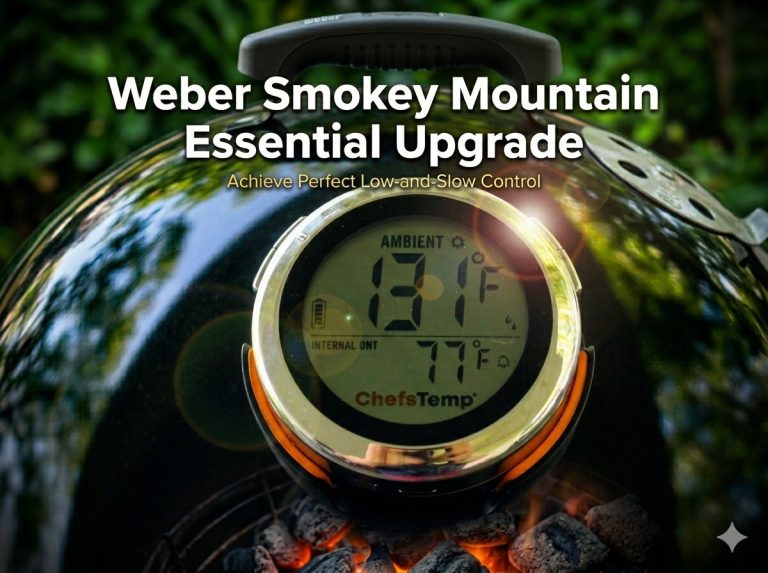
How to Smoke Brisket Overnight on a Weber Smokey Mountain: True User Experience
You can smoke brisket overnight on a Weber Smokey Mountain (WSM) without checking the smoker every few minutes...
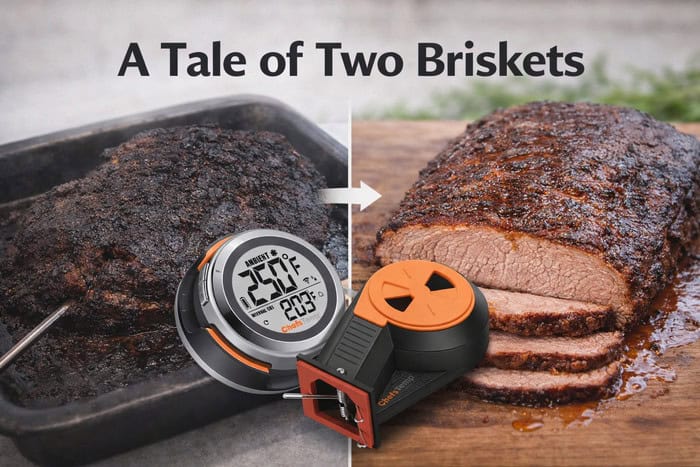
Control vs. Chaos: A Tale of Two Briskets
I’ve cooked 1000s of briskets. Enough that I don’t usually worry much once one’s settled in for the night...