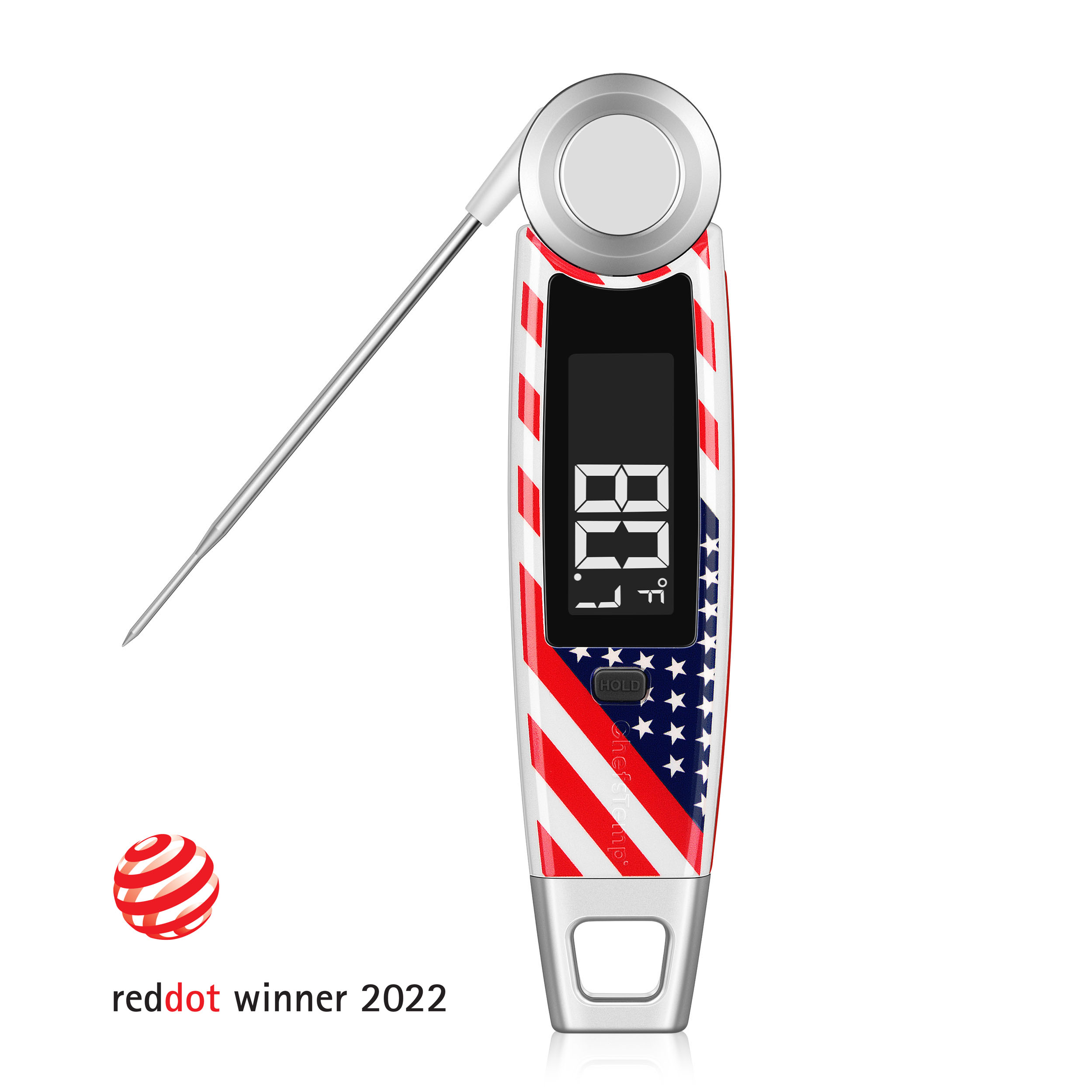
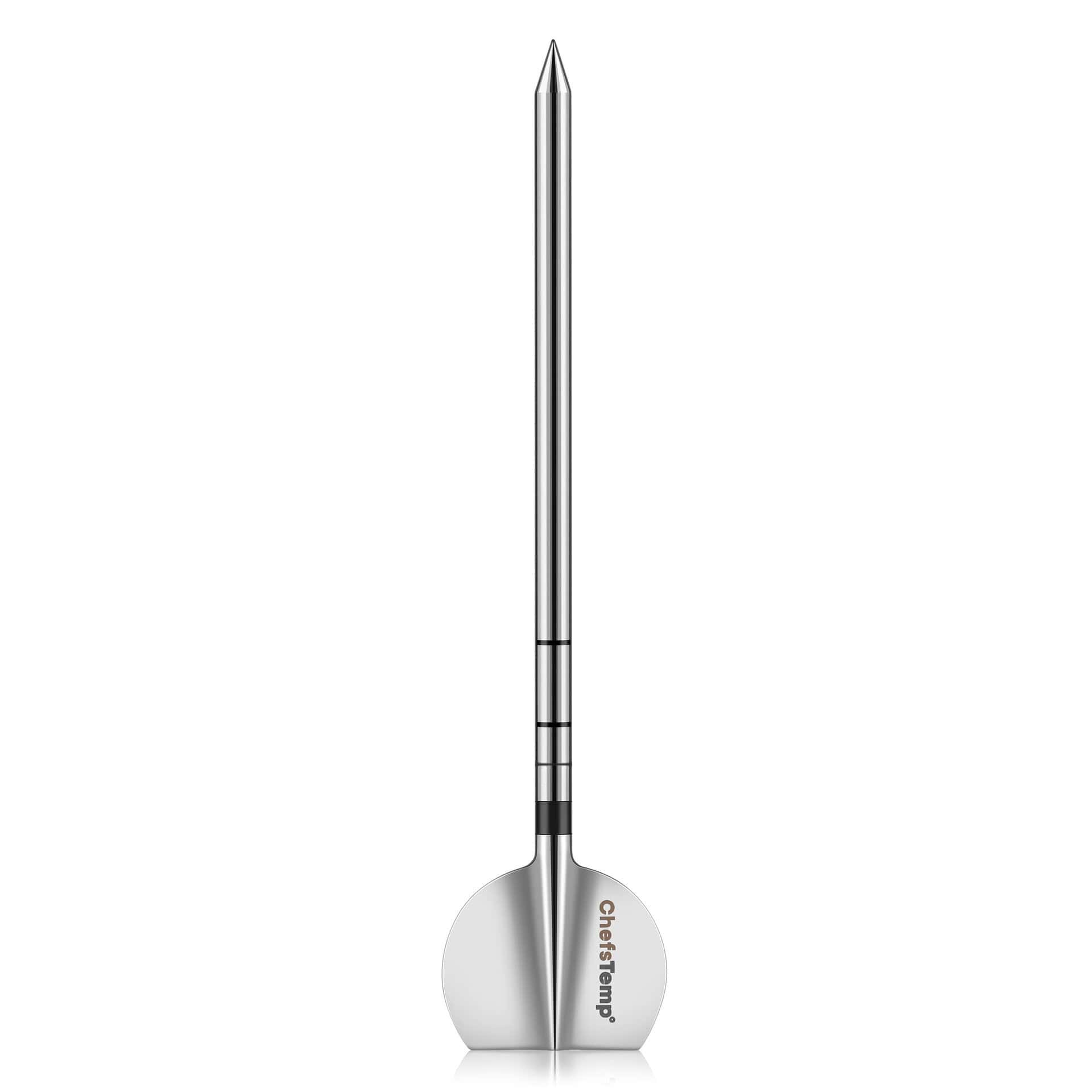
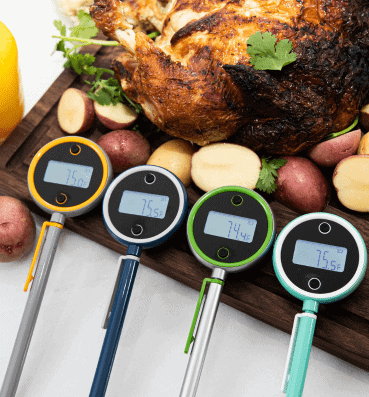
Termometro digitale di precisione per cucine professionali e sicurezza alimentare.
Temperatura di cottura ideale

Tabella delle temperature dei prodotti da forno

Crunchy bread, solid pie, juicy cakes – delicacies for the weekend or just to enjoy baking, make sure to have your thermometer at hand!

Part 1. The Most Complete Temp Chart for Pie, Cakes, Cookies, etc.

If you thought that checking the temperature of your food only applied to meat, you are wrong! Cooking your baked goods to safe internal temperatures is equally important. Many baked goods contain eggs, which can harbor harmful bacteria.

Even if your baked goods do not contain eggs, it’s important to check the temperature to ensure that your pastry gets fully cooked. From scones to cinnamon rolls, our baked goods temperatura interna chart will help you bake them to perfection every time.

Temperatura interna del nucleo in
Fahrenheit
Temperatura interna del nucleo in
Centigrado
Descrizione interna
Pane Inserire il termometro dal lato del pane. Se il pane è in uno stampo da plumcake, inserirlo appena sopra il bordo dello stampo, orientandolo verso il basso.
Pane veloce (pane, muffin e pane di mais) 200°F 93°C
Pane lievitato da 200°F a 210°F da 93°C a 99°C
Panini morbidi/panini per la cena da 180°F a 190°F da 82°C a 88°C
Scones 200°F 93°C
Pane a lievitazione naturale da 200°F a 210°F da 93°C a 99°C
panini alla cannella da 190°F a 200°F da 87°C a 93°C
Temperatura dell'acqua per aggiungere il lievito da 105°F a 115°F da 41°C a 46°C
Torte - Cupcakes da 205°F a 209°F da 93°C a 98°C Inserire il termometro al centro della torta.
Torta di carote da 205°F a 209°F da 93°C a 98°C Ricorda: la cottura continua anche dopo aver tolto la torta dal forno. Mentre la torta si raffredda, il calore residuo in superficie penetra lentamente al centro.
Clafouti (con frutta) 160°F 71°C
Torta del diavolo - Torta di velluto rosso 205 °F 93°C
Torte al cioccolato Molton 160°F 71°C
Torta di libbra da 210°F a 212°F da 99°C a 100°C
Torta Tres Leches, Torta ai tre latti 200°F 93°C
Torte capovolte da 190°F a 200°F da 88°C a 93°C
Cheesecake Quando la temperatura interna di una cheesecake supera i 71 °C (160 °F) durante la cottura, tenderà sempre a creparsi. Per evitare che ciò accada, toglietela dal forno quando raggiunge i 65 °C (150 °F) al centro per evitare di cuocerla troppo.
Torte Inserire il termometro a qualche centimetro dal bordo della torta.
Torta alla crema di cioccolato 165°F 74°C
Torta alla crema pasticcera - Torte alla crema da 170°F a 175°F da 76°C a 79°C Cuocere fino a quando la crema non si sarà solidificata sui bordi, ma non si muoverà leggermente al centro se picchiettata con un cucchiaio di legno.
Crostate di frutta (mirtilli, more, ecc.) 175°F 79°C Le crostate di frutta devono essere succose e gonfie ovunque, soprattutto al centro. La crostata deve presentare delle bollicine se contiene un addensante a base di amido, altrimenti l'amido non si addenserà.
Torta di noci pecan 200°F 93°C
Torta di zucca 175°F 79°C
Torta di patate dolci 175°F 79°C
Torte di meringa da 160°F a 165°F da 71°C a 74°C
Budini e creme: Inserire il termometro al centro. Iniziare a controllare la temperatura circa 5 minuti prima del tempo consigliato.
Budino di pane 160°F 71°C
Crème brûlée da 170°F a 175°F da 76°C a 79°C
Crema pasticcera al forno (alla vecchia maniera) 160°F 71°C
Flan da 170°F a 175°F da 76°C a 79°C

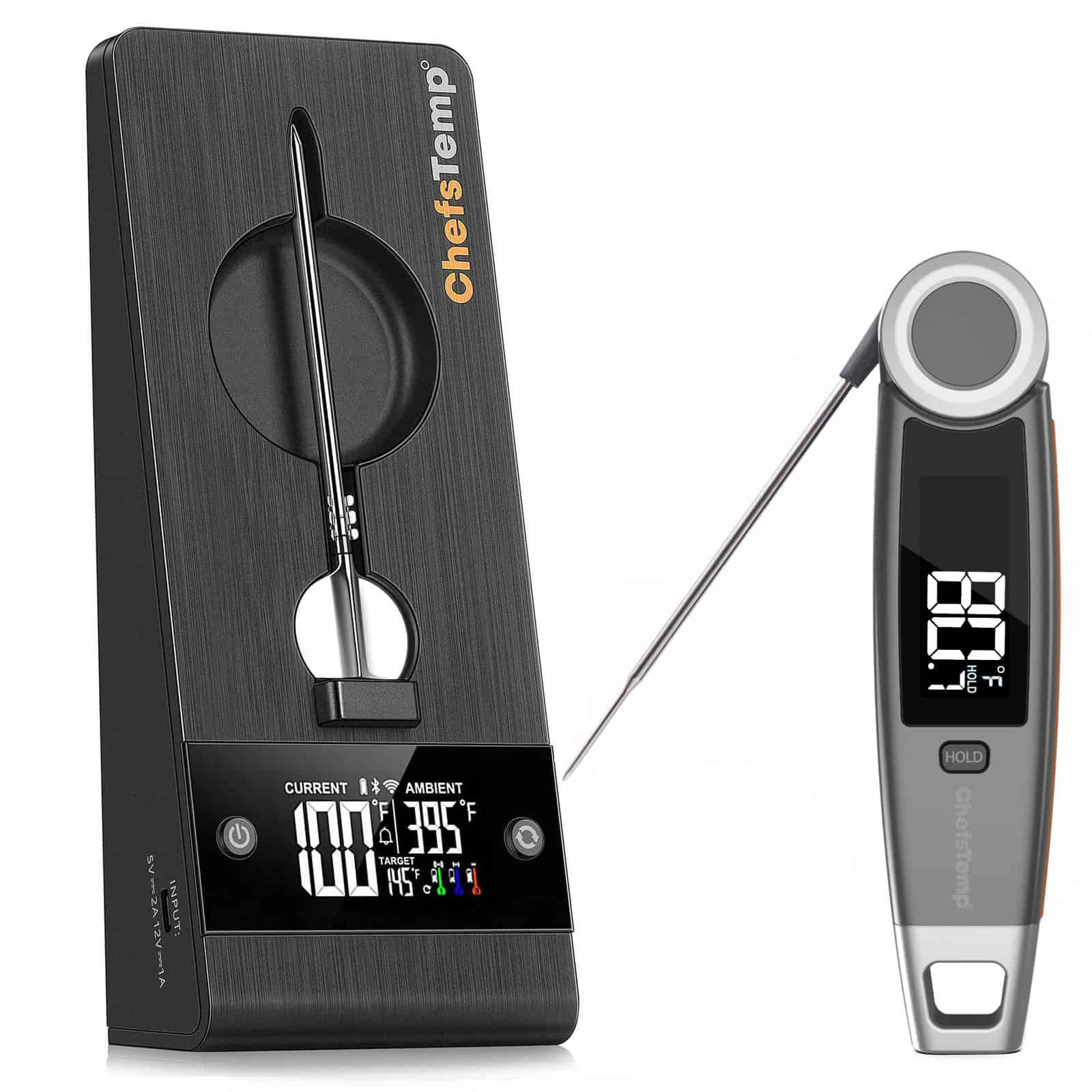
Part 2. Usable Kitchen Accessories to Measure Baked-Goods Internal Temperature
Part 3. FAQs & Hot Guides for Baked-Goods Internal Temp
The ideal internal temperature for a pie depends entirely on the type of filling you are baking. Fruit Pies (Apple, Cherry, Berry): 90°C to 95°C; Custard and Egg-Based Pies (Pumpkin, Pecan, Lemon Meringue) 75°C to 80°C; Savory Meat Pies (Chicken Pot Pie, Beef and Ale): 74°C (Minimum). Remember to insert your termometro a lettura istantanea directly into the dead center of the pie (the last place to cook through). Make sure the probe is sitting fully in the filling and isn’t touching the bottom crust, which will give you an artificially high reading from the baking dish.

When choosing or making a pie friendly for someone with diabetes, the main goals are to minimize added sugars and reduce the refined carbohydrates usually found in the crust. Berry Pies, Crustless Pumpkin or Custard Pies, Savory Meat Pies, etc., are good choices to try.

Thick juices bubbling through the center vents and a golden brown crust indicate that the pie is perfectly baked. The casing for custard pies should be removed from the oven and set only marginally in the middle. The center is meant to be jiggly for the pie to be considered complete. Pour custard into the case after the pie shell has been par-baked. Meat pies only require that the center be at a safe 74°C and be savory. Otherwise, the pie is deemed out.

In baking, the 1-2-3-4 rule is a helpful ratio for classic American pound cakes and yellow butter cakes. The basic rule is 1 cup of butter, 2 cups of sugar, 3 cups of flour, and 4 eggs. This is usually combined with a cup of milk and a leavener. This basic recipe is great because the batter is very versatile. You can add different flavorings to customize your cake, like vanilla, citrus zest, or spices.

Indeed, 180°C, which is 350°F, is one of the most recommended oven settings, considered the standard operating procedure for moderate oven temperatures. At this temperature, for instance, the Maillard reaction occurs perfectly, allowing for even cooking and browning from the inside to the outside, which is most noticeable when the food is browned beautifully. It works well for a wide variety of recipes, most of which involve baking. These include quick breads, muffins, cookies, and even cake.

Yes, an internal temperature of around da 200°F a 210°F (93°C to 99°C) is the standard indicator that most butter or oil-based cakes are perfectly baked. Checking the temperature with an instant-read thermometer in the exact center is highly reliable and often more accurate than the traditional toothpick test for preventing an overbaked, dry dessert. While lighter sponge cakes are usually ready right around the 200°F mark, denser bakes like pound cakes might need to reach closer to 210°F to be fully set.

The ideal internal temperature for cookies to ensure the perfect chewy texture is 175°F to 185°F (80°C to 85°C). Baking times and temperatures can vary by recipe, whereas other cookies can still be judged by eye. When judging cookies, generally, golden brown and firmer-looking edges with a center that is still soft are the indicators. Many bakers rely on the cookies to continue baking from the residual heat. Cookies are often pulled from the oven with a middle that still looks underdone to ensure they remain soft and tender to eat.

Baking at 350°F is the average, dependable temperature that yields a balanced cookie with a crispy edge and a chewy center, as it allows the dough to spread evenly. On the other hand, hotter 400°F cookies set the outside layer too quickly and do not allow enough spreading of the dough, resulting in a thicker cookie with a crispier outside and a gooey, soft inside. Stick to 350°F for a classic, even texture, and 400°F for a taller cookie with a softer center.

Indeed, 12 minutes is usually the ideal baking time for standard-sized drop cookies at 350°F. If a cookie is desired to be soft and chewy, we recommend 10 to 12 minutes so that the edge is set and golden, while the center stays soft. Yet, if cookies are extra-large, or you prefer them to be crispy throughout, baking may be required for as long as 15 minutes.

For fully enriched bread types such as sandwich loaves and brioche, ideal doneness is between 88°C and 93°C. Experienced bakers know that for lean and crusty artisan bread types, such as sourdough and baguettes, they must aim for 93°C to 99°C. It is always best to measure by inserting instant read thermoeters to the thickest center of the loaf. This will ensure the bread has a well-set crumb and is not gummy.

Vai in alto