I Fought My Egg for Nearly Three Hours… and Still Made the Best Chicken of My Life
I got home early and made a decision that felt completely reasonable at the time.
“I’ll just throw a chicken on my new rotisserie tonight.”
It is the kind of thought that arises when the day opens unexpectedly. You feel like you have gained time. You have earned the right to do something a little more involved. Rotisserie chicken on Big Green Egg sounds simple enough. It’s not a brisket and not an all-day commitment. It spins, it bastes itself, and if you believe most of what you read, it is almost difficult to mess up.
What that thought ignores is, well, reality.
Inhoudsopgave
Part 1. The Maiden Voyage: A “Simple” Plan for Rotisserie Chicken
Rotisserie chicken is simple once everything is ready. It is not simple when you decide at 4:00 in the afternoon, on your maiden voyage with a spit, that tonight is the night… and somehow expect it all to come together smoothly.
So I pulled the chicken out of the fridge and gave it what I would generously describe as a quick dry. Paper towels, a couple of passes, good enough in the moment. Then I reached for Texas Sugar, went a little heavier than necessary, and told myself that the spinning would take care of the rest.
At that point, everything still felt under control.
Then I lit the fire.
Part 2. When the Egg Strikes Back: Chasing Temperatures and Airflow
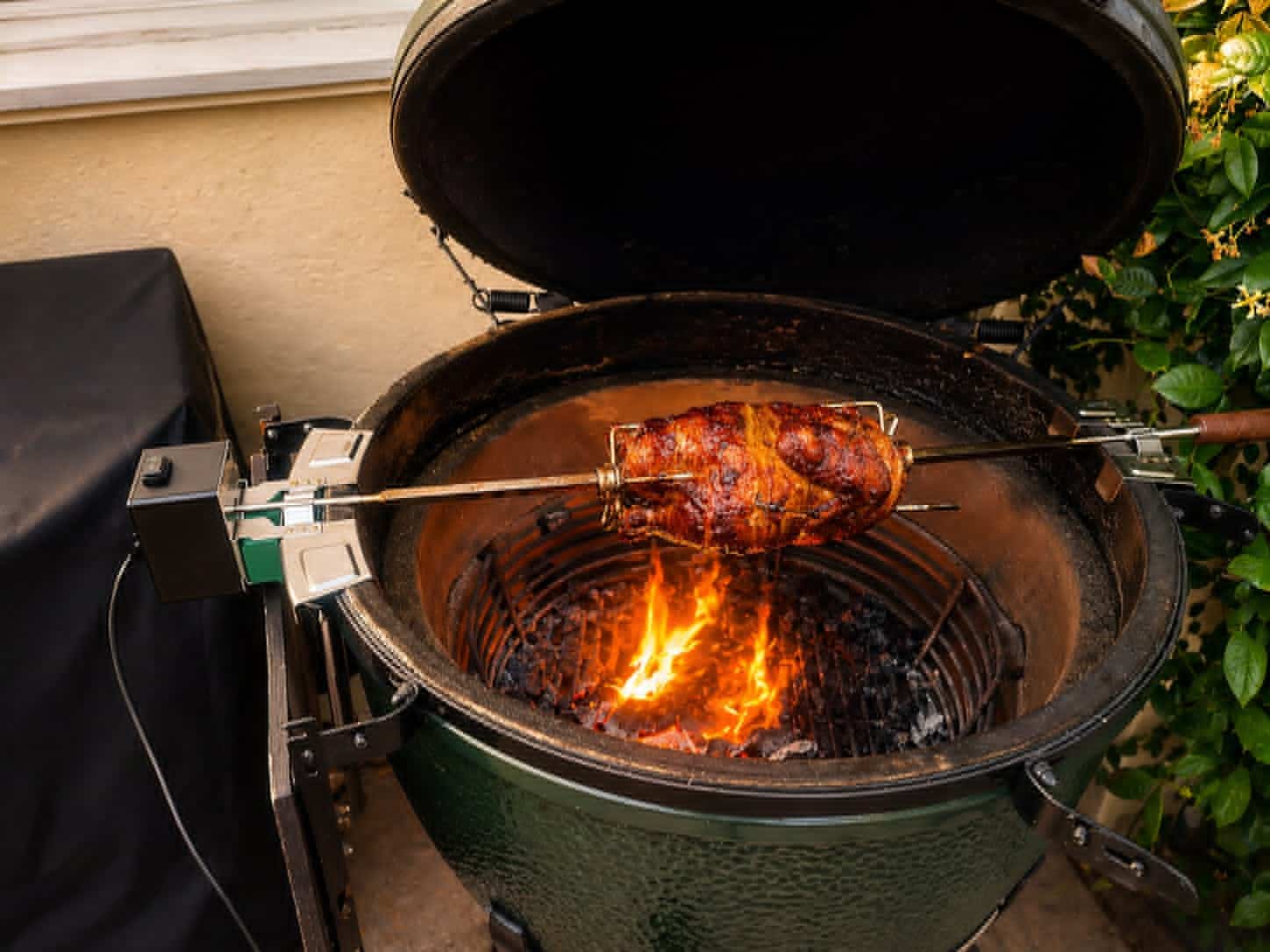
My first decision seemed ok, at first, and that was the location of my hot zone. My thinking was simple. It would be easier to rake cold coals forward than push coals to the back. It seemed logical, and it actually did pan out. But given the close proximity to the Breezo, I will probably play it a little safer with the traditional back-of-the-Egg setup next time.
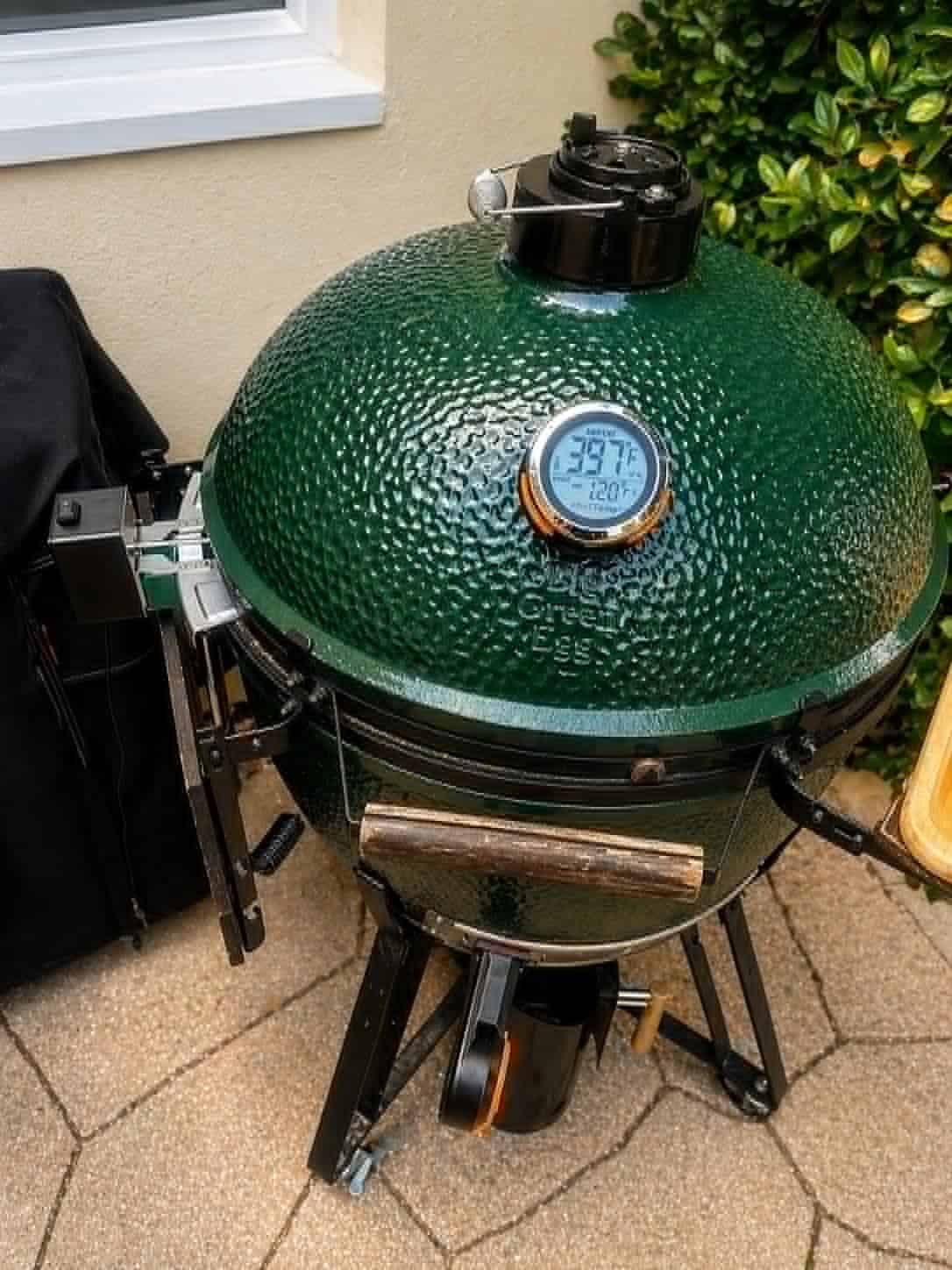
My next decision is where the cook started going off the rails. While I was inside futzing with the chicken, the Egg came up much faster than I expected. That’s usually not a bad thing, but only if you are paying attention to how it is getting there. This was not a slow, controlled climb. It was an early surge. Before I had time to think about vent settings or airflow, it pushed past 400 and kept going.
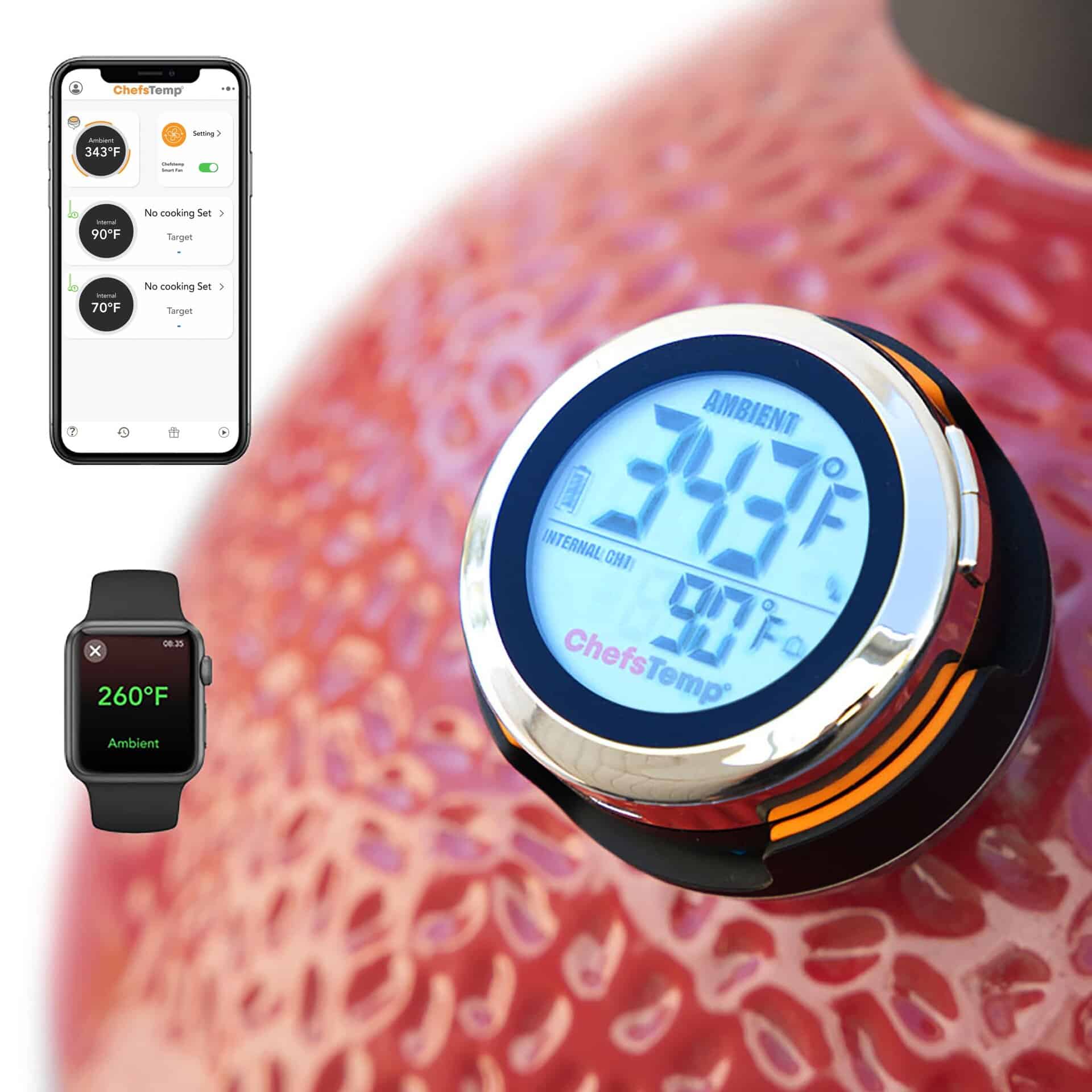
And I had not even hooked up the Breezo yet. That turned out to be a big mistake. Had it been my since-retired BBQ Guru, it would have been the first thing I did. The Breezo-ventilator? It’s been great. I’m still learning it.
It settled briefly around 425. Not ideal, but early enough that I convinced myself that if I just shut everything down, it would be fine. I wasn’t cooking yet. I had time. Fan installed.
What I didn’t fully appreciate was how much extra airflow the rotisserie gap creates. The extra time I thought I had at the beginning started disappearing quickly.
So while I waited for the temperature to drop, I turned my attention to the rotisserie.
There is a moment the first time you mount a whole chicken on a spit where you expect mechanical precision. You want it to spin evenly, smoothly, quietly. You imagine something balanced and controlled.
Part 3. The Battle of Balance: Dealing with Sharp Prongs and Uneven Birds
What you get is a whole bird with uneven weight distribution and very sharp prongs, which I promptly drove through my glove and into my thumb. Not ideal. Painful. A problem, and ultimately a bit more blood than I expected upon later inspection. We fight on.
I finished loading the chicken, stepped back, and watched it rotate. All of this, of course, with the lid open. Close the lid to slow the spike, then open it again to fix the balance. Still wobbling.
Open, adjust, close. Repeat.
Each time I opened the lid, I gave the fire more oxygen. What had already been running hot started building real momentum.
There is a certain trap in trying to make something perfect that does not need to be. The wobble was not going away. The more I adjusted, the more I realized I was solving the wrong problem.
By the time I decided it was good enough, the Egg had already made its decision. It was not coming back down quietly.
So at that point, I had a choice. Wait for it to settle or move forward.
I moved forward.
Once the chicken went on, the cook became less about execution and more about management. The target was the mid-300s, but the Egg was not interested in staying there. It hovered high, dipped when I restricted airflow, then climbed again as the stored heat in the ceramics pushed back.
That’s the part you don’t appreciate until you have done it wrong once or twice. The Egg is not just responding to the fire in that moment. It is carrying heat. Once it absorbs that early spike, it does not give it up quickly.
So, despite all the advice I have given on this very blog, I chased it.
Small vent adjustments. Watching the ProTemp S1. Trying to land in a narrow band instead of accepting a range. It is a natural instinct. It’s just wrong… You keep thinking you are one small correction away.
What you are really doing is staying just behind the cooker the entire time.
And of course, the rotisserie and its spit gap added another variable. Air moves differently. It is subtle, but it is enough to make things feel unpredictable when you are already chasing the kiptemperatuur.
Then it was time for probes.
Part 4. Trusting the Data: How Probes Saved the Cook
Yes, I know. Just put the probes in at the beginning. First-time rotisserie guy here, not thinking entirely well.
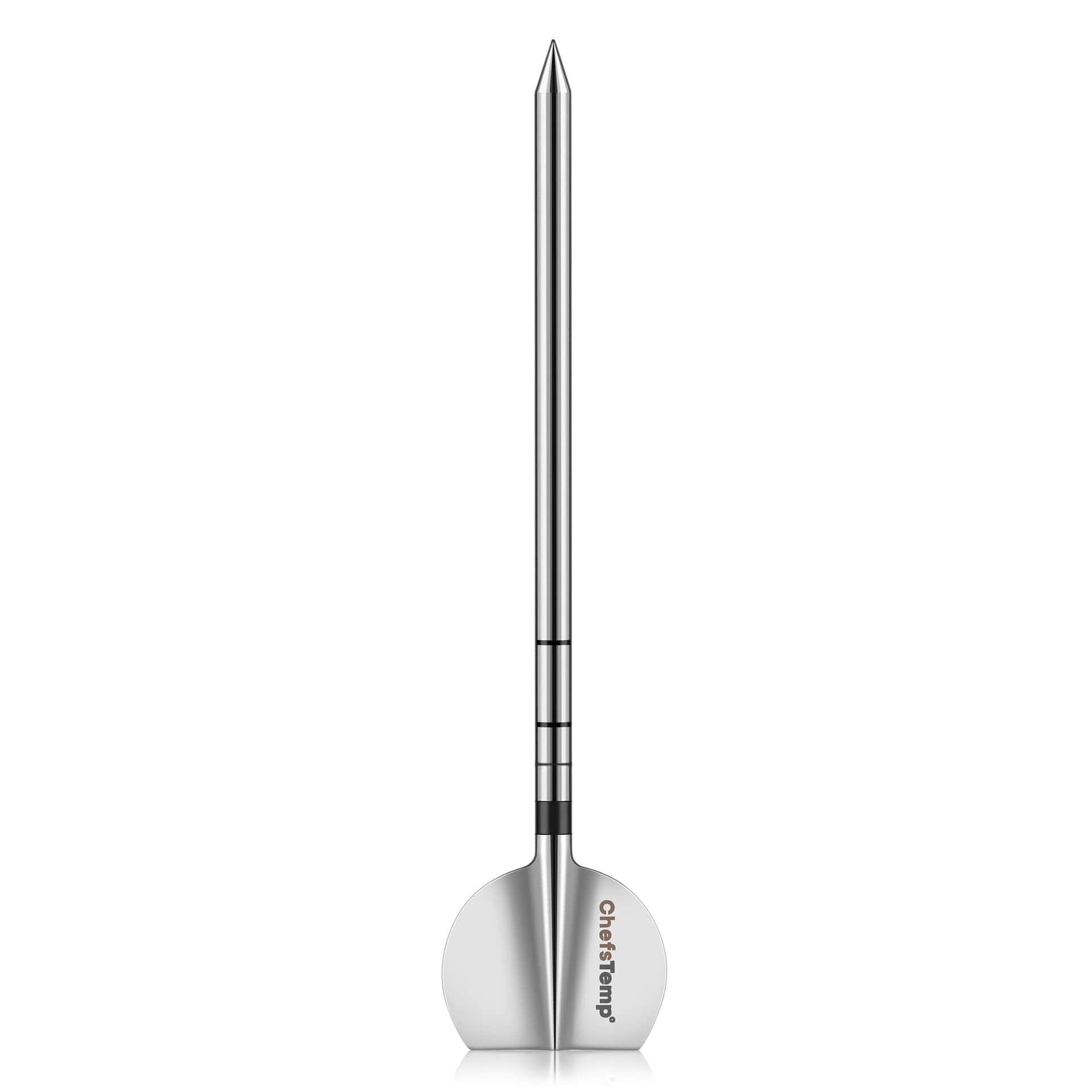
The plan was simple. Place them cleanly, monitor both the breast and the thigh, and let the data guide the cook.
In reality, even wireless probes become a timing issue on a rotisserie. The bird is moving. The surface is hot. The lid is open. Every extra second you spend trying to achieve perfect placement adds fuel to the fire you are already trying to calm.
Yes, I could have turned it off for a minute and just done it. Clear thinking had long since left the process (see above).
I got two in.
That was enough.
At some point, I stepped back and looked at what I was doing. The Egg was running hotter than I wanted. I was adjusting vents too frequently. I was still trying to fine-tune details that would not change the outcome.
And that is when I stopped trying to control it.
I let it play out.
The temperature wasn’t perfect, but it wasn’t out of bounds. The rotation was not flawless, but it was consistent.
As the chicken approached serving temperature, I started thinking about crisping the skin.
I let the temperature climb, hoping to tighten it up. It helped with color, but not with texture. By then, the surface had already taken on, or in this case never shed, its moisture. Crisp skin is something you earn early. It is not something you fix at the end.
Still, the chicken looked right.
The color had deepened. The surface had that sheen you get from continuous basting. The rotation had done its job in a way that is difficult to replicate with a static cook. Fat was rendered and redistributed evenly, even though everything else felt slightly chaotic.
Through all of it, the one thing that never felt uncertain was the interne temperatuur.
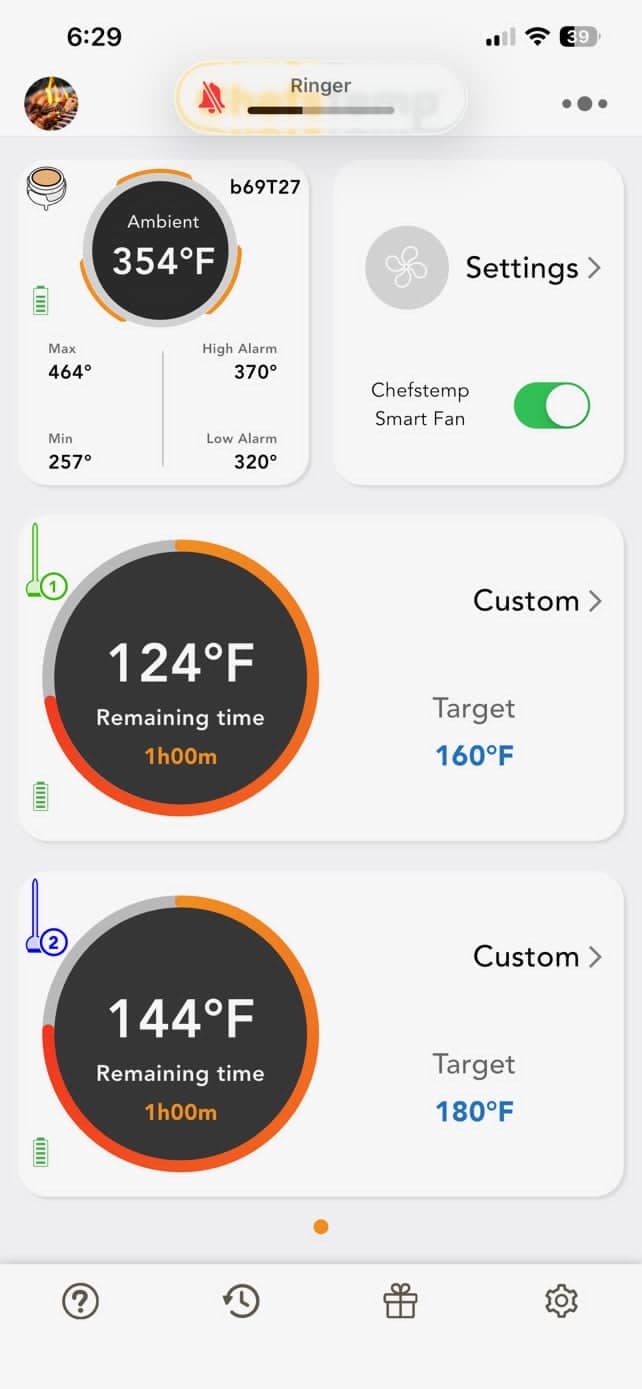
While I was adjusting airflow and second-guessing the fire, the probes were steady. The breast climbed gradually. The thigh followed its own curve. No sudden jumps. No confusion. Just a clear path toward doneness.
That became the anchor.
Part 5. The Verdict: Chaotic Process, Flawless Results
I pulled the chicken at 160 in the breast and 175 in the thigh. Exactly where I wanted to be.
I let it rest, though not quite long enough, because dinner was ready. Ten minutes feels like enough when you are standing there looking at it. It usually isn’t, though, and an impatient bride doesn’t help.
So when I started carving, the juices confirmed that immediately.
They didn’t just run. They moved with purpose across the board and thankfully into the grooves.
Note to self… buy a cutting board with deeper grooves.
In the end, none of the missteps really mattered.
A rotisserie is, apparently, unconcerned with your experience level or how many times you botch the process.
The first slice told the real story. The breast was moist without being soft. The texture held. The thigh was fully rendered, tender, and balanced. The seasoning came through, what was left of it, without overpowering the meat.
Out of a process that looked flawed at almost every step, it was the best chicken I have ever made.
And that’s all that mattered.
Next up? Picanha.
Or… maybe another chicken first.
That seems like the smarter play before I mess with a nice piece of beef.

Richard McWhorter kookt al jaren boven een open vuur. 5 decennia, Hij ontwikkelde zijn methode al lang voordat digitale sondes en apps bestonden. Hij kookt voornamelijk op een Big Green Egg en een Yakitori op basis van molenschil, waarbij de focus ligt op de basisprincipes, timing en het vuur het werk laten doen. En toch… blijf ik leren.
Ontdek andere ChefsTemp-producten


Ontdek meer recepten en leer keukentrucs door lid te worden van onze kookcommunity op Facebook.
Dit vind je misschien ook interessant: