Can Salmon Be Undercooked? The Real Risks and How to Stay Safe
Can salmon be undercooked? Absolutely. Staring at a thick, deeply pink fillet often sparks that exact worry. We all crave tender seafood. Nobody wants food poisoning.
Cooking fish feels like walking a tightrope. You lean one way, the meat turns to dry chalk. Lean the other, and you serve an unsafe, raw center. Eating raw fish invites nasty parasites and aggressive bacteria right to your dinner table.
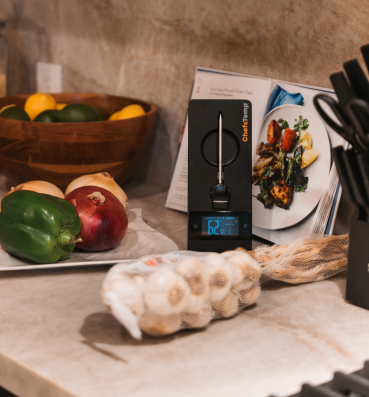
Stop guessing. By checking internal temperature with precise kitchen meat thermometers, you easily hit that safe, flaky, sweet spot every time.
Inhoudsopgave
Part 1. Why It’s Never OK to Eat Salmon That’s Undercooked
Treating a standard grocery store fillet like premium sashimi is a dangerous gamble. Harmful organisms thrive deep inside the muscle tissue of both farmed and wild fish. Squeezing lemon over a raw slice might taste great. It does not sanitize the meat. Heat does. Fire is the only reliable wall between your dinner plate and a nasty illness.
Skip the stove, and you invite microscopic stowaways to the table. Here is what hides in raw fish:
- Resilient Parasites: Raw salmon often hosts Anisakis simplex. This aggressive roundworm burrows right into the human stomach lining within hours. You might also swallow the Japanese broad tapeworm. It quietly grows up to 30 feet long inside the digestive tract. The CDC routinely finds both pests in American supermarkets.
- Aggressive Bacteria: Raw fish can carry Vibrio parahaemolyticus, the leading cause of seafood-related illness nationwide. Listeria monocytogenes also heavily contaminates raw and cold-smoked cuts.
What happens if you eat undercooked salmon? Your body goes to war. The fallout usually hits anywhere from 12 to 72 hours after that last bite. Sharp stomach cramps strike first. Relentless vomiting and watery diarrhea follow fast. Severe dehydration sets in, frequently pushing people straight into emergency rooms. Pregnant women, young kids, and older adults suffer the worst of it.
Folks still ask, “Can you eat undercooked salmon?” You can. But only if that fish carries a legitimate “sushi-grade” label. Commercial fishmongers take these specific cuts and flash-freeze them at a bone-chilling -4°F (-20°C) for 7 unbroken days. That brutal, sustained deep freeze completely obliterates live parasites.
So, is undercooked salmon safe? Unless it survived that exact commercial freezing process, absolutely not. Standard home freezers hover around 0°F (-18°C). They just cannot kill these resilient pests. Fire is your only real safety net. Before you even strike a match, bookmark this Seafood Temperature Chart to get your baseline numbers right.
Part 2. How to Tell If Your Salmon is Undercooked
Nailing the perfect piece of fish feels like a magic trick. You want a tender, flaky bite. You definitely do not want to gamble with a raw center. A raw middle ruins dinner and invites illness. Catching an undercooked fillet is actually pretty simple once you know what to watch.
Pay close attention to these 4 signals:
- The exact internal heat is hiding inside the meat.
- The amount of white liquid seeping onto the surface.
- The shift in the fillet’s overall color and shine.
- The physical pushback when you press down with a fork.
Check the Internal Temperature
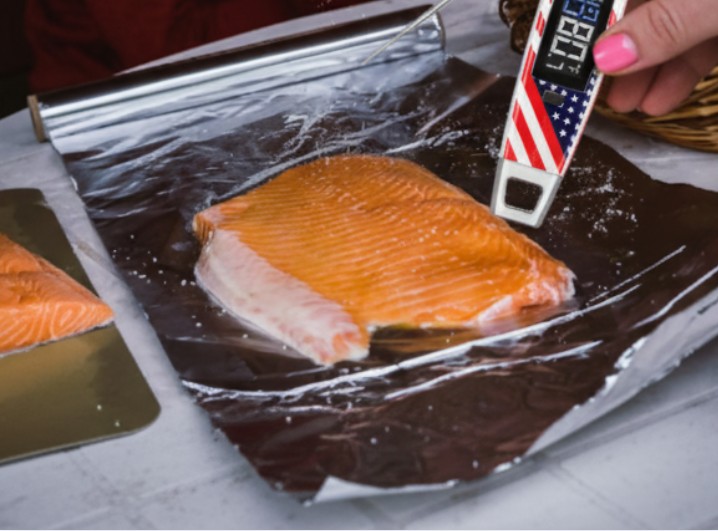
Every piece of salmon needs to reach a final resting heat of 145°F (63°C). That is non-negotiable. To nail this, slide your meat thermometer probe straight into the absolute thickest part of the meat.
For thick cuts, pull your salmon from the pan or oven as soon as your thermometer reads 140°F. The carryover heat pushes that coldest center section safely over the finish line. For thin cuts under three-quarters of an inch, cook them straight to 145°F.
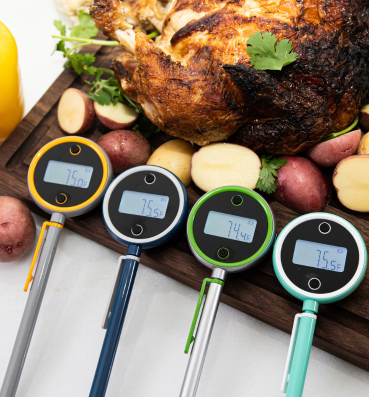
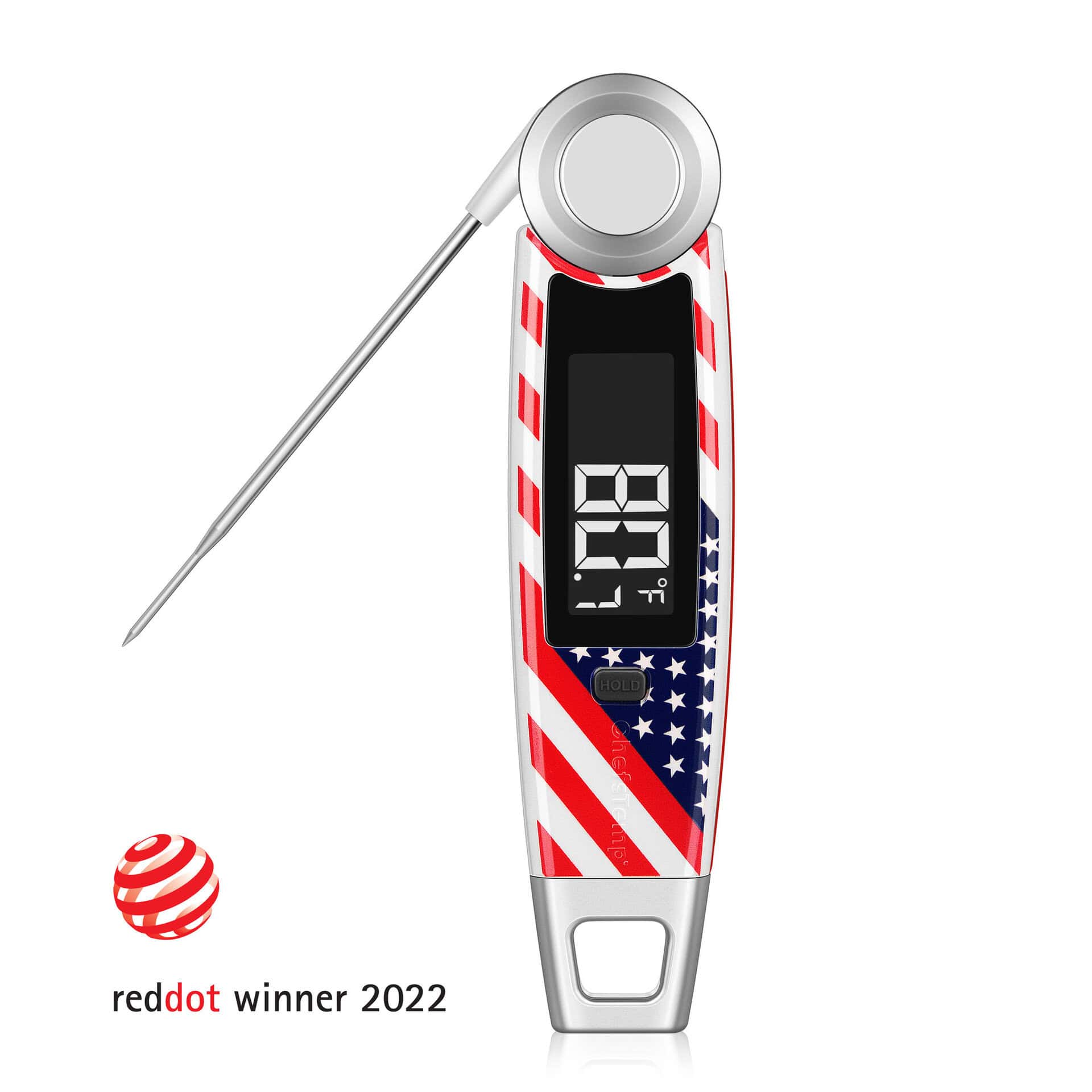
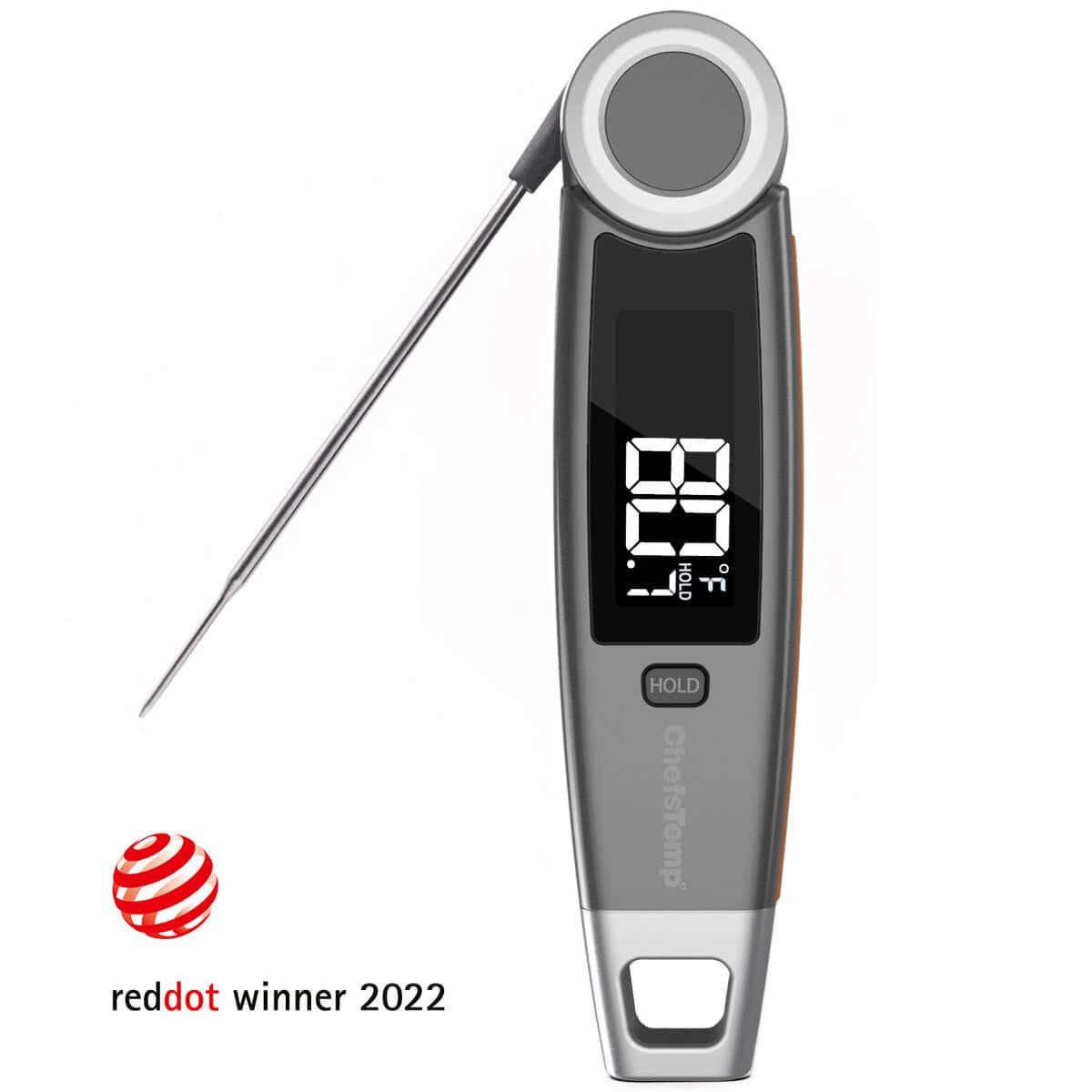
Always slide the probe horizontally through the side of the fillet. Poking it from the top down rarely catches the true core. A fast, practical tool like the Finaltouch X10 Instant Read vleesthermometer eliminates all guesswork.
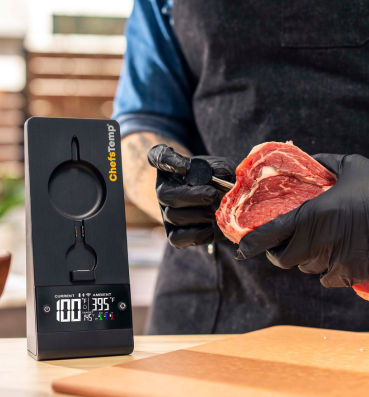
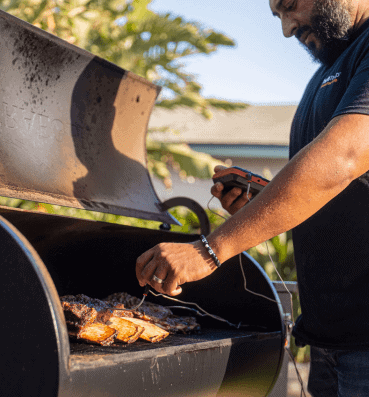
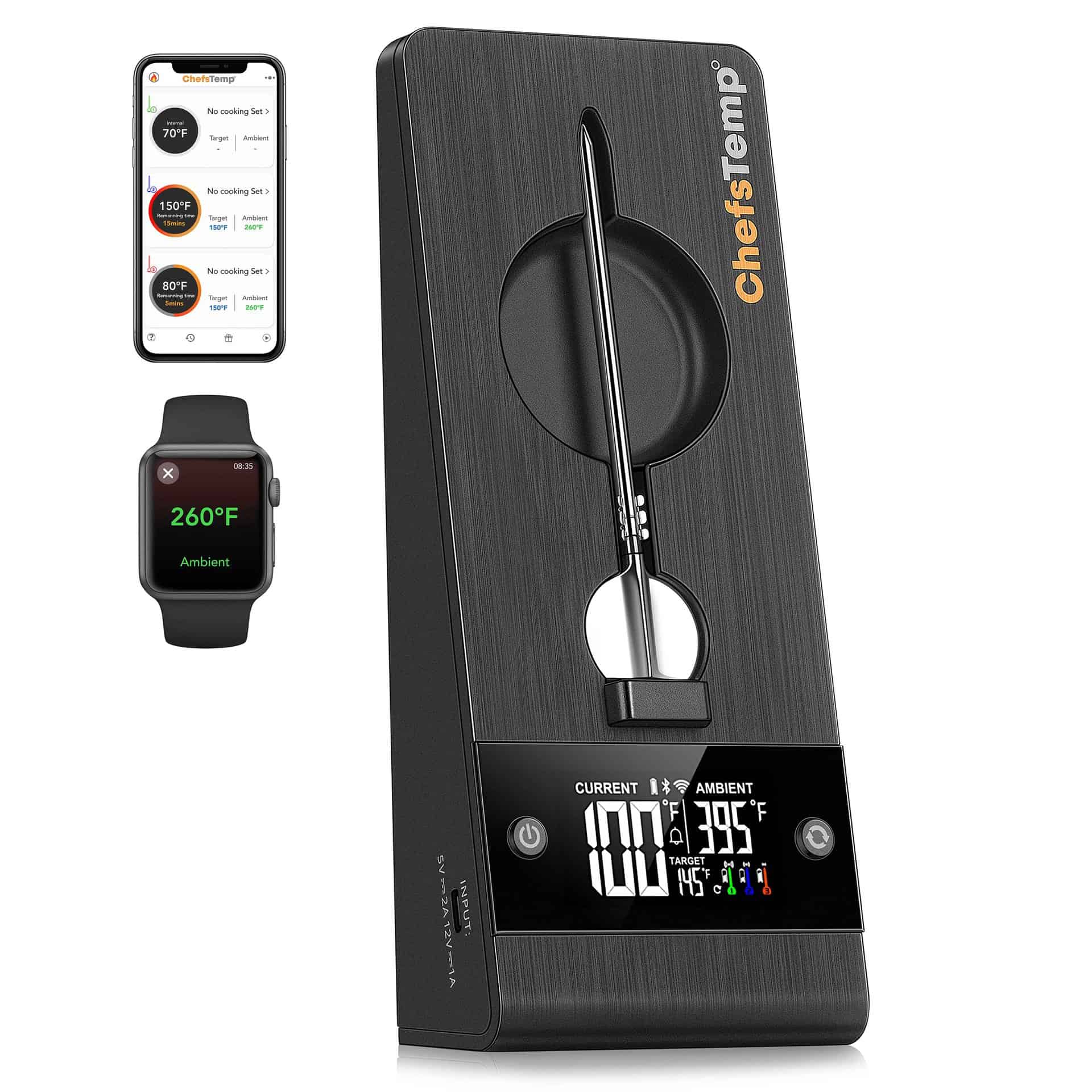
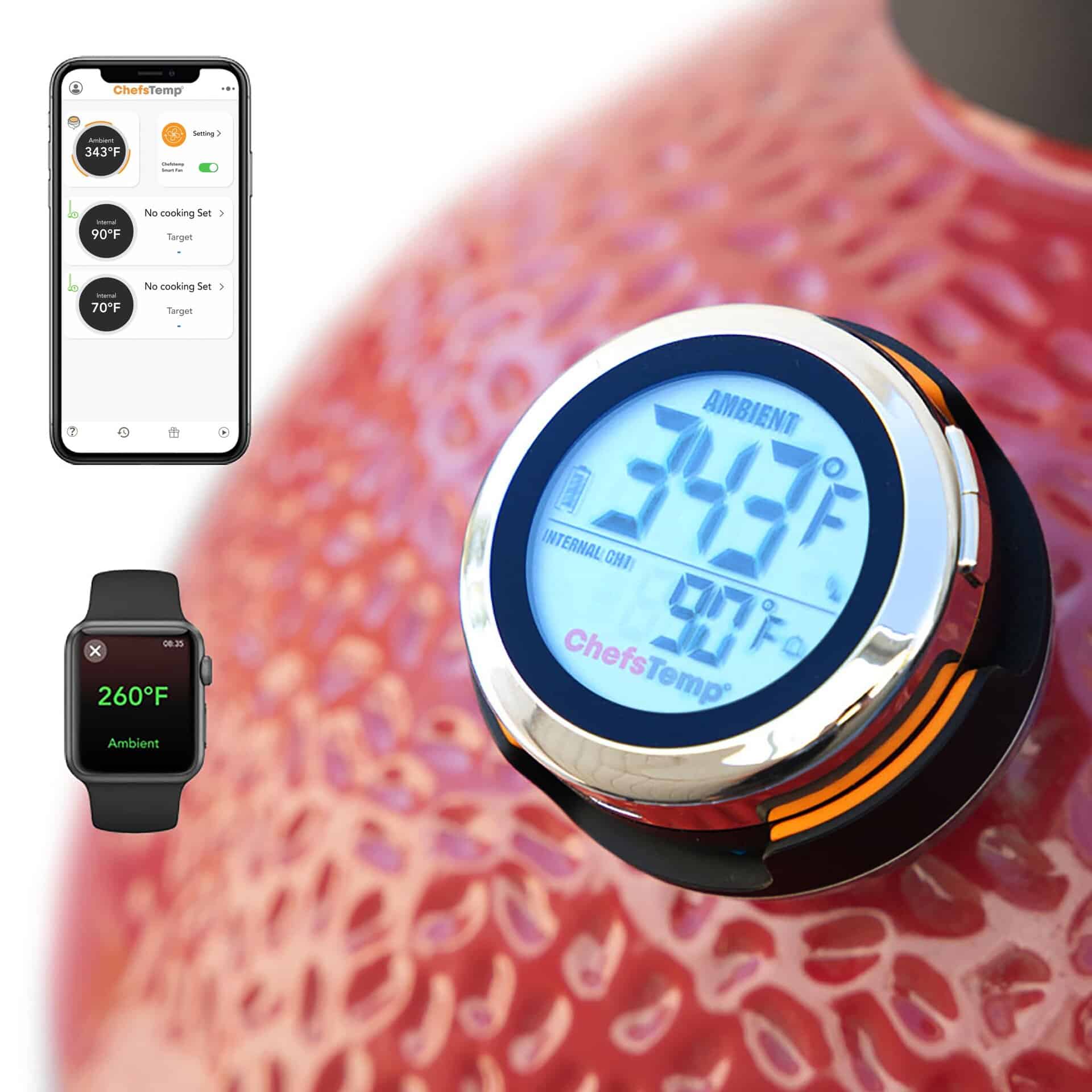
Handling a massive, thick-cut side of salmon in the oven? Opening the door to check the heat ruins your bake constantly. A wireless setup lets you walk away. You leave the probe buried in the meat and just read the screen on your counter. The hot air stays trapped exactly where it belongs. A setup like the ProTemp 2 Plus draadloze vleesthermometer handles heavy lifting for you.
Common cooking temperatures at a glance:
| Meat Type | Safe Internal Temperature |
| Salmon & All Seafood | 145°F (63°C) |
| Ground Meats (Beef, Pork) | 160°F (71°C) |
| All Poultry (Chicken, Turkey) | 165°F (74°C) |
Opmerking: Shellfish (clams, oysters, mussels) should be cooked until their shells pop wide open. Shrimp and lobster are done when the flesh turns completely opaque.
Watch for Albumin
As the salmon cooks, you might see a white liquid oozing out. This milky substance is called albumin. It is simply a liquid protein found naturally inside raw muscle fibers. When your pan gets too hot, those muscle fibers squeeze tightly. This forces the white protein right to the surface of the fish.
Seeing a lot of albumin usually means your heat is way too high. Still, seeing it does not mean the inside of the fish is fully cooked. You should review more salmon cooking tips to manage your heat and keep the fish juicy.
Use Your Eyes
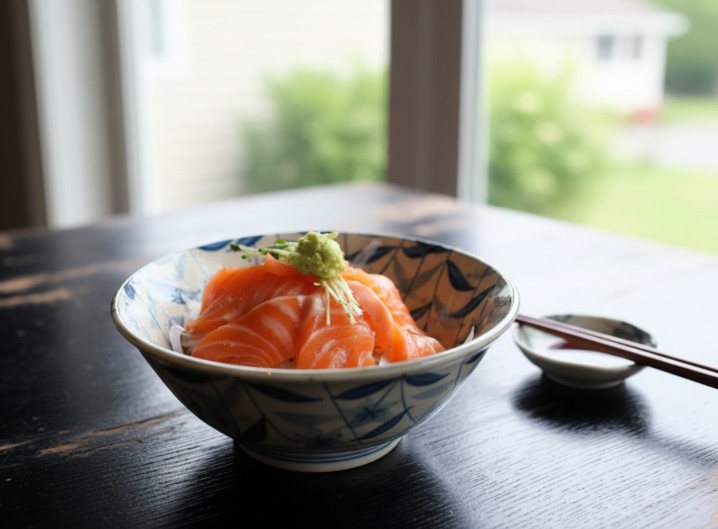
What does undercooked salmon look like? You can spot raw fish very easily. Just look at the color and the shine. Raw salmon is deep pink, dark orange, or dark red. It looks glossy, shiny, and clear. You can almost see right through the thin edges.
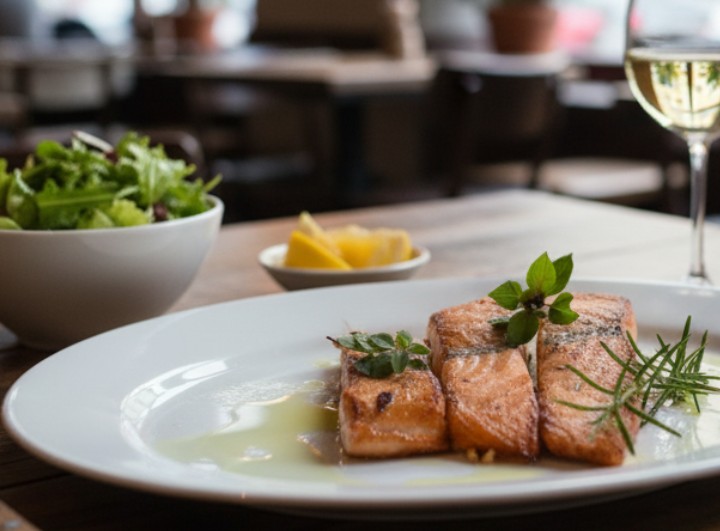
As the fish cooks, this color changes completely. Fully cooked salmon turns into a pale, solid pink. The shiny gloss completely fades away. Always look for this solid, flat color from top to bottom.
Try a Fork for Flakiness
Another easy test uses a regular dining fork. Press down gently on the top of the meat. Knowing whether salmon is undercooked comes down to how the fish pushes back. Raw fish feels firm, squishy, and rubbery. The muscles stay stuck together.
However, when the fish hits that safe 145°F mark, the meat changes. The tissues melt away. The fish will now gently break apart, or flake, along the white fat lines. If you must push hard to break the meat, leave it on the stove a bit longer.
Part 3. Preventions of Undercooked Salmon
Serving fish shouldn’t feel like a high-stakes gamble. A beautiful fillet easily turns into a dining disaster if the center stays raw. You want that perfect, tender bite. Getting there starts long before the pan even gets hot. A few smart kitchen habits build an invisible wall between your plate and foodborne illness.
Here is how you keep your seafood safe and delicious:
- Buy from a Trusted Source First: Everything begins at the fish counter. Talk to your fishmonger. Look for bright, firm meat. Sniff it. It should smell like a cold ocean breeze, never like ammonia. Planning a raw or rare dish? You need to ask for sushi-grade or sashimi-grade cuts specifically. Those labels prove the supplier slammed the fish through an FDA-grade deep freeze to obliterate parasites.
- Store It Right Before You Cook: Raw salmon stays safe in the refrigerator for 1 to 2 days at or below 40°F (4°C). Beyond that window, harmful bacteria multiply fast. If you are not cooking it within 2 days, freeze it immediately. Thaw frozen fillets in the refrigerator overnight – never on the counter at room temperature.
- Use Proper Cooking Techniques: Baking, grilling, and smoking all hit the fish differently. Smoking takes the scenic route. Low, slow heat requires serious patience. Generously season the fillet, then watch the internal temperature closely. Let the lingering heat finish the job with these easy smoking steps.
- Prep the Fish Correctly: Never throw an ice-cold fillet straight into a sizzling skillet. It physically shocks the meat – the outside scorches into a tough crust while the core stays frigid. Give the fish a break. Let it sit on the kitchen counter for 15 to 20 minutes. Taking the chill off allows the heat to glide smoothly into the center later.
- Factor in Carryover Cooking: The stove turns off. The fish keeps cooking. The intense surface temperature pushes inward toward the cooler middle. Professional line cooks exploit this physics trick constantly.
- Master Ground Seafood Variations: Ground fish demands extreme caution. The meat grinder folds surface bacteria deep into the center of your patty. Your zalmburger needs to hit 145°F at the absolute core – not just look done on the outside. A quick pan-sear won’t save you here. The dead center has to get properly hot. Always probe the absolute middle of the patty.
You don’t need a culinary degree to pull this off. Let the cold meat relax. Respect how heat travels. Probe the center. Those simple moves guarantee a safe, perfectly cooked dinner every single time.
Part 4. The Bottom Line
Can salmon be undercooked? Yes, and eating it causes severe stomach problems. Raw fish often hides dangerous parasites. You can look for a solid color and test for easy flakes. However, the only guaranteed safe method is hitting exactly 145°F inside.
Both the Finaltouch X10 and ProTemp 2 Plus take uncertainty out of the equation. Whether you’re cooking at home, running a commercial kitchen, or managing an outdoor grill. The right temperature reading, every time, is the simplest food safety upgrade you can make.
Part 5.FAQs about Can Salmon Be Undercooked
Q: What does undercooked salmon look like?
Raw fish looks glossy and clear. You will notice a dark, deep pink color. The meat also feels squishy and rubbery if you poke it. When it finishes cooking, that clear look fades away. The fish turns into a solid, light pink color. It will then flake apart easily with a normal fork.
Q: Is salmon OK to eat slightly undercooked?
It is highly risky to serve standard grocery fish medium-rare. Unless the supplier confirms the fish underwent a commercial deep-freeze, often marketed as “sushi-grade”, or was safely farm-raised on a formulated diet, eating it slightly raw leaves you vulnerable to aggressive bacteria and parasites.
Q: What should salmon’s internal temperature be?
Per FDA Fish & Fishery Products Guidance, the minimum safe internal temperature for all fin fish, including salmon, is 145°F (63°C). Probe the absolute thickest spot. Hitting that exact heat ceiling instantly obliterates dangerous pathogens. Grab a fast digital thermometer. Guessing the heat with your bare hands rarely works out well.
Q: What are the risks of eating undercooked salmon?
Eating raw fish can wreck your stomach. You are basically inviting live tapeworms and nasty Salmonella bacteria inside. The physical toll is awful. Think sharp stomach cramps. Relentless vomiting. Watery diarrhea. Sudden fluid loss can quickly cause dangerous dehydration. Sometimes it gets bad enough that you wake up hooked to an IV drip.
Q: How long to cook salmon in the oven?
A standard 400°F oven needs about 4 to 6 minutes for every half-inch of meat. But honestly, throw out the timer. Home ovens lie. They have hidden hot spots that completely ruin the math. Rely on a thermometer instead. Your fish is actually done when the very center finally hits 145°F. No sooner.
Q: Can you get food poisoning from undercooked salmon?
Yes, it happens all the time. The CDC estimates roughly 80,000 Vibrio illnesses of all species occur annually in the U.S., with V. parahaemolyticus accounting for the majority of seafood-linked cases. Serving fish below 145°F gives harmful bugs a free pass into your gut. Sickness usually strikes within 12 to 72 hours. Expect a sudden fever. Intense nausea hits fast. Punishing stomach cramps follow right behind.
Q: How do you fix undercooked salmon?
Just slide the fillet right back into the pan. Use medium-low heat. Give it another 3 to 5 minutes. Then grab your thermometer and poke the thickest part again. Nobody eats until that screen reads 145°F. Those extra minutes easily save dinner.
Q: What should I do if I just ate undercooked salmon?
Don’t panic. Simply eating it does not guarantee you will get sick. Drink plenty of water and monitor how you feel for the next 12 to 72 hours. If you experience a sudden high fever, relentless vomiting, or severe stomach pain, seek medical attention immediately and mention that you recently consumed raw fish.
Ontdek andere ChefsTemp-producten

Ontdek meer recepten en leer keukentrucs door lid te worden van onze kookcommunity op Facebook.
Dit vind je misschien ook interessant: