The Best WiFi Meat Thermometer for Smoker: ProTemp Plus (True Wireless) vs. Signals (Wired)
The Best WiFi Meat Thermometer for Smoker
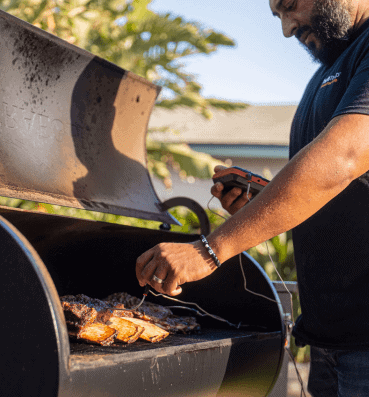
Smoking a brisket requires a full day of commitment. It’s not just a “set it and forget it” kind of deal. We’ve all been there. It’s the middle of the night, and an alarm pulls you from your slumber because your Bluetooth thermometer lost connection to the smoker. If you want to enjoy the process of smoking and brisket and actually get some sleep, a rock-solid wifi meat thermometer for smoker is a must. No one wants to look through boring spec sheets, so I’ll show you a 12-hour cook and let you see how the wired juggernaut, ThermoWorks Signals, stacks up against the fully wireless ProTemp Plus.
Sommario
The Smoker’s Dilemma: Why Bluetooth Fails and WiFi Wins
Why Bluetooth Fails and WiFi Wins
At first, all I thought I needed for brisket was a Bluetooth probe. I’d set the probe, shut the lid, and leave the Big Green Egg to do its job. I’d go fetch the brisket later, but five minutes later, I’d go get it again, and I’d always find “connection lost.”
It’s not broken. It’s just, well, actually broken. When the lid on a round Kamado or a quarter-inch steel offset pit is closed tight, a Faraday cage is effectively what you’ve built. These heavy enclosures block radio frequency, Bluetooth, or any waves, to be honest. The original Meater was just a Bluetooth probe at the time and was basically useless for anyone more than a room away from the Egg or the smoker.
Bluetooth is fine if you just need to run outside to flip the steak every few minutes, but for low-and-slow smoking that takes hours, your only option is to leave a bridge tablet outside or go back and forth from the house to the patio to reset the connection. The design had to change to solve this problem.
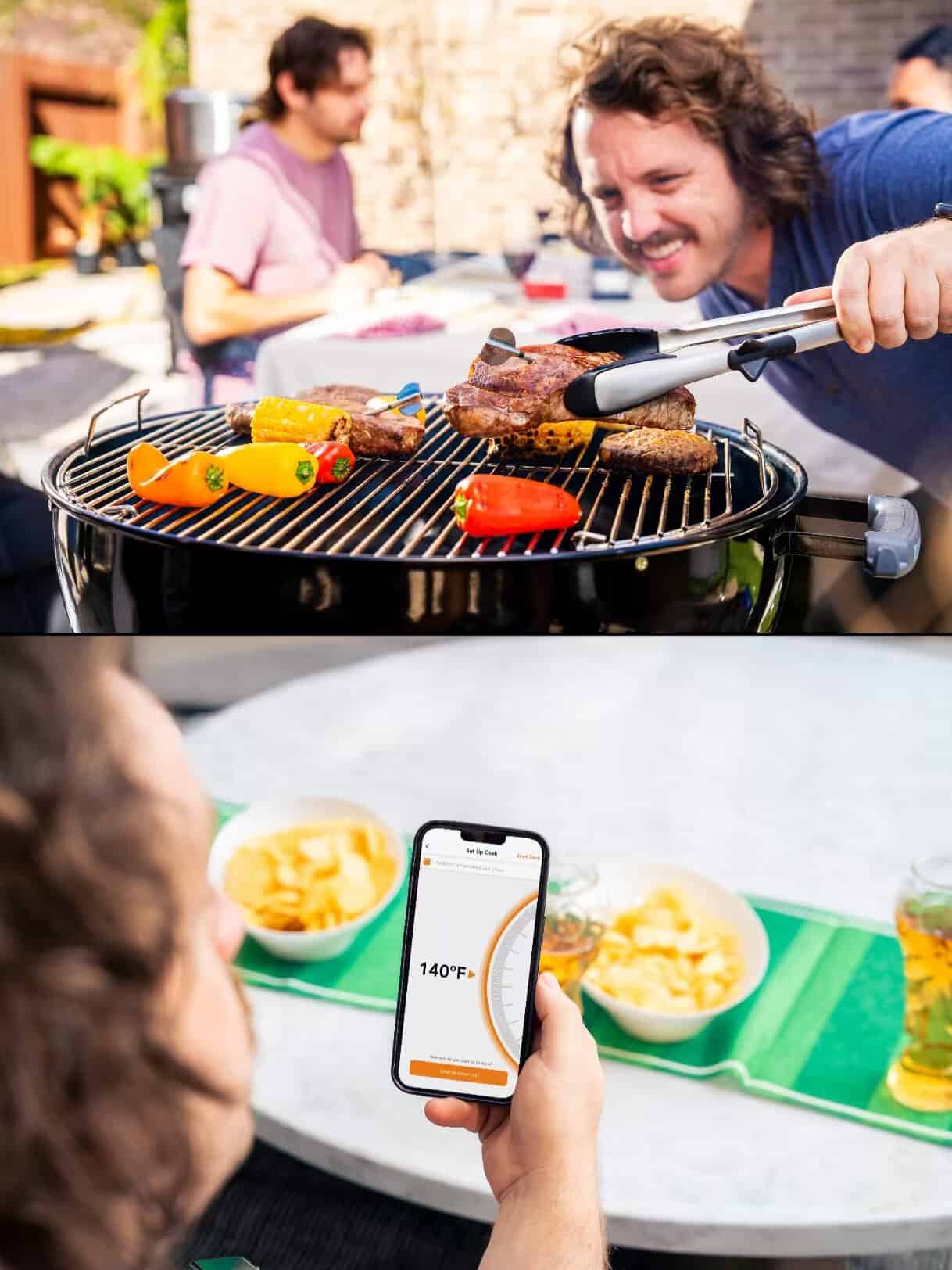
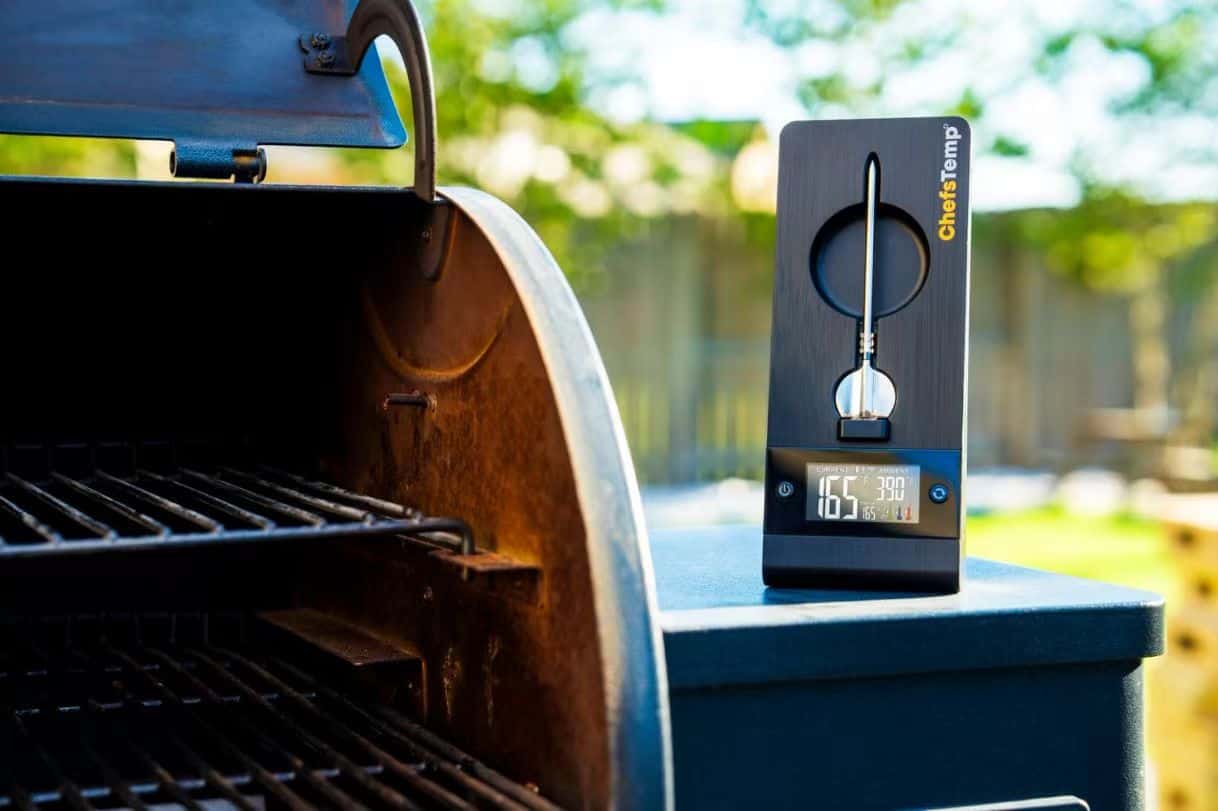
A base station had to be placed outside the smoker to break the Faraday Cage effect. This base absorbs the short-range signal and uses a stronger antenna than normal to send the data to your home router. The Wi-Fi meat thermometer helps eliminate the stress of wondering whether your meat is still safe to monitor and provides real-time updates, whether you are in the kitchen or trying to get some much-needed sleep.
The Heavyweights: ThermoWorks Signals vs. ChefsTemp ProTemp Plus
The Legacy of ThermoWorks Signals (Wired Precision)
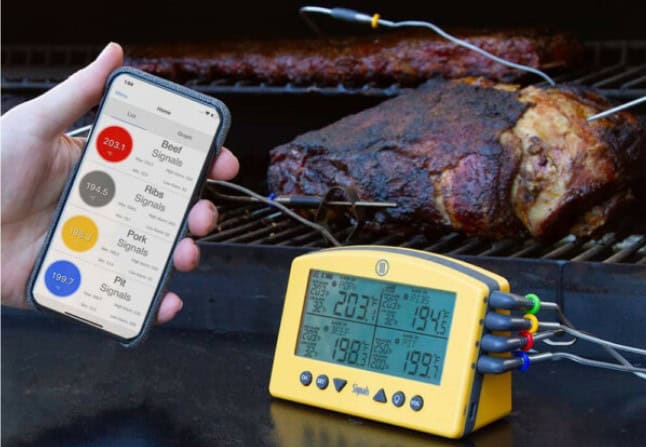
ThermoWorks Signals (Wired Precision)
For many years, ThermoWorks Signals was the absolute king of the smoker. No complaints from me, the hardware is excellent. It’s spot-on in terms of temperature accuracy and has up to 4 probe channels. If you had a complicated, multiple-meat setup at the time, there’s a good chance you used one to help you cook.
Now, we need to be real about the competitive landscape. It’s a legacy product with long cables. Managing four separate wires and trying to move a heavy piece of meat is not only cumbersome, but it ruins the modern experience you worked hard to create. More time is spent untangling wires and worrying about a heavy lid pressing down on a wire than on what you actually want to do, tending the fire.
The True Wireless Shift: ChefsTemp ProTemp Plus
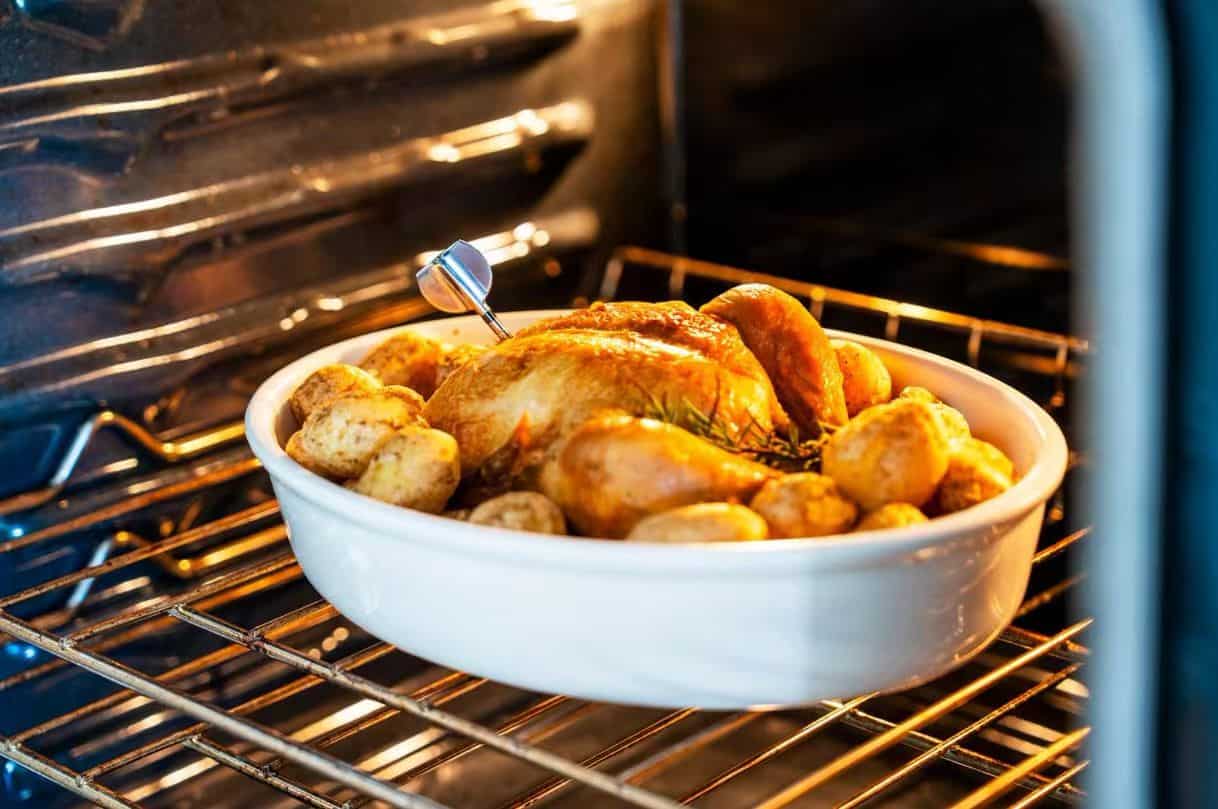
The True Wireless Shift
That frustration was the impetus for the development of “true wireless” technology. While testing the ChefsTemp ProTemp Plus, a smart, wireless meat thermometer, a striking operational difference emerged.
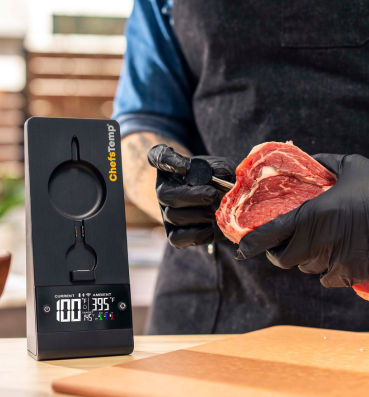
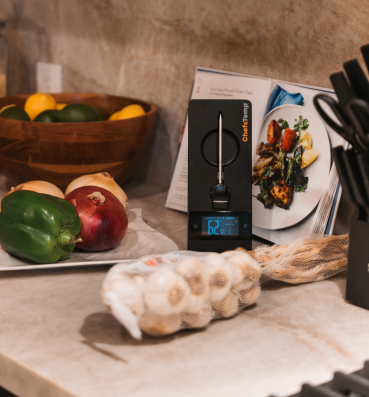
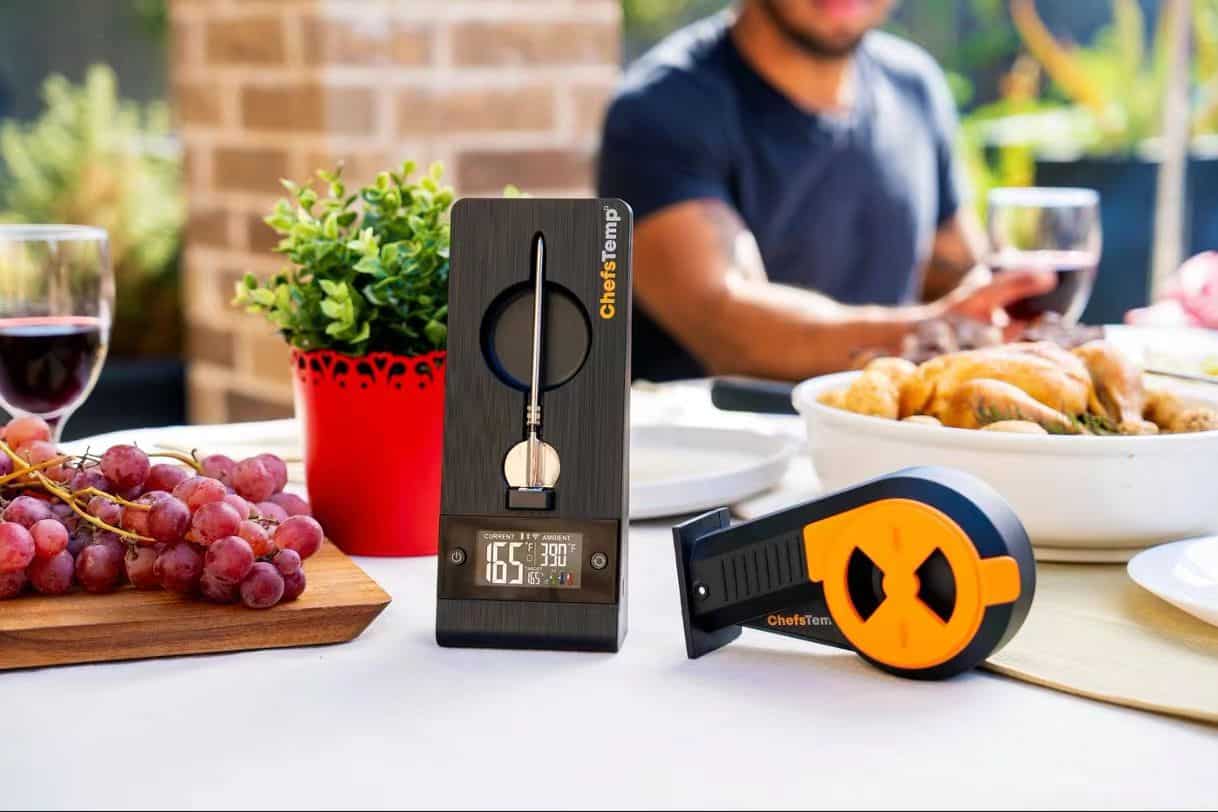
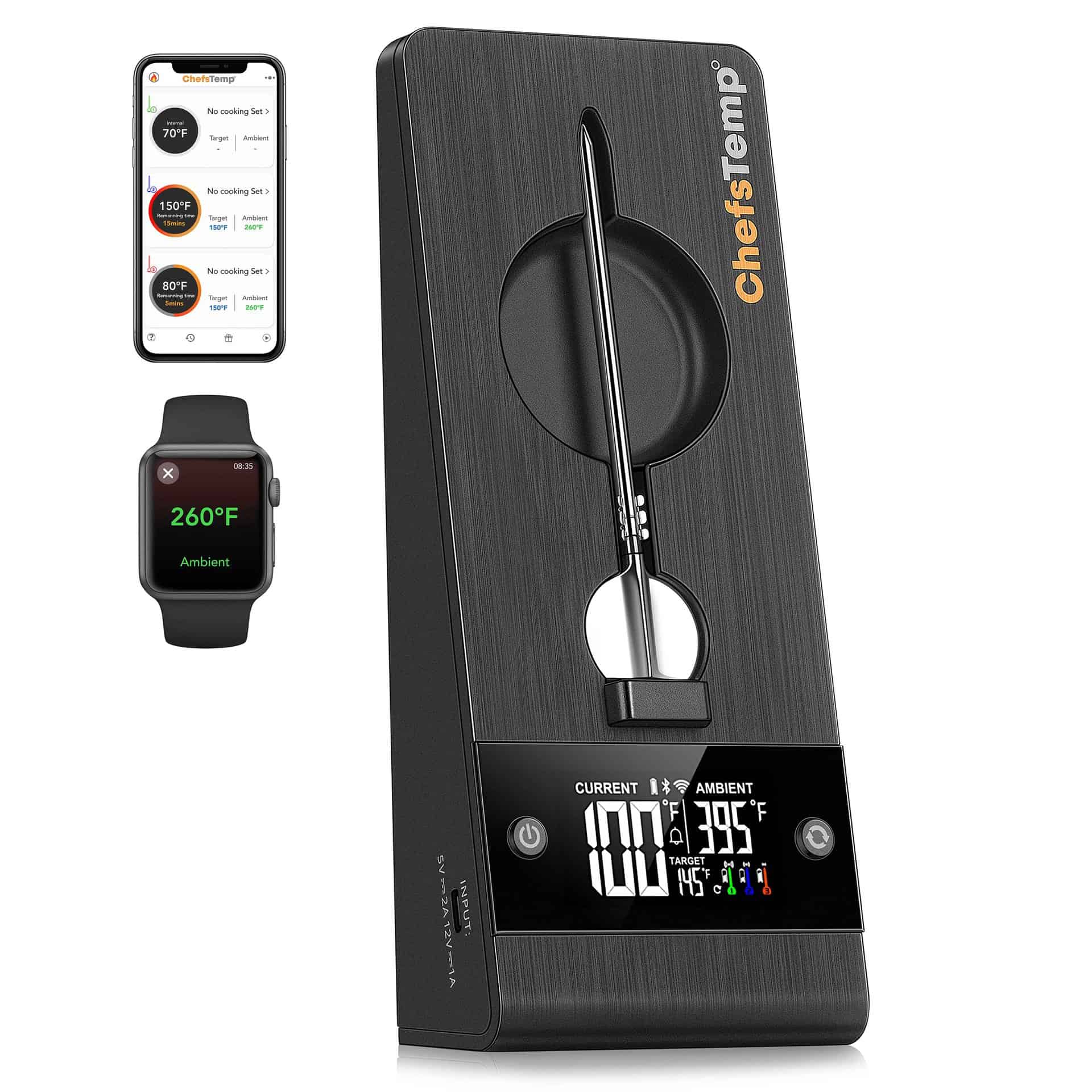
For starters, it gets rid of cables entirely. The probe communicates with the base unit, which houses the battery and WiFi with more than 10,000 mAh of capacity. The signal is sent to your home router. That takes care of what is known as the Faraday cage effect, where your signal drops on the unit due to the WiFi interference. This feature alone makes the ChefsTemp ProTemp Plus the best alternative to a ThermoWorks Signals that I have used.
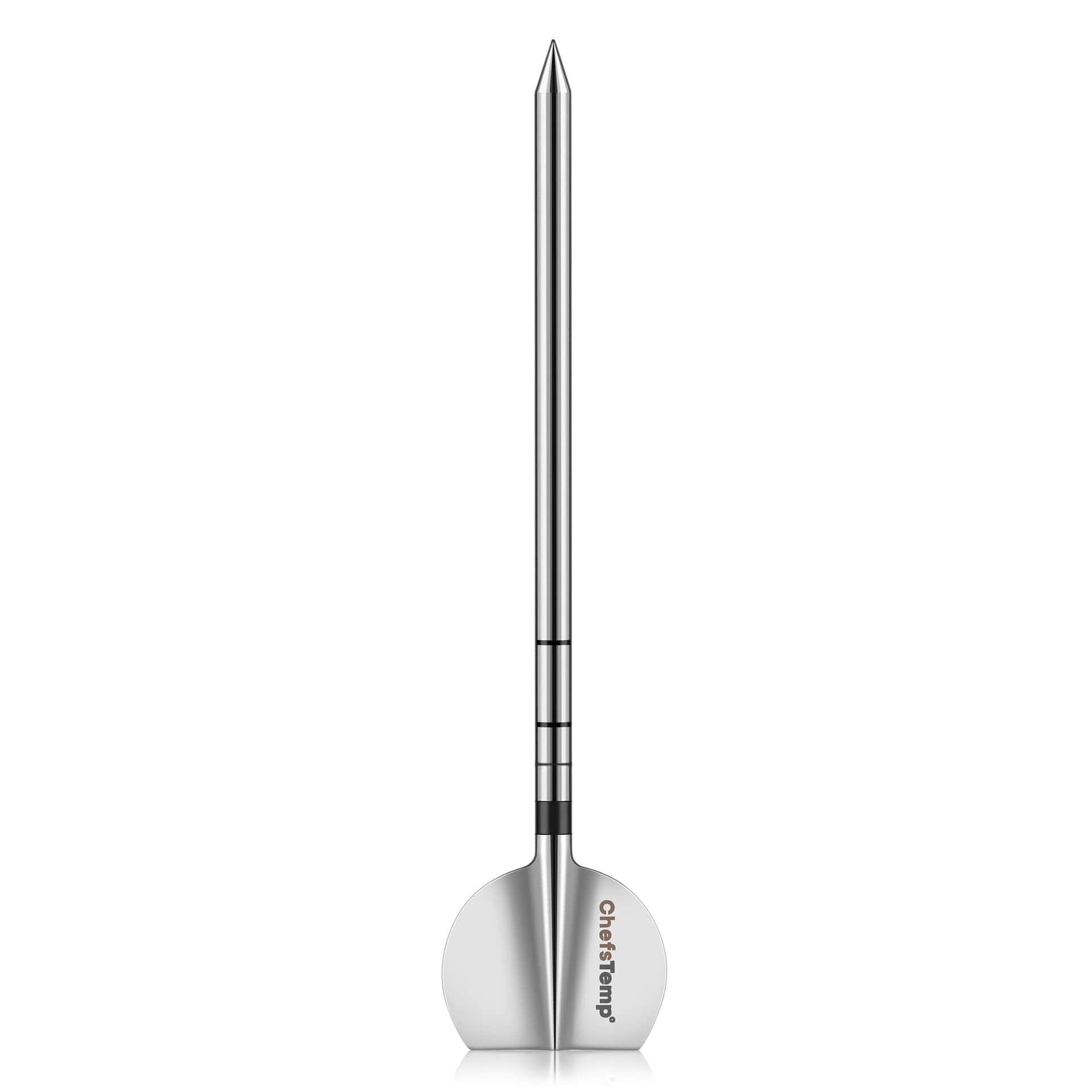
For older Bluetooth thermometers, there was a lot of redesign needed, and this one addresses one of the biggest problems. This thermometer houses the world’s thinnest probe at a staggering 4.55mm in diameter. This is a lot better than the standard 6mm probes, which will puncture your meat, leading to aesthetic and undesirable results. This is what separates the ProTemp Plus from the competition.
The 12-Hour Cook: Real-World BBQ Nightmares Solved
We know that tending to a large smoke isn’t just about kicking back in a chair watching a display. There are meat-handling considerations to consider. This is where spec sheets take the back burner, and the true value of the best wifi meat thermometer for smoker comes to light. We’ll take a look at wired versus true wireless when you are deep into an arduous 12-hour cook.
The Texas Crutch (Foil Wrapping Without Tears)
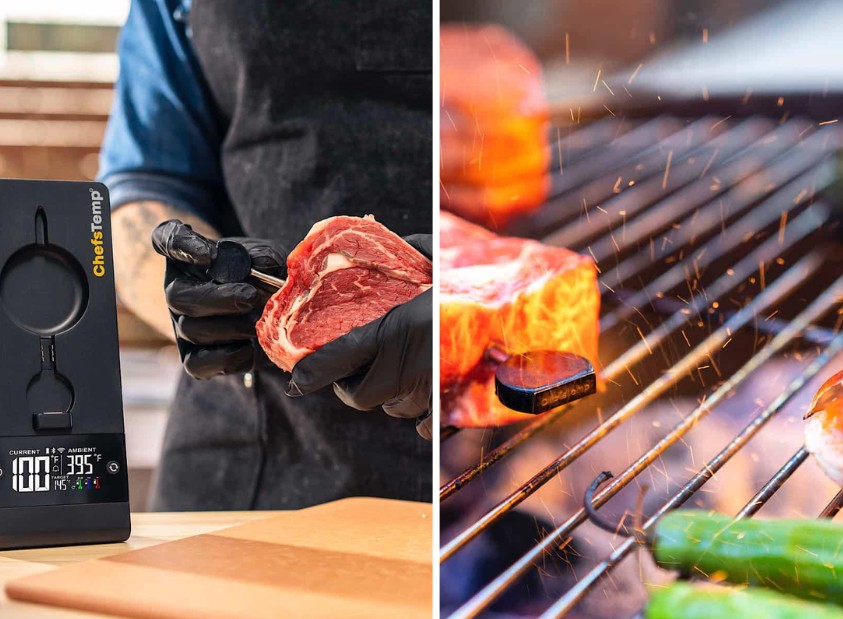
Foil Wrapping Without Tears
Every BBQ expert knows the feeling of getting the smoke to about 165 degrees. To overcome this stall, you apply “the Texas Crutch” using heavy-duty aluminum foil or peach paper. If you use Signals with a wired setup, wrapping is a major headache. You’ll have to route the cable awkwardly through the foil and crimp the edges. There is no perfect seal, thus some steam escapes and causes leaking. You lose the pressure-cooking effect, which breaks down tough connective tissues.
Wires are a hassle, but with the ProTemp Plus, I have the option to wrap the brisket with the or keep the probe in it. I found a solution to this steaming problem while wrapping it with foil. The moisture is sealed within the probe and foil. Although the time allows the data to be transmitted, it does not hinder the data connectivity itself, and it transmits effectively during this time.
The Greasy Cleanup Battle
Skip ahead to the end of the cook. You feel tired, look like a hickory tree, and are ready to eat. The last thing you want to do is meticulously scrub four feet of sticky, ash-coated, grease-smeared cables. It’s a horrible task. One careless slip under the faucet, water gets into the wire cramp, and you ruined an expensive probe.
At this point, a real wireless design brings some relief. You pull out the ProTemp Plus wireless meat probe, toss it in your sink, and wash it with soap and water like a regular probe. Because it’s fully IP67 waterproof, you can relax and focus on cooking without the anxiety of breaking the wires.
The Crucial Resting Phase
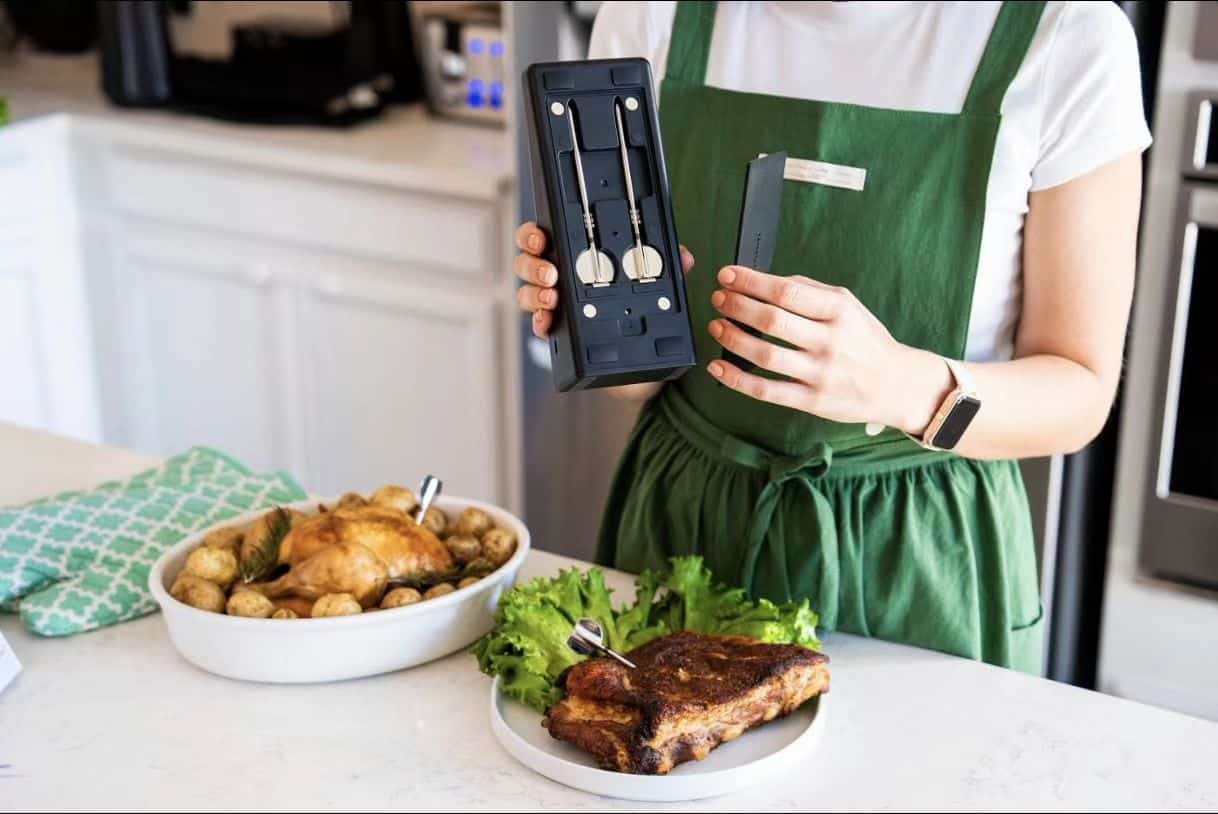
The Crucial Resting Phase
Taking a brisket off the grill doesn’t mean the cooking process is complete. To achieve that stunning contrast in bite and texture between brisket meat and the crust, it’s important to rest your smoked brisket for at least an hour, often with a faux Cambro technique using a hard cooler. During the resting period, the meat’s juices redistribute.
Packing a fully cooked brisket into a cooler, attached to a bundle of wires, is annoying. You crush the wires with the heavy cooler lid, compromising the seal, or you have to take the probes out early and cook the rest completely blind. With a truly wireless cooking probe, it stays securely in the meat. You drop the brisket into the cooler, shut the lid tight, and monitor the meat to cool to the ideal temp for that first slice.
Building a Smart Ecosystem: From Passive to Active Control
Building a Smart Ecosystem
Taking your BBQ to the next level requires controlling the fire, not just watching the numbers rise. I know plenty of the guys who run an external fan attachment with their Signals. It does the job, but your side table starts looking like a server room. You’re left with a fan cable, bulky power adapters, and have to deal with four probe wires. It’s a huge pain.
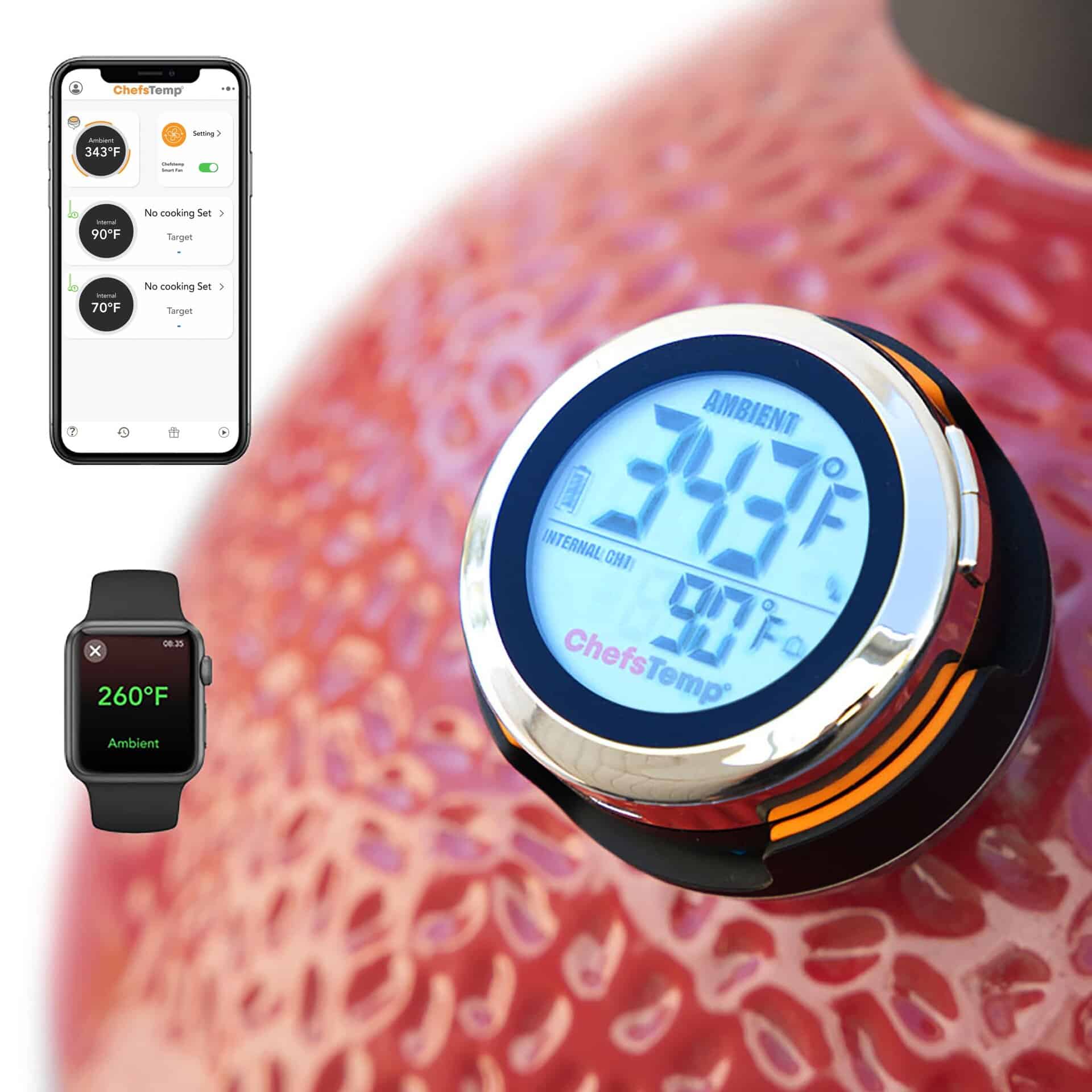
This is where a true wireless smart ecosystem makes a difference. When I paired my setup with the ChefsTemp Breezo V2 temperature control fan, I got rid of the obnoxious cable mess. The fan and the system talk to each other. If you look into the thermodynamics of cooking and managing fire, you realize that draft control is the only way to truly achieve an even and stable low and slow cooking. It makes my Kamado a smart appliance. I put my target temperature in the Breezo app, and my system, while I spend time with my guests, worries about managing the fire.
FAQ about the WiFi Meat Thermometer for Smoker
Q1: Can wireless meat probes be used in smokers?
Definitely. The key here is a probe designed for harsh conditions like the ProTemp Plus with its 1000°F ceramic handle. And with an independent WiFi base, it can easily shoot the signal right through thick steel or ceramic walls.
Q2: Is there a wireless meat thermometer that connects to WiFi?
Yes. With normal Bluetooth systems, you have to leave a phone outside as a bridge, but true WiFi systems have a base station that connects to your home router. If you’re frustrated by dropped signals, try these top Meater competitors. They show how ready dedicated WiFi is a true game changer.
Q3: Are wireless meat thermometers worth it?
For 12-hour low and slow smokes, it’s a 100% yes from me. No cords and just a quick rinse make the ol’ foil the easiest midnight to early morning chore in the world.
The Final Call
For cable-loving purists, the ThermoWorks Signals is one of the most precise tools one can own, even if it does come with some wires to manage. However, if you want to put an end to wire tangles and enjoy the benefits of ProTemp Plus come 2026, this is the way to go. ProTemp Plus is an easy recommendation as the best wifi meat thermometer that I use for all of my overnight smoker cooks. You can check ProTemp Plus to see if it is in stock and ready to ship.
Before you bring your expensive cuts inside for the water bath and final sear, check out our advanced guide: Sous Vide Showdown: The Food Thermometer Secret Weapon.
Scopri altri prodotti ChefsTemp

Scopri altre ricette e impara trucchi di cucina unendoti alla nostra famiglia di cuochi su Facebook.
Potrebbe anche interessarti: