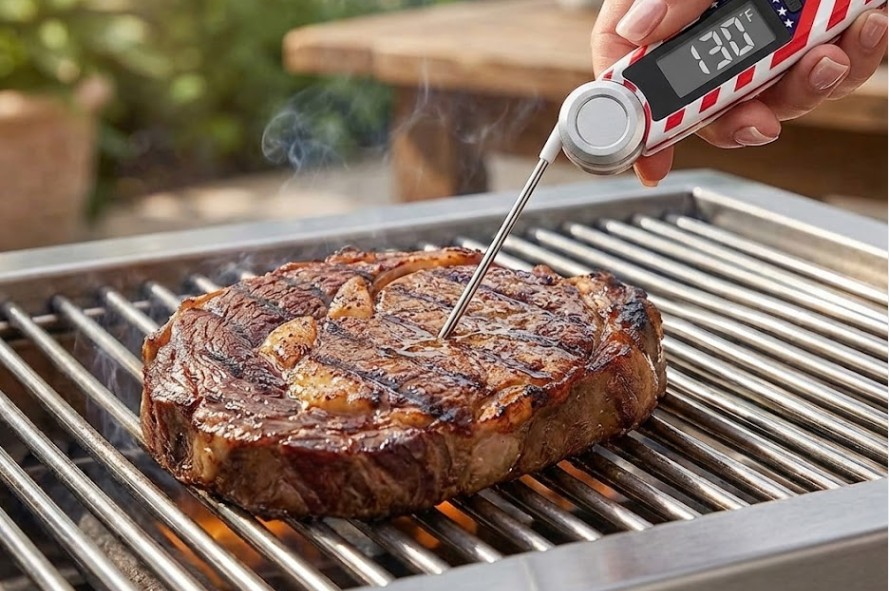
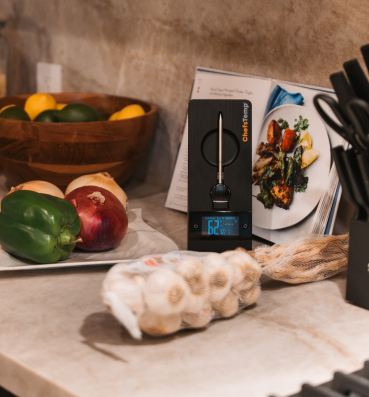
Das perfekte Steak zuzubereiten, ist eine universelle Herausforderung. Wir alle kennen Videos, die diesen “Moment der Wahrheit” zeigen. Man schneidet das Fleisch an und sieht seine Farbe. Manchmal ist es perfekt rosa, aber oft ist es eher grau.
This highlights a big problem: most home cooks guess. According to a consumer survey by the USDA Food Safety and Inspection Service, only about 15% of people consistently use a food thermometer. Guessing doneness by color or touch remains the norm – and it consistently leads to dry, overcooked, or unsafe results.
Zum Glück gibt es eine einfache Lösung. Sie benötigen ein hochwertiges Produkt. Steakthermometer. Cooking steak with a thermometer instantly transforms an amateur cook into a grill master. It removes the stress of cooking expensive cuts.
Immer mehr Köche legen Wert auf Präzision. Bis 2035 wird der weltweite Markt für digitale Fleischthermometer voraussichtlich 1,5 Milliarden US-Dollar übersteigen. Dieser Ratgeber erklärt, warum die Temperatur so wichtig ist und wie man ein Fleischthermometer optimal für Steaks verwendet.
Teil 1. Warum ein Steakthermometer Ihre Geheimwaffe ist
Great steak cooking is about knowing the numbers. Professional chefs never guess when meat is ready, and you shouldn’t either. If you want restaurant-quality food at home, you need a reliable steak thermometer. It gives you the real data you need to take control of. Here is why this simple gadget is a must-have for your kitchen:
Präzision Kontrolle und konsistente Ergebnisse
Fleischdicke, Fettanteil und Knochen machen jedes Stück Fleisch einzigartig. Das beeinflusst die Garzeit, daher reicht es nicht, nur auf die Uhr zu schauen. Ein Steak braucht heute vielleicht 8 Minuten, morgen aber 12. Sich auf einen Timer zu verlassen, ist riskant.
Ein Steakthermometer zeigt Ihnen genau, was im Fleisch vor sich geht. So gelingt Ihnen jedes Mal die perfekte Kerntemperatur. Schluss mit Gerichten, die innen roh oder außen verbrannt sind!.
Verhindert Überkochen und Austrocknen
Zu langes Garen verdirbt das Abendessen im Nu. Wenn Fleisch zu heiß wird, ziehen sich die Muskeln zusammen. Dadurch wird die natürliche Feuchtigkeit herausgepresst. Das Ergebnis ist ein zähes, trockenes Stück Fleisch statt eines saftigen Bisses.
Mit einem digitalen Steakthermometer lässt sich dieses Problem jedoch lösen. Es zeigt genau an, wann das Fleisch vom Grill genommen werden muss. So geht keine Flüssigkeit verloren und der Geschmack bleibt erhalten. Das Ergebnis ist jedes Mal ein perfekt zartes und köstliches Steak.

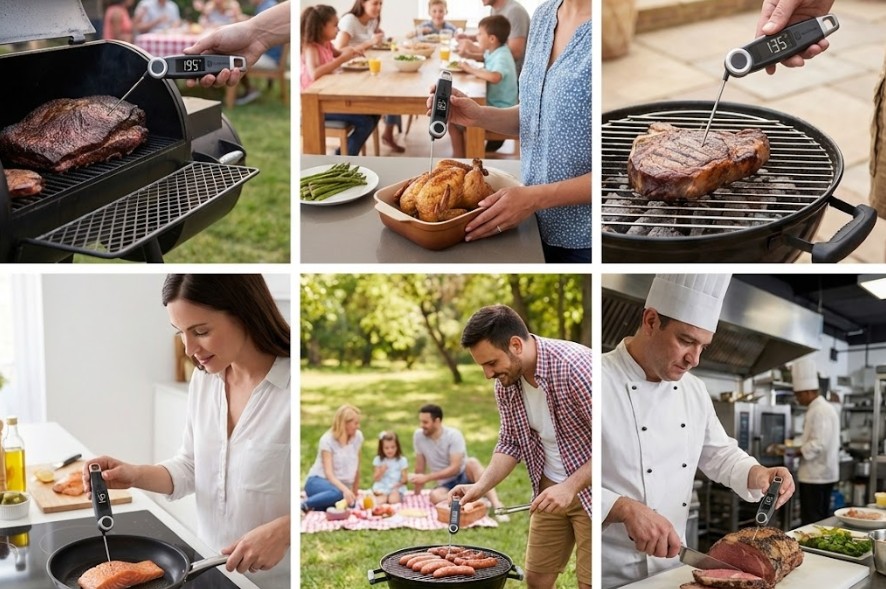
Vom Grillen im Garten bis zur Gourmetküche – ein vielseitiges digitales Thermometer ist Ihre Geheimwaffe für perfekt zubereitete Speisen.
Lebensmittelsicherheitsgarantie
Beyond taste, safety is the top priority. You cannot see bacteria, and checking the meat’s color is not a reliable test. You need to be sure. According to the USDA, whole beef cuts must reach an internal temperature of 145°F, followed by a three-minute rest, to be considered safe. Ground beef requires 160°F. Only a reliable internal meat thermometer can confirm these numbers with certainty.
Vielseitigkeit der Kochstile
A steak temperature probe earns its place far beyond the grill. Use it to confirm a roasted chicken hits 165°F, a pork loin reaches 145°F, or a salmon fillet lands at 125°F–130°F for a silky, flaky texture. One tool covers every protein in your kitchen.
Teil 2. Was ein Steakthermometer tatsächlich misst
Ein Steak perfekt zuzubereiten, fühlt sich an wie eine Kunst, ist aber eigentlich reine Wissenschaft. Wenn Sie Ihr Steakthermometer verstehen, können Sie es besser einsetzen. So gelingt Ihnen das perfekte Steak:
-
How Heat Travels Through a Steak: When you cook a steak, heat travels from the outside in. The surface gets sizzling hot, while the inside remains cool. This difference creates a thermal gradient – meaning the outer crust may read 400°F while the core sits below 120°F. This is exactly why surface color is a poor judge of doneness.
-
Why the Center Temperature Matters Most: Ihr Ziel ist es, die kälteste Stelle des Fleisches zu messen. Dies ist üblicherweise der geometrische Mittelpunkt. Dieser einzelne Wert gibt Ihnen den optimalen Garzustand des gesamten Fleischstücks an.
-
When to Pull Your Steak Off the Heat: Wenn die Kernzone die gewünschte Temperatur erreicht hat, wissen Sie, dass der Rest des Fleisches ausreichend gegart ist.
Using a high-quality steak measuring tool matters. Modern sensors in the
best instant steak thermometer for steakSie sind hochempfindlich. Sie erfassen selbst kleinste Temperaturveränderungen blitzschnell. Dank dieser Geschwindigkeit können Sie rasch reagieren. Sie können das Steak vom Herd nehmen, bevor die Temperatur zu hoch ansteigt.
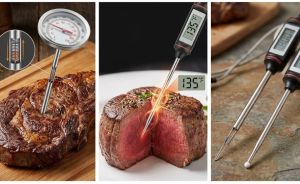
Steakthermometer messen präzise die Innentemperatur des Fleisches, um perfekten Garzustand und Lebensmittelsicherheit zu gewährleisten.
Teil 3. So verwenden Sie Ihr Steakthermometer wie ein Profi
Verderben Sie sich nicht ein schönes Ribeye-Steak durch Raten. Nur wenige Grad trennen ein köstliches Essen von einem zähen Stück Fleisch.
Verwenden Sie Ihr Steakthermometer richtig for restaurant-quality results. These steps help you master the steak measuring tools and grill with total confidence:
Schritt 1: Auswahl des richtigen Thermometertyps
You need the right steak measuring tool for the job. Generally, you will choose between two main styles:
-
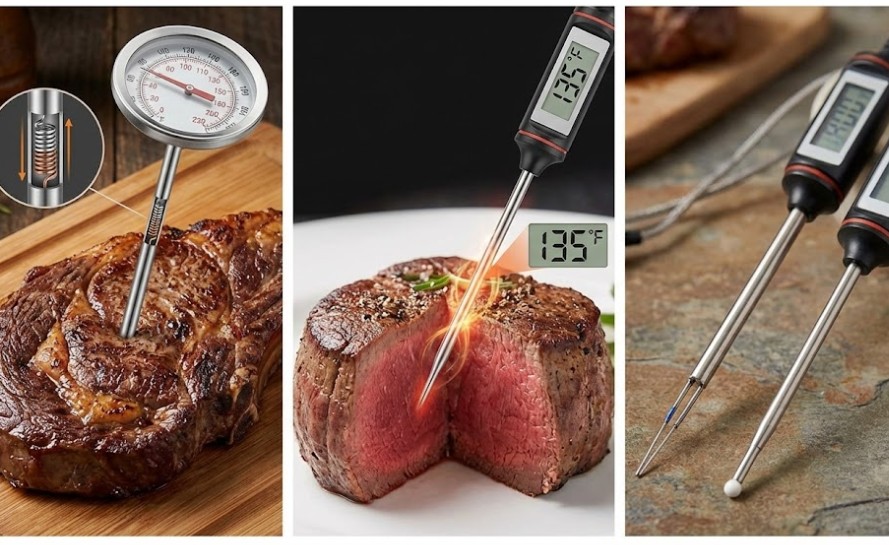
Sofort ablesbare Thermometer: These handheld devices are your go-to
thermometers for grilling. You insert the metal tip, get a fast reading, and pull it away. They are perfect for steaks, pork chops, and other thin cuts. Speed is the most important thing here. You want a
professional-grade meat thermometer for home cooks Das liefert Ihnen in weniger als 3 Sekunden ein Ergebnis. Wenn es zu langsam ist, verbrennen Sie sich während des Wartens die Hand am heißen Grill.
-
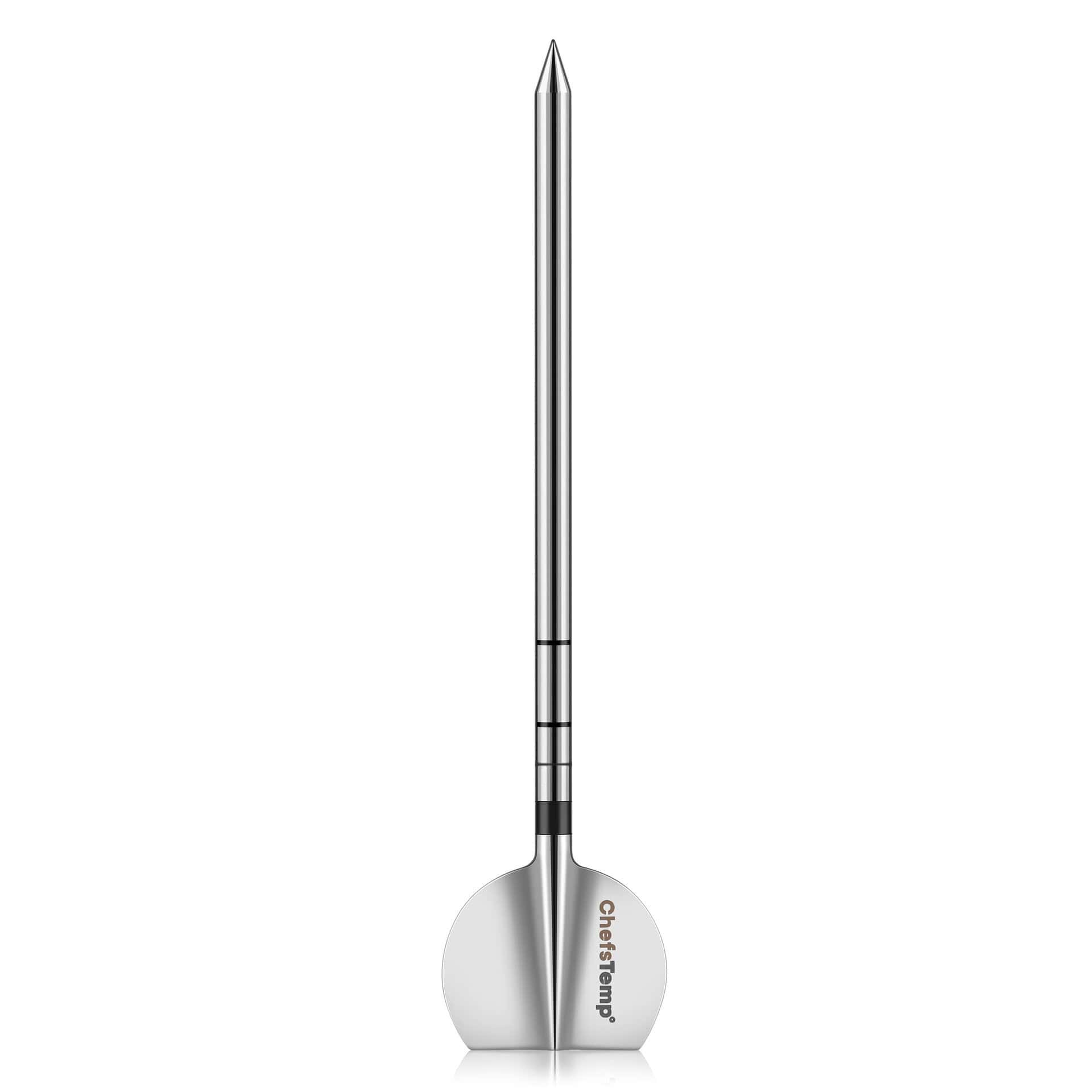
Einsteckthermometer: Diese Geräte funktionieren anders. Sie haben eine Sonde, die an einem Kabel befestigt ist. Das Kabel ist mit dem Sockel verbunden. Die Sonde bleibt während des Garvorgangs im Fleisch. Das eignet sich am besten für einen großen Truthahn zu Thanksgiving oder eine langsam geräucherte Rinderbrust. Die Kabel können jedoch stören, wenn man ein Steak schnell scharf anbraten möchte.
Let’s compare Instant-Read vs Probe Thermometer features:
|
Besonderheit
|
Instant-Read
|
Leave-In Probe
|
|
Geschwindigkeit
|
1–3 sec
|
Continuous
|
|
Best Use
|
Steak
|
Roasts, brisket
|
|
Convenience
|
High
|
Medium
|
|
Lid/Oven Access Needed
|
Ja
|
NEIN |
Schritt 2: Richtige Platzierung der Sonde
Wird die Sonde falsch platziert, erhält man einen falschen Messwert.
-
Finde das Zentrum: Zielen Sie immer auf den dicksten Teil des Steaks. Dort dauert das Garen am längsten.
-
Gehe durch die Seite: For steaks under 1.5 inches thick, insert the probe horizontally from the side to reach the true center. For thicker cuts over 1.5 inches, inserting straight down from the top works well – just angle the probe slightly toward the center mass.
-
Vermeiden Sie Knochen und Fett: Zielen Sie sorgfältig. Knochen erhitzen sich sehr schnell. Fett wird heißer als Muskelfleisch. Wenn Sie einen Knochen oder ein größeres Stück Fett treffen, erhalten Sie einen fälschlich hohen Messwert. Ihr Thermometer zeigt möglicherweise 57 °C an, aber das Fleisch direkt am Knochen ist noch roh.
-
Die Pull-Back-Methode: Wenn Sie sich nicht sicher sind, versuchen Sie diesen Trick, um die kühlste Stelle zu finden: Schieben Sie die Sonde über die Mitte hinaus. Ziehen Sie sie dann langsam wieder heraus. Beobachten Sie die sich ändernden Zahlen. Der niedrigste angezeigte Wert ist die tatsächliche Kerntemperatur.
Schritt 3: Temperaturrichtlinien für perfekte Ergebnisse
Aim for a final resting temperature of 135°F for a perfect pink center. Use this chart to find your favorite spot.
Notiz: Aus Sicherheitsgründen empfiehlt das USDA, ganze Rindfleischstücke auf 145°F zu garen.
Schritt 4: Berücksichtigung von Restkochvorgängen
Die meisten Leute übersehen das: Fleisch gart auch nach dem Grillen noch nach. Die Restwärme der äußeren Schichten wandert zum Kern. Köche nennen diesen Vorgang Nachgaren.
To finish at 135°F (Medium-Rare), remove the steak when it reads 130°F. The temperature rises about 5°F while resting a steak. If you wait until it reaches 135°F, it will end up Medium. A sensitive meat thermometer steak temp reader helps you catch this moment perfectly.
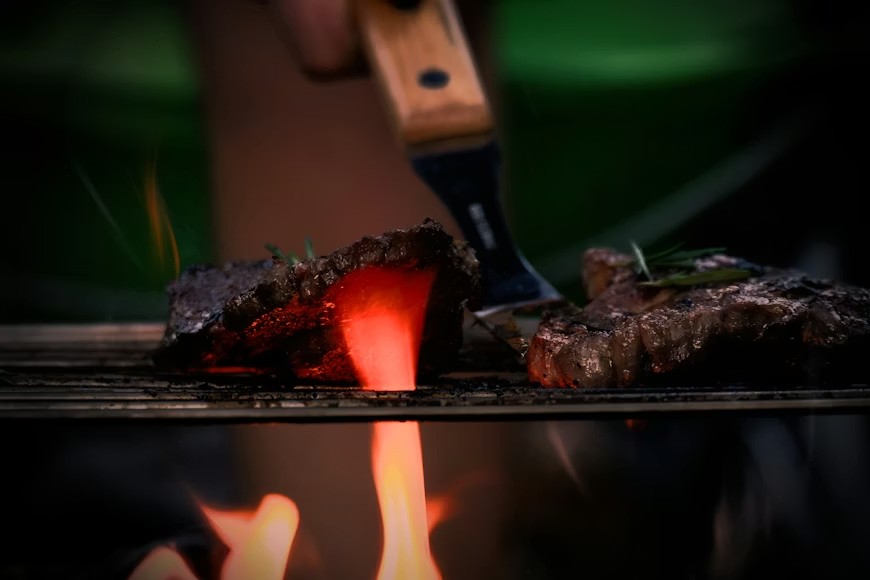
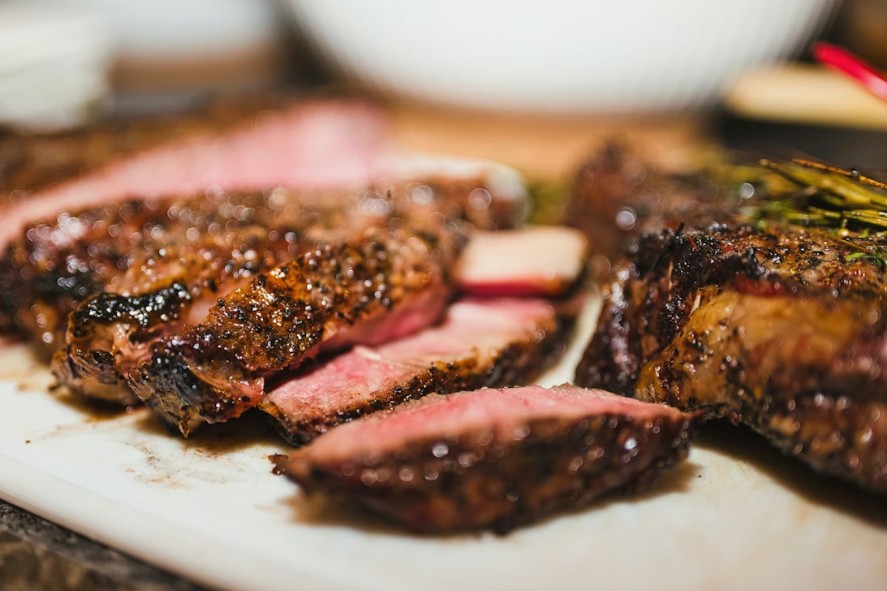
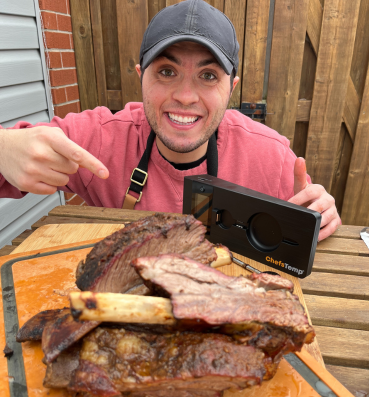
Zartschmelzende Steaks vom Grill, perfekt zubereitet mit professionellem Touch.
Teil 4. Zusätzliche Tipps für die perfekte Zubereitung Ihres Steaks – jedes Mal
Ein perfektes Steak zuzubereiten, erfordert Übung. Damit Sie jedes Mal einen perfekten Bissen genießen können, nutzen Sie diese einfachen Tipps, um Ihr Thermometer optimal einzusetzen. So überprüfen Sie die Temperatur korrekt und Ihr Fleisch wird genau richtig gegart.
Das Gegenteil Anbraten Verfahren
Beginnen Sie mit dem Rückwärtsgaren. Diese Methode eignet sich perfekt für dicke Steaks. Es klingt kompliziert, ist aber eigentlich ganz einfach. Garen Sie das Steak zunächst bei niedriger Temperatur im Ofen. Verwenden Sie ein Fleischthermometer oder prüfen Sie die Kerntemperatur regelmäßig mit einem Handthermometer.
Watch the temperature closely. If your goal is Medium-Rare (135°F), pull the steak from the oven at 110°F-115°F. The quick, high-heat sear will add the final 20°F, delivering a perfectly pink center with a crispy crust. Always confirm with your digital steak thermometer before serving.
Härten das Fleisch
Nehmen Sie das Steak 30 Minuten vor dem Braten aus dem Kühlschrank. Lassen Sie es bei Zimmertemperatur ruhen. Diesen Vorgang nennt man Temperieren. Kaltes Fleisch gart ungleichmäßig. Ist das Steak kalt, verbrennt die Außenseite, bevor es innen gar ist. Durch das Temperieren kann sich die Hitze gleichmäßig im Fleisch verteilen.
Why Resting Your Steak Locks in Juices
Schneiden Sie ein Steak niemals direkt nach dem Braten an. Sie müssen warten. Der heiße Fleischsaft ist noch im Inneren. Wenn Sie das Fleisch anschneiden, läuft dieser Saft aus. Ihr Steak wird trocken.
Lassen Sie das Steak stattdessen 5 bis 10 Minuten ruhen. Das Fleisch nimmt so die Flüssigkeit wieder auf und die Temperatur stabilisiert sich. Nutzen Sie diese Ruhezeit, um das Steakthermometer mit einem Alkoholtuch zu reinigen, damit es für das nächste Mal bereit ist.
Kalibrierungsprüfung
Trust your steak measuring tools. Even the best gear needs a check-up. Test your device with a glass of ice water. Fill a tall glass with crushed ice, then add just enough cold water to fill the gaps. Stir for 30 seconds.
Insert the probe at least 2 inches deep without touching the sides or bottom of the glass. A properly calibrated thermometer reads exactly 32°F (0°C). If it reads off, recalibrate or replace the unit immediately.
Part 5. What is the Best Steak Thermometer for Home Cooks
Picking the right steak thermometer is one of the smartest moves any home cook can make. Not all thermometers are equal, though. Cheap, slow models can cost you a perfectly cooked steak. On a blazing hot grill, a 15-second delay is genuinely dangerous.
Fortunately, there is a type for every cook and every budget:
- Sofort ablesbare Thermometer: Deliver a reading in under two seconds. These are absolute lifesavers when searing high-heat cuts like flank or thin ribeyes, where seconds matter.
- Leave-in probe thermometers: Perfect for the oven stage of a thick Tomahawk reverse-sear, allowing you to track the rising internal heat without opening the door.
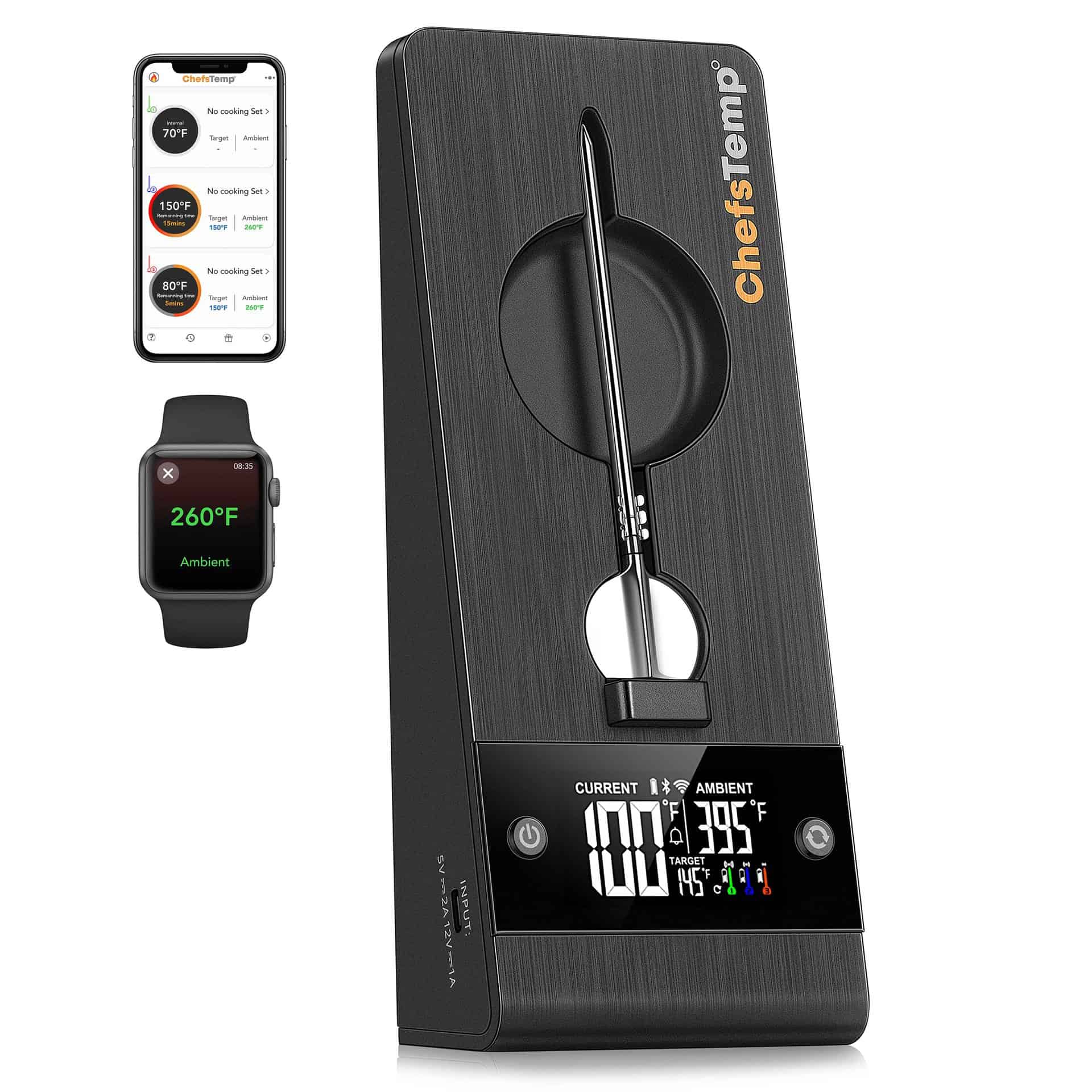
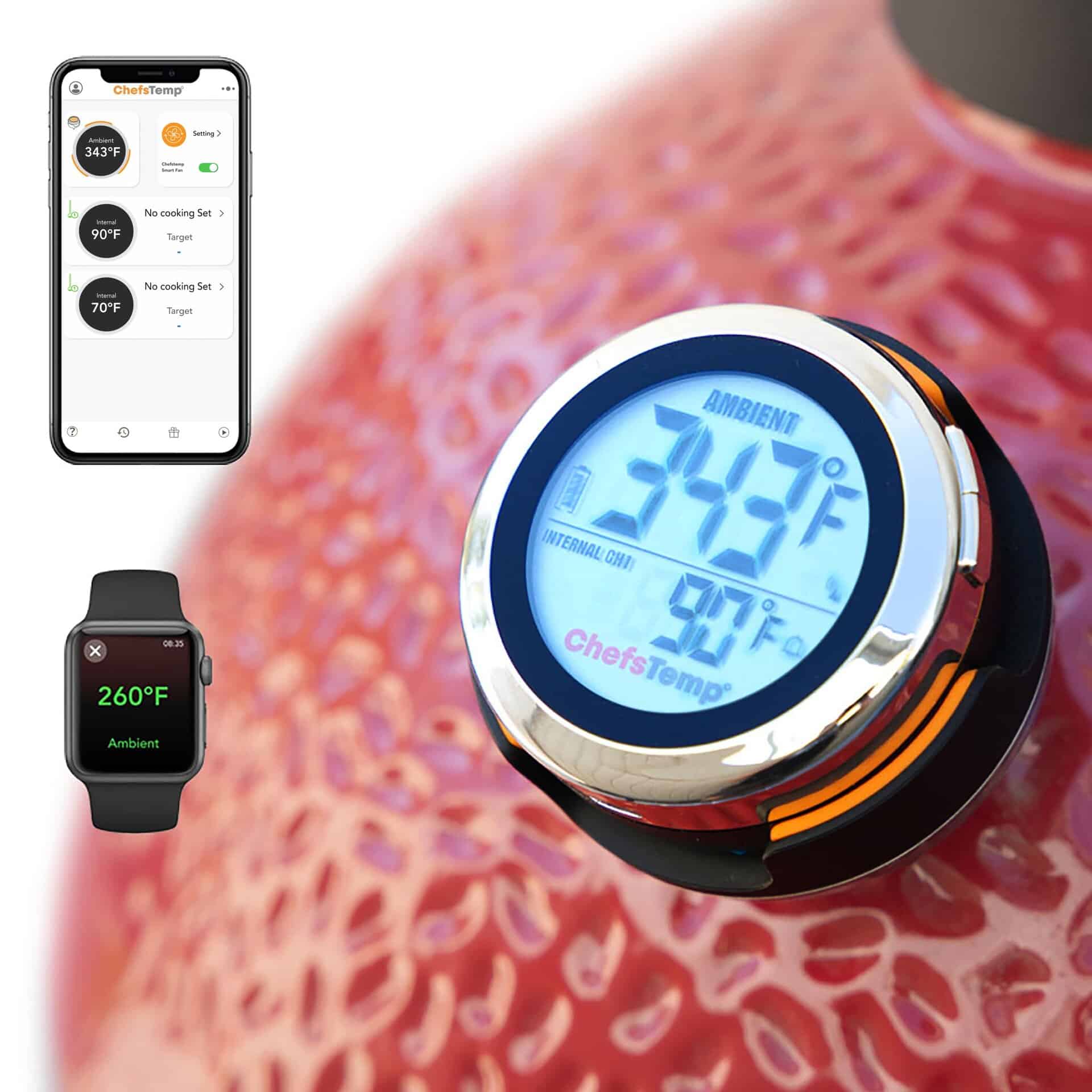
- Wireless Bluetooth thermometers: Ideal for multi-tasking hosts. You can mingle with guests while your phone tracks the steak’s progression on the grill.
- Dial thermometers: While traditional and budget-friendly, they are generally too slow and leave too large a puncture hole for delicate steaks.
Matching thermometer type to cooking method:
- Grilling steaks: Instant-read thermometer for fast spot checks
- Oven roasting or smoking: Leave-in probe or wireless Bluetooth thermometer for hands-off monitoring.
- Pan-searing thin cuts: Instant-read thermometer for rapid final verification.
- Reverse sear method: Leave-in probe during the oven phase; instant-read during the sear.
Each steak measuring tool removes all guesswork from the process. Beyond speed, accuracy matters most. A reliable thermometer steak tool with tight precision tells you exactly when the meat hits your target — rare, medium, or well done.
Ultimately, great steak cooking comes down to one habit: always measure before you plate. The right thermometer gives you the confidence to nail the perfect result every single time.
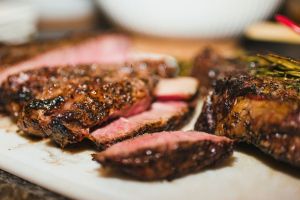
Perfekt geschnitten! Verleihen Sie Ihrem Steak-Erlebnis mit der Präzision eines professionellen Thermometers den letzten Schliff.
Teil 6. Schlussfolgerung
Ein perfektes Steak zuzubereiten, erfordert Geschick. Mit dem Daumen in das Fleisch zu drücken, ist nur ein Raten. Es ist nicht genau. Für Gerichte in Restaurantqualität zu Hause braucht man absolute Präzision. Steakthermometer Das macht den Unterschied zwischen gutem und großartigem Essen aus. Es hält Ihre Mahlzeit frisch und bewahrt den Saft.
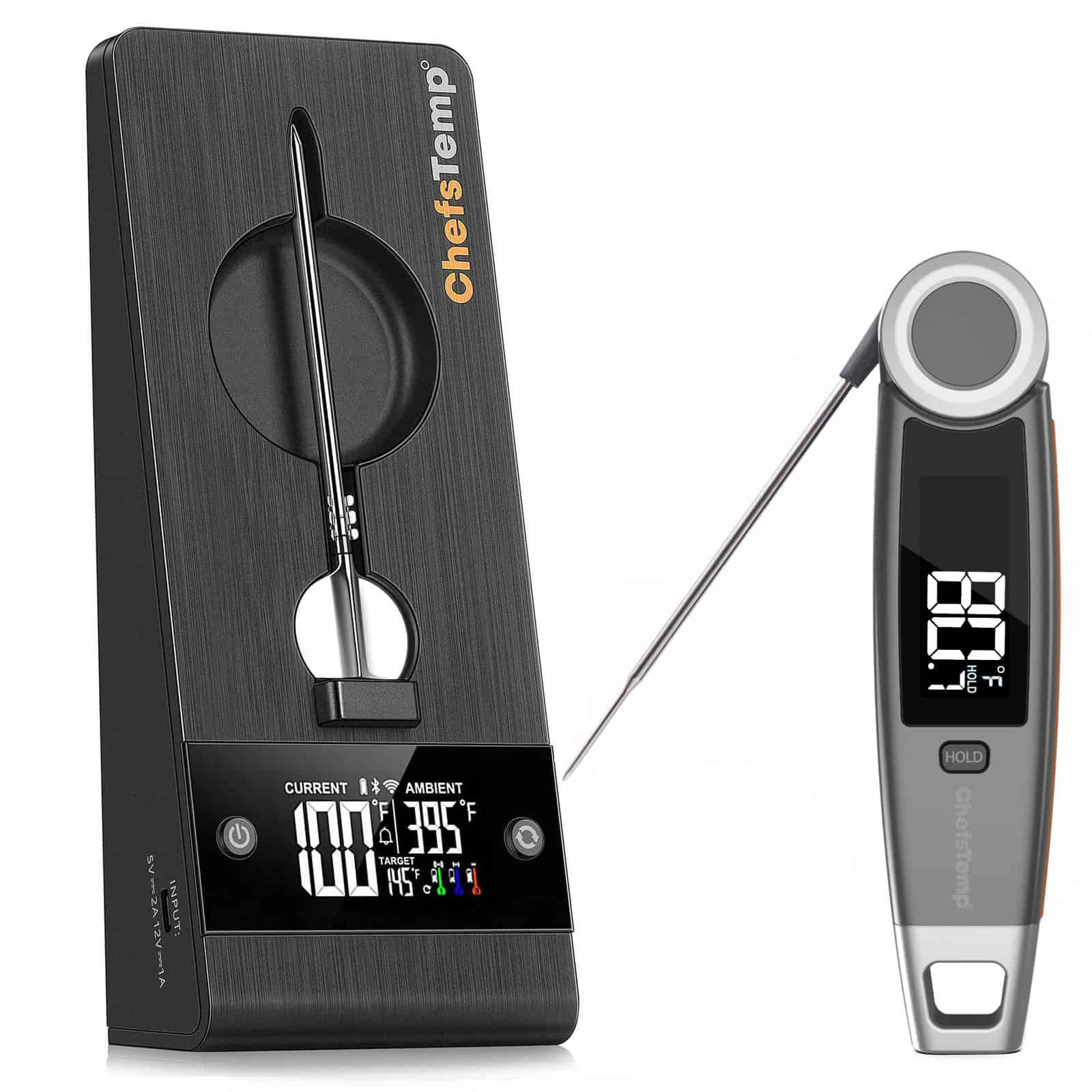
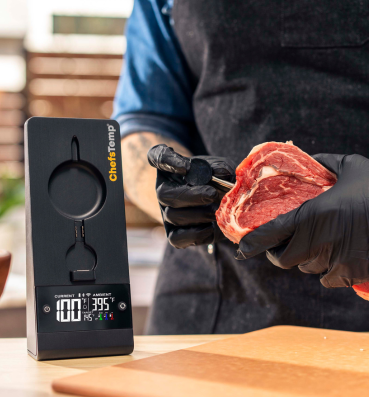
ChefsTemp brings professional power straight to your kitchen. Our thermometer steak tools are built for speed and accuracy. Whether you are grilling outside or roasting inside, the
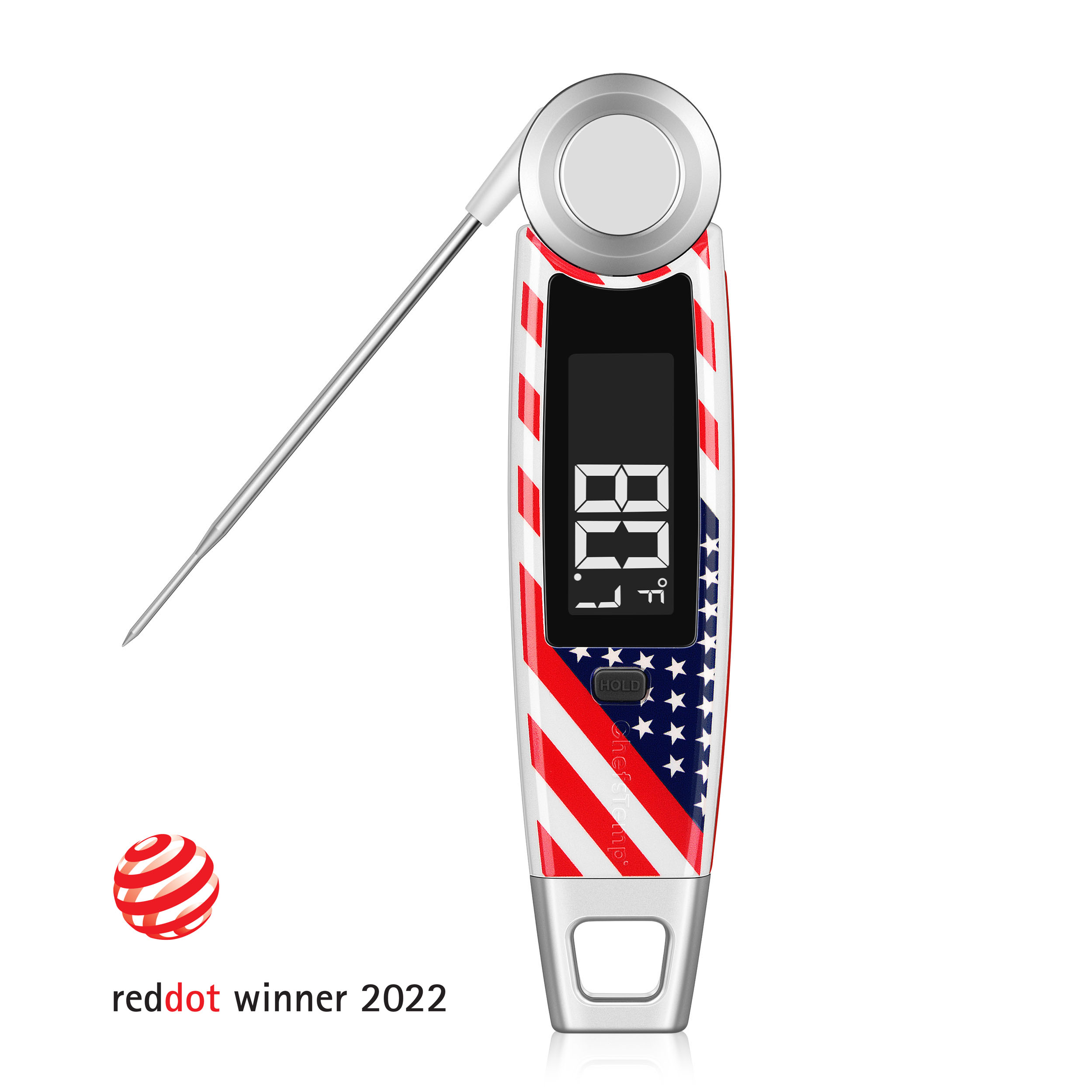
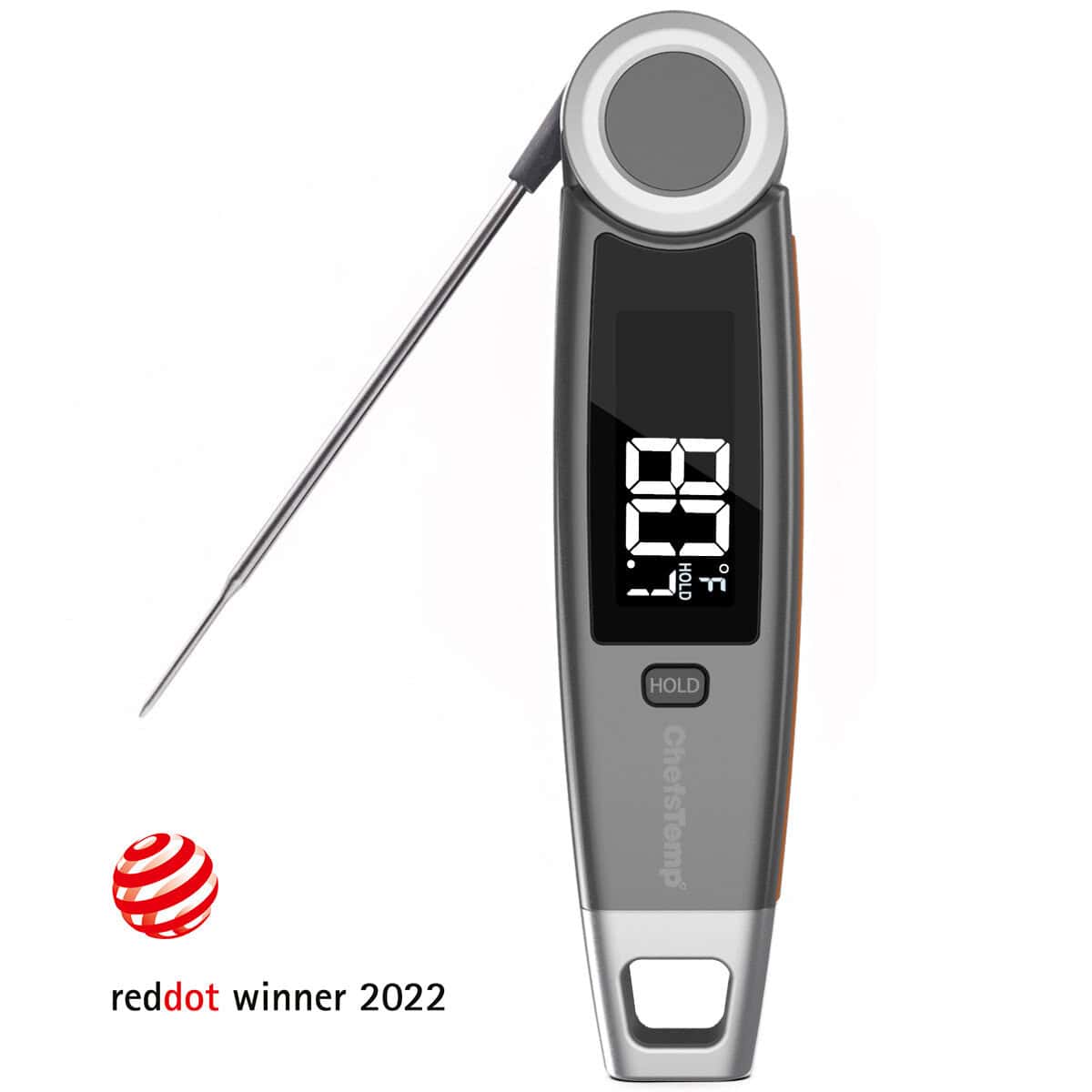
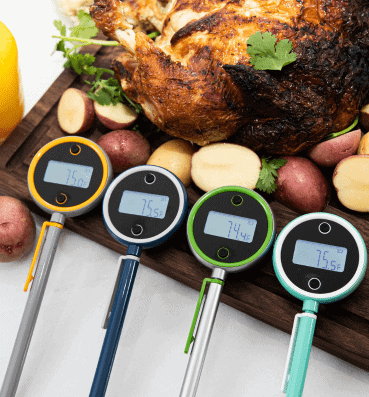
Finaltouch Professional Instant Read Steak Thermometer puts you in total control. Stop guessing. Check the temperature, hit your number, and serve the best steak of your life.
Teil 7. Häufig gestellte Fragen zum Steakthermometer
Q1: Does using a steak thermometer dry out the meat?
A quality steak thermometer uses an ultra-thin, step-down probe, often just 1.5mm at the tip, meaning any lost moisture is practically invisible. Overcooking will always do far more damage to your steak than a quick temperature check ever will. You trade a single drop of juice for edge-to-edge perfection. It makes total sense.
Q2: How do I know if my steak thermometer is accurate?
Twice a year is plenty. Test it immediately if it takes a hard spill onto your tile floor, though. An ice bath is your ground truth here. A glass packed with crushed ice and water sits squarely at 32°F. Submerge the tip. If the screen hits that number, your digital steak thermometer is dead on.
Q3: What is the difference between instant-read and oven-safe thermometers?
No. High ambient oven heat will melt the plastic housing and fry the internal electronics instantly. For long roasts, you need a specialized wired unit built to survive the oven. Leave your instant-read thermometer exactly where it belongs. Keep it resting safely on the cool kitchen counter until checking time.
Frage 4: Welches ist das beste Steakthermometer für Anfänger?
Start simple. A quality instant-read digital model handles almost every kitchen task imaginable. You want something fast with a highly visible display. The ChefsTemp Finnaltouch X10 instant-read steak thermometer hits that sweet spot perfectly. It reads core temperatures in a flash. Having reliable, split-second feedback builds solid cooking intuition before any bad habits form.
Frage 5: Warum zeigt mein Thermometer an verschiedenen Stellen unterschiedliche Temperaturen an?
Muscle, fat, and bone all conduct heat at entirely different rates. The outer edges sear while the deep center stays cool. It resembles a thermal map. Finding cold spots is completely normal. Probe the absolute thickest section of the raw cut. The lowest temperature you find dictates the actual doneness of your entire evening meal.
Frage 6: Benutzen professionelle Köche tatsächlich Fleischthermometer?
Yes. Even veteran line cooks rely on them. Intuition is great for estimating, but paying customers demand absolute consistency. Guessing leads to returned plates. A quick core temperature check acts like an insurance policy during a chaotic dinner rush. It guarantees the steak hits the exact target doneness before ever leaving the kitchen pass.
Frage 7: Wie reinige ich meinen Steak-Temperaturfühler?
Treat it like a sharp knife. Keep an antibacterial wipe or a simple alcohol pad handy by the grill. Wipe the metal tip immediately after probing raw or partially cooked meat to prevent cross-contamination. When dinner is done, wash the tip with warm, soapy water. Never submerge the whole unit in the sink. Water ruins those delicate electronics instantly. Keep the display housing dry unless your specific steak temperature probe is officially waterproof.
Q8: Do professional chefs really use meat thermometers?
Yes. Visual cues frequently lie. A beautifully charred crust often hides a completely raw, cold center. Relying on touch is equally flawed. A good steak thermometer removes the anxiety of ruining an expensive piece of beef. It provides objective data. You stop guessing and start cooking with the exact precision premium meat demands.