Cooking the perfect steak is a universal challenge. We have all seen videos showing that “moment of truth”. You cut into the meat to reveal its color. Sometimes it is perfect pink, but often it is gray.
This highlights a big problem: most home cooks guess. According to a consumer survey by the USDA Food Safety and Inspection Service, only about 15% of people consistently use a food thermometer. Guessing doneness by color or touch remains the norm – and it consistently leads to dry, overcooked, or unsafe results.
Fortunately, there is an easy solution. You need a high-quality steak thermometer. Cooking steak with a thermometer instantly transforms an amateur cook into a grill master. It removes the stress of cooking expensive cuts.
More cooks want precision. By 2035, the global market for these digital meat thermometers is anticipated to surpass USD 1.5 billion. This guide explains why temperature matters and how to use a meat thermometer for steak for the best results.
Table of Contents
Part 1. Why a Steak Thermometer is Your Secret Weapon
Great steak cooking is about knowing the numbers. Professional chefs never guess when meat is ready, and you shouldn’t either. If you want restaurant-quality food at home, you need a reliable steak thermometer. It gives you the real data you need to take control of. Here is why this simple gadget is a must-have for your kitchen:
Precision Control and Consistent Results
Meat thickness, fat, and bone make every cut unique. This changes cooking speed, so watching the clock is not enough. A steak might need 8 minutes today but 12 tomorrow. Relying on a timer is a gamble.
Instead, a steak cooking thermometer shows precisely what is happening inside the meat. This lets you hit the perfect temperature every single time. You can stop serving dinners that are raw in the middle or burnt on the outside.
Prevents Overcooking and Dryness
Overcooking ruins dinner fast. When meat gets too hot, the muscles tighten up. This squeezes out the natural moisture. You end up with a tough, dry piece of leather instead of a juicy bite.
However, using a digital steak thermometer solves this. It shows exactly when to take the meat off the heat. This stops you from losing liquid and keeps the flavor inside. The result is a perfect, tender, delicious bite every time.
From backyard BBQs to gourmet kitchens, a versatile digital thermometer is your secret weapon for perfectly cooked meals every time.
Food Safety Assurance
Beyond taste, safety is the top priority. You cannot see bacteria, and checking the meat’s color is not a reliable test. You need to be sure. According to the USDA, whole beef cuts must reach an internal temperature of 145°F, followed by a three-minute rest, to be considered safe. Ground beef requires 160°F. Only a reliable internal meat thermometer can confirm these numbers with certainty.
Versatility in Cooking Styles
A steak temperature probe earns its place far beyond the grill. Use it to confirm a roasted chicken hits 165°F, a pork loin reaches 145°F, or a salmon fillet lands at 125°F–130°F for a silky, flaky texture. One tool covers every protein in your kitchen.
Part 2. What a Steak Thermometer Actually Measures
Cooking a steak perfectly feels like an art, but it is really just science. Understanding your steak thermometer helps you use it better. This is how it will help you cook to perfection:
How Heat Travels Through a Steak: When you cook a steak, heat travels from the outside in. The surface gets sizzling hot, while the inside remains cool. This difference creates a thermal gradient – meaning the outer crust may read 400°F while the core sits below 120°F. This is exactly why surface color is a poor judge of doneness.
Why the Center Temperature Matters Most: Your goal is to measure the coldest part of the meat. This is usually the geometric center. This single number tells you the proper doneness of the entire cut.
When to Pull Your Steak Off the Heat: If the center spot reaches your target temperature, you know the rest of the meat is cooked enough.
Using a high-quality steak measuring tool matters. Modern sensors in the best instant steak thermometer for steakare highly sensitive. They detect these subtle heat shifts rapidly. This speed lets you react quickly. You can remove the steak before the temperature rises too high.
Steak thermometers precisely measure the internal temperature of meat to ensure perfect doneness and food safety.
Part 3. How to Use Your Steak Thermometer Like a Pro
Don’t ruin a nice ribeye by guessing. Only a few degrees separate a delicious meal from a tough piece of leather. Use your steak thermometer correctly for restaurant-quality results. These steps help you master the steak measuring tools and grill with total confidence:
Step 1: Choosing the Right Type of Thermometer
You need the right steak measuring tool for the job. Generally, you will choose between two main styles:
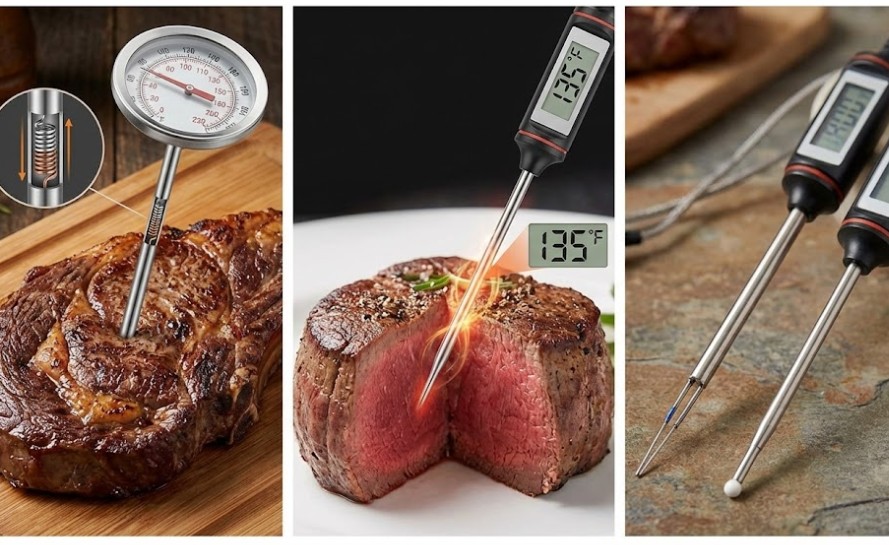
Instant-Read Thermometers: These handheld devices are your go-to thermometers for grilling. You insert the metal tip, get a fast reading, and pull it away. They are perfect for steaks, pork chops, and other thin cuts. Speed is the most important thing here. You want a professional-grade meat thermometer for home cooks that gives you a number in under 3 seconds. If it is too slow, your hand will burn over the hot grill while you wait.
Leave-In Probe Thermometers: These are different. They have a probe attached to a wire. The wire connects to the base. You leave the probe inside the meat while it cooks. This works best for a big Thanksgiving turkey or a slow-smoked brisket. But the wires can get in the way when you want to sear a steak quickly.
Let’s compare Instant-Read vs Probe Thermometer features:
Feature
Instant-Read
Leave-In Probe
Speed
1–3 sec
Continuous
Best Use
Steak
Roasts, brisket
Convenience
High
Medium
Lid/Oven Access Needed
Yes
No
Step 2: Proper Probe Placement
Placing the probe incorrectly gives a bad reading.
Find the Center: Always aim for the thickest part of the steak. This is where cooking takes the longest.
Go through the Side: For steaks under 1.5 inches thick, insert the probe horizontally from the side to reach the true center. For thicker cuts over 1.5 inches, inserting straight down from the top works well – just angle the probe slightly toward the center mass.
Avoid Bone and Fat: Aim carefully. Bone gets hot very fast. Fat gets hotter than muscle. If you hit a bone or a big piece of fat, you will get a falsely high reading. Your thermometer might read 135°F, but the meat next to the bone is still raw.
The Pull-Back Method: If you are unsure, try this trick to find the coolest part. Push the probe past the center. Then, slowly pull it back out. Watch the numbers change. The lowest number you see is the actual core temperature.
Step 3: Temperature Guidelines for Perfection
Aim for a final resting temperature of 135°F for a perfect pink center. Use this chart to find your favorite spot.
Note: For safety, the USDA recommends cooking whole beef cuts to 145°F.
Step 4: Accounting for Carryover Cooking
Most people miss this: meat still cooks when it comes off the fire. The residual heat from the outer layers moves to the center. Chefs call this process carryover cooking.
To finish at 135°F (Medium-Rare), remove the steak when it reads 130°F. The temperature rises about 5°F while resting a steak. If you wait until it reaches 135°F, it will end up Medium. A sensitive meat thermometer steak temp reader helps you catch this moment perfectly.
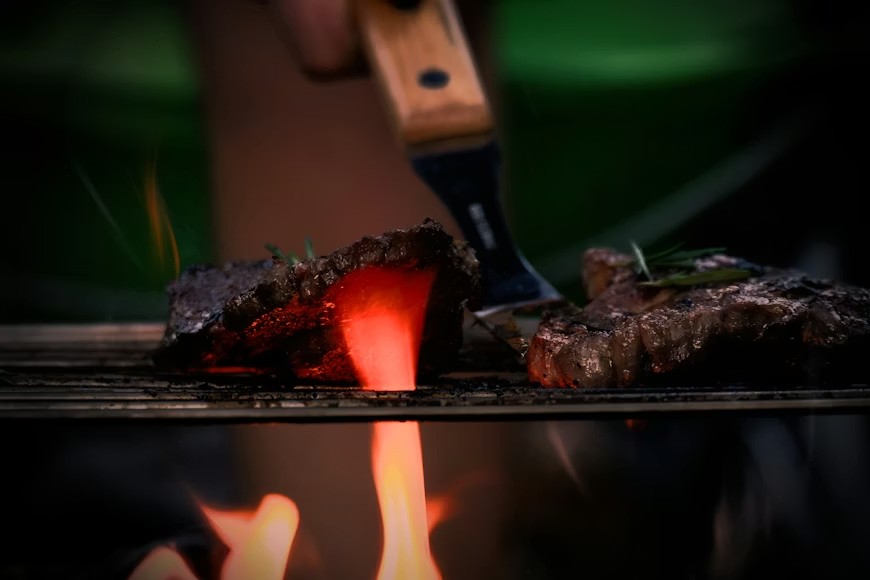
Sizzling steaks on the grill, perfectly cooked with a professional touch.
Part 4. Extra Tips to Prepare Your Perfect Steak Every Time
Cooking great steak takes practice. To get a perfect bite every time, use these simple tips to get the most out of your thermometer. This helps you check the temperature correctly, so your meat is cooked exactly right.
The Reverse Sear Method
Start with the reverse sear. This method cooks thick steaks perfectly. It sounds fancy, but it is actually simple. First, cook the steak in an oven at a low temperature. Use a leave-in probe or check the meat often with your handheld tool.
Watch the temperature closely. If your goal is Medium-Rare (135°F), pull the steak from the oven at 110°F-115°F. The quick, high-heat sear will add the final 20°F, delivering a perfectly pink center with a crispy crust. Always confirm with your digital steak thermometer before serving.
Tempering the Meat
Take the steak out of the fridge 30 minutes before cooking. Let it sit on the counter at room temperature. This is called tempering. Cold meat cooks unevenly. If the steak is cold, the outside burns before the inside is ready. Letting it warm up helps the heat move through the meat smoothly.
Why Resting Your Steak Locks in Juices
Never cut a steak right after cooking. You must wait. The hot juices are moving inside. If you cut the meat, those juices spill out. Your steak ends up dry.
Instead, let the steak rest for 5 to 10 minutes. The meat will reabsorb the fluids. The temperature will also stabilize. Use this quiet time to clean your steak-temperature probe with an alcohol wipe, so it is ready for next time.
Checking Calibration
Trust your steak measuring tools. Even the best gear needs a check-up. Test your device with a glass of ice water. Fill a tall glass with crushed ice, then add just enough cold water to fill the gaps. Stir for 30 seconds.
Insert the probe at least 2 inches deep without touching the sides or bottom of the glass. A properly calibrated thermometer reads exactly 32°F (0°C). If it reads off, recalibrate or replace the unit immediately.
Part 5. What is the Best Steak Thermometer for Home Cooks
Picking the right steak thermometer is one of the smartest moves any home cook can make. Not all thermometers are equal, though. Cheap, slow models can cost you a perfectly cooked steak. On a blazing hot grill, a 15-second delay is genuinely dangerous.
Fortunately, there is a type for every cook and every budget:
Instant-read thermometers: Deliver a reading in under two seconds. These are absolute lifesavers when searing high-heat cuts like flank or thin ribeyes, where seconds matter.
Leave-in probe thermometers: Perfect for the oven stage of a thick Tomahawk reverse-sear, allowing you to track the rising internal heat without opening the door.
Wireless Bluetooth thermometers: Ideal for multi-tasking hosts. You can mingle with guests while your phone tracks the steak’s progression on the grill.
Dial thermometers: While traditional and budget-friendly, they are generally too slow and leave too large a puncture hole for delicate steaks.
Matching thermometer type to cooking method:
Grilling steaks: Instant-read thermometer for fast spot checks
Oven roasting or smoking: Leave-in probe or wireless Bluetooth thermometer for hands-off monitoring.
Pan-searing thin cuts: Instant-read thermometer for rapid final verification.
Reverse sear method: Leave-in probe during the oven phase; instant-read during the sear.
Each steak measuring tool removes all guesswork from the process. Beyond speed, accuracy matters most. A reliable thermometer steak tool with tight precision tells you exactly when the meat hits your target — rare, medium, or well done.
Ultimately, great steak cooking comes down to one habit: always measure before you plate. The right thermometer gives you the confidence to nail the perfect result every single time.
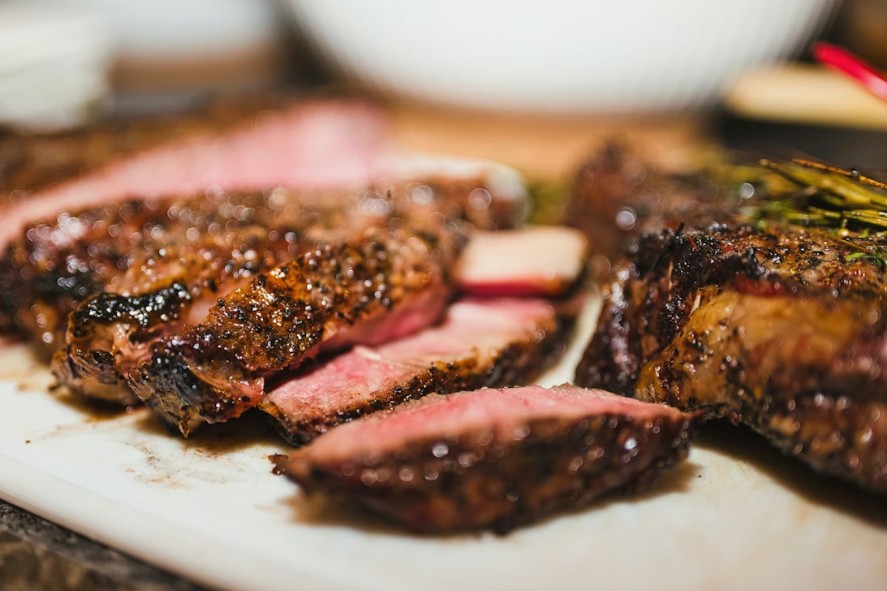
Sliced to perfection! Elevate your steak game with the precision of a professional-grade thermometer.
Part 6. Conclusion
Cooking a perfect steak takes skill. Poking the meat with your thumb is just a guess. It is not accurate. For restaurant-quality meals at home, you need absolute precision. A steak thermometer makes the difference between good and great food. It keeps your meal safe and locks in the juice.
ChefsTemp brings professional power straight to your kitchen. Our thermometer steak tools are built for speed and accuracy. Whether you are grilling outside or roasting inside, the Finaltouch Professional Instant Read Steak Thermometer puts you in total control. Stop guessing. Check the temperature, hit your number, and serve the best steak of your life.
Part 7. FAQs about Steak Thermometer
Q1: Does using a steak thermometer dry out the meat?
A quality steak thermometer uses an ultra-thin, step-down probe, often just 1.5mm at the tip, meaning any lost moisture is practically invisible. Overcooking will always do far more damage to your steak than a quick temperature check ever will. You trade a single drop of juice for edge-to-edge perfection. It makes total sense.
Q2: How do I know if my steak thermometer is accurate?
Twice a year is plenty. Test it immediately if it takes a hard spill onto your tile floor, though. An ice bath is your ground truth here. A glass packed with crushed ice and water sits squarely at 32°F. Submerge the tip. If the screen hits that number, your digital steak thermometer is dead on.
Q3: What is the difference between instant-read and oven-safe thermometers?
No. High ambient oven heat will melt the plastic housing and fry the internal electronics instantly. For long roasts, you need a specialized wired unit built to survive the oven. Leave your instant-read thermometer exactly where it belongs. Keep it resting safely on the cool kitchen counter until checking time.
Q4: What is the best steak thermometer for a beginner?
Start simple. A quality instant-read digital model handles almost every kitchen task imaginable. You want something fast with a highly visible display. The ChefsTemp Finnaltouch X10 instant-read steak thermometer hits that sweet spot perfectly. It reads core temperatures in a flash. Having reliable, split-second feedback builds solid cooking intuition before any bad habits form.
Q5: Why does my thermometer show different temperatures in different spots?
Muscle, fat, and bone all conduct heat at entirely different rates. The outer edges sear while the deep center stays cool. It resembles a thermal map. Finding cold spots is completely normal. Probe the absolute thickest section of the raw cut. The lowest temperature you find dictates the actual doneness of your entire evening meal.
Q6: Do professional chefs actually use meat thermometers?
Yes. Even veteran line cooks rely on them. Intuition is great for estimating, but paying customers demand absolute consistency. Guessing leads to returned plates. A quick core temperature check acts like an insurance policy during a chaotic dinner rush. It guarantees the steak hits the exact target doneness before ever leaving the kitchen pass.
Q7: How do I clean my steak temperature probe?
Treat it like a sharp knife. Keep an antibacterial wipe or a simple alcohol pad handy by the grill. Wipe the metal tip immediately after probing raw or partially cooked meat to prevent cross-contamination. When dinner is done, wash the tip with warm, soapy water. Never submerge the whole unit in the sink. Water ruins those delicate electronics instantly. Keep the display housing dry unless your specific steak temperature probe is officially waterproof.
Q8: Do professional chefs really use meat thermometers?
Yes. Visual cues frequently lie. A beautifully charred crust often hides a completely raw, cold center. Relying on touch is equally flawed. A good steak thermometer removes the anxiety of ruining an expensive piece of beef. It provides objective data. You stop guessing and start cooking with the exact precision premium meat demands.
Discover Other ChefsTemp Products
ProTemp 2 Plus & Finaltouch X10 Bundle
$219.99Original price was: $219.99.$209.99Current price is: $209.99.
2nd-Gen Probe & 4-in-1 Charger Combo – Replacement Accessory for ProTemp S1 or ProTemp 2 Plus (Requires ProTemp S1/2 Plus – Cannot Be Used Standalone!)