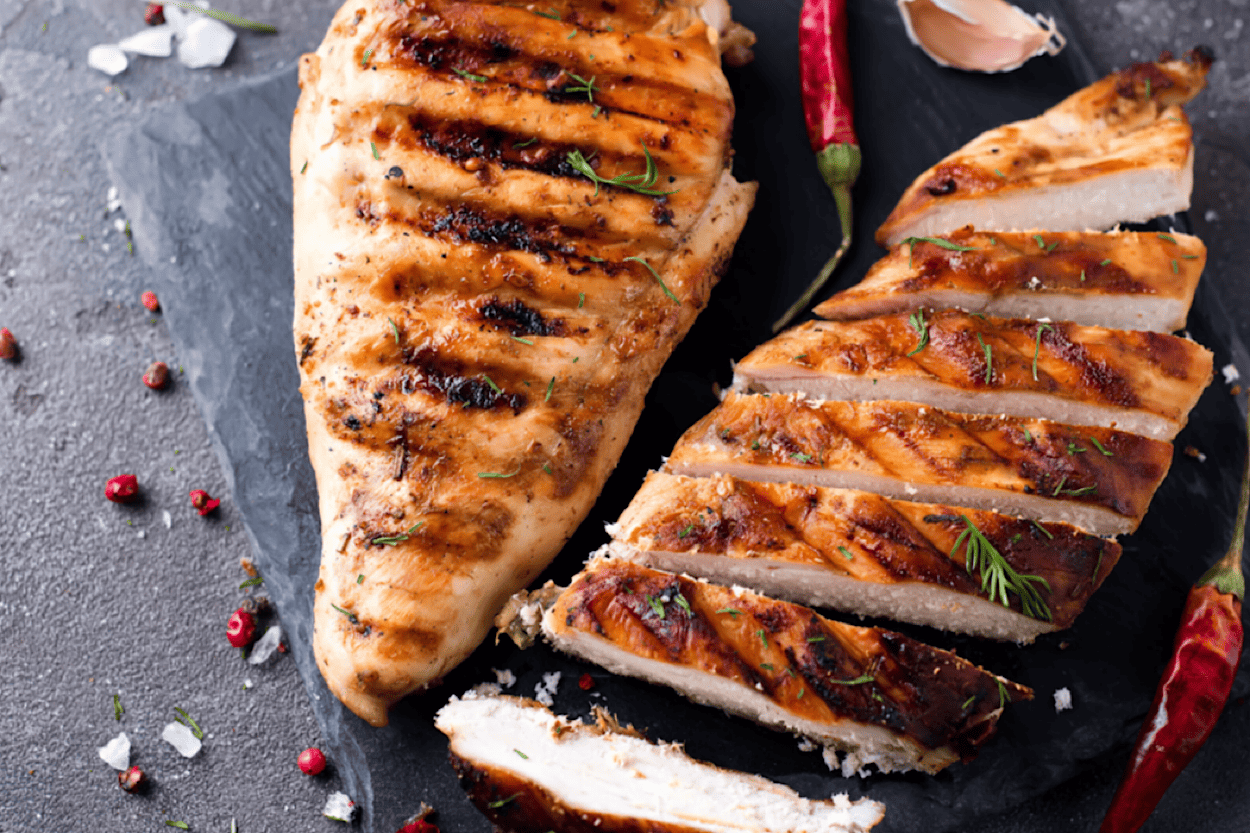
A perfectly grilled chicken is a delicacy most Americans adore.Who wouldn’t?From the moment you cut through the tender meat to the moment you relish the juicy, flavorful taste, it’s a delightful experience. Oh, and of course, the burst of tastiness on your palate!But there’s a catch.Trying to hit such accurate taste consistency is a toss-up for most people. But if you fall into this category, you are familiar with the pinkish undercooked chicken or the dry, overcooked cuisine.So, if you’re trying to discover the secret to a perfectly grilled chicken breast, you are in luck!We’ve uncovered a grilling mystery that reveals how to grill a chicken to perfection. And as a bonus, you’ll get a world-class Tandor-Style Recipe!Teaser: temperature and time are vital to achieving your dream grilled chicken.Now, let’s drill into the grilling tips already! No one wants to deal with food poisoning caused by undercooked chicken. Hence, you must cook your chicken thoroughly so you can relish the taste and be assured it’s safe to eat.Your pull-out temperature is crucial, since time and temperature affect the perfect grilled chicken. We recommend you use a 155°F (68°C) pull-out temperature. You should also foil the chicken for a few minutes to aid carryover cooking by maintaining that temperature for a while.Chicken is safe to eat at 155°F (68°C), but it takes 55 seconds to reach that temperature. So, tenting it with foil will keep that temperature for about 1 minute. But cooking it for an extra 50 seconds might push it past your desired temperature.Besides, the thermal gradients will equalise over the chicken breast, aiding carryover cooking. Hence, you will end up with about 165°F (73°C), which is a safe temp for chicken.The best way to achieve a 5-7°F (3-4°C) rise in temperature for carryover cooking is by preserving the current temperature for a while. That’s why we recommend tenting it with foil.
Part 1. What Is the Indefectible Doneness Temperature for Chicken?
You are probably used to the usual medium-rare preparation for grilled meat. Chicken is quite different.Chicken is always contaminated with Salmonella bacteria. The best way to get rid of these bacteria is pasteurisation. 165°F (73°C) is the standard temperature for pasteurization; this temperature immediately kills Salmonella bacteria.Unfortunately, that is the fastest way to overcook chicken.This situation is a catch-29. How do you eliminate bacteria and grill a perfect chicken at the same time?Remember, we said time is critical while grilling chicken?Now you need to introduce the time factor.Well-executed pasteurisation is a fine blend of temperature and time. For example, although 165°F (73°C) kills Salmonella bacteria, you can achieve the same result at 155°F (68°C).Hence, you can still cook your chicken flawlessly at a slightly lower temperature. A flawless grill means retaining juiciness, achieving accurate doneness, and preserving flavour. Although it might take longer, it’s worth it.However, the fear of undercooking chicken often leads to overcooking it. Hence, you may have more overcooked chicken than undercooked. We have a couple of tips to help you grill your chicken to perfection.Part 2. Tips to Help Grill Your Chicken Breast Like a Pro
Pound Your Chicken
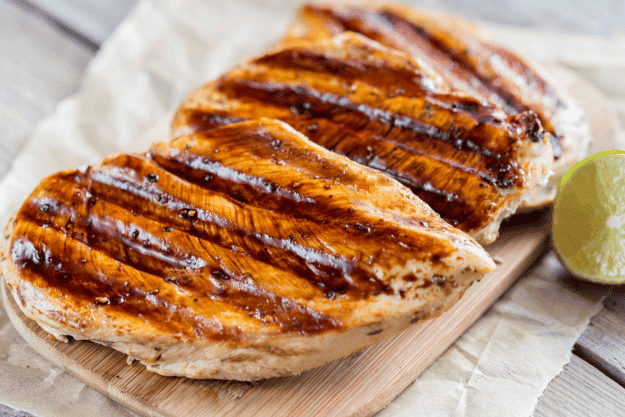
A moist, juicy and tasty chicken breast requires optimum attention and extra effort. So one of the things you need to do is pound the chicken breast before grilling.The general assumption is that a boneless and skinless chicken breast should go straight to the grill. But this assumption couldn’t have been more wrong. Contrarily, chicken breast creates a thermal gradient mess.Managing the thermal gradients in an unpounded chicken breast is arduous. It would have a thick middle coupled with thin edges. The edges would be dry and overcooked by the time the centre reaches the prescribed doneness temperature.Research shows that the temperature swings in an unpounded chicken are wide. For example, the swing between centre and edge could be as vast as 53°F (11°C). But you can flatten the chicken’s skin by pounding it or pressing it.Pounding the chicken to even out its thickness can significantly reduce the gradient. And if you flatten it evenly, the heat would transfer uniformly and cook the chicken perfectly.You will have a homogeneous final temp to show for the extra effort in the long run.Worth it, right?This tip has an incredible impact on your grilling quality.There are more benefits attached to pounding your chicken. Let’s check out these benefits below:Faster Cooking
Getting rid of excess bulky meat reduces your cooking time considerably. That’s because the heat has less flesh to travel through before it reaches the centre and the required temperature.Flattened meat cooks 4 times faster than the un-pounded one. Lesser time and better quality sound like a great deal!Even Cooking
Uniform cooking remains an essential benefit. Uneven grilling is a common issue with avid grillers. So, you can achieve even cooking when your chicken is uniform in thickness. It will reach the right temperature almost simultaneously. This way, you don’t have to deal with overcooked edges.Preserved Moisture
Even cooking and less temperature gradient equate to moister meat. The excess meat mass and extended cooking time almost squeeze out moisture. As a result, you are more likely to have a moist, uniformly cooked chicken with healthy protein fibres. Undoubtedly, the chicken’s juiciness is one of its lovable features.Tenderizing
Pounding your chicken tenderises it by loosening protein fibre bundles. That way, you can dig into a rich and tender chicken breast.Use a ThermalPen
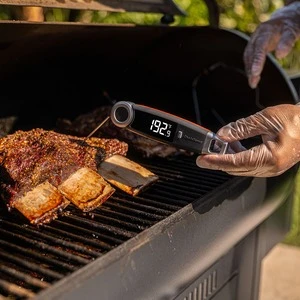
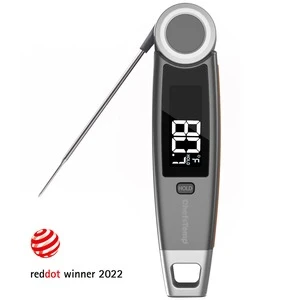
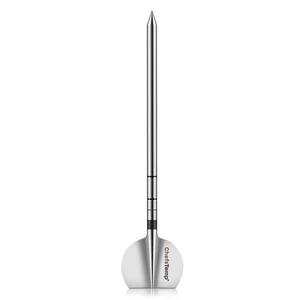
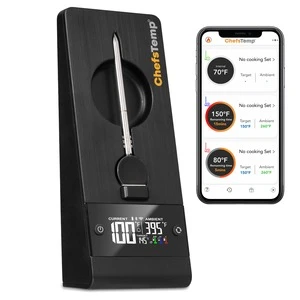
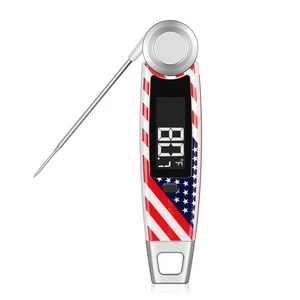
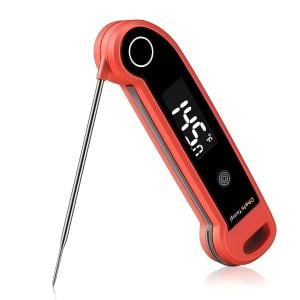
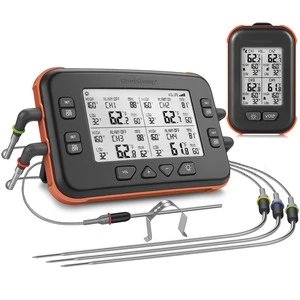
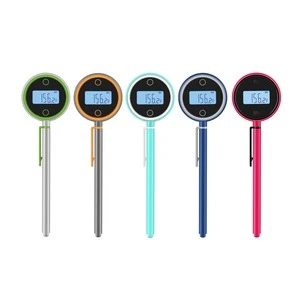
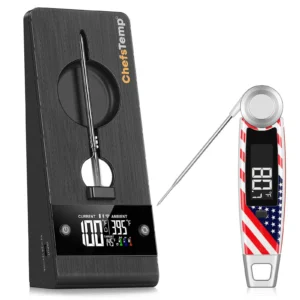
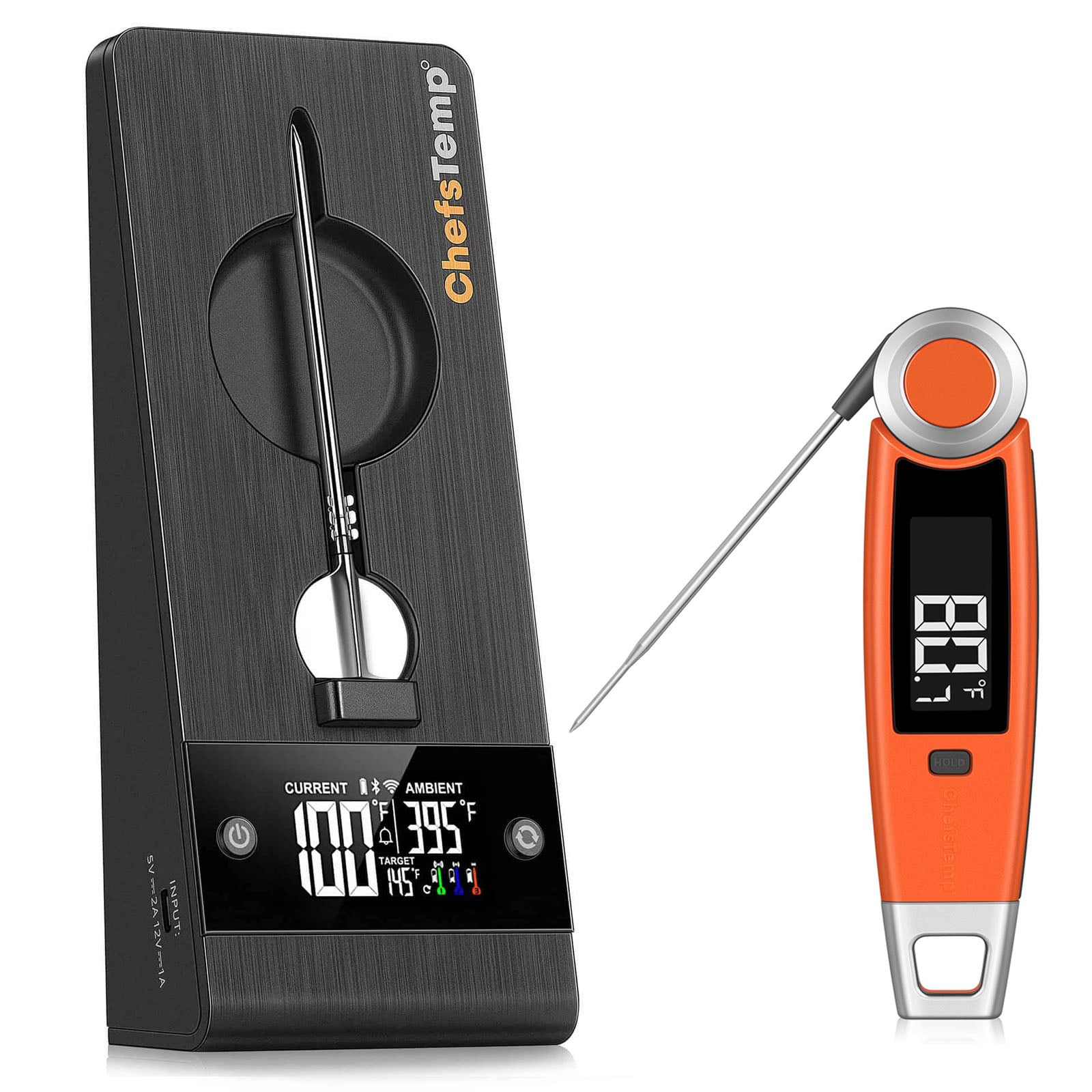
The general rule for cooking meat is that a meat’s doneness is judged by the lowest temperature. Simply put, meat is only as cooked as its lowest temperature.How can you determine the meat’s lowest temperature?Gauging the thickest part of the meat isn’t a good way to reach the lowest point, which is in the centre. Instead, check the temperature at several places to know when the chicken is well-cooked.If you prefer a lower grilling process, you can use a leave-in probe thermometer to track the temperature. However, Finaltouch X10 is essential to ensure the thermal centre is safe to pull out.Part 3. Perfect Pull-Out Temperature for Grilled Chicken
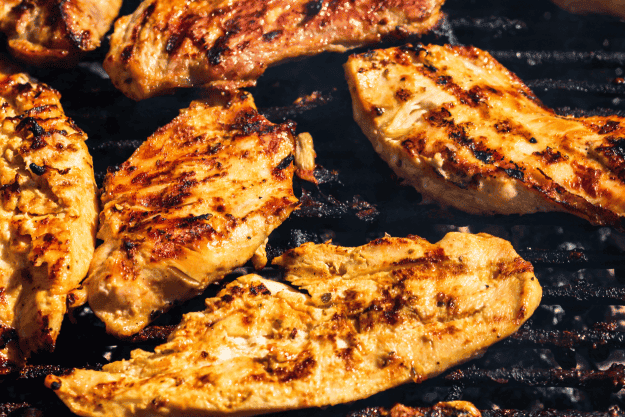 No one wants to deal with food poisoning caused by undercooked chicken. Hence, you must cook your chicken thoroughly so you can relish the taste and be assured it’s safe to eat.Your pull-out temperature is crucial, since time and temperature affect the perfect grilled chicken. We recommend you use a 155°F (68°C) pull-out temperature. You should also foil the chicken for a few minutes to aid carryover cooking by maintaining that temperature for a while.Chicken is safe to eat at 155°F (68°C), but it takes 55 seconds to reach that temperature. So, tenting it with foil will keep that temperature for about 1 minute. But cooking it for an extra 50 seconds might push it past your desired temperature.Besides, the thermal gradients will equalise over the chicken breast, aiding carryover cooking. Hence, you will end up with about 165°F (73°C), which is a safe temp for chicken.The best way to achieve a 5-7°F (3-4°C) rise in temperature for carryover cooking is by preserving the current temperature for a while. That’s why we recommend tenting it with foil.
Part 4. How to Set Up Your Grill for Chicken Breast?
Defined grilling marks on the chicken convey professionalism and appeal. So, how do you achieve those gorgeous grill marks on your chicken breast?You need to heat the surface with high heat. But you don’t want to overcook it as well. Preheat the grill on high, then lower the temperature to medium-high before placing the chicken breast on it.Ensure you turn the chicken frequently to prevent an overcooked side while the grill gradually brings it to your target temperature.Tip: Click here to learn more about the correct internal temperature for chicken, if needed.Tandori-Style Recipe
Ingredients
- 1 teaspoon cumin
- 3 tablespoons vegetable oil
- 1 teaspoon of ground turmeric
- 1 teaspoon ground coriander
- 1 tablespoon paprika (not hot)
- 1 teaspoon cayenne
- 1 tablespoon garam masala
- 2 tablespoons lemon juice
- 1 cup plain yoghurt or buttermilk
- 4 minced garlic cloves
- 1 teaspoon salt
- 2 tablespoons minced ginger
- 4 skinless, boneless chicken breasts
Preparation
- Wrap your chicken in plastic wrap and pound it until it’s even in thickness, about half as thick as before.
- Heat the oil over medium-high heat.
- Put the dried spices in the oil and cook for a while. Or until it sizzles and becomes fragrant. Turn off the heat.
- Let the spiced oil cool for a while before mixing it with yoghurt, salt, garlic, ginger, and lemon juice.
- Coat the chicken with the marinade. You can do this with a bowl, or place the chicken in a large zipper bag.
- Refrigerate the chicken with the marinade for 1 to 8 hours.
- Heat your grill to high to start.
- Lower the heat to slightly medium-high before placing the chicken on it.
- Ensure you generously oil the grill grates.
- Take your chicken out of the marinade and shake off the excess.
- Place the chicken on the direct heat.
- Turn the chicken after a while and grill the other side.
- Track the temp with a thermometer.
- Turn the chicken often for grill marks.
- Remove the chicken when the lowest temperature reaches 155°F (68°C), then maintain the heat with foil for 1 min.
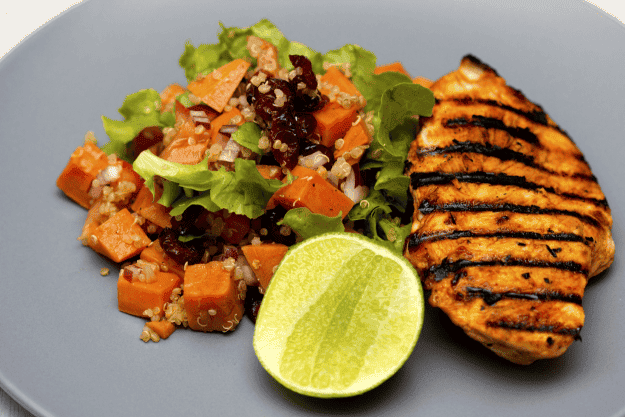
- Be creative with the chicken. Serve with salad or as an entree.
Takeaway – Grill the Best Chicken Breast!
Grilling a chicken breast could be a hard nut to crack. But you can practice it to perfection, bearing these tested tips in mind. We hope you learned something new. We would grab some chicken and create some grilling magic if we were you. So what are you waiting for?Related Posts
The Rest Is Part of the Cook
"Using time, temperature, and even your grill to protect the final result."Most of us spend a lot of time th...
I Fought My Egg for Nearly Three Hours… and Still Made the Best Chicken of My Life
I got home early and made a decision that felt completely reasonable at the time.“I’ll just throw a chicken ...
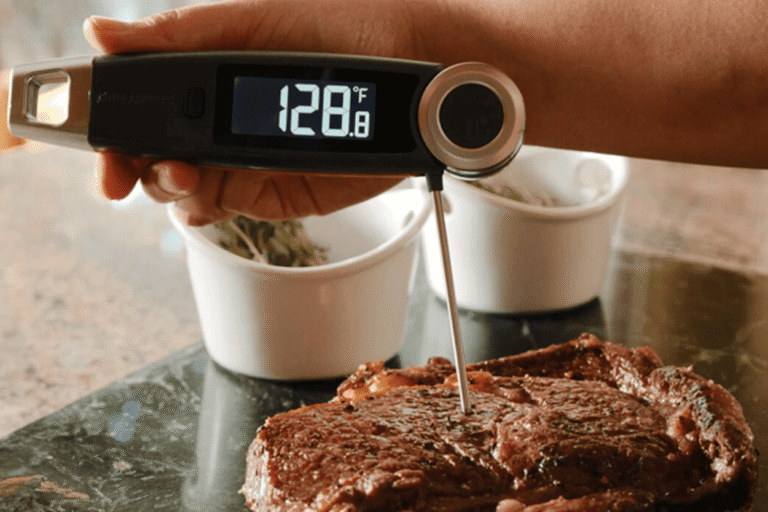
Reasons Why You Should Upgrade to the Best Instant Read Thermometer
A kitchen without an instant-read thermometer is incomplete. When it comes to creating a succulent pot roast o...
Letting Meat Rest Myth Debunked: Find Out the Truth
Whether it's your first time cooking meat or not, you might have heard one common piece of advice: always rest...
Are Infrared Thermometers Accurate in Cooking?
Temperature control is an integral part of the cooking process. If the temperature is incorrect, some types of...
Are Infrared Thermometers Safe?
The pandemic saw a surge in the popularity of infrared thermometers. It is quick, contactless, and convenient,...
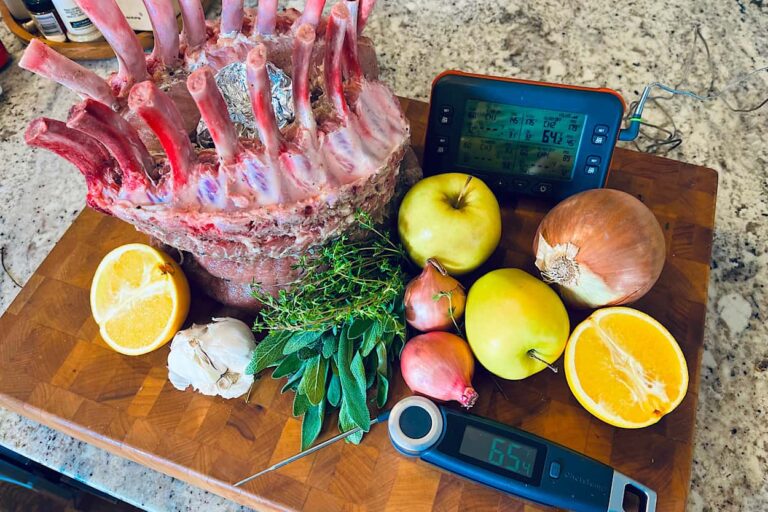
King Crown Roast of Pork
What is a Crown Roast?The holiday season is a unique culinary time, especially in America. We have Thanksgiv...
Best Infrared Thermometer for Kitchen Use
Cooking is both an art and a science. It requires knowledge of food preparation, different cooking methods, un...
Infrared Thermometer for Grilling
Some cooking methods require accurate and precise temperature readings. A slight temperature difference can si...
Best Uses for Infrared Thermometers
Infrared technology has been around for ages and used in different industries. There is a wide range of infrar...
Grilling Hamburgers: A Temperature Guide
You drown in the sight of your kids hopping cheerily in your yard while you try to contain the excitement! Fin...
Understanding Chicken Internal Temp to Cook Crispy Wings
Chicken wings are the crispy, tasty starters that take part in every party and get-together. Cooking chicken t...