Pork Temperature Chart

Pork Temperature Chart

Check our temperature charts for preparing your most favorite pork recipes

When cooking with pork, it’s essential to be mindful of safe cooking temperatures to prevent foodborne illness. Whether you’re cooking pork chops or pork tenderloin, harmful strains of bacteria like Salmonella and Listeria could live inside. By cooking your pork to the proper temperature, you can significantly reduce the risk of bacteria.

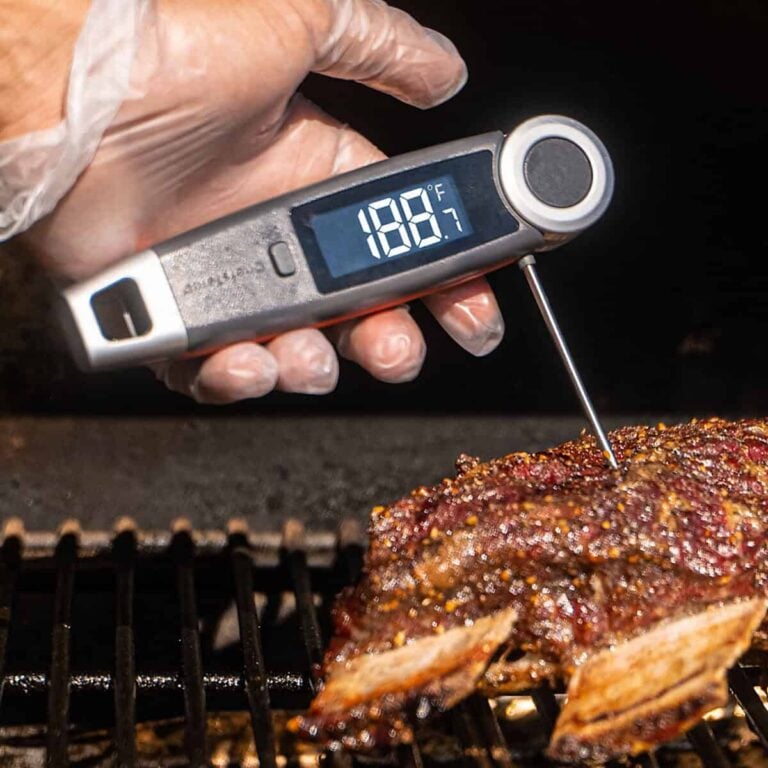
To check the internal temperature of cooked pork, you should place your food thermometer midway inside the roast and away from the bone. Remember that pork will continue to cook slightly after it’s removed from the heat, so the internal temperature will rise by approximately 5°F-10°F (-15 to -12.22°C) within a few minutes. With this in mind, make sure to allow your meat to rest for a few minutes before checking the temperature one last time.

Fahrenheit and Celsius Cooking Temperatures

Cut / TypeInternal Core Temperature in
Fahrenheit
Internal Core Temperature in
Celsius
Internal Description
Medium140°F to 145°F60°C to 63°Cpale pink center
Well Done160°F and above steak is uniformly brown throughout
Pork ribs
Pork shoulders
Brisket
180°F to 200°F
195°F to 200°F
195°F to 200°F
82°C to 93°C
90°C to 93°C
90°C to 93°C
Pale white to tan. Cooked medium to well done
Sausage   
Raw Sausage160°F71°Cno longer pink
Sausage (pre-cooked)140°F60°C 
Ham   
Raw Ham160°F71°C 
Pre-cooked Ham140°F60°C 

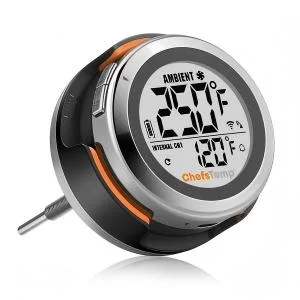
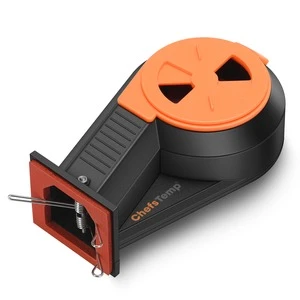
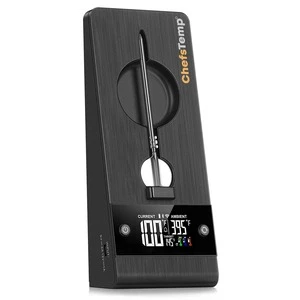
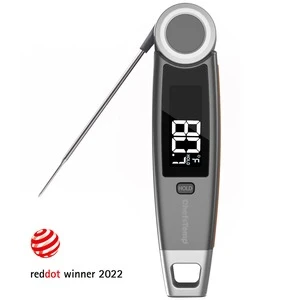
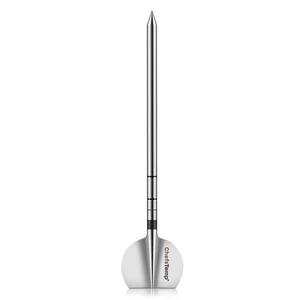
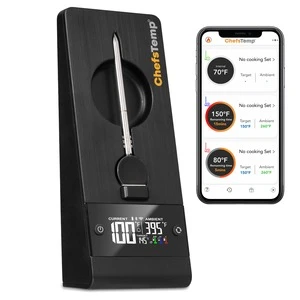
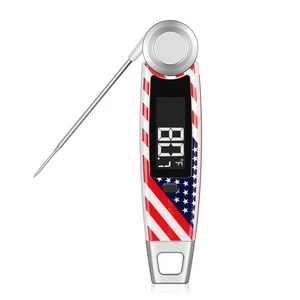
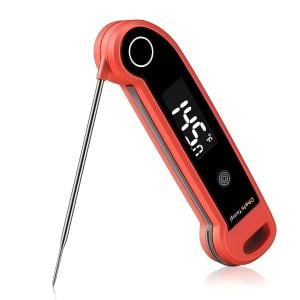
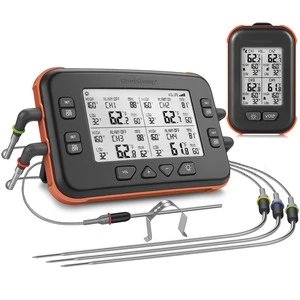
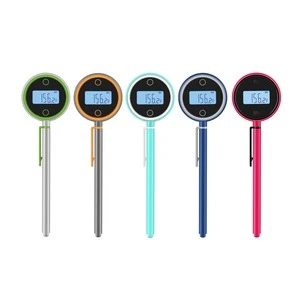
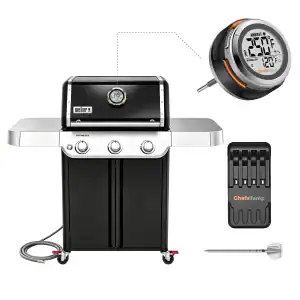
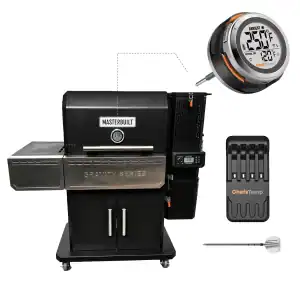
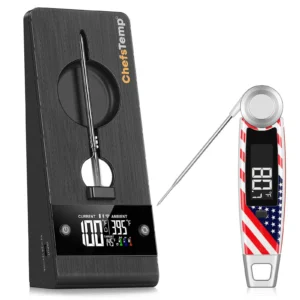
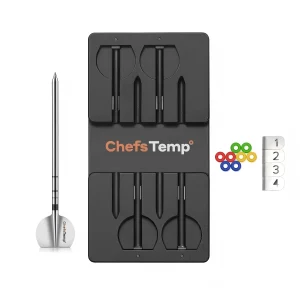
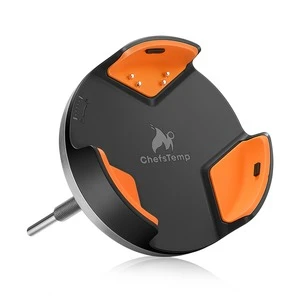
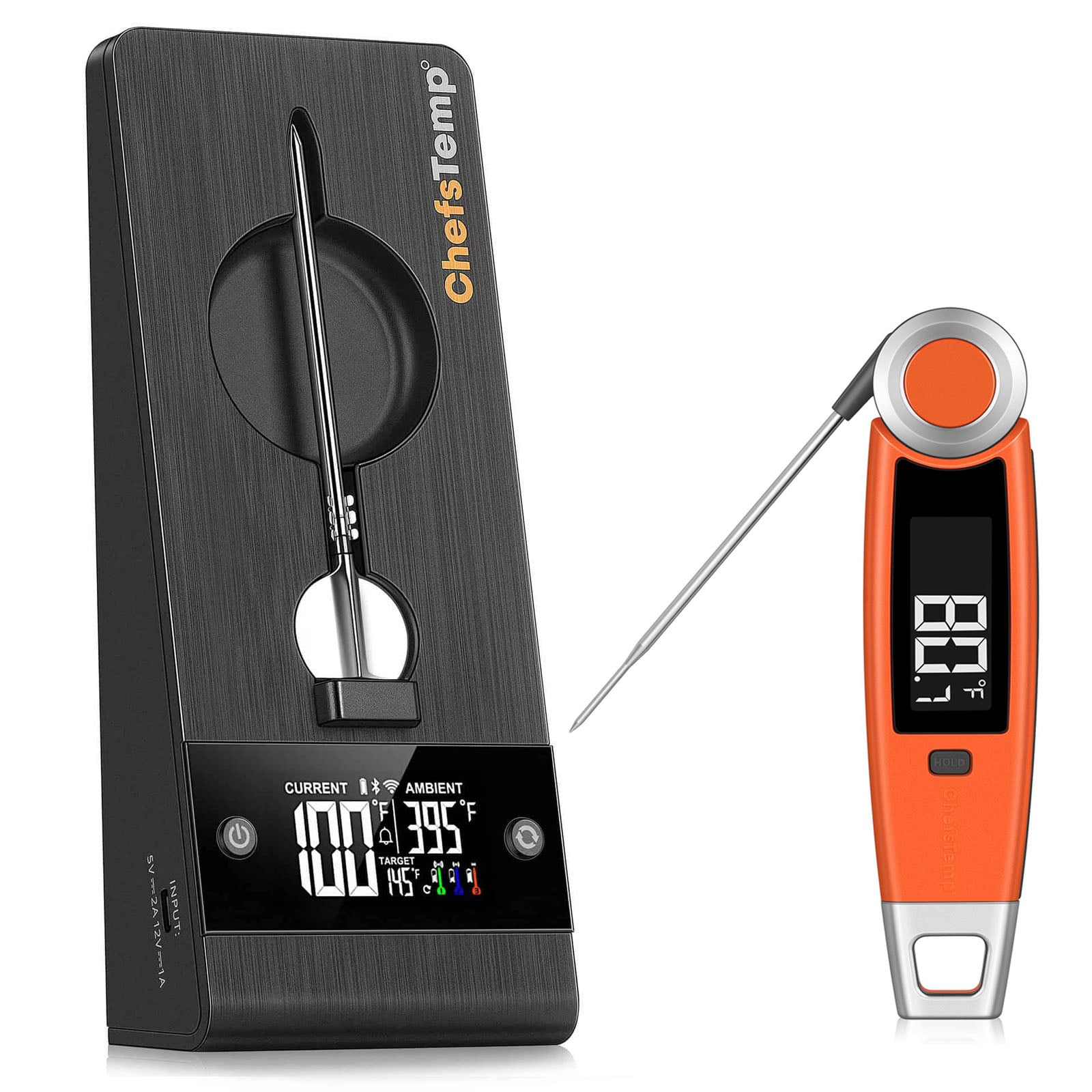
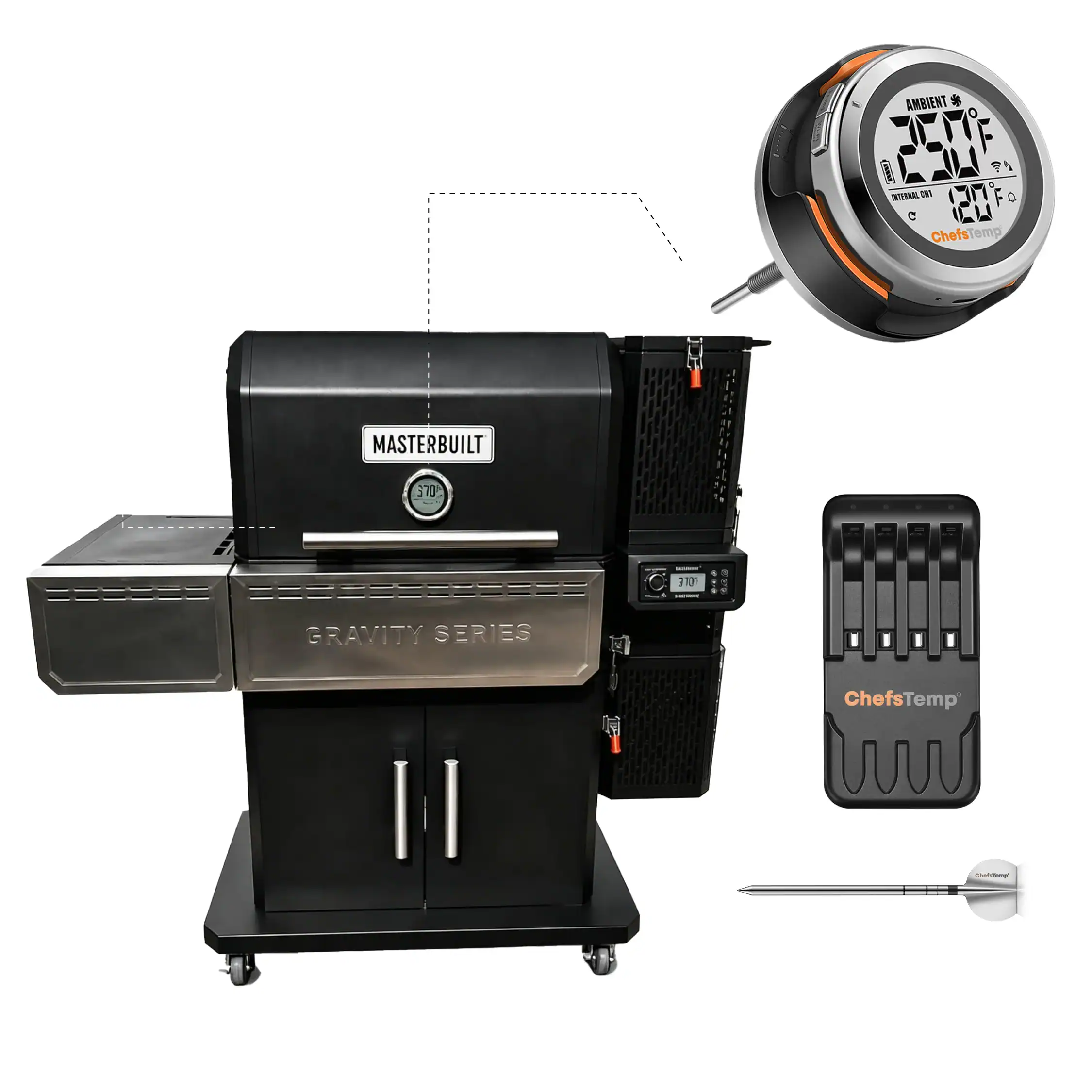
Best Tools to monitor food temperature accurately & fastly

Keep yourself informed about recipes and FAQs

How can you make a stew using pork or lamb chops?

Using pork or lamb chops to make a stew is easy. First, you must have a very accurate chefstemp thermometer in hand. Taking the meat off the bone, then season the meat and dredge it in seasoned flour. Brown it in a little bit of butter mixed with olive oil.

Once you have it browned, remove it from the pan, add onions and sweat the for about 3 minutes, add the garlic and sweat it for two more minutes, then add your celery and carrots and cook them for 5-7 minutes. Add your potatoes and your broth. For pork stew use chicken broth, and for lamb use beef broth.

You could also add the bones to the pot; however, you will need to remove the bones when you finish making the stew. Bring the broth and vegetables up to a boil, then add the meat back to the pot and reduce the heat to a slow simmer. The flour on the meat, and the flour in the pot will thicken the stew naturally at a slow simmer.

How long can BBQ pork sit out at room temperature after cooking?

Any food cooked to a safe internal temperature of 165⁰F can be put out at room temperature and served. If you do not use chafing dishes with lids to maintain the temperature of 145⁰F to keep the food out of the temperature danger zone, then you have a limited amount of time to leave the food out. BBQ pork can be left sitting out at room temperature, covered, for no longer than 4 hours. After 4 hours the food will need to be refrigerated or reheated. If you choose to reheat the food, you must reheat it to 165⁰F and at this point you could leave it at room temperature for an additional 2 hours, afterwards the food must be discarded. The rule is you can only reheat food once and then any leftovers must be discarded.
How do you figure out if meatballs are done all the way through without breaking one open?

Meatballs are basically little round meatloaves. Making meatballs up and then checking the temperature for doneness is best done with an instant read thermometer. Meatballs are mixed up with spices, herbs, breadcrumbs or rice, eggs, and milk. Usually, a mixture of beef or veal and ground pork, and then cooked for consumption. You can cook them in the oven or pan fry them. I personally prefer to cook them in the oven unless I am making meatball soups, then the meatballs are cooked in the soup broth.