The Ultimate Sous Vide Steak Recipe: Time Chart & 4X Speed Hack
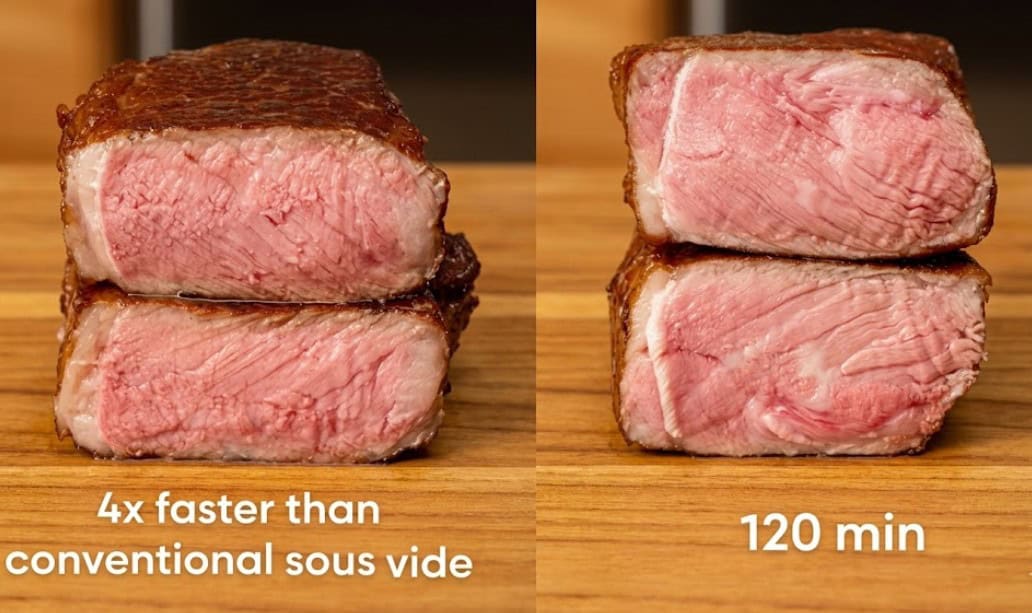
Sous Vide Steak Recipe
A standard sous vide will yield that perfect pink in our steaks, but few of us have time to wait two hours for a water bath on a Tuesday night. That’s why I’m offering my ultimate sous vide steak recipe. I’ll give you all the insider info on where to set your standard for cook temp on anything from a thin, lean filet to a thick, well-marbled ribeye steak. But I’m also including the Delta-T method to slash your required cook time from 120 minutes to just 30 minutes, all while avoiding that full center ‘steak. ‘
Table of Contents
The Most Comprehensive Sous Vide Steak Temp and Time Chart
Most online guides offer vague time estimates, and treating a slightly marbled filet mignon like a very marbled ribeye is a mistake. To add some value, I’ve compiled this chart with approximate steak sous vide temperatures, along with certain adjustments I find useful for the various cuts I keep on hand.
The time estimates below are for a standard 1.5-inch thick cut.
| Doneness | Target Temp | Time (1.5″ thick) | Texture Result | Chef’s Note |
| Rare | 120°F – 128°F | 1 to 2.5 hrs | Very soft, deep red center | Stick to ultra-lean cuts like Tenderloin. Do not exceed 2.5 hours to avoid food safety risks. |
| Medium Rare | 129°F – 134°F | 1 to 4 hrs | Edge-to-edge pink, firm but yielding | A sous vide medium rare steak is the absolute sweet spot for New York Strips and T-bones. |
| Medium | 135°F – 144°F | 1 to 4 hrs | Light pink, thoroughly rendered fat | Pro tip: Push your water bath exactly to 137°F for Ribeyes. The higher heat melts the intramuscular fat beautifully without drying out the meat. |
| Medium Well | 145°F – 155°F | 1 to 3 hrs | Very firm, barely any pink | If you prefer this doneness, use a heavily marbled cut to retain at least some moisture. |
With traditional sous vide, the 1-to-4-hour cooking window is one of the biggest benefits. The core temperature stops rising when the target water temperature is hit. Before you use this feature for cooking, don’t let your steaks stay in the water all day. This is especially a problem the longer you let it go. After about four hours, the enzymes of the meat break down the muscles too aggressively. This results in an expensive cut losing its quality, becoming an unpleasant mush. Pay attention to the time.
Step-by-Step Sous Vide Steak Recipe: From Prep to Perfect Sear
Every great sous vide steak recipe depends on a solid execution strategy. I’ve cooked through and ruined many valuable steak cuts, and now I know where most of the issues arise. Here is the workflow I follow to ensure a great sous vide steak recipe every time.
Step 1: Prep & Seasoning
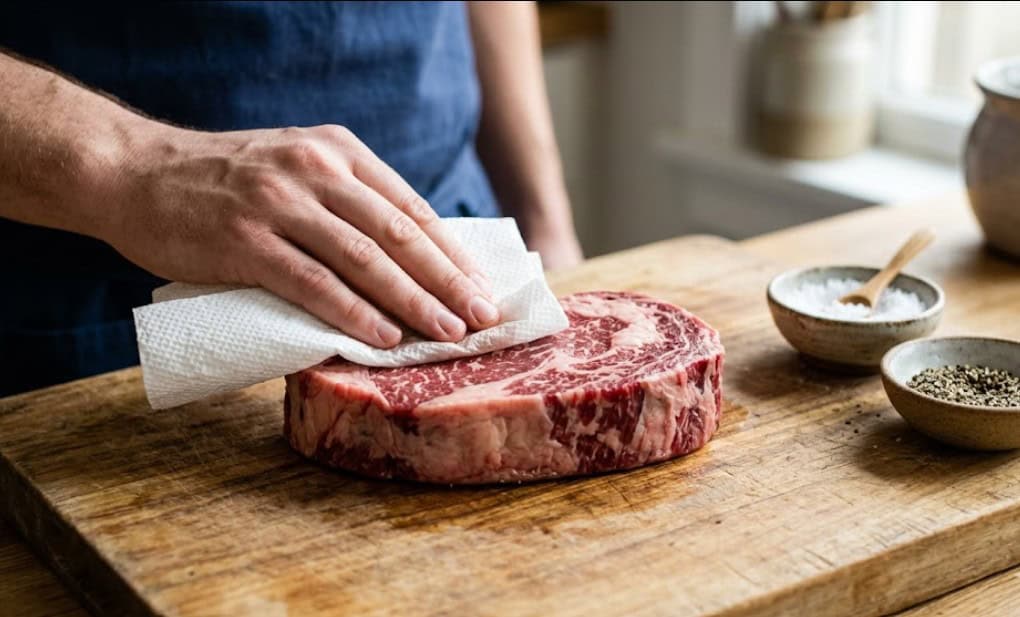
Prep & Seasoning
I start by ensuring my meat is dry. I use paper towels to dehydrate meat. I do this because moisture can cause a crust to form on the outside of the meat. I season meat generously with coarse sea salt and cracked black pepper. Butter must be included with meat is the common myth I will dispel today. Butter is bad and dilutes the beef flavor. Butter is a vessel that coats the steak and carries its flavor into the butter. Amazing Food Made Easy cites this. For flavor and scent infusions, sprigs of rosemary or cloves of garlic do a much better job.
Step 2: Bagging
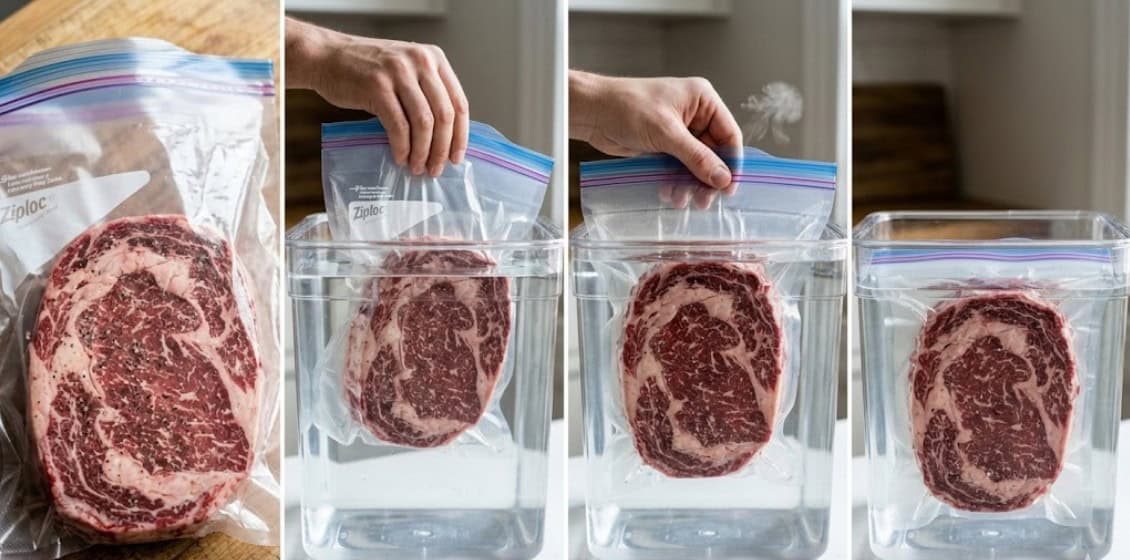
Bagging
Use your vacuum sealer to bag frozen steak for sous vide. If you don’t have a vacuum sealer, you can bag frozen steak for sous vide using the water displacement method. Place the seasoned cut you’ve chosen in a freezer bag. Leave the bag partially unzipped. Take the bag to a pot of water, and slowly submerge it, as the water pressure will displace the excess air. Seal the bag quickly before the zipper submerges completely.
Step 3: The Water Bath
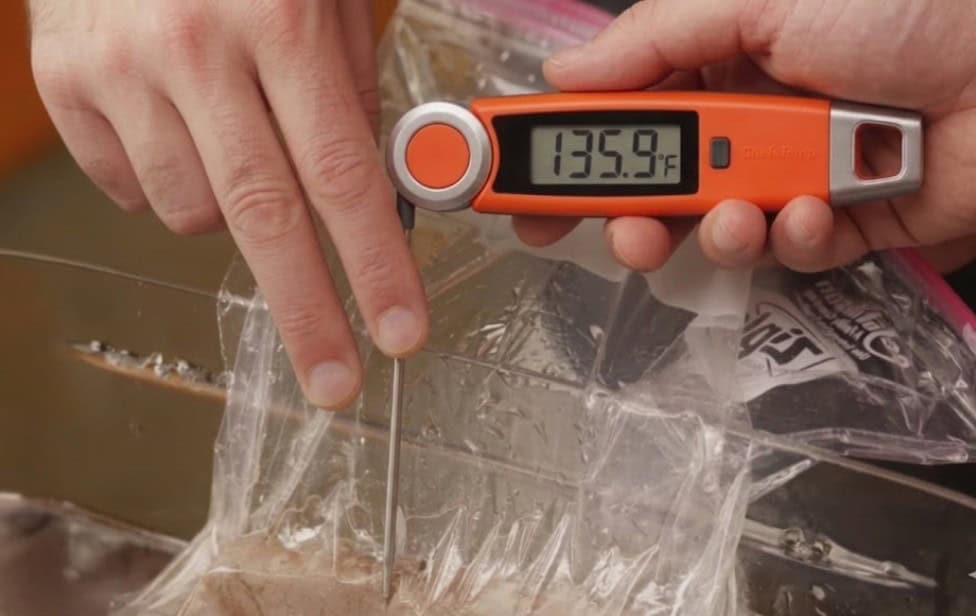
The Water Bath
For a standard cook, consult our chart and set the circulator to the exact target temperature. (If you are using the Delta-T method below, you will adjust this higher). Place the bag in the water bath, with the meat completely submerged. Use a clip to attach the bag to the container to prevent it from floating. You may want to use a clip to prevent the bag from blocking the water pump.
Step 4: The Perfect Sear
The Perfect Sear
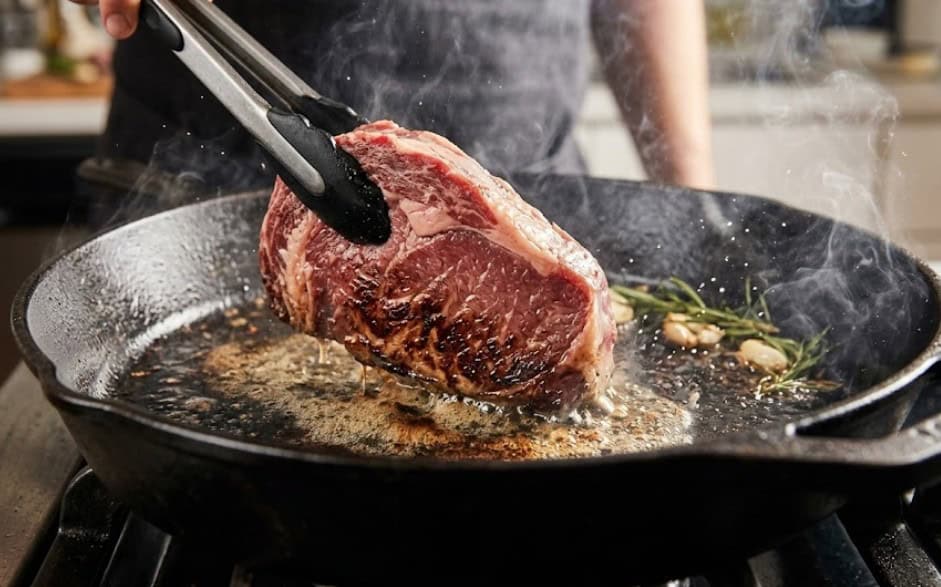
The first thing you’ll notice after removing the steak from the bag is the color. The meat will be gray and unappetizing. To sear like a pro, don’t skip this next step. This is the most important step. That steak needs to be patted bone dry with a paper towel. The remaining moisture will ruin the Maillard reaction. With a rapid, aggressive sear, we’re combusting the inside of the pan. Make sure you have an A, and sear for 45 to 60 seconds per side.
Speed Up Sous Vide Steak Time: The Delta-T Hack Explained
The Delta-T Hack Explained
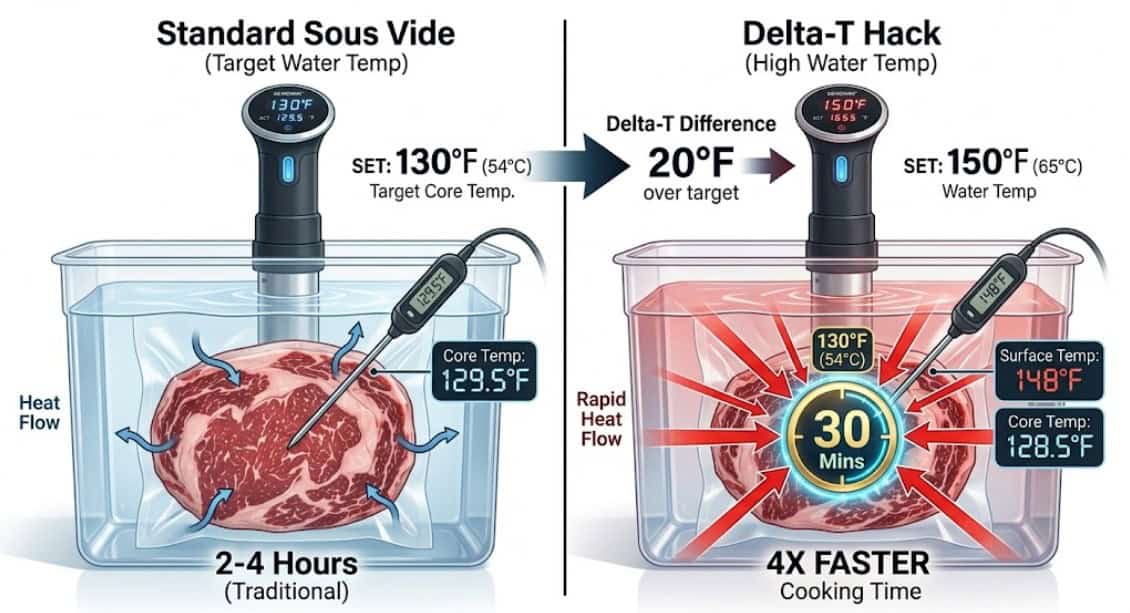
Do you pace your kitchen while you wonder how long to sous vide steak on a busy weeknight? You probably know how time-consuming this method is. There’s an obvious flaw in most sous vide recipes. Once the thickest part of the meat is just a degree or two from the temperature of the sous vide water, the remaining heat transfer occurs incredibly slowly. Those final cooking steps account for over 50% of the total sous vide steak time.
I usually don’t have the time for this, so I break the mold of classic sous vide steak recipe. I use a cooking technique called Delta-T cooking to save time. Delta-T cooking means taking advantage of a larger temperature differential. Instead of heating the water bath to exactly the target temp, which would, for example, be 130° F, you would set it to 150° F.
Most people would think this will instantly overcook the meat, but this is a common misconception. A personal hot bath is a great example. When you set foot in a hot bath, over the initial quick heating of the water, your body cools the water immediately against itself. The surface of the meat does the same thing. Even though the water is at a high temperature, the surface cools the water immediately against it. This keeps the exterior from instantly overcooking, while the higher heat incredibly fast drives energy to the center of the meat, saving you cooking time.
Why the Best Sous Vide Steak Recipe Needs a Precision Thermometer
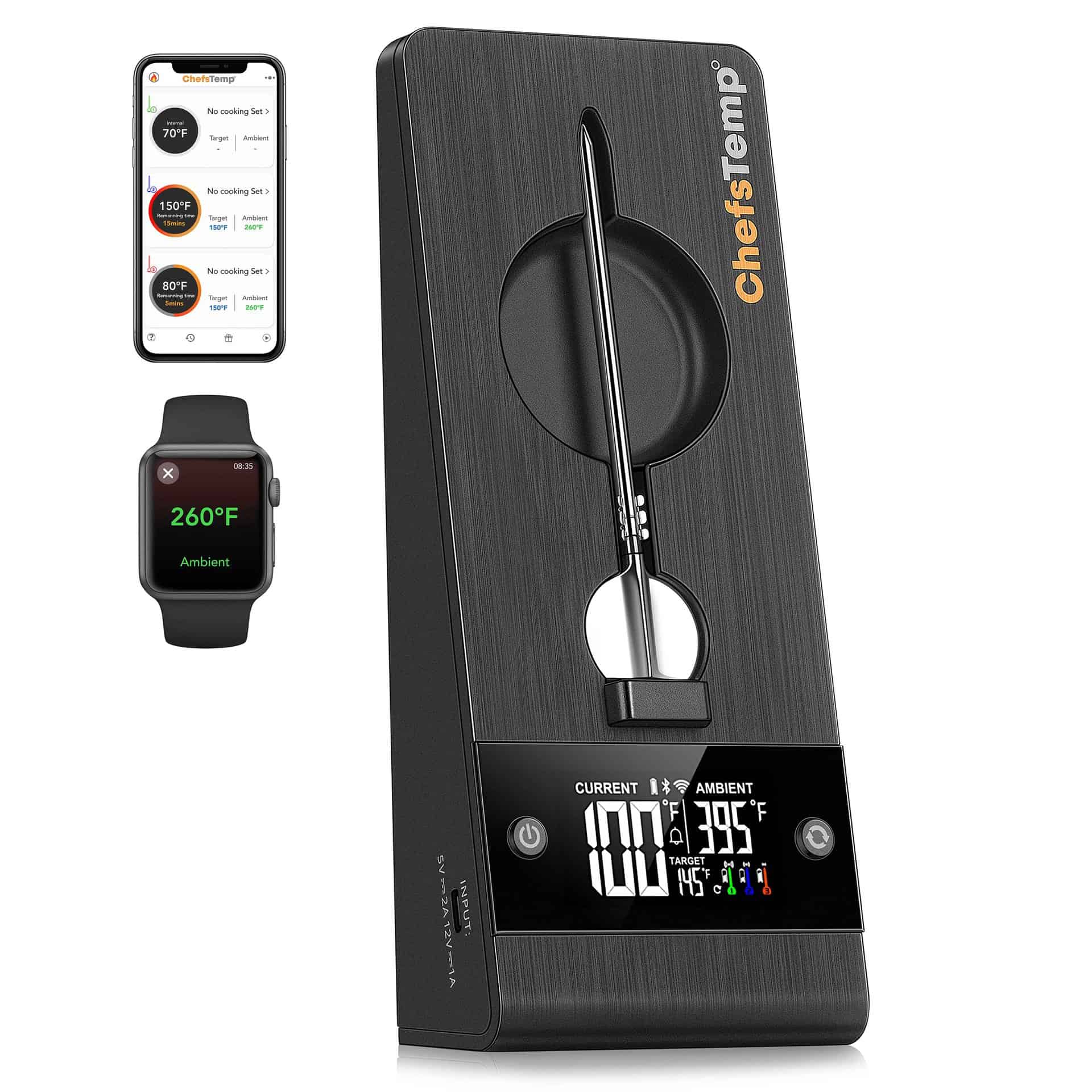
Chefstemp ProTemp 2 Plus
Unlike traditional sous vide, the one potential problem with the Delta-T method is the risk of overshooting. Leaving your steak in a 150°F water bath for too long will definitely cause it to overcook. Timing is key. Some companies even sell fancy, expensive, algorithm-based circulators to calculate this economy of effort, but I would consider this an example of adaptive overshooting.
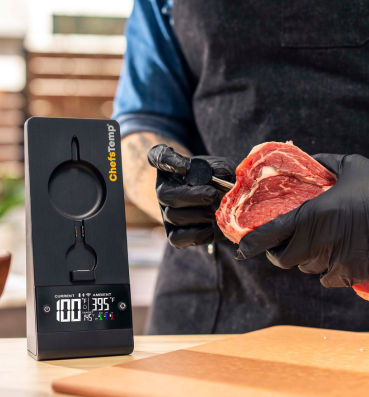
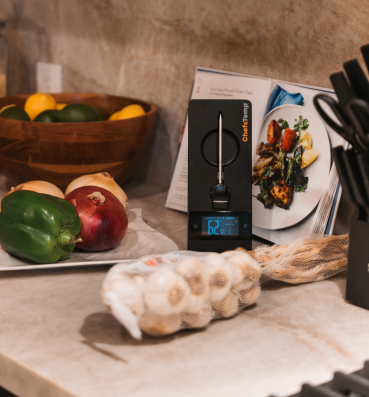
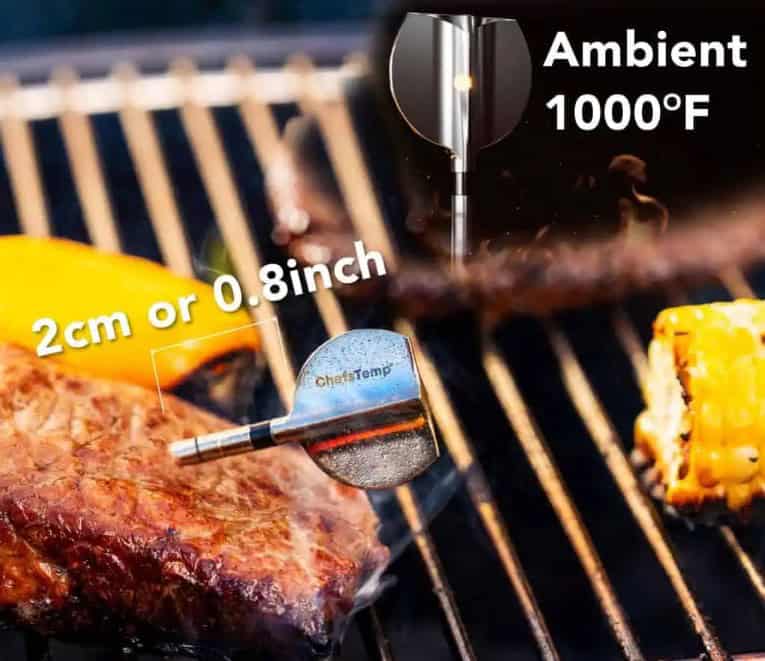
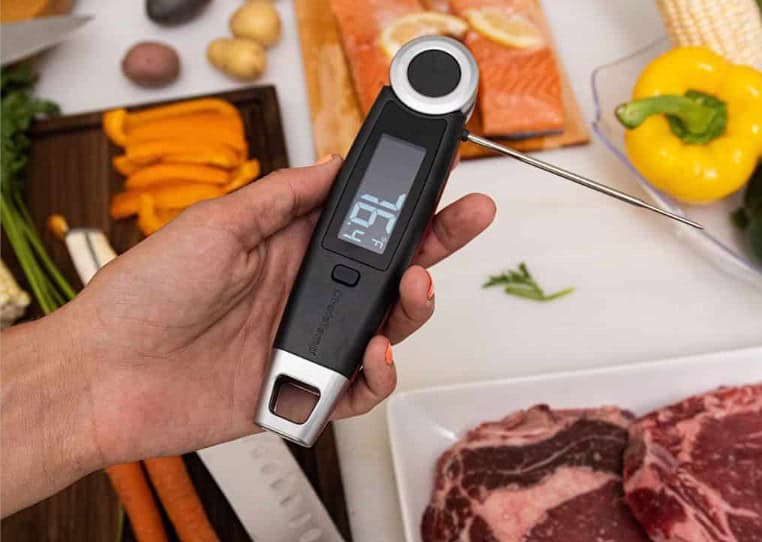
Here’s my system: before bagging the steak, I insert a smart wireless meat thermometer. I have the Chefstemp ProTemp 2 Plus. With a design including an ultra-thin 4.55mm probe, it tracks the core meat temperature in real time for the duration of the water bath. I can extract the meat at just the right temperature with no bleeding. If I am working with a non-vacuum method or just need to execute the final sear, I have the Finaltouch X10 instant-read thermometer to assess the meat temperature in under 1 second.
Finaltouch X10
FAQ about Sous Vide Steak
Q1: What temperature should I sous vide the steak?
In a standard sous vide setup, achieving a perfect medium-rare is a matter of setting the water bath to a consistent 130°F. Refer to my temperature chart to find the perfect temperature for different cuts of meat, depending on how pink you want.
Q2: Is 4 hours too long to sous vide a steak?
It won’t technically “overcook” past your target temperature, but leaving it past the four-hour mark breaks down the muscle fibers too aggressively, turning the meat unpleasantly mushy. This is exactly why nailing your timing is crucial. For a deeper dive into why accurate temp control matters more than time alone, check out our guide on the Sous Vide Showdown: Food Thermometer Secret Weapon.
Q3: What is the 3 3 3 3 rule for steaks?
It is a traditional grilling method that suggests searing a steak for 3 minutes per side, repeating the process, and then letting it rest for a final 3 minutes. Speaking of resting after searing, is it strictly necessary for sous vide? Find out the truth in our article: Letting Meat Rest: Myth or Fact?.
The Bottom Line
No more compromising on a perfect cut of meat versus dinner at a reasonable time! It combines classic water bath methods with the intense Delta-T hack, resulting in phenomenal results in a short amount of time. The key is just knowing what’s going on inside the land. It’s time to get rid of the guesswork and come up with a perfect weeknight dinner from the Michelin level. I really hope that this sous vide steak recipe becomes a staple in your kitchen.
Discover Other ChefsTemp Products


Discover more recipes and learn kitchen tricks by joining our cooking family on Facebook.
You may also like: