Thermometer Calibration for Cooking: Understanding the Process
Every home cook will need a thermometer as a cooking aid. A thermometer helps with measuring the internal temperature of the food, ensuring it is cooked all the way through and safe to eat. Inaccurate temperature readings are always a possibility, even with a good thermometer. Calibration is a vital process to ensure the temperature-measuring device reliably performs all of the above.
No need to worry about food safety while you cook. Learn the various ways of calibrating a thermometer. Learn, also, to calibrate your own to give you the assurance you need in your cooking.
Table of Contents
Why is Thermometer Calibration Important?
Table of Contents
An accurate thermometer is crucial in cooking. Even if you are a couple of degrees off, it can spell the difference between food that is safe to eat and that which can cause foodborne illnesses. On the other hand, overcooked food can be tough and dry, making it unpleasant to eat.
When a thermometer is not calibrated correctly, it can give inaccurate readings. Therefore, you must know how to calibrate a thermometer to a known standard to ensure accuracy.
Various factors can cause a thermometer to become inaccurate, such as rough handling or exposure to extreme temperatures. In addition, regular wear and tear can lead to inaccurate temperature readings.
You must also regularly calibrate your thermometer. The calibration frequency depends on other factors.
What Are the Risks of Not Calibrating Your Thermometer?
Knowing how to calibrate a thermometer is very important because there are significant risks if you don’t. Temperature control is critical in the food industry. If a thermometer is not calibrated correctly, it can yield inaccurate readings. If the temperature is incorrect, it can be undercooked or overcooked. In addition, it can pose a severe threat to public health, as harmful bacteria may still be present in the food.
Food temperature can also affect your experience with it. When overcooked, food can be dry, tough, and unappetizing. You also lose flavor, texture, and nutrients when you cook the food much longer than recommended.
Failing to calibrate your thermometer can pose significant risks. You can prevent these risks by knowing when and how to calibrate a thermometer.
How to Calibrate a Thermometer
You can use a few methods to calibrate a thermometer. However, the two primary methods for calibration are the Ice Point Method and the Boiling Point Method.
These two methods are widely accepted as the most accurate ways to calibrate a thermometer. Let’s discuss the advantages and disadvantages of choosing each method.
-
Ice Point Method
The Ice Point Method for calibrating a thermometer measures the thermometer’s ability to read the freezing point of water (0 degrees Celsius). You will need a container filled with crushed ice and water.
First, fill the container with water and add the crushed ice. Next, insert the thermometer into the mixture. Ensure the stem is fully submerged without touching the sides of the container. Wait a few minutes and see if the thermometer registers 0 degrees Celsius.
The advantage of using the Ice Point Method is that it’s easy to perform. You don’t need any special equipment to perform the test, yet it is reliable and accurate.
The disadvantage of the Ice Point Method is that it only measures the temperature below the freezing point of the water. If you need to test at a higher temperature, use the following method.
-
Boiling Point Method
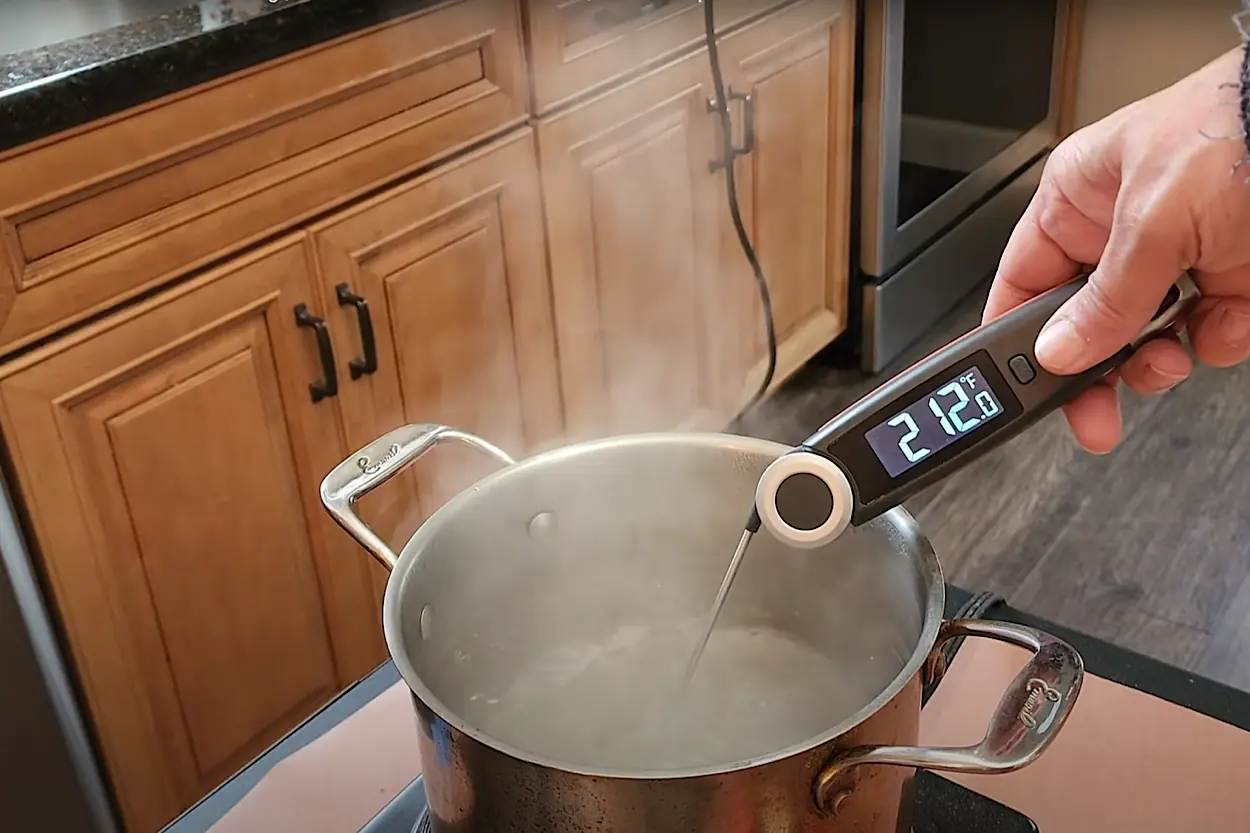
The Boiling Point Method is used to calibrate thermometers that measure above the boiling point of water, 100 degrees Celsius. Like the Ice Point Method, you don’t need any special equipment to perform this test.
First, fill a pot with water and bring it to a rolling boil. Once it’s boiling, insert the thermometer into the water, making sure it doesn’t touch the sides. Next, fully submerge the thermometer in the water. Wait for a few minutes until the temperature reads 100 degrees Celsius.
The advantage of the Boiling Point Method is that it is easy to use. In addition, it is an accurate way to test your thermometer’s ability to read temperature.
The disadvantage of the Boiling Point Method is that it can be dangerous. You must do it carefully or risk burning yourself. However, other calibration methods are more reliable and accurate. In addition, results can vary with altitude, which can affect the water’s boiling point.
Other Ways to Ensure Accurate Temperature Readings
In addition to regularly calibrating a thermometer, you can take further steps to ensure accuracy. Here are some tips to keep in mind:
- Each type of thermometer is unique and requires different calibration methods. Therefore, knowing the proper calibration process for each type is essential to getting the best results. If you’re unsure, always refer to the manufacturer’s instructions for calibrating a thermometer to ensure you’re doing it correctly.
- Always calibrate your thermometer after dropping it or when you see any signs of wear and tear.
- Please wait a few minutes after calibrating a thermometer before you use it. It will ensure the thermometer works correctly and reads the correct temperature.
- It’s time to calibrate your thermometer if it’s been a while since you last did so.
- Store the thermometer in a cool and dry place. Exposure to extreme temperatures can cause it to give inaccurate readings. Make sure to limit their exposure to extreme temperature fluctuations, though it is difficult, since cooking with a thermometer exposes it to extreme temperatures.
Conclusion
Calibrating a thermometer is vital in ensuring that your food is cooked to the correct temperature. It can also help prevent foodborne illnesses and ensure you enjoy tender, juicy meat.
Follow the steps and methods outlined here to calibrate a thermometer. It requires little time and effort but can significantly improve your cooking process. That way, you can be confident that you’re reading the correct temperature.
Discover Other ChefsTemp Products


Discover more recipes and learn kitchen tricks by joining our cooking family on Facebook.
You may also like: