What You Need to Know About Infrared Thermometer Sensors
Infrared thermometers bring a lot of convenience to the kitchen. They are effortless and straightforward to use. The temperature-reading process starts with the lens in the thermometer, which focuses infrared energy onto the detector, converts that energy into an electrical signal, and then displays it in a temperature unit. This process takes only a second or two, making infrared thermometers extraordinarily efficient and convenient in the kitchen.
The reliability of infrared thermometer sensors enables multiple functionalities from this handy tool.
Table of Contents
When should I use infrared thermometers?
Infrared thermometers are specifically designed to measure temperature in applications and circumstances where conventional thermometers cannot be used. Examples include moving objects (conveyor belts, machinery, rollers, etc.) or when a non-contact temperature reading is needed. The latter is relevant to avoid contamination or for safety reasons (e.g., high voltage, extremely high temperatures when physically placing the thermometer sensors).
In the kitchen, infrared thermometers can help you control food temperature and the cooking process. While many things go into cooking, from the ingredients used to techniques and preferences, it is essentially about temperature control. Incidentally, temperature control is the most critical factor in keeping food safe for consumption.
Pathogenic microorganisms found in food grow and multiply rapidly in mid-range temperatures. But they expand slowly at low temperatures. Moreover, most can be killed at extremely high temperatures (cooking). Thus, for safety, food must be kept cold (in refrigerators and freezers) and cooked thoroughly to avoid foodborne illness. This is where the benefits of kitchen thermometers come into the picture. Of all the kitchen thermometers, infrared thermometers are the most unique in their application and use.
An infrared thermometer sensor lets you stand at a safe distance and measure temperature quickly and accurately.

Quick and easy to use
Other food thermometers require you to handle both the food and the thermometer prong simultaneously. You will need to place the prong inside the food to get a temperature reading. To clean the thermometer and prevent contamination, do so as soon as possible.
On the other hand, infrared thermometers are handheld devices designed for quick, easy operation. Point it to the specific object, press its trigger, and read the digits displayed on a digital screen. That’s it.
Helps avoid Contamination
Since you are simply pointing the device from a distance, you don’t cross-contaminate different food ingredients in your kitchen while measuring their temperature. An infrared thermometer lets you measure the temperature of multiple foods, ingredients, and cooking equipment quickly and easily without making physical contact.
Maintain your food’s pristine look
Traditional kitchen and meat thermometers require you to poke your food with prongs to measure its temperature. This, of course, leaves a hole in your food. While it will not affect the taste, it can affect the presentation of your food.

Other uses of infrared thermometers in the kitchen:
- Check the oven temperature – while built-in oven thermometers provide temperature readings, their accuracy deteriorates over time, leading to inaccurate temperature readings. Point your infrared thermometer sensor to determine whether your oven is ready. You can also use this thermometer to ensure that your pizza (dough and topping) is cooked thoroughly.
- Check freezer and refrigerator temperatures – the built-in dials on these appliances don’t accurately display temperature readings.
- Food and beverage temperature – restaurant owners must keep food in buffet lines at 140˚F or higher to ensure safety. You can use an infrared thermometer to adjust your slow cookers and warming trays accordingly.
Limitations of Infrared Thermometer Sensors
Cannot determine doneness
Kitchen thermometers remove the guesswork from cooking; they are the most reliable tools for ensuring the safety and doneness of most types of food. In most cases, you must cook food items to a high enough temperature to kill harmful bacteria. For the aspect of “doneness”, on the other hand, you cook food to your desired taste (appearance, texture, juiciness, etc.). In this case, use the conventional meat thermometer, NOT your infrared thermometer. Why? As mentioned earlier, infrared thermometers measure the surface temperature of the food, not its internal temperature.
Many home cooks depend on visible indicators (colour changes) in their cooking. However, appearance and colour are not reliable indicators of either food safety or doneness. A food thermometer is still the most accurate tool for determining both, as it is the only tool you can use to tell whether harmful bacteria in the food have been destroyed.
While doneness is primarily subjective, food safety experts emphasise the importance of raising the internal temperature to a specific level (depending on the type of food) to ensure the destruction of harmful pathogens. Thus, you must only use visual indicators for doneness after the food has reached its safe internal temperature.
Poultry, for example, should reach an internal temperature of 165˚F for at least 15 seconds to be safe for consumption. A hamburger patty should get at least 155˚ F for 15 seconds to be safe. This is where you need traditional meat thermometers.
Not ideal for boiling water and other liquids
Again, infrared thermometer sensors read the surface temperature of a specific object. In the case of boiling water, it will simply measure the steam temperature.
Moreover, to avoid mistakes when measuring the temperature of liquid foods, such as soups, make sure to stir the pot first so the temperature is even throughout.
Not for shiny steel pans
Infrared thermometers cannot provide accurate temperature readings on shiny steel pans. They are, however, ideal for skillets, cast iron, and regular baking pans.
Things to Consider Before Buying an Infrared Thermometer for Your Kitchen
Accuracy – Measurement accuracy is the closeness of a device’s measurement to a specific value. The thermometer’s accuracy is displayed on the spec sheet or packaging (+/- set amount).
Range – Range refers to the distance from which the infrared thermometer can provide an accurate temperature reading (minimum and maximum temperatures given). It is shown on the spec sheet or on the product’s packaging.
Adjustable Emissivity – Emissivity is how efficiently the object’s surface can emit energy. Emissivity for infrared radiation is measured from 0 to 1. Most everyday objects have an emissivity of 0.95, and you will find this default setting for most infrared thermometers.
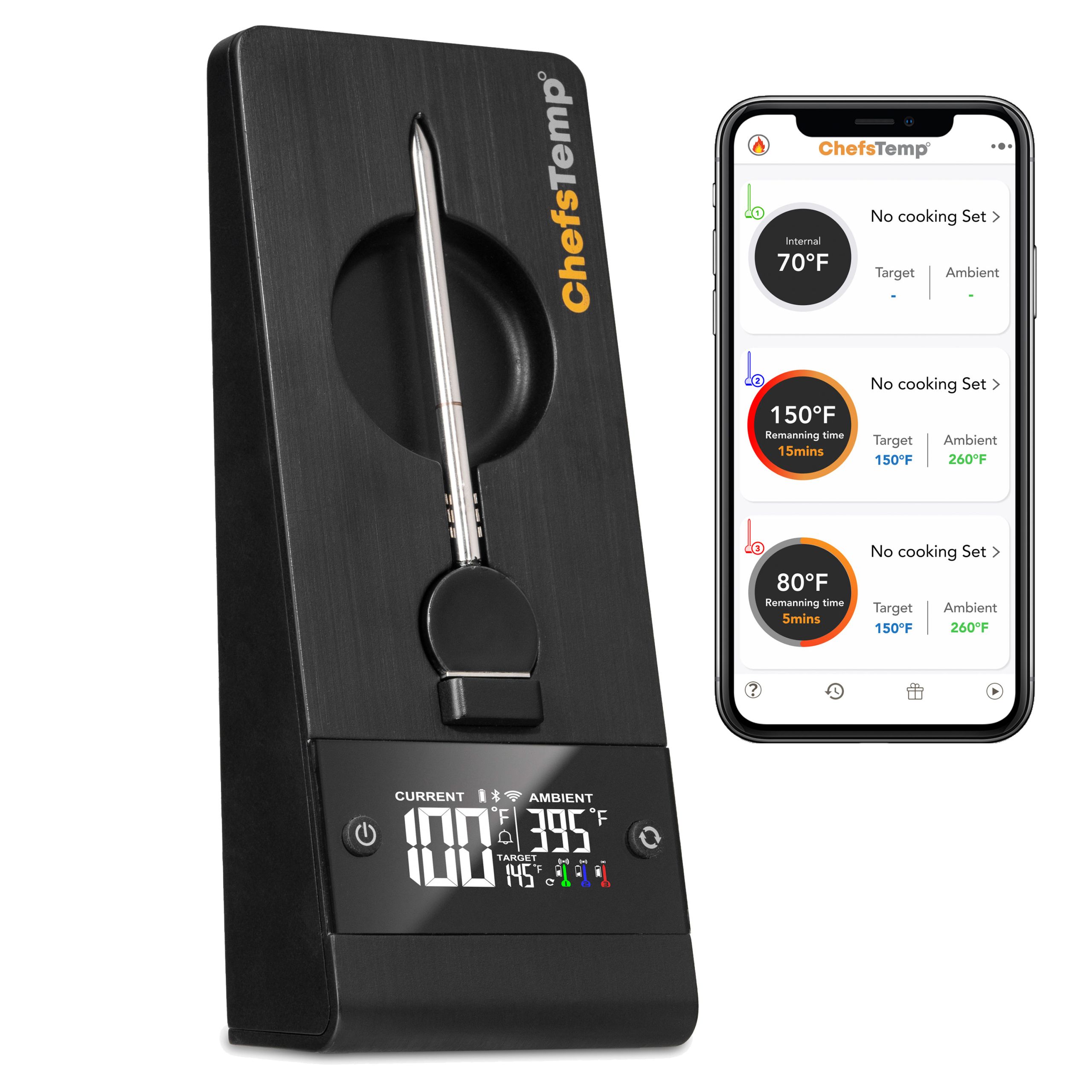
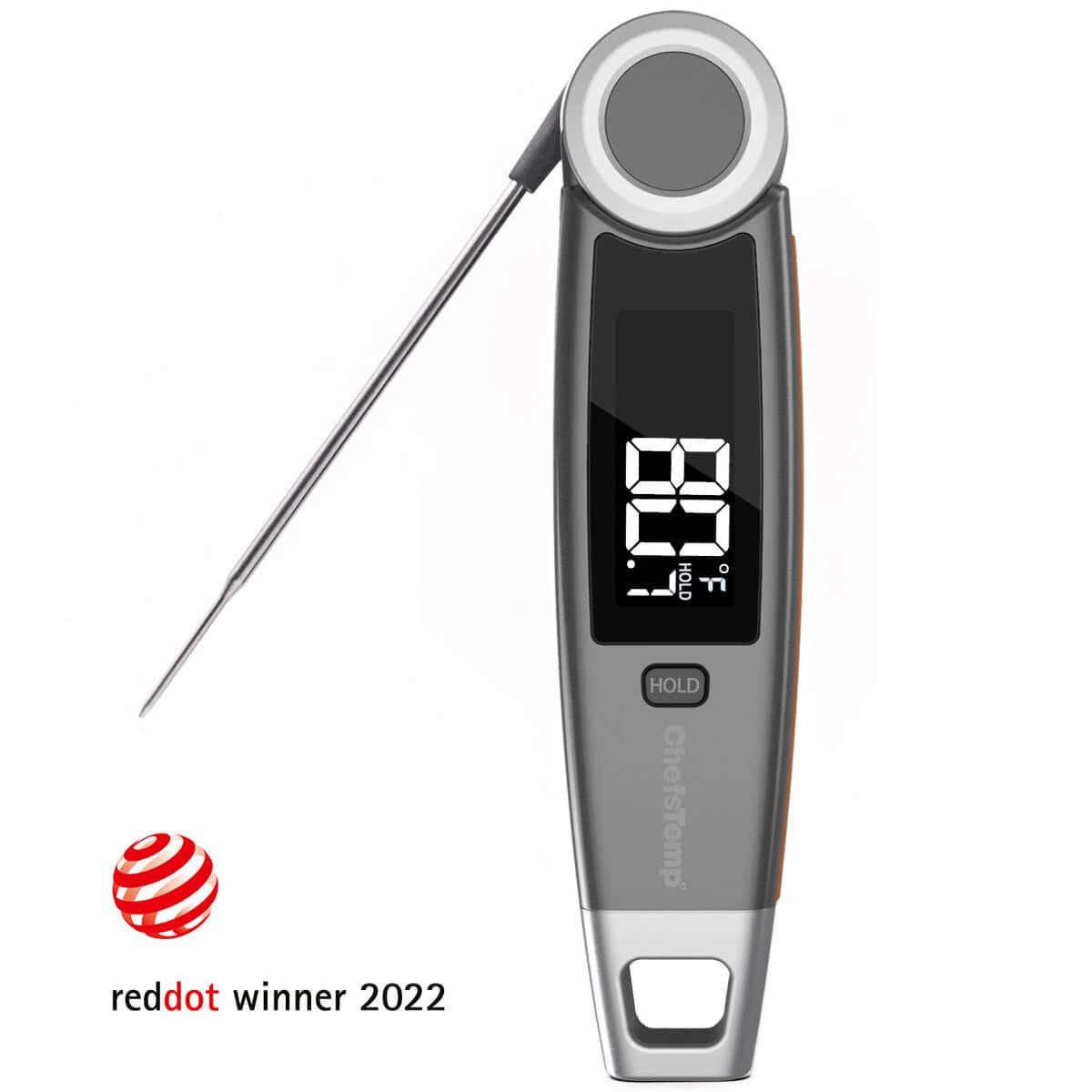
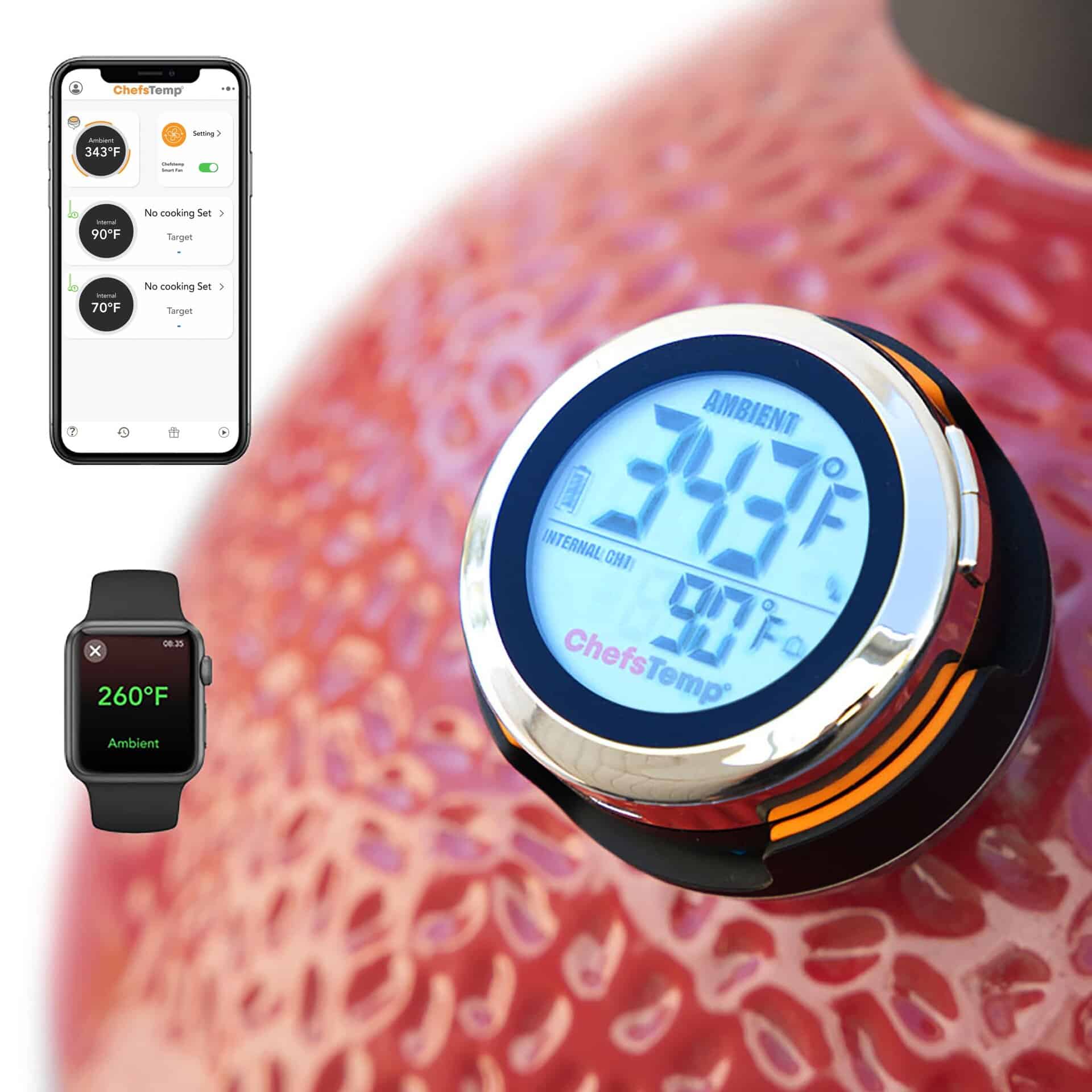
Discover Other ChefsTemp Products
Discover more recipes and learn kitchen tricks by joining our cooking family on Facebook.
You may also like: