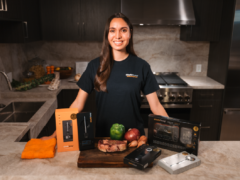
Saturday Afternoon
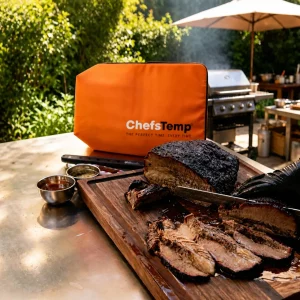
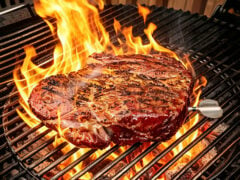
Ribs. You're outside. You're enjoying the grill.
Adjust the vents yourself. Watch the fire. Make the little corrections you've learned to make.
Sometimes managing the pit is exactly how you want to spend the afternoon.
Manual
Kamado Temperature Control
You Already Know How to Run Your Kamado.
This Isn't About That.
A well-managed Kamado can hold a steady temperature for hours.
You know your vents. You know your charcoal. You know how your pit responds. S1 + Breezo isn't here to replace that skill.
It's for the cooks when knowing how to manage the fire doesn't mean you want to watch it all night.
Manual when you want it.
Assisted when you need it.
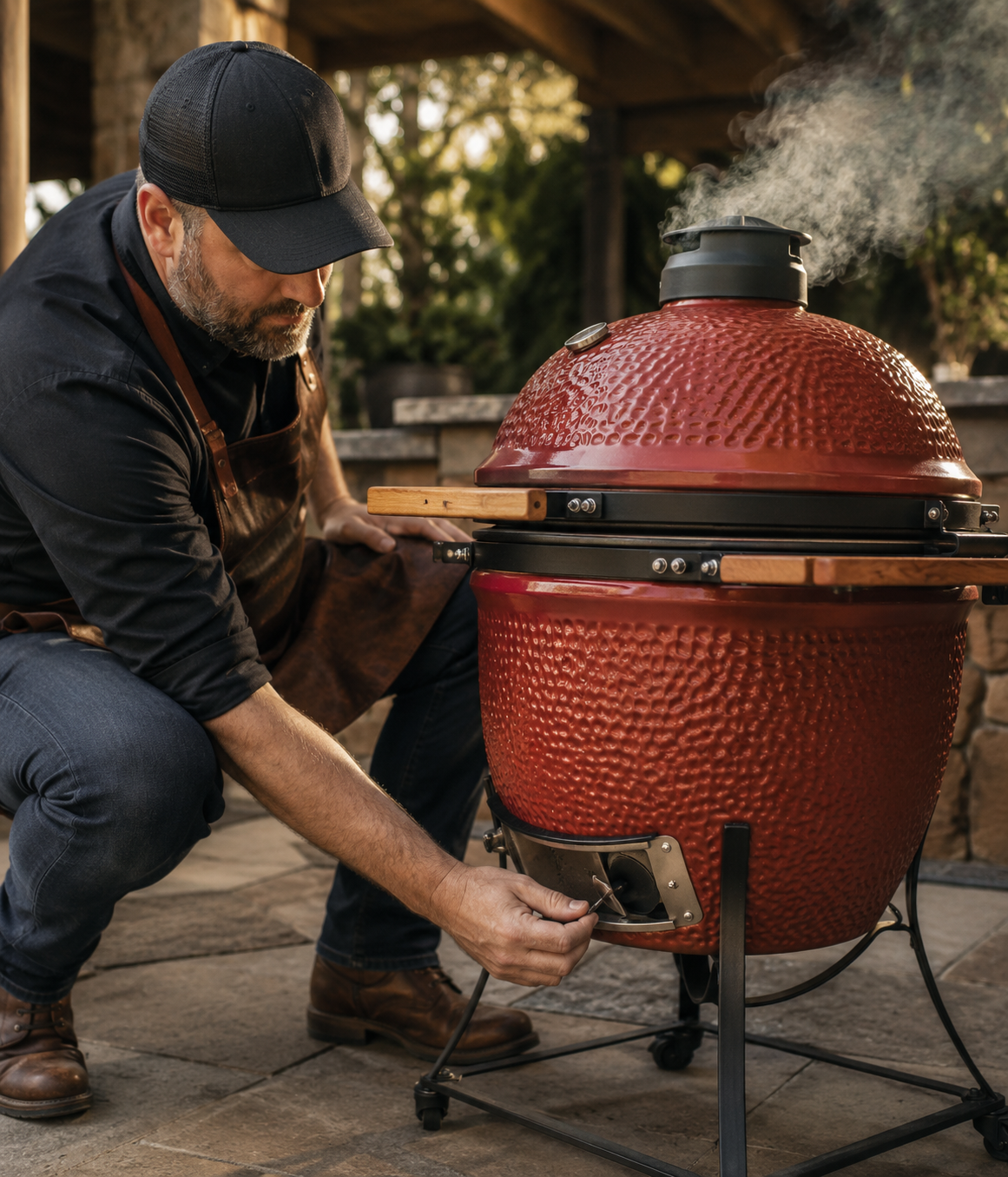
A Kamado can run low and slow without an automatic controller.
If your fire is built correctly, your vents are dialed in, and you enjoy tending the pit, there's no reason to stop.
For a short daytime cook, manual control may be all you ever want.
But needing a controller and wanting one are two very different things.
Quick Answer
A Kamado temperature controller isn't required for good BBQ. It becomes most useful during long, overnight, or unattended cooks when you want stable pit temperature without repeatedly checking and adjusting airflow.
When the cook gets longer
Target pit temperature: 250°F
Everything is exactly where you want it.
Dinner is over.
You've checked the fire.
You don't.
Knowing how to manage the fire doesn't mean you have to watch it all night.
Assisted temperature control
You choose the temperature.
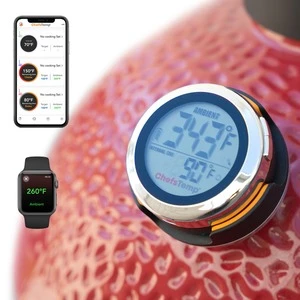
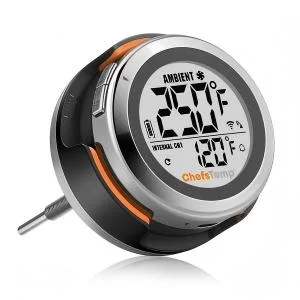
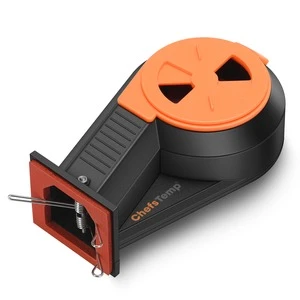
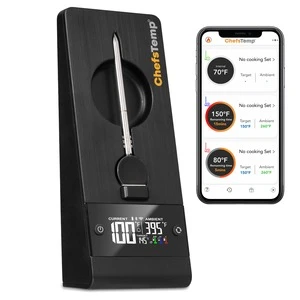
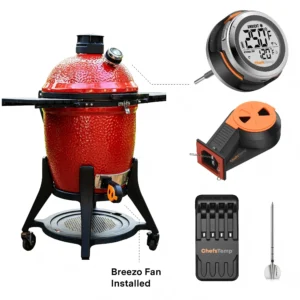
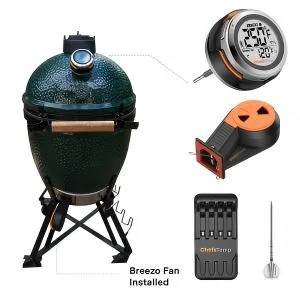
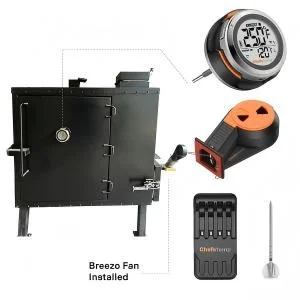
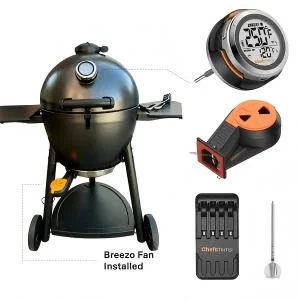
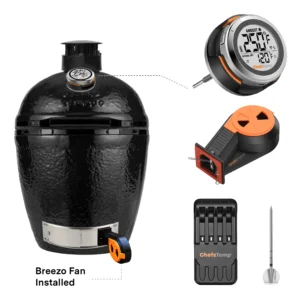
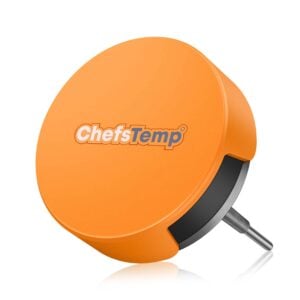
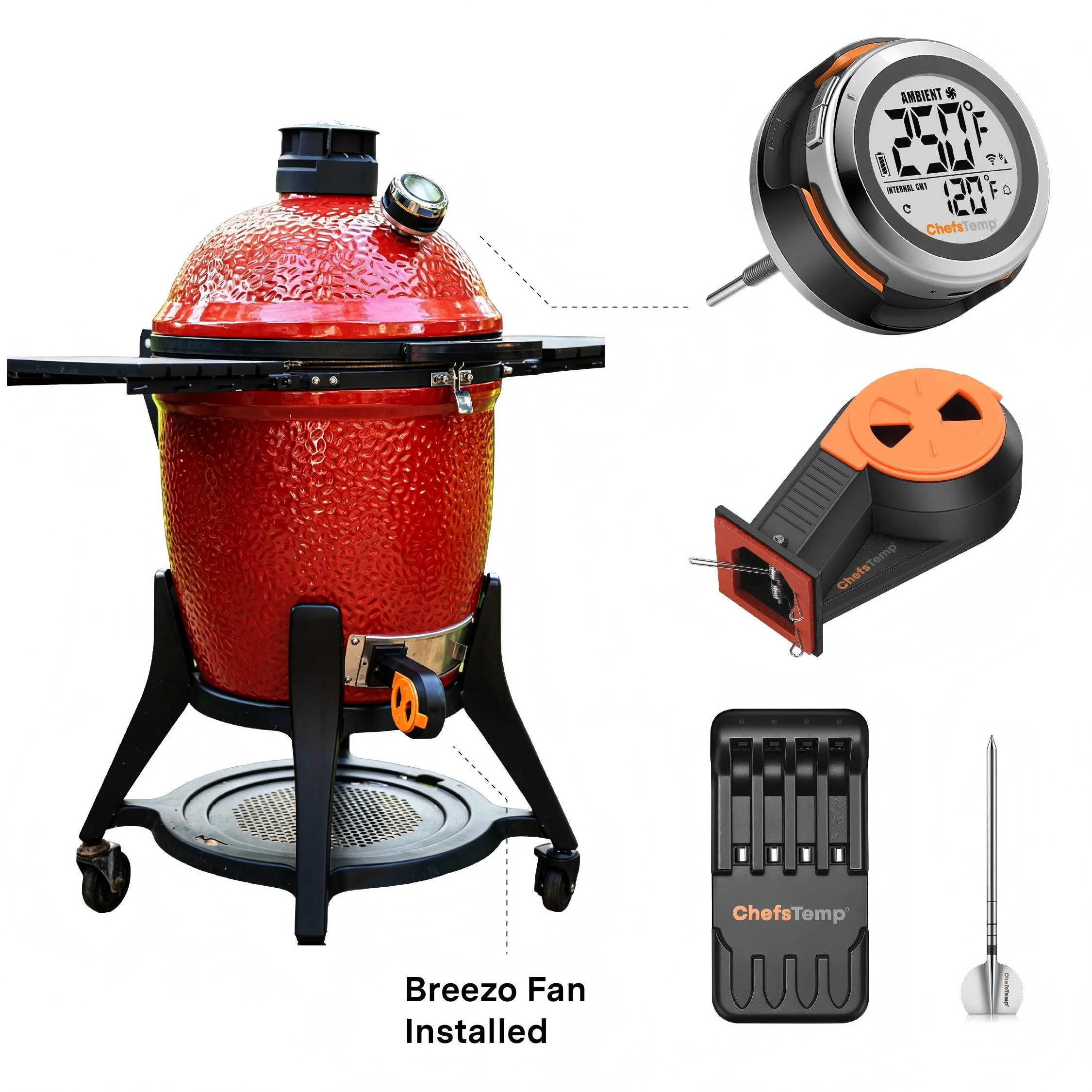
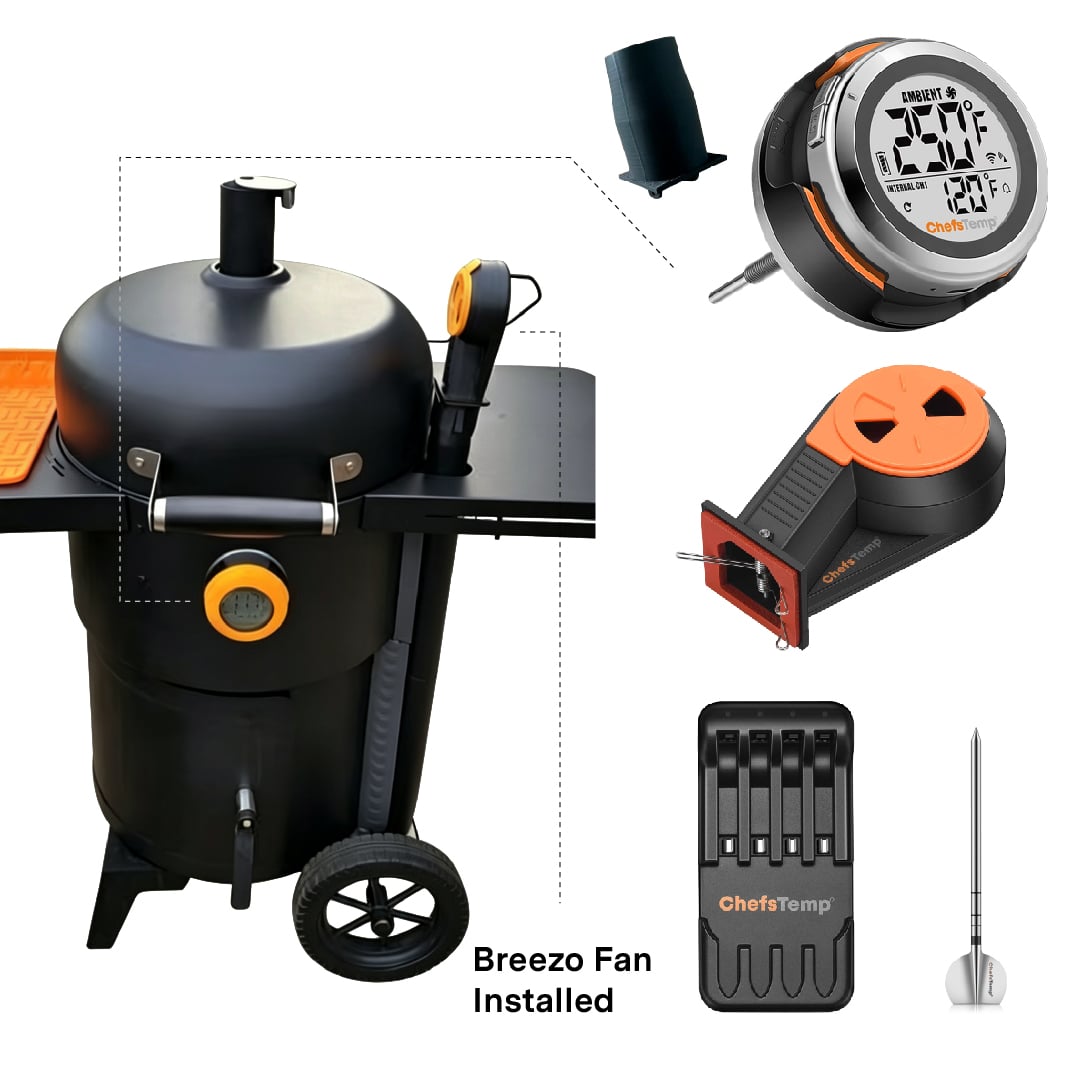
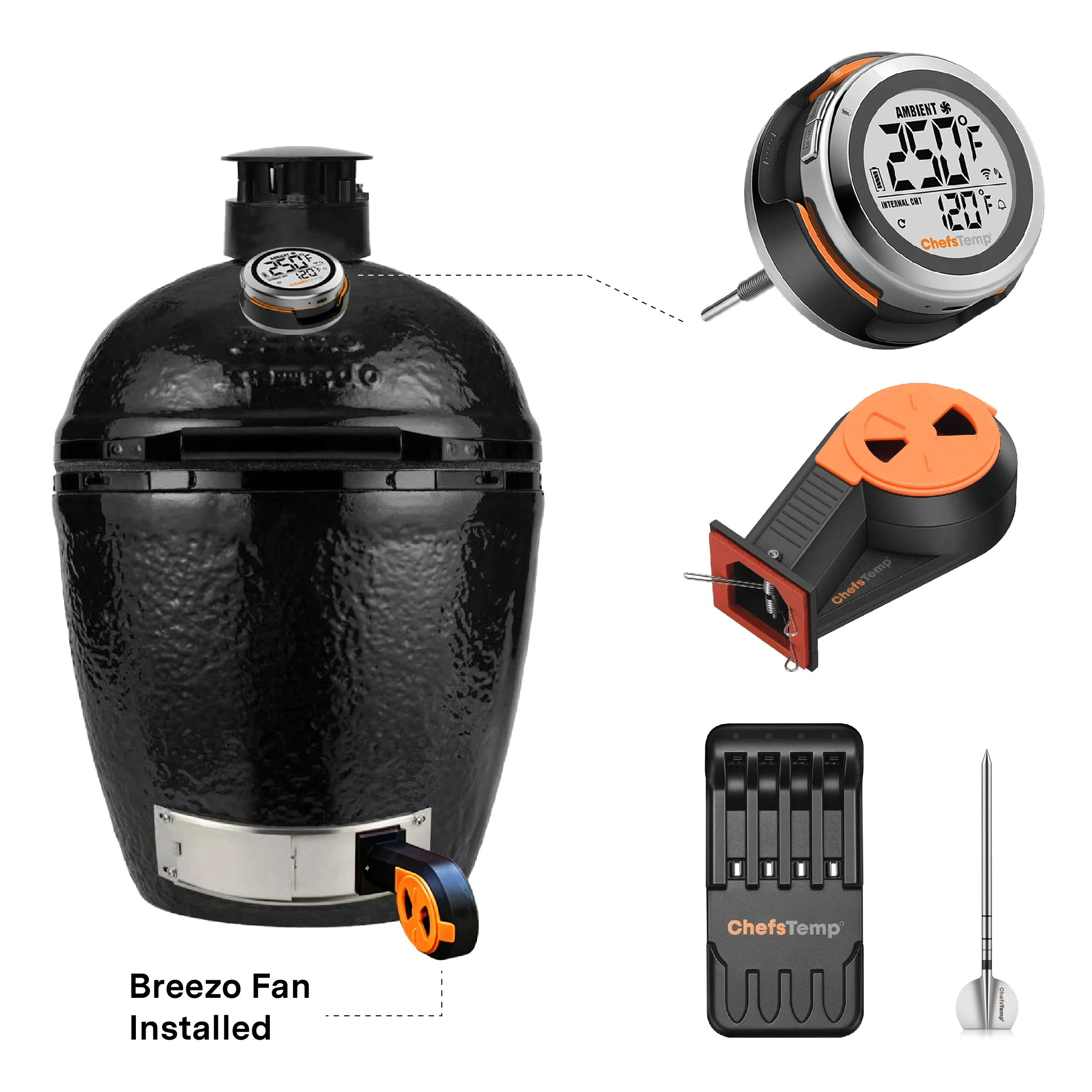
S1 monitors what's happening inside your Kamado. When the pit moves away from your target, Breezo adjusts airflow to help bring it back.
You stay in control of the cook—without staying beside the cooker.
You set the cook.
The system watches the fire.
Two ways to cook
Saturday Afternoon
Adjust the vents yourself. Watch the fire. Make the little corrections you've learned to make.
Sometimes managing the pit is exactly how you want to spend the afternoon.
Manual
Saturday Night
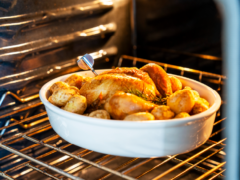
Let S1 monitor the pit. Let Breezo manage airflow when the temperature needs correcting.
The cook keeps going even when you don't want to stand beside it.
Assisted
You Don't Have to Choose a Side.
Using a controller tonight doesn't mean you've forgotten how to run your Kamado tomorrow.
It's another tool—not another way of defining who the pitmaster is.
Where it earns its place
| Cook | How useful is a controller? |
|---|---|
| Steak / burgers / quick grilling | Usually unnecessary |
| Short daytime smoke | Optional |
| 4–6 hour ribs | Mostly preference |
| 8–12 hour pork shoulder | Very useful |
| 10–16 hour brisket | Very useful |
| Overnight cook | Strong use case |
| Unattended long cook | Strong use case |
The longer the cook—and the less attention you want to give it—the stronger the case for assisted temperature control becomes.
Absolutely.
That's one of the reasons people love ceramic Kamado grills. Once the charcoal, airflow, and vents are properly dialed in, a Kamado can remain remarkably stable.
A controller doesn't change that.
What it changes is how much attention you need to give the cooker when conditions change or the cook runs long.
Think less about making the Kamado capable.
Think more about reducing the monitoring burden.
If you enjoy handling every adjustment yourself, keep doing it. When you want to step away, sleep, spend time with guests, or simply stop checking the pit every few minutes, that's when assisted control starts to make sense.
Learn how grill temperature controllers work →Real-life use cases
The pit doesn't care that it's 3 AM.
You probably do.
Keep the cook moving without making another vent check the reason you're awake.
Pork shoulder. Brisket. Ribs. The longer the cook, the more useful continuous monitoring and airflow control become.
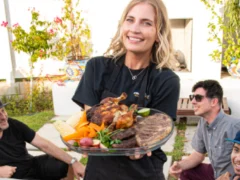
You invited people over to eat BBQ—not to watch you watch the BBQ all afternoon.
Dinner. Kids. A phone call. Something inside the house. The cook can keep going without demanding all of your attention.
Sample cook graph
Here's an illustrative example of what a long low-and-slow Kamado cook with S1 + Breezo can look like.
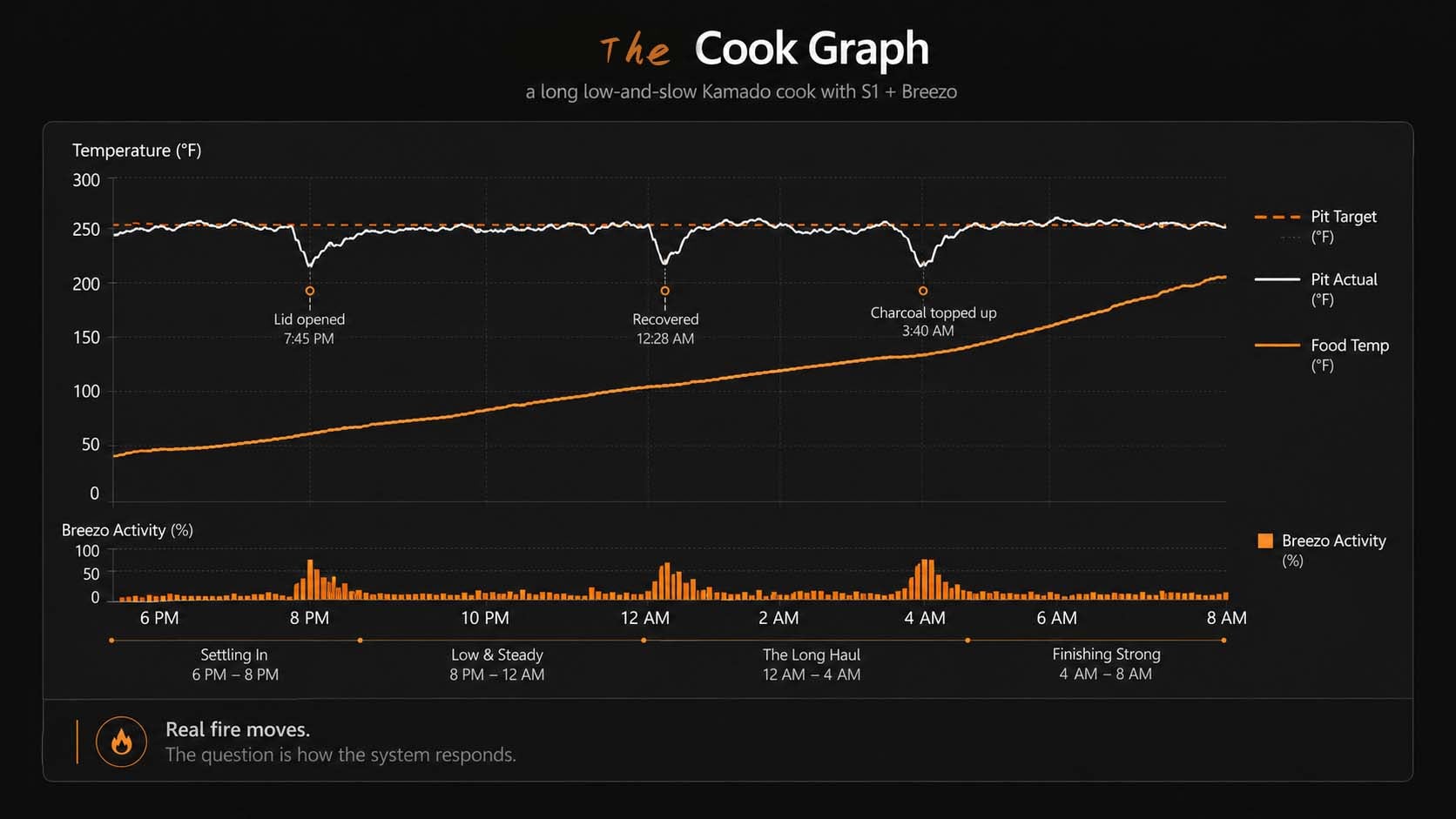
Illustrative example only. This graph is included to show the type of cook data we plan to present. It will be replaced with measurements from a real S1 + Breezo Kamado cook.
The setup
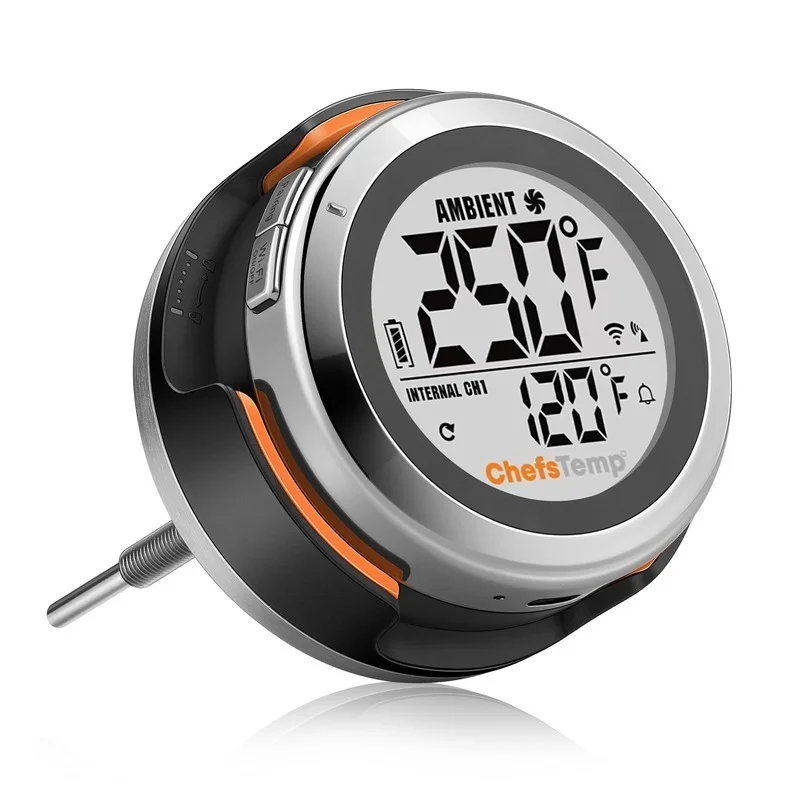
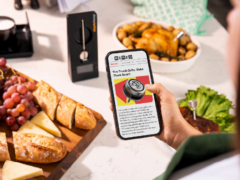
Know what's happening.
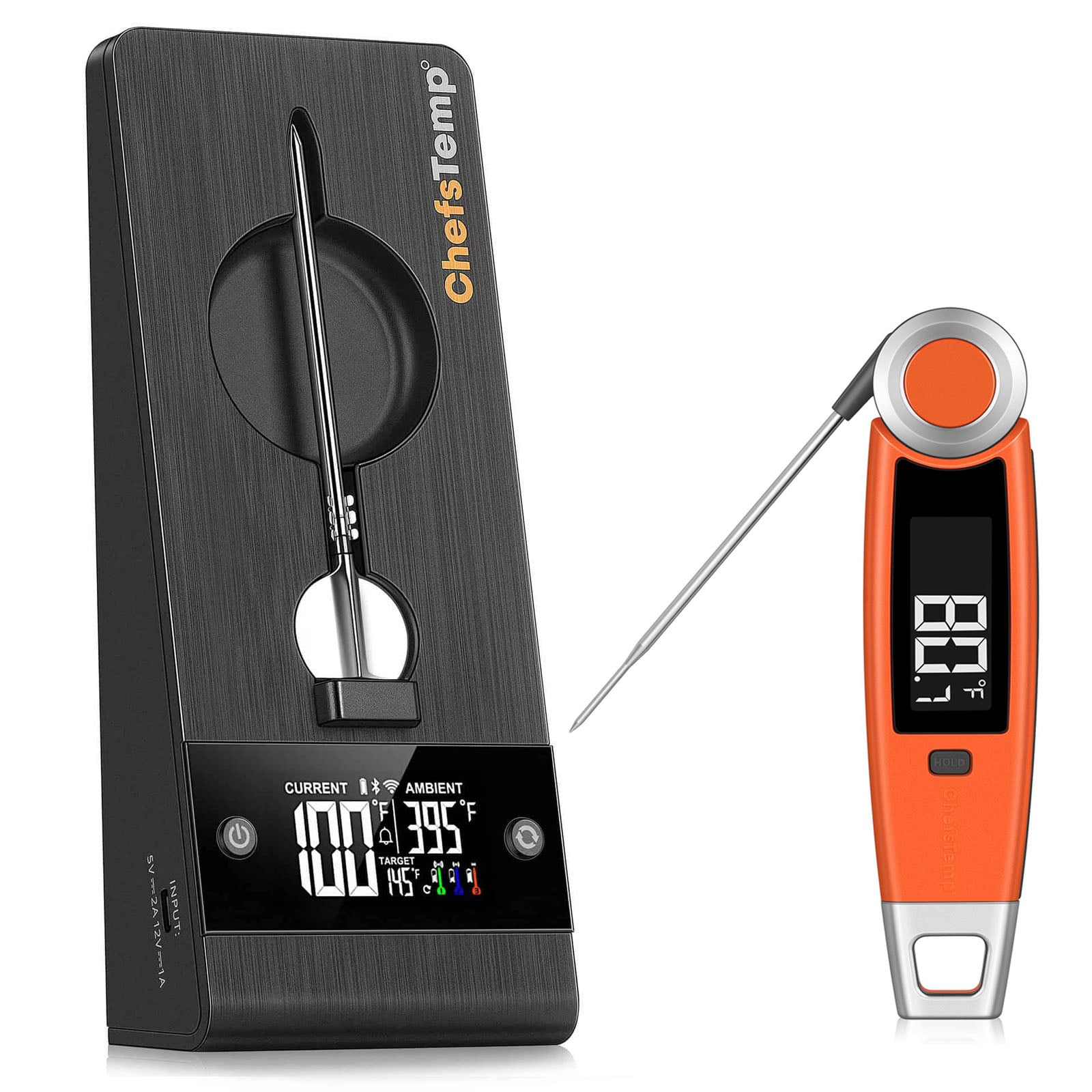
Monitor the temperatures that matter, set your target, and keep track of the cook without staying beside the grill.
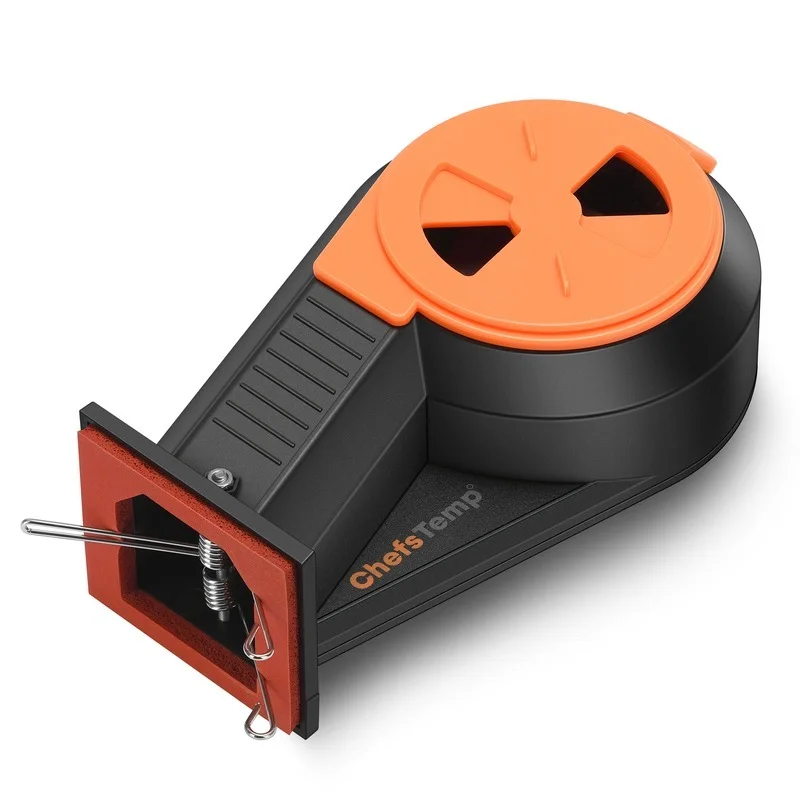
Manage the airflow.
Breezo works with S1 to adjust the air entering your cooker as pit temperature changes.
Monitor + Control
Before you buy
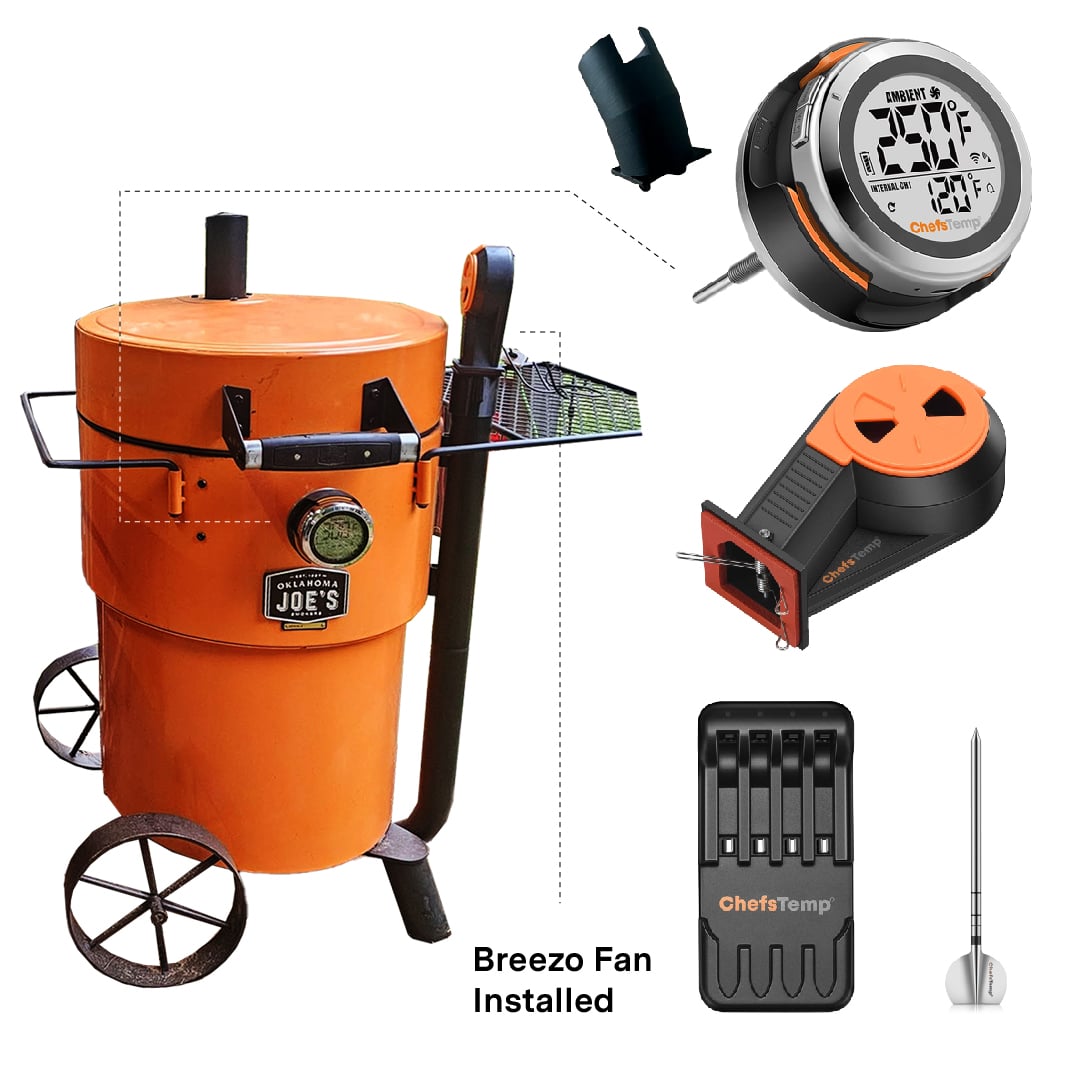
S1 + Breezo supports popular Kamado Joe models. Check your grill before ordering.
Compatibility can vary by grill model and adapter configuration. Check the product page before ordering.
Good.
Keep doing it.
S1 + Breezo isn't about replacing the part of Kamado cooking you enjoy.
It's about having another option when the cook is long, the night is late, or your attention belongs somewhere else.
Manual when you want it.
Assisted when you need it.

Free delivery on all US orders.

30-day risk-free returns.

Up to 3 years of coverage.

Red Dot & NBBQA award-winning.