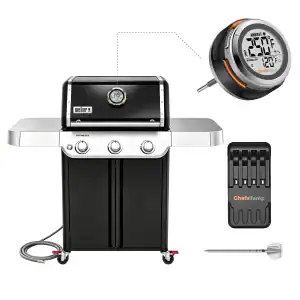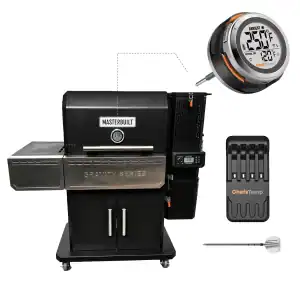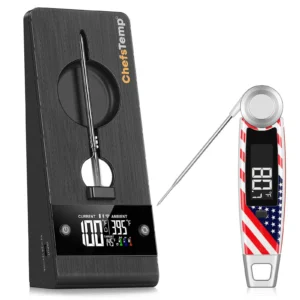
Key Takeaways
-
Connectivity Physics: 915MHz Radio Frequency (RF) penetrates brick and heavy metal smokers more reliably than 2.4GHz Wi-Fi and Bluetooth, preventing data loss during overnight cooks.
-
Power Management: Long smokes (12+ hours) require robust battery life; rechargeable batteries degrade in extreme cold, making AA-powered devices with 1,000+ hour lifespans a safer operational choice.
-
Strategic Trade-offs: The ThermoWorks Signals excels at cloud-based data logging but suffers from short battery life and network friction. The ChefsTemp Quad XPro lacks remote Wi-Fi access but guarantees zero-latency connection and continuous power.
-
Precision Calibration: Thermometers must be calibrated using a highly specific 32.0°F (0°C) crushed ice-to-water slurry to ensure pinpoint accuracy before high-stakes cooks.
Executing a 14-hour brisket cook requires precise thermal management. Consumer-grade kitchen probes inevitably fail under the duress of overnight smoking due to battery degradation, thermal stress, and signal drop-offs. Relying on an enterprise-grade alarm thermometer is not a luxury; it is a mandatory safeguard against ruined protein and fluctuating pit temperatures.
This is exactly where an alarm thermometer becomes your best friend. In fact, more backyard cooks and chefs rely on data to perfect their meals. According to Maximize Market Research, the global smart meat thermometer market is expected to reach USD 549 million by 2032. A good BBQ alarm monitors both the meat and the pit, alerting you before disaster strikes.
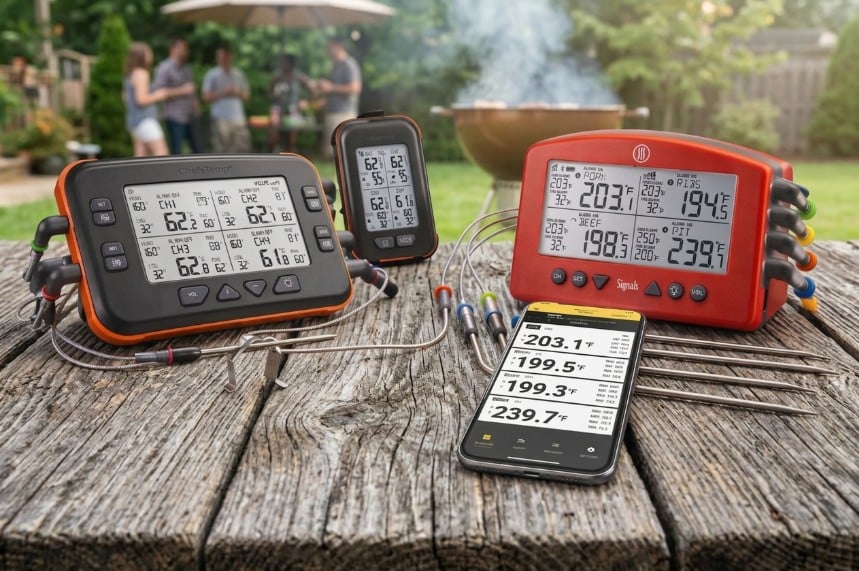
With so many brands available, choosing the right tool is hard. Today, we look at a major matchup: ChefsTemp vs ThermoWorks. Both brands make top-tier gadgets. In this guide, we will compare their best long-smoke devices by reviewing their features, range, and battery life. Ultimately, you will know exactly which digital thermometer with an alarm fits your backyard setup.
Part 1. What to Know about Alarm Thermometers for Long Smokes
A cheap kitchen probe dies halfway through a 14-hour brisket cook. You need a survivor. Overnight smoking means fighting wind, grease, and pitch-black yards. Treat a reliable thermometer with an alarm like a night guard for your meat. It stays awake. It monitors the fire, tapping your shoulder before a cold pit ruins tomorrow’s lunch.
Finding the right gear requires looking closely at how the hardware actually holds up under pressure:
Transmission Protocols
Wireless thermometers rely on two primary protocols: Radio Frequency (RF) and Wi-Fi/Bluetooth. RF operates at lower frequencies (typically 915 MHz), allowing it to penetrate heavy-gauge steel smokers and brick walls with zero latency. Wi-Fi units push data to cloud servers for remote tracking, but 2.4GHz signals are notoriously volatile in backyards, dropping packets when routers fail or interference peaks.
Range Matters for a Wireless Thermometer
Babysitting a smoker gets exhausting. You need to step away. A reliable wireless thermometer with an alarm buys you that freedom. Bluetooth signals often die when they hit heavy glass doors or brick walls. You lose the feed entirely. Radio frequency pushes straight through the house.
Dashboard Displays vs. Mobile Apps
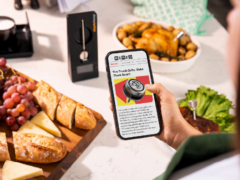
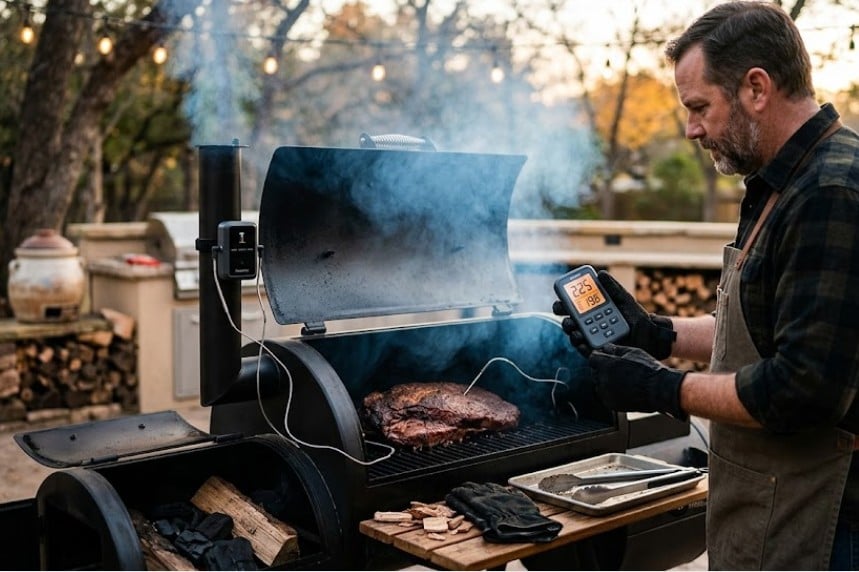
It’s a habit to check the temperature. Push alerts and phone graphs are a must for app users. Traditional cookers pick up a stand-alone receiver. Every spike is instantaneously displayed on that actual screen. With rib sauce smeared over their thumbs, nobody wants to swipe a locked phone.
Environmental Durability
Outdoor cooking exposes hardware to sudden rain, high humidity, and grease. An IP66-rated device is non-negotiable. This rating guarantees complete protection against dust ingress and heavy water jets, ensuring the motherboard will not short-circuit if caught in a torrential downpour or accidentally sprayed during cleanup.
Battery Power for a BBQ Alarm
Long smoke can run all night. Because of that, battery life matters as much as accuracy. Rechargeable units are convenient, but traditional batteries can feel safer when you need long, reliable power.
Low Temp Sensor Features
A high-temp alarm helps prevent burnt meat. Just as important, a low-temp sensor warns you when the fire fades. That way, you can fix the pit before the cook gets off track.
When the cook becomes long, dark, and unexpected, the ideal alarm thermometer is the one that remains dependable. Your next smoking will be much simpler to control if you choose a device with a long range, clear alarms, a long battery life, and simple controls.
Part 2. ChefsTemp vs ThermoWorks: Reviews of the Best Alarm Thermometers for Long Smokes
Why is this review trustworthy? We focus on exact specs and real backyard needs. When you are cooking all day, you do not want dead batteries or dropped signals. Therefore, we compare the exact numbers, limits, and user experiences for both brands. In this major matchup of ChefsTemp vs ThermoWorks, we break down everything you need to know.
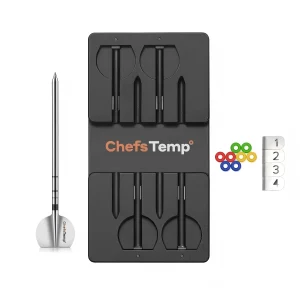
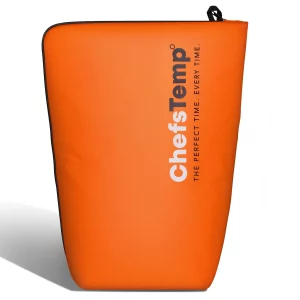
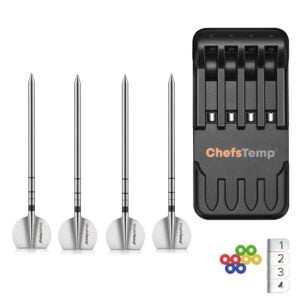
ChefsTemp Quad XPro 4 Probes Wireless Meat Thermometer
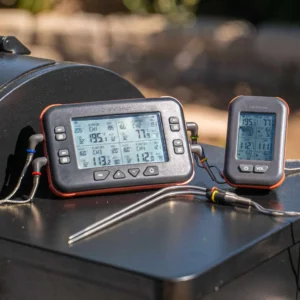
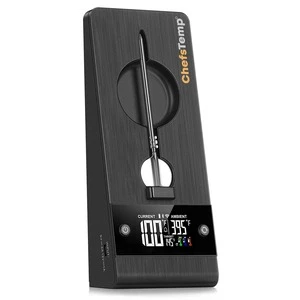
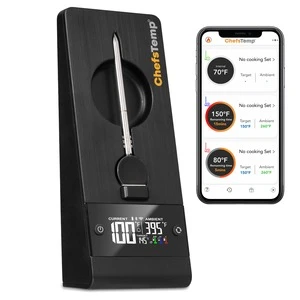
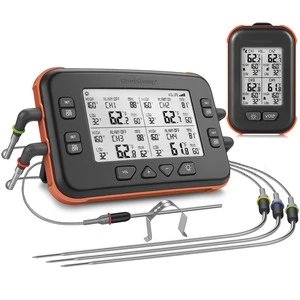
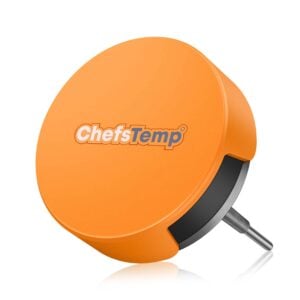
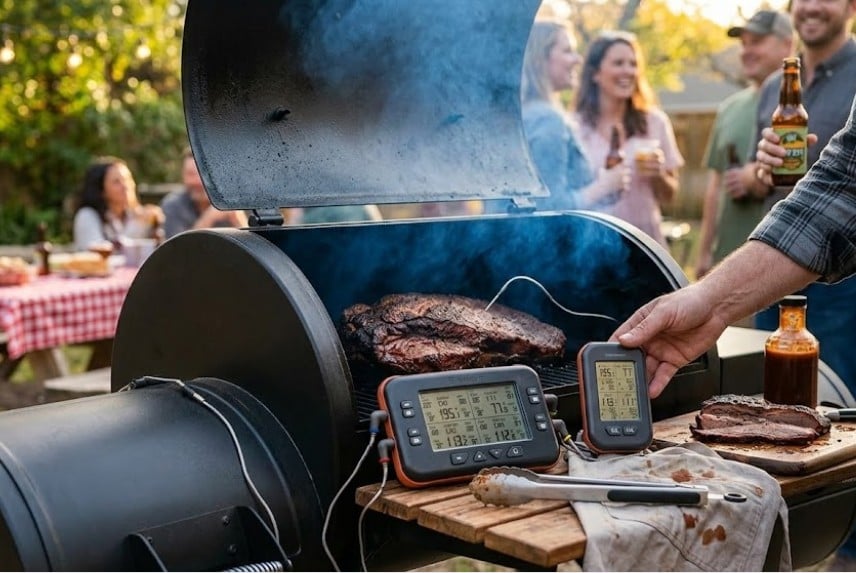
The ChefsTemp Quad XPro 4 is a heavy-duty remote alarm thermometer. It is built for ultimate stability during long smokes, oven-roasting, and grilling.
Specs:
- Transmission: Reliable RF technology. It reaches up to 500 feet through walls and 1,000 feet in open areas.
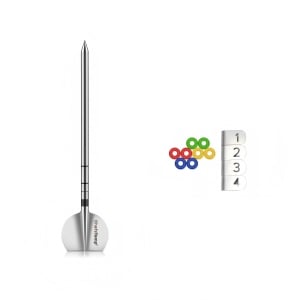
- Probes: 4 total probes. You can track three meats and one ambient pit temperature.
- Probe Design: 6-inch probes feature a right-angle bend for easy pulling. The cables are 47 inches long.
- Heat Limits: Cables handle up to 700°F. The transition max temp is 644°F.
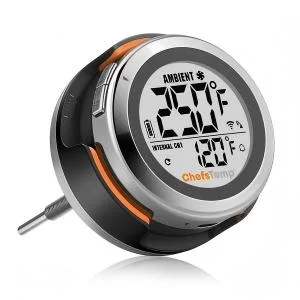
- Display: An intuitive dashboard shows Min/Max and High/Low readings for all channels at once.
- Durability: It boasts an IP66 splash-proof rating.
- Power: You get up to 1,000 hours of ultra-long battery life.
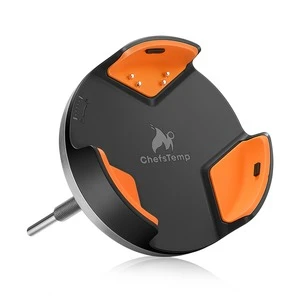
- Mounting: A magnetic back makes placement a breeze.
Pros:
The Quad XPro 4 is strictly an RF device. It lacks Wi-Fi and Bluetooth entirely. You cannot log into a cloud app to check your brisket from the grocery store, and it will not chart exportable cooking graphs. Furthermore, the dashboard is incredibly simple to use. You don’t need to press buttons to switch channels. Because the RF connection is rock-solid, it doesn’t drop out like Bluetooth. You can watch a video on how to stay connected with a BBQ alarm thermometer here.
Cons:
This unit lacks Wi-Fi. You cannot check your meat from the store. This “limitation” is its greatest operational advantage for overnight cooks. By stripping away battery-draining Wi-Fi chips, it achieves an untouchable 1,000-hour battery life on standard AA batteries. Its RF signal bypasses finicky router pairing entirely, delivering an unbreakable, zero-latency feed directly to the receiver up to 1,000 feet away.
What Others Are Saying:
Users praise its true simplicity. Backyard cooks love skipping the app downloads. They turn it on, set the alarms, and let it run. Plus, the splash-proof design is a huge hit for cooking in the rain.
Tips to Use:
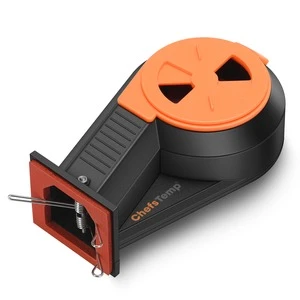
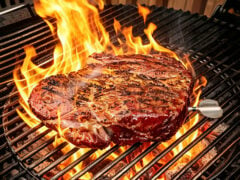
Use the included grate clip to float the pit probe above the grates. Keep the main unit stuck to a cool metal surface.
ThermoWorks Signals BBQ Alarm Thermometer
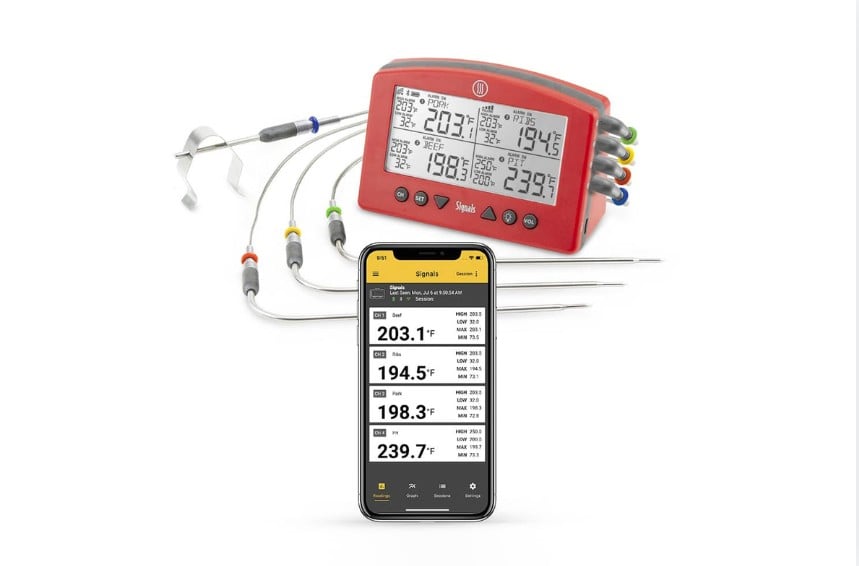
ThermoWorks Signals is a premium device built for data lovers. It keeps you connected through your phone.
Specs:
- Transmission: Wi-Fi and Bluetooth.
- Probes: 4 channels (three for meat, one for the pit).
- Display: An LCD screen on the base sends data directly to a mobile app.
- Durability: IP66 splash-proof design.
- Power: A built-in rechargeable battery lasts about 15 hours.
Pros:
The Signals is an elite data logger. For analytical pitmasters who want to track ambient-to-internal temperature ratios via cloud-based apps, its software is industry-leading.
Cons:
Its reliance on cloud connectivity creates massive friction. The built-in rechargeable battery maxes out at 15 hours, a timeline that plummets in cold ambient temperatures. If your overnight cook stalls, the unit will die unless it’s tethered to a power bank. Furthermore, its 2.4GHz Wi-Fi receiver often struggles to maintain a handshake with indoor routers when the signal passes through exterior walls, leading to frustrating blind spots.
What Others Are Saying:
Tech-savvy cooks enjoy the app’s detailed graphs. However, many complain about Wi-Fi pairing headaches. Connecting to home routers can sometimes be a struggle.
Tips to Use:
Always plug the base into an outlet or power bank. This keeps the battery from dying mid-cook.
Part 3. ChefsTemp vs ThermoWorks: How to Choose the Right Alarm Thermometer
Selecting the best thermometer with an alarm depends entirely on your cooking habits. Every pitmaster has different needs in the backyard. Therefore, you should use a few simple strategies to match the right features to your specific routine.
Here is how to narrow down your choices:
- Choose Based on Connection Preferences: If you love tech, apps, and data graphs, a Wi-Fi unit might appeal to you. On the other hand, if you want a system that works instantly, choose a dedicated RF device. RF systems skip the pairing headaches. They also ignore router resets and stay strong during internet outages.
- Evaluate Your Typical Cooking Duration: Think about how long your smokes usually last. If you cook briskets overnight, battery life is critical. A device with 1,000 hours of power will serve you much better than a rechargeable unit that dies after just 15 hours. After all, you never want to wake up to a blank screen and cold meat.
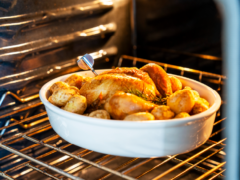
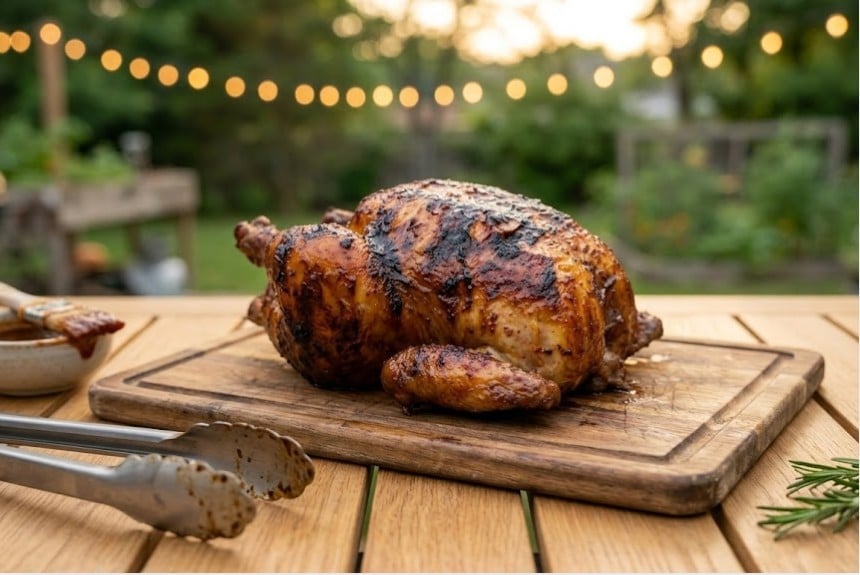
- Assess Your Cooking Environment: Consider where your smoker sits. If you cook outdoors, weather resistance is vital. Look for an IP66 rating to protect against sudden rain showers. Furthermore, if you often cook thick cuts of meat, you need long probes. Make sure the kit includes 6-inch probes to reach the deep center of large roasts. You can also find tips for cooking grilled BBQ chicken by placing the probe in the thickest part of the breast.
Finding the perfect tool is about knowing your style. By considering your connection needs, average cooking times, and weather conditions, you can make a smart choice. Once you find the right fit, your long smokes will become much easier and far more predictable.
Part 4. How to Use an Alarm Thermometer for Long Smokes
Buying a top-tier wireless thermometer with an alarm is only the first step. To get a perfect barbecue, you must use it correctly. Follow these simple tips to master your next long cook.
Here is how to set up and care for your gear:
Strategic Probe Placement
Incorrect probe placement yields false data. Insert the meat probe into the thermal center of the thickest muscle mass. Avoid touching bones, as bone acts as a thermal conductor and will read 5 to 10 degrees hotter than the surrounding meat. For pit ambient temperature, secure the grate clip exactly 2 inches away from the meat. If placed too close, the cold thermal mass of the meat will artificially depress the ambient reading.
Advanced Calibration Protocol
Digital probes drift over time. Calibrate every 90 days using a rigorous thermal baseline:
- Fill a glass to the brim with finely crushed ice (do not use cubed ice; it creates warm water pockets).
- Add cold water until it sits 1/2 inch below the top of the ice.
- Stir aggressively, wait 3 minutes, and insert the probe 2 inches deep without touching the glass walls.
It must read 32.0°F (0°C). If it deviates by more than ±1.8°F, run the device’s hardware calibration sequence. Read more on how to correct your oven temperature.
Cleaning and Maintenance Tips
Avoid putting your alarm thermometers in the dishwasher. High water pressure destroys electronics. After cooking, wipe the probes with a moist, soapy cloth. Water can damage the metal crimps and cause erroneous readings; therefore, never soak the cables. Instead of bending the cables during packing, loop them freely.
By placing your probes correctly, checking your accuracy, and cleaning up carefully, your thermometer will serve you for years. These easy habits make every backyard cook much smoother and more predictable.
Part 5. Conclusion
The correct equipment is needed to achieve the ideal temperature. When comparing ChefsTemp vs ThermoWorks, both brands provide excellent choices for extended smoking. Still, the ChefsTemp Quad XPro 4 wins out for stress-free cooking.
It gives you a massive 1,000-hour battery life and a steady 1,000-foot range. Plus, the simple dashboard screen helps prevent dropped Wi-Fi and dead batteries.
Ultimately, these tough tools help backyard cooks get pro-level BBQ results without any extra fuss. Whether you are smoking, roasting, or frying, you stay in close contact with your food. Upgrade your setup today and take total control of the heat.
Part 6. FAQs about ChefsTemp vs ThermoWorks
Q: What is the difference between the Quad XPro 4 and the Thermoworks Smoke X4?
The Quad XPro 4 displays all four channels and alarm targets simultaneously on a single screen. Meanwhile, the Smoke X4 forces you to push buttons to scroll through channels. Also, the Quad XPro boasts a massive 1,000-hour battery life.
Q: What is the most accurate BBQ thermometer?
The most accurate tools use advanced sensors that read within ±1.8°F (±1°C). Brands like ChefsTemp and ThermoWorks lead the industry. Still, regular ice bath checks ensure your digital thermometer with an alarm stays accurate during long cooking sessions.
Q: What is the optimal alarm thermometer for long smokes?
The optimal device depends on your failure tolerance. If you prioritize cloud data and don’t mind managing power banks, the ThermoWorks Signals is top-tier. If you require absolute reliability, specifically immunity to router failures and battery deaths during 15-hour brisket cooks, a dedicated RF unit with high battery capacity like the ChefsTemp Quad XPro 4 is the superior tool.
Q: How to choose the right alarm thermometer?
Start by looking at the range and battery life. Pick an RF wireless thermometer with an alarm for reliable signal strength, no apps required. Choose Wi-Fi only if you’re away from the house. Most importantly, look for an IP66 rating for outdoor durability.
Q: What is the highest-rated instant-read meat thermometer?
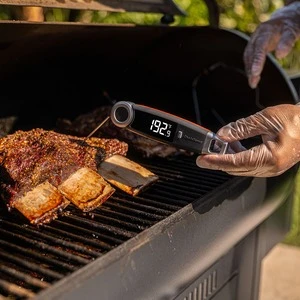
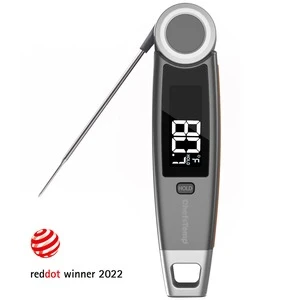
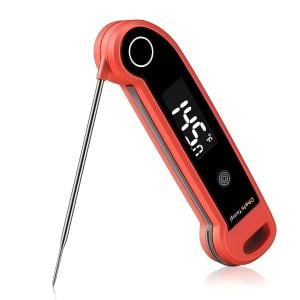
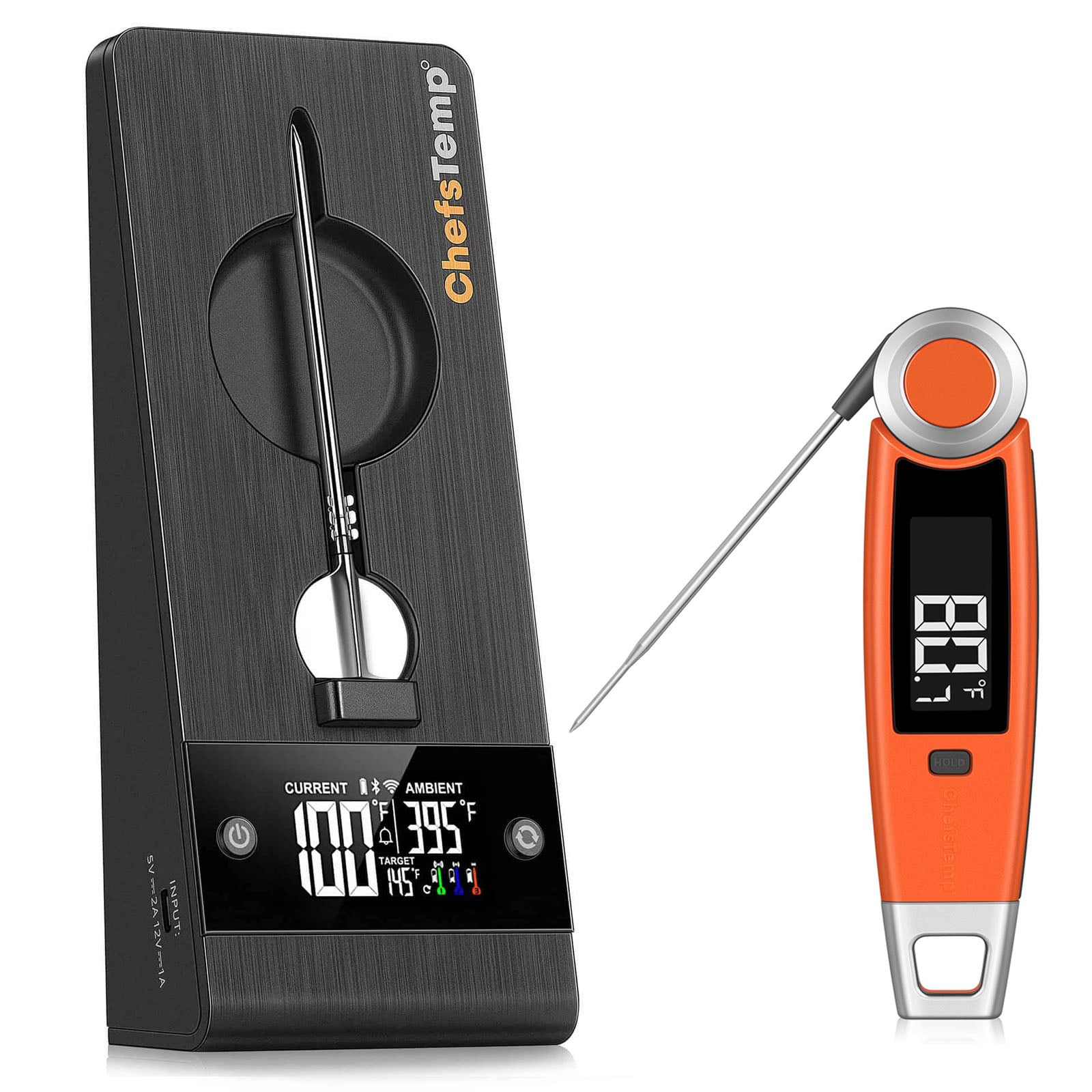
While alarm tools handle long smokes, instant-reads handle quick checks. The ChefsTemp Finaltouch X10 is highly rated. Thanks to its 1-second reading speed, rotating probe, and sharp accuracy, it is the perfect companion to your main BBQ alarm.
Q: Do I need a wireless internet thermometer for BBQ?
You only need a wireless internet thermometer if you run errands away from home while cooking. For most cooks, a dedicated RF temp alarm works better. It skips app pairing, ignores routers, and rarely drops the signal.
Q: How does a temp alarm improve my cooking?
A temp alarm stops you from opening the smoker lid. Every time you open the lid, you lose heat. High alarms prevent burnt meat, while a low-temperature sensor warns you if the fire dies, saving your expensive dinner.