Gammon Joint Internal Temperature UK: The Ultimate Guide to Safe Cooking
By Jax RyanPublished On: February 12th, 2026Categories: blogs, Chefs Insight, recipesComments Off on Gammon Joint Internal Temperature UK: The Ultimate Guide to Safe Cooking
Your Sunday roast will be thoroughly cooked, juicy, and ready to eat if you set the cooking temperature correctly. In fact, recent market reports reveal gammon is hotter than ever, with sales volumes jumping 1.4% last year. December alone accounts for nearly a quarter of annual sales, proving that we Brits can’t get enough of this salty, savoury favourite.
However, cooking it to perfection is a high-stakes game. Undercook it, and you risk illness; overcook it, and you’re left with dry, tough leather – the secret lies in hitting the precise gammon joint internal temperature UK standard.
The UK Food Standards Agency (FSA) states pork must reach 70°C for two minutes. Don’t guess. Follow these cooking times and safety rules to ensure your food is safe, tender, and juicy every time you cook.
Table of Contents
Part 1: UK Gammo Safe Temperature: FSA Official Standards
Cooking pork in the UK isn’t a guessing game; the rules here are often stricter than elsewhere for good reason. Checking the internal temp of the gammon joint is the only proof that your dinner is safe. Don’t rely on guessing.
Many cooks still determine the gammon cooking time solely by weight. Even though 20 minutes per 450g is a common guide, it does not guarantee the meat is cooked properly. The obstacles of real life arise.
Factors such as the actual temperature of your oven, the peculiar form of the joint, or even the temperature of the meat at the beginning might cause significant errors in your mathematical calculations. The FSA requires thorough cooking to kill harmful bacteria such as Salmonella.
Since bacteria on a steak live mostly on the surface, a quick sear makes it safe to eat. But gammon is different. Since it is a rolled joint, the outside surface becomes the inside centre during butchering. This traps bacteria deep in the middle, where heat takes longer to reach.
So, don’t leave it to chance or luck. You must reach the UK gammon-cooked temperature of 70°C to safeguard your table properly. It is the critical finish line for health and safety.
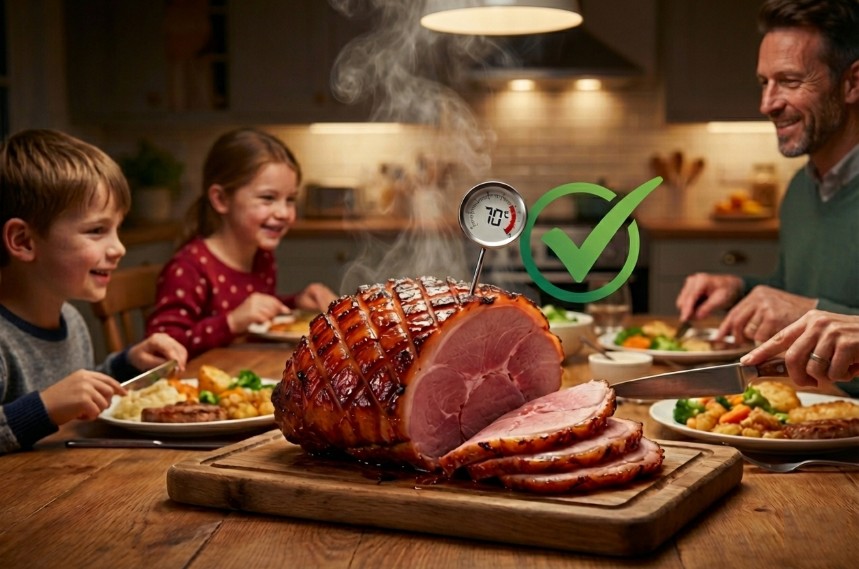
A happy family gathers for a delicious glazed roast ham dinner. A thermometer confirms a safe 70°C internal temp, ensuring a perfect, juicy holiday meal.
Part 2: FSA 70°C vs. US 63°C: Understanding the Difference
Sometimes it feels like crossing lines when looking for cooking advice online. U.S. websites tend to predict lower heat than British ones so that you may see mixed messages. Knowing the difference helps you make the safest choice for dinner.
What Temperature is a Gammon Joint When Cooked?
In the U.S., the USDA says 63°C (145°F) is okay if the meat rests. This keeps it moist. However, the official UK gammon temperature recommendation is strictly 70°C (158°F), held for two minutes. This higher heat guarantees a “7-log reduction.” This ensures 99.99999% of bacteria are destroyed.
For vulnerable groups such as grandparents and children, following this UK standard is the safest option. For more tips on different cuts, check the updated guides on Gammon cooked temperature.
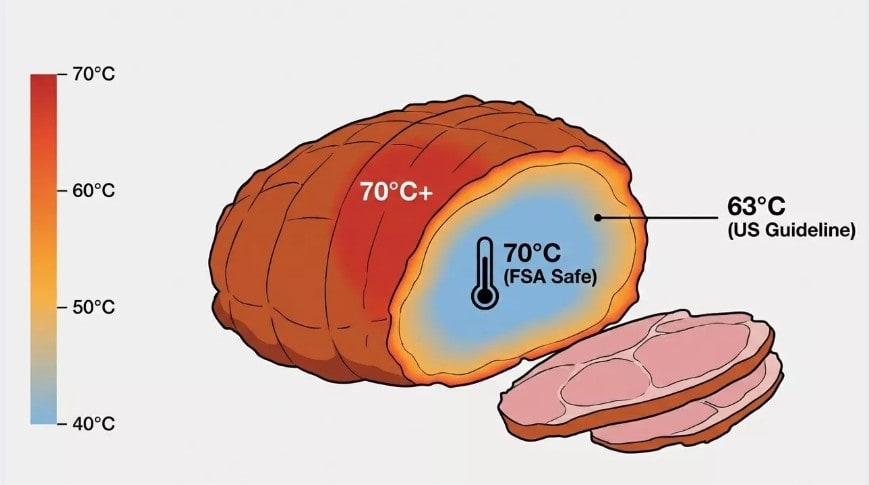
Temperature Diagram of Various Parts of Gammon Joint
Heat doesn’t zap meat instantly like a microwave; it travels slowly from the outside in.
Surface: This heats up fast to kill germs.
Mid-layer: This part warms up steadily as the roast cooks.
Geometric Centre: This is the “Thermal Centre,” or the deepest, coldest spot.
You absolutely must measure the gammon joint’s internal temp right at that centre point. If the middle hits 70°C, you can be sure the rest of the meat is safe.
Learn safe ham cooking temperatures with this guide. Compare the UK FSA 70°C safety standard to the US 63°C guideline to ensure your meat is juicy and safe.
How Cooking Temperatures Make Gammon Joint Safe
Think of heat as a weapon against germs. It breaks down their walls and stops them in their tracks.
At 50°C: Most bacteria are still alive and kicking.
At 60°C: They start to die, but the process is slow.
At 70°C: It is game over. Bacterial death is almost instant.
This keeps you safe when roasting joints or cooking grilled pork chops. Since they cook faster, use a thermometer rather than a timer.
Part 3: How to Check a Gammon Joint is Cooked Properly
Cooking isn’t about luck; it is about precision. Guessing usually leads to dry, disappointing dinners. To hit that perfect roast gammon internal temperature UK every single time, you need to ditch the old myths and trust the right tools.
Using Visual Cues to Check if Food is Cooked Properly
Home cooks have been using easy methods to determine when their roasts are done for years.
Pierce the meat: Stick a skewer into the joint’s thickest area.
Check the juices: You should be all set if they run clear. It returns if they seem pink or bloody.
Texture check: Unlike uncooked dough, the meat should feel firm to the touch.
However, these tricks often fail with gammon. Even after cooking, the meat naturally maintains its pink colour because it is cured with nitrites, or salts. The roast will be overcooked and become tough and stringy if you wait for the pink colour to fade. You need a method that sees what your eyes can’t.
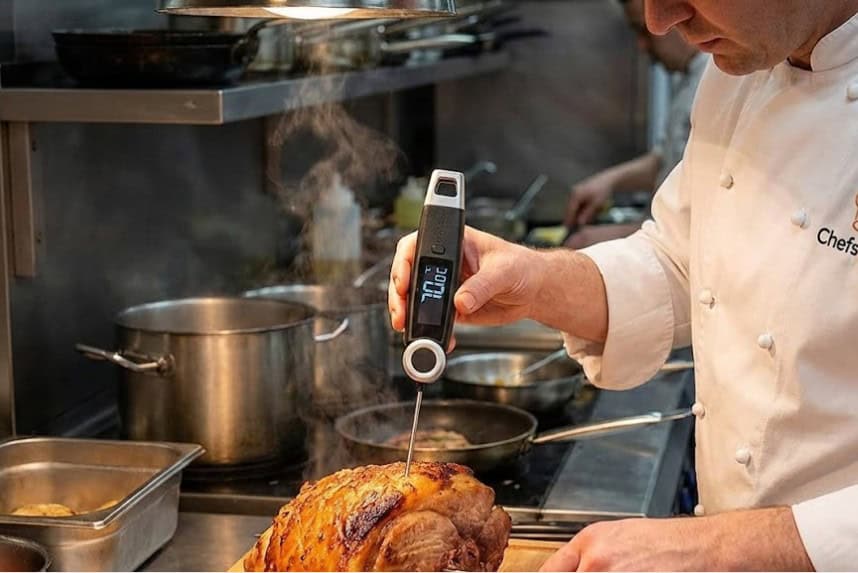
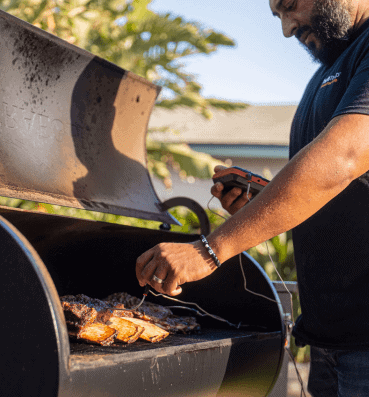
A professional chef uses a digital thermometer to confirm a roast ham has reached a safe 70.0°C. High-quality catering standards for delicious, safe results.
Using a Food Thermometer: The Professional Standard
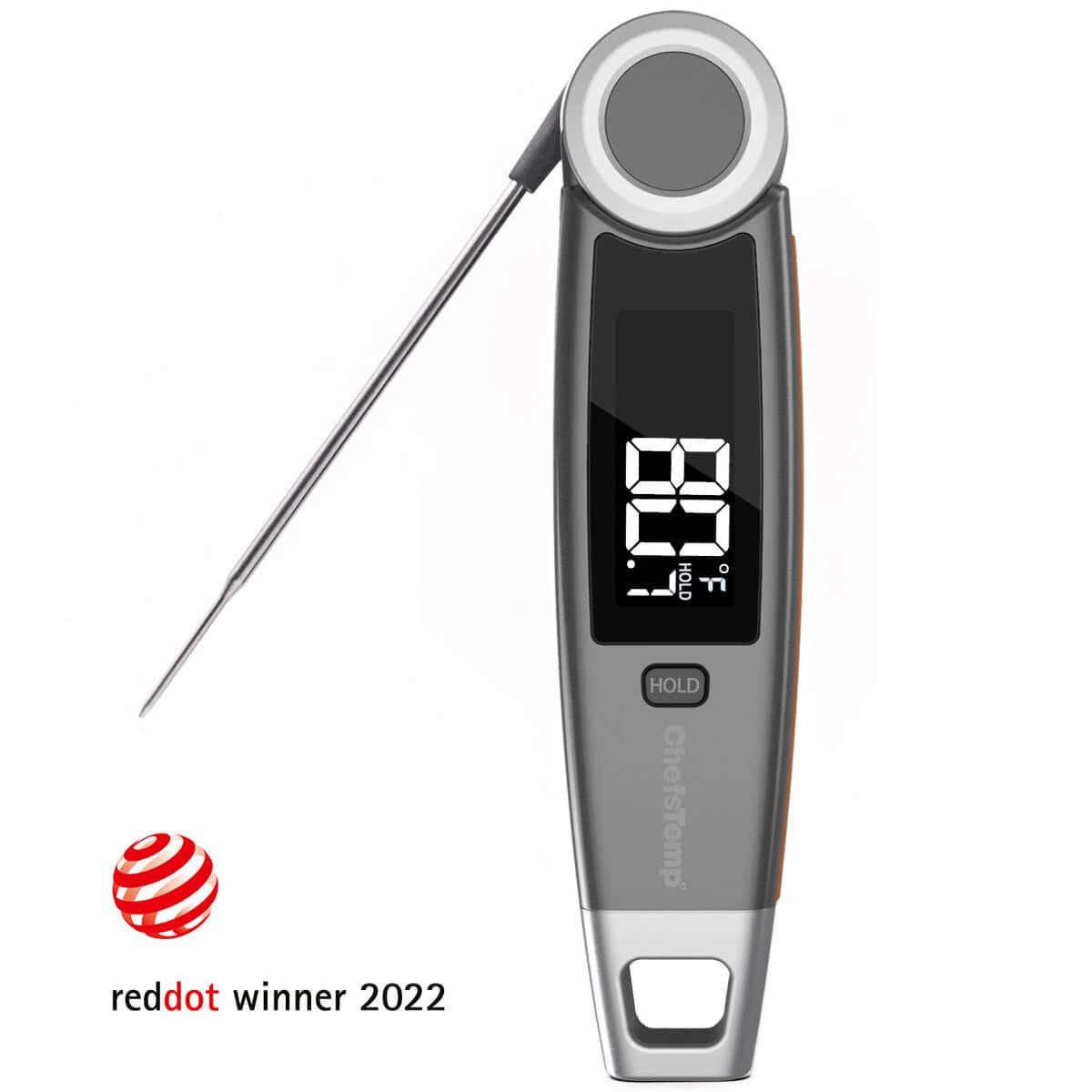
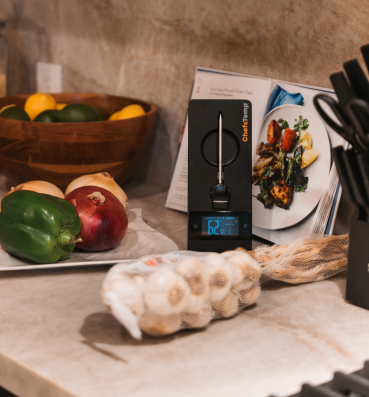
Speed: This is huge. The Finaltouch X10 provides a reading in just a second. The oven loses valuable heat every second the door is open. This way, you enter, get the number, and exit the oven before it cools down.
Accuracy: ±0.5°F. When the temperature reaches 70°C, you’ll know it. By doing this, you avoid unintentionally overshooting to 80°C, which would destroy the luscious texture.
270-Degree Rotation Probe: This is a total game-changer. You can see the screen well by twisting the probe. Thus, you can read the numbers without straining your neck or dragging a heavy, sizzling roasting tray out of the oven.
Whenever you are unsure what the internal temperature should be for other meats like beef or chicken, this reliable tool is the solution for all your kitchen needs.
Part 4. Complete Gammon Joint Recipe (Validated at 70°C)
While cooking a large piece of meat may seem daunting, it doesn’t have to be. We have two foolproof methods to help you nail the perfect internal temperature for a gammon joint in the UK. The key is temperature control, whether you’re going for a “set it and forget it” dinner or a glossy Christmas centrepiece.
Honey-Glazed Gammon (A Christmas Classic)
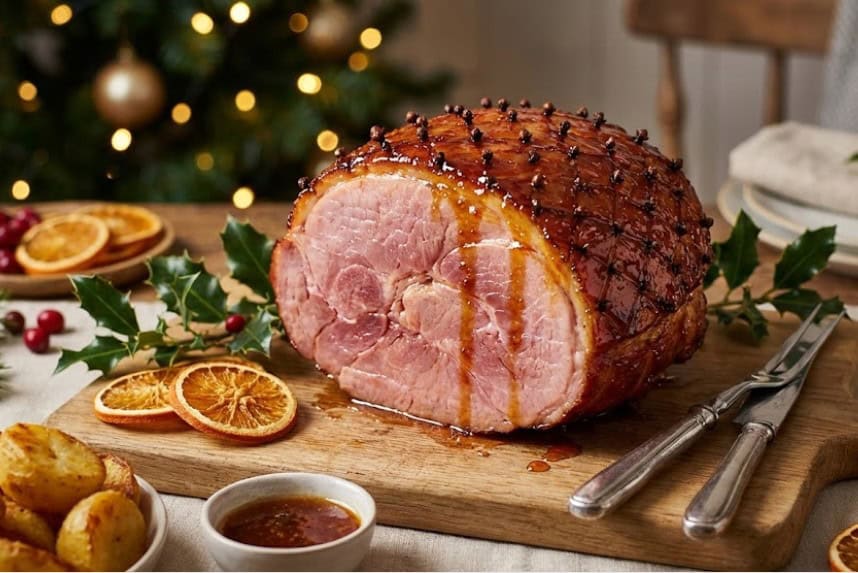
Celebrate the holidays with a succulent honey-glazed roast ham. Studded with cloves and served with festive garnishes, it’s the perfect Christmas centerpiece.
This method is the gold standard for festive dinners. Boiling retains the meat’s fluid content and removes excess salt, while roasting provides that sticky, alluring crunch.
Ingredients:
Gammon Joint: 2kg, Unsmoked or Smoked
Aromatics: 1 Chopped Onion, 1 Chopped Carrot, and Peppercorns
Glaze: 4 Tablespoons Honey, 2 Tablespoons Dijon Mustard, and 2 Tablespoons Brown Sugar
Instructions:
Soak: Leave the salty cure you purchased in cold water overnight.
Boil: Add the gammon to a large pot. After adding your peppercorns, carrot, and onion, pour water over them. Bring to a boil, reduce the heat to medium-high, and simmer.
Timing: Allow roughly 20 minutes per 450g of meat, plus an extra 20 minutes.
Check Temp: As you approach the simmer’s end. A temperature of roughly 65°C should be maintained internally.
Prep for Roast: Lift the meat out. Keep the white fat layer in place while you carefully cut off the skin. Score it in a diamond pattern to help the glaze stick.
Glaze & Roast: Put your honey-mustard mixture on top. Place it in a high oven (200°C/Fan 180°C) for 20 to 30 minutes, or until it seems bubbling and brown.
This is the moment of truth. Grab your Finaltouch X10. You are aiming for the official UK gammon-cooked temperature target of 70°C at the very centre.
Insert the probe into the deepest, thickest part.
Avoid the bone, as it gets hot faster and lies to you.
Wait just one second for the reading.
Remove it right away if it reads 70°C.
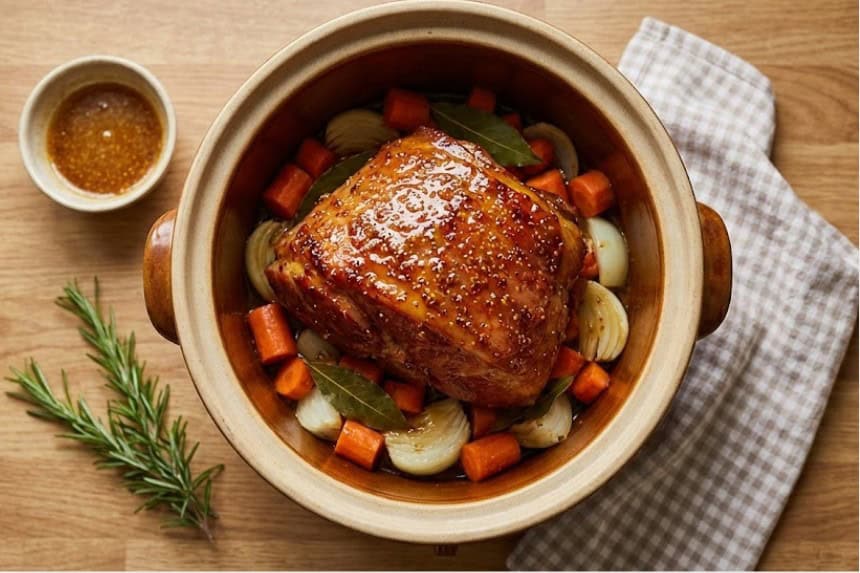
Slow Cooker Gammon Joint (Easiest Recipe Ever)
Enjoy a stress-free meal with this slow cooker glazed ham. Paired with carrots and onions, it’s a healthy, flavorful one-pot dinner for the whole family.
If you want to make dinner without any hassles, the slow cooker is your best buddy. Because of the moisture it holds, the meat is incredibly tender.
Instructions:
Prepare: Drop the joint into the pot. Add just 100ml of water or apple juice – no need to drown it.
Cook: Set it to LOW for 6–8 hours or HIGH for 4–5 hours.
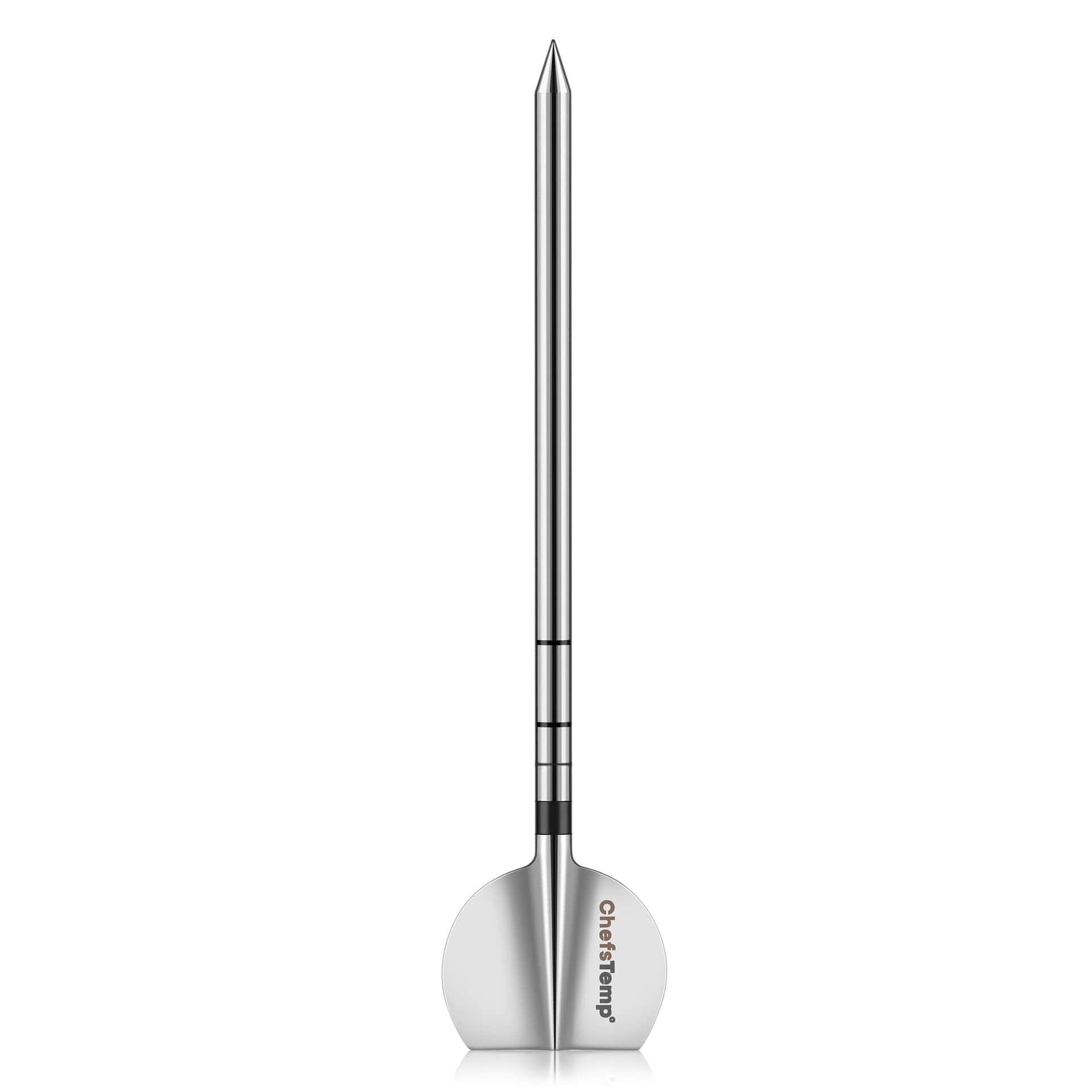
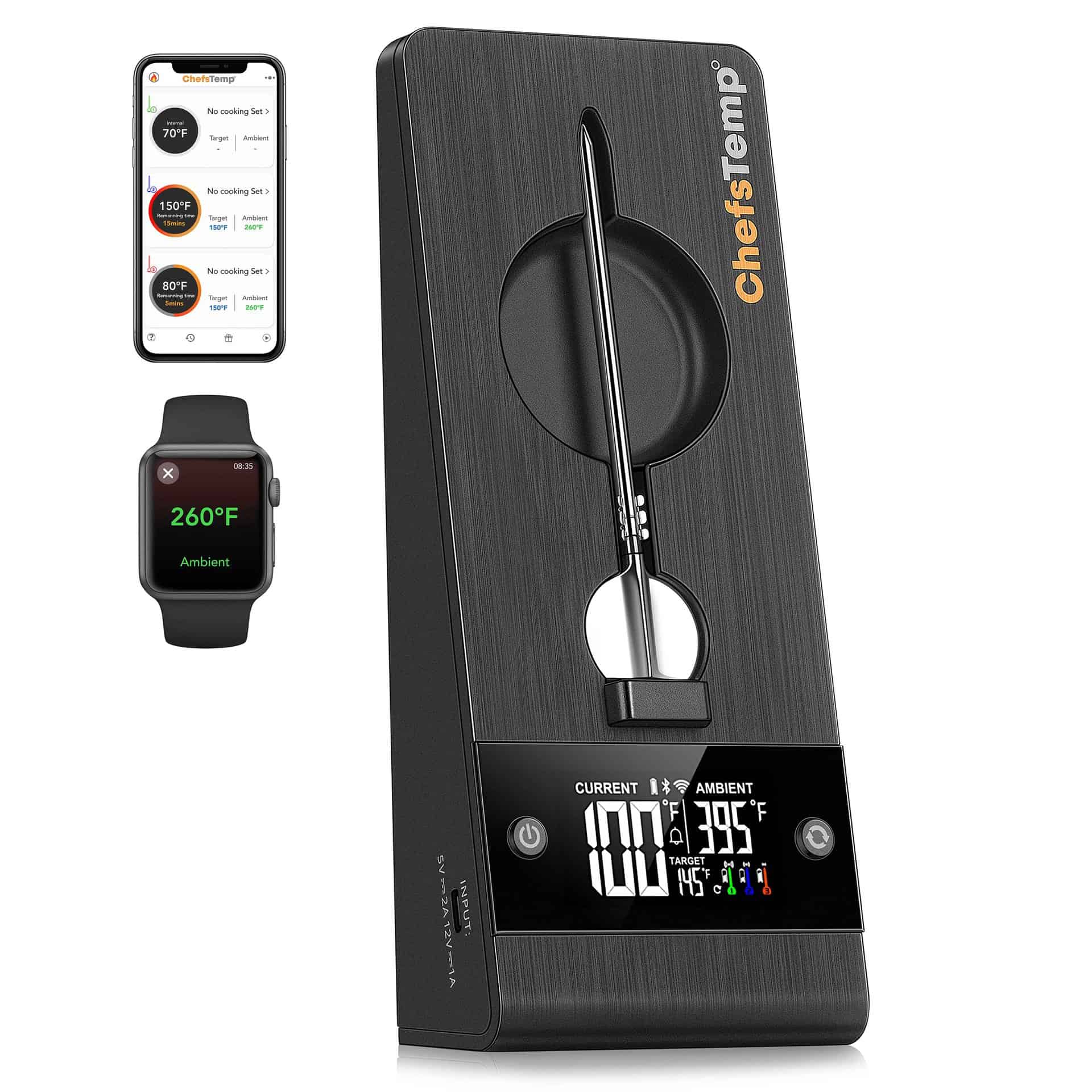
Verify with ProTemp 2 Plus: This is where technology comes into play. Insert the ProTemp 2 Plus probe and leave it in. Its Thinnest Needle Probe is gentle on meat, so you won’t lose those precious juices.
Monitor: Thanks to the Unlimited Range Monitoring (WiFi & Bluetooth), you can check your roast from the couch. No lifting the lid, no losing heat.
To achieve the shreddable, pull-apart texture necessary for this procedure, the meat is frequently cooked well above 70°C (typically 85°C to 90°C). Put it in the oven for ten minutes to crisp up the fat once it is soft.
Lastly, always let your meat rest for 15 minutes before slicing. This allows the fluids to settle and stay on your plate rather than run off onto the chopping board.
Part 5. Conclusion
Following the guidelines isn’t enough to achieve the ideal internal temp of a gammon joint in the UK. It is about serving a meal that is both safe and mouth-watering. Aim for that magic 70°C mark to get the firm, traditional texture everyone loves.
But be careful – don’t trust your eyes alone. Curing salts often keep the meat pink, fooling even the best cooks. Instead, take the stress out of your Sunday roast with the Finaltouch X10.
It gives you the speed and accuracy to banish dry meat forever. Whether roasting or boiling, always trust the temperature, not the clock, for pro results at home.
Part 6. FAQs about Gammon Joint Internal Temperature UK
Q: Can I cook gammon to a lower temperature if I let it rest?
In the UK, the FSA recommends 70°C for immediate safety. But here’s a chef’s secret: pull the meat out early at 65°C-67°C. During a short rest, the leftover heat works its magic. It naturally boosts the gammon joint internal temperature right into the safety zone, keeping your roast juicy, not tough.
Q: Why is the U.S. temperature guideline lower?
The US USDA lowered its tender meat temperature to 63°C, thanks to cleaner, modern farming. However, UK experts stick to their guns. They demand 70°C to guarantee total safety for everyone. So, when in Britain, follow the local rules for peace of mind.
Q: What if my gammon is pink inside?
Pinkness in gammon does not always indicate undercooking. Curing salts lock that colour in for good. Trust your tools, not your eyes. If your gammon internal temp hits 70°C on a reliable gadget like the Finaltouch X10, dig in – it is perfectly safe to eat.
Q: How do I calculate gammon cooking time?
The old rule of thumb is 20 minutes per pound, plus 20 “for the pot.” That is roughly two hours for a big joint. But ovens can be tricky beasts. Ignore the time and use the internal temperature of the gammon joint to determine when it’s finished for a successful outcome.
Q: Should I boil gammon before roasting?
It is recommended but not mandatory. Simmering initially retains moisture and removes harsh salt. Consider it a head start. The roasting process then turns into the winning lap, minus the glazing and crisping. This combo gives you the perfect texture you’ve been craving.
Q: Can I cook a gammon joint from frozen?
No. Large joints, like gammon, should not be cooked from frozen. When the centre remains hazardous and icy, the outside will burn. You will never reach a safe gammon joint internal temp evenly. Let it chill and fully thaw in the refrigerator before considering the oven.
Q: What is the difference between gammon and ham?
All it takes is cooking. Gammon is the raw rookie; it needs heat before hitting your plate. The final result, ham, is ready to eat once it has been cooked or cured. Oddly enough, that raw joint graduates and becomes ham once you roast it.
Q: Where is the best place to probe the temperature?
Try to hit the bullseye. Place your probe at the exact centre of the thickest section. Watch out for the bone – it throws off readings. On a rolled roast, go deep into the middle. That spot is the final frontier for achieving the correct gammon cooking temperature in Celsius.
Discover Other ChefsTemp Products
ProTemp 2 Plus & Finaltouch X10 Bundle
$219.99Original price was: $219.99.$209.99Current price is: $209.99.
2nd-Gen Probe & 4-in-1 Charger Combo – Replacement Accessory for ProTemp S1 or ProTemp 2 Plus (Requires ProTemp S1/2 Plus – Cannot Be Used Standalone!)