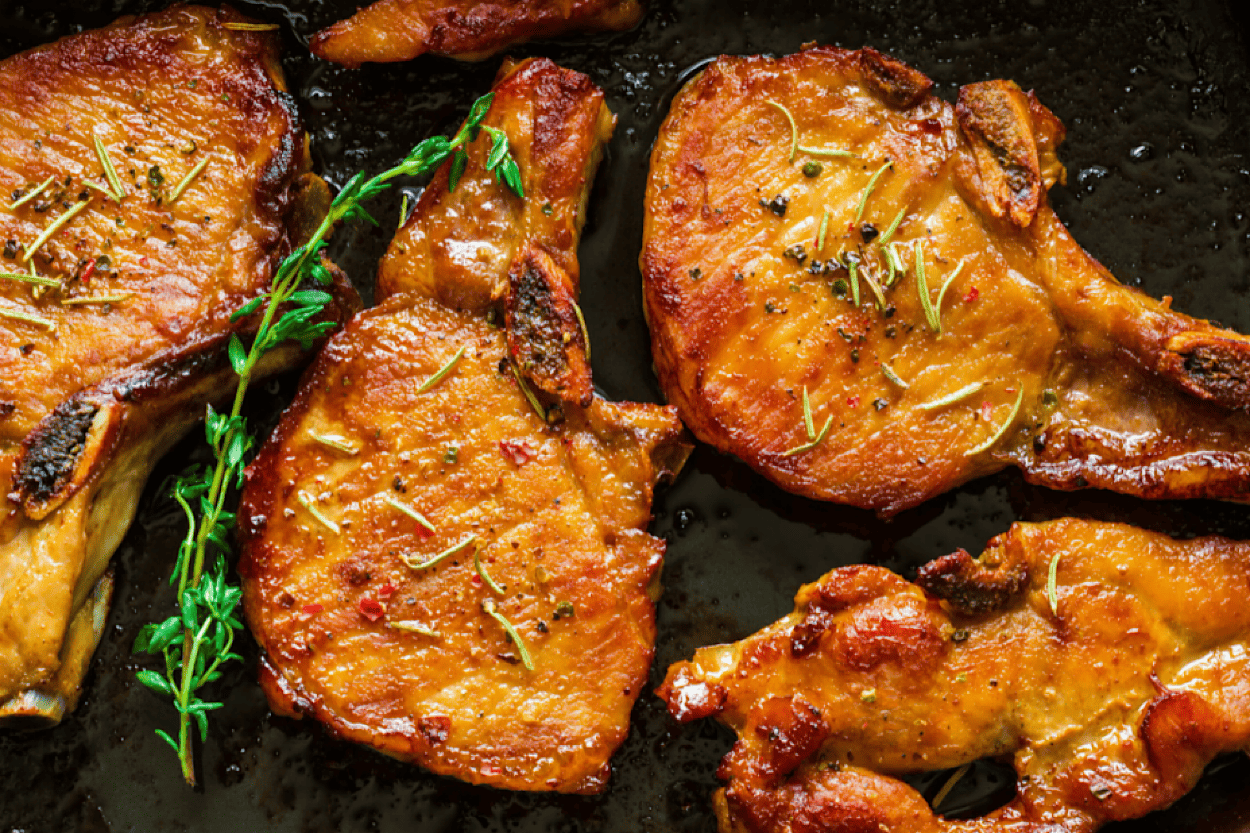
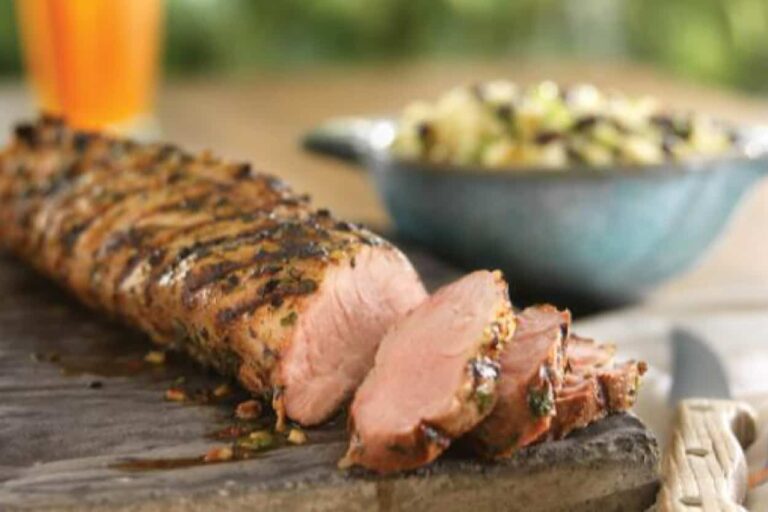
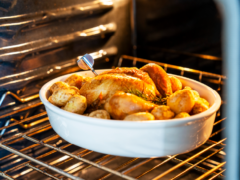
Bone-in Pork Chops are one of the most flavorful cuts of pork we can cook. They are so flavorful because of the bone, that being said, Pork Loin Chops tend to get dried out during the cooking process and to help them stay moist and tender, we have a couple of choices, one, coat them with some kind of breading or flour and bake or fry them, the other choice is to marinate them, and then cook them in a covered pan in the oven, this is a healthier option as it doesn’t include breading or flour and the flavor is coming from the bone and the marinade. They cook relatively fast, and when done this way, they are tender and juicy.
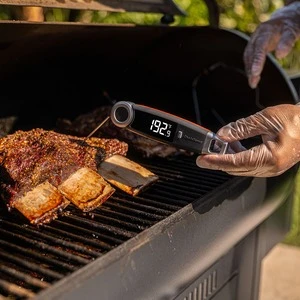
Tip: Use
ChefsTemp Finaltouch X10 to get the most flavorful meat with accurate and instant readings.
First, let’s look at the marinade and the pork cut we’ll use.
- 3 pounds bone-in centre-cut pork loin chops
- Medium white onion julienned
- 8 tbsp garlic, parsley, butter
- 7 ounces ginger ale
- 4 tbsp Worcestershire sauce
- 4 tbsp Caribbean Jerk Seasoning
- Gallon-size zip-close bag or marinating dish with a sealable lid
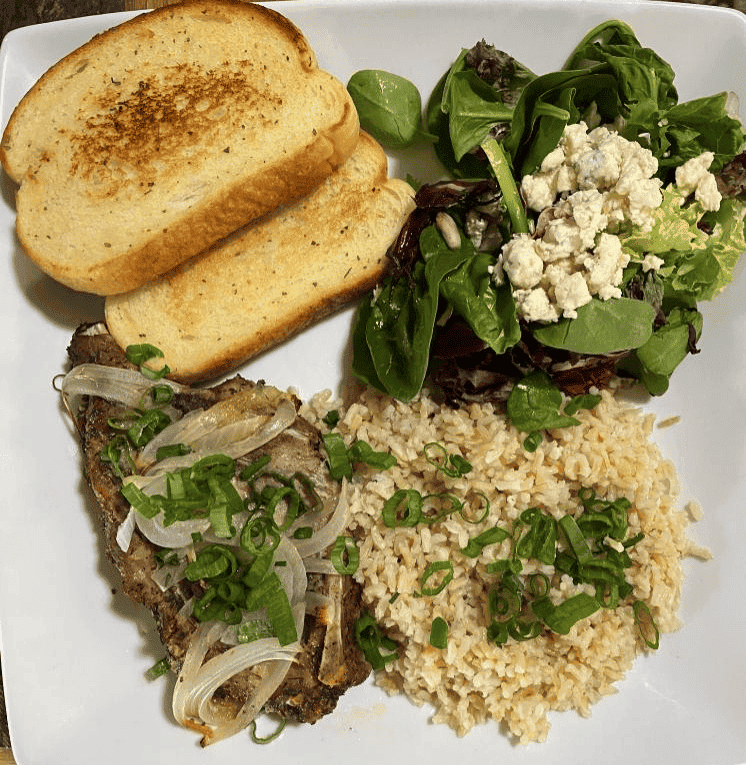
Start by placing the chops into the container or bag, and add the ginger ale, Worcestershire sauce, and Caribbean Jerk Seasoning. Seal the container and then rotate it to fully coat the chops with the marinade. Place it in the refrigerator for 24 to 48 hours. Once your chops are marinated, it’s time to cook them. Preheat the oven to 350℉ (176℃). Place the chops with the marinade in a pan and top with julienne onions, garlic, parsley, and butter. Cover with foil, place in the oven, and cook for 1 hour. It should reach approximately 185℉ (85℃) and will be fully cooked, tender and ready to eat. Make sure to let it rest for at least 5 minutes once it comes out of the oven.
The other part of this dish is oven-made rice pilaf. It may sound strange, but this is an easy way to make rice that comes out perfect every time.
Ingredients:
- 14 ounces of converted rice
- 4 cups chicken broth
- 4 tbsp herbed butter
In a pan, place the converted rice, chicken broth, and butter. Cover with plastic wrap and then foil. Place in a 350℉ (176℃) oven and cook for exactly 30 minutes. Remove from the oven and allow it to sit for 5 minutes. Remove the plastic wrap and foil, fluff with a fork, and serve.
Now that we have cooked our pork chops and rice, and have made an incredible dinner, let’s talk about marinades and what they do. I think it is important to understand what the marinating process does to meats, some tips to follow and some cautions about specific ingredients and what they do when used in marinades.
Marinades are ways to add flavour and tenderise tough cuts of meat, making them delicious and tender. Marinades and slow-cooking methods like smoking and braising lend themselves well to these kinds of dishes because they use slower cooking, which allows the meat to become tender.
Marinades do some interesting things when applied to meats. They break down muscle and connective tissue, making tougher cuts of meat, or leaner cuts, more tender. The marinade medium we use depends on the cut of meat and the specific flavour profile we aim to impart.
Let’s look at some commonly used ingredients for marinades:
- Fruit juices – citrus juice or apple juice are a great help to break down connective tissue.
- Soy sauce – adds a wonderful flavour and salt
- Worcestershire sauce – adds another dimension to a marinade due to the tamarind flavouring
- Vinegar and wines – add a component that helps to break down and tenderise muscle tissues
- Oil-and-vinegar salad dressings – these use vinegar to help break down muscle tissue and add fat to relatively lean cuts of meat or poultry. Usually used with pork and chicken
- Chopped herbs – add a flavour dimension to your marinades
- Fruits – fruits like orange slices, sliced pineapple, or any other fruits will add flavour as well
- Onions and garlic–like herbs add a layer of flavour
- Nut oils – oils like sesame oil, walnut oil, etc., add flavour to marinades
- Spices – spices like black pepper, ground nutmeg, cinnamon, etc., add additional flavour to any of the marinades you will use, and are also perfect for coating meats as well
As I am sure you have already seen, all the ingredients are about flavour first, and secondly, tenderising. One ingredient to use very cautiously is papaya; it contains an enzyme that can completely dissolve a cut of meat. If you choose to use papaya, remember to remove it or rinse the meat after a few hours; don’t leave it on the meat overnight.
I think it is also important to understand dry rubs, dry brining, and wet brining.
- Dry rubs are combinations of salt, pepper, herbs, and spices applied to meats to add flavour. They are usually added just before cooking and used to coat the meat.
- Dry brining is used on meats that have been frozen and thawed. It is the same as your rubs, except you coat the meat, then refrigerate it for 4 to 24 hours.
- Wet brining – wet brining is used on fresh meats and poultry and is a basic combination of sugar, salt, water, and peppercorns and the meat is immersed in the brine for 1-3 days prior to cooking, it is important that whatever meat you are brine is in a container large enough to hold the meat and brine and for the meat to be fully immersed in the brine.
In Summary
You can take any meat and make it amazing by using marinades, rubs, and brines, and then cooking it at a lower temperature and monitoring it with your ChefsTemp Finaltouch X10 to make sure the meat is fully cooked to the correct temperature to get it out of the
temperature danger zone and to kill any foodborne pathogens, viruses, and bacteria.