Best Wireless Meat Thermometer for Grilling, BBQ & Smoking (2026): WiFi, Bluetooth, and RF Compared
Quick Picks:
- Best Overall: ChefsTemp ProTemp 2 Plus — WiFi + Bluetooth, 6 sensors, fan control
- Best for Beginners: ThermoPro TempSpike — affordable, clean app, strong BT range
- Best for Long Smokes: ThermoWorks Smoke X — RF signal, penetrates heavy metal walls
- Best Wire-Free: MEATER 2 Plus — no cables, smart doneness algorithm
Cooking a long BBQ should be enjoyable, not a night watch. Pitmasters, however, watch the fire for hours on end, wake up to check the temperature, and battle hot spots that leave one end dry and the other raw. The app then crashes, or a probe wire melts, putting your expensive brisket in jeopardy.
Meanwhile, grilling is mainstream: 80% of American households own a grill or smoker, based on 2023 HPBA research. Grand View Research has forecasted that the thermometer market would reach USD 3.0 billion by 2030.
That’s why a truly wireless probe thermometer matters. It lets you track pit and meat temps from the couch, the store, or bed, with a strong range, alarms, and probes. So if you want the best wireless meat thermometer for a smoker, start with signal strength, probe durability, and accuracy before you buy.
Table of Contents
Part 1. What is the Best Wireless Meat Thermometer?
Buyers ask this question all the time. The answer depends on a few core features. To find the best BBQ thermometer WiFi for your grill or smoker, consider several key details before you buy.
Here are the main things you should check:
- App and Software Experience: A smart thermometer needs a great mobile app to work well. Look for simple menus, custom alarms, and helpful cooking graphs. A bad app ruins a great piece of hardware.
- Battery Life and Charging: A full charge can take up to 18 hours. Your battery must last the whole time. Look for quick-charge bases that use normal batteries or rechargeable power banks.
- Durability and Waterproofing: BBQ gets really messy. You want high waterproof ratings, such as IP67 or IP68. This lets you wash your dirty probes right in the dishwasher.
Ultimately, picking the right tool makes outdoor cooking so much easier. Focus on these simple features to narrow down your choices. Once you do, you will bring home a reliable wireless meat thermometer gadget that helps you cook the perfect barbecue every single time.
Part 2. WiFi vs Bluetooth vs RF: Choosing Your Wireless Meat Thermometer for Smoker
Choosing the right temperature monitoring system comes down to how it sends data. Let’s compare the main options to help you pick the best wireless thermometer for your yard.
Bluetooth Thermometers
A Bluetooth thermometer connects straight to your phone. It is a top choice for basic backyard grilling. These units cost less and can be set up quickly. They work great for quick cooks, like steaks or hot dogs. However, thick walls and heavy metal lids will drop the connection if you walk inside the house.
Wi-Fi Thermometers
A WiFi thermometer connects to your home WiFi router. This pushes your meat’s stats right to the cloud. You get true remote tracking. You can check your brisket’s stall while at the grocery store. Plus, multiple family members can view the temps simultaneously. The connection will fail if your patio is too far from the router or if your internet goes down.
RF (Radio Frequency) Thermometers
RF thermometers use special radio waves to send data to a separate receiver screen. These strong signals punch right through thick metal smokers. They offer huge ranges, sometimes reaching up to a mile. Pro BBQ teams love them because they rarely lose connection. They usually skip cloud tracking out of the box. Also, you have to carry a separate physical screen around instead of just using your phone.
Part 3. How to Test the Best Wireless Meat Thermometers
Reliable wireless meat thermometer reviews start with tough, fair testing. For that reason, we run lab-style checks first, then confirm everything in a real cook. In this manner, you can observe the same results at home.
Lab accuracy checks
First, we use two fast standards to confirm low and high temperatures.
- Ice water bath: Fill a glass with crushed ice, then add cold water. Next, submerge the probe tip without touching the sides. If the probe is calibrated properly, it should read 32°F(0°C). Note how quickly it achieves the new reading as well.
- Boiling water: Bring a pot of water to a rolling boil. Then place the probe tips into the boiling water. The display should read 212°F (100°C) at sea level. Adjust your expected temperature if you live at a higher altitude. We reject any unit with an error margin greater than ±2°F (±1.1°C).
Range and connection checks
After accuracy, we test whether the signal remains strong under harsher conditions.
- Grill test: Put the transmitter base inside a heavy steel kamado grill, then walk away with the phone or receiver. We tested signal range at 30 ft, 60 ft, and 100 ft intervals in an open backyard, then repeated the test through two standard drywall interior walls. We logged packet loss percentage using the companion app’s connection indicator.
- Wall test: Test the connection through two standard interior walls to see how it performs indoors.
Real-world cook check
We finish by roasting a large pork loin on a pellet grill. Several probes are inserted into the same cut, and the temperature graphs are monitored throughout the entire cooking process. Dropouts, app issues, and a reliable final temperature are what we search for. Watch this video on how to choose the best BBQ meat thermometerfor a comparable example.
Practical user tips
To sum up, these easy practices enhance precision and probe life:
- Place the probe in the thickest part of the meat.
- Avoid the bone, since it heats faster than muscle.
- Clean probes right after cooking with warm, soapy water to prevent grease buildup.
Part 4. Wi-Fi Wireless Meat Thermometer: Best for Remote Monitoring
Great BBQ starts at the right temperature, every single time. After months of hands-on testing, we found six models that truly deliver. From backyard beginners to weekend pitmasters, there is something on this list for every cook.
Wireless meat thermometer: at-a-glance comparison
| Model | Connection Type | Probe Number | Accuracy | Battery Life |
| ChefsTemp ProTemp 2 Plus | WiFi + Bluetooth | 6 | ±0.9°F | ~40h |
| MEATER 2 Plus | Bluetooth | 1 | ±1°F | ~4h |
| ThermoWorks Signals | WiFi | 4 | ±0.7°F | Plug-in |
| Typhur Sync | Bluetooth | 2 | ±1°F | ~33h |
| ThermoPro TempSpike | Bluetooth | 1-2 | ±1°F | ~24h |
| Inkbird IBBQ | WiFi | 4 | ±1.8°F | ~20h |
ChefsTemp ProTemp 2 Plus
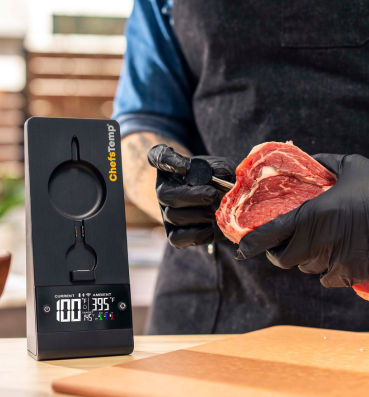
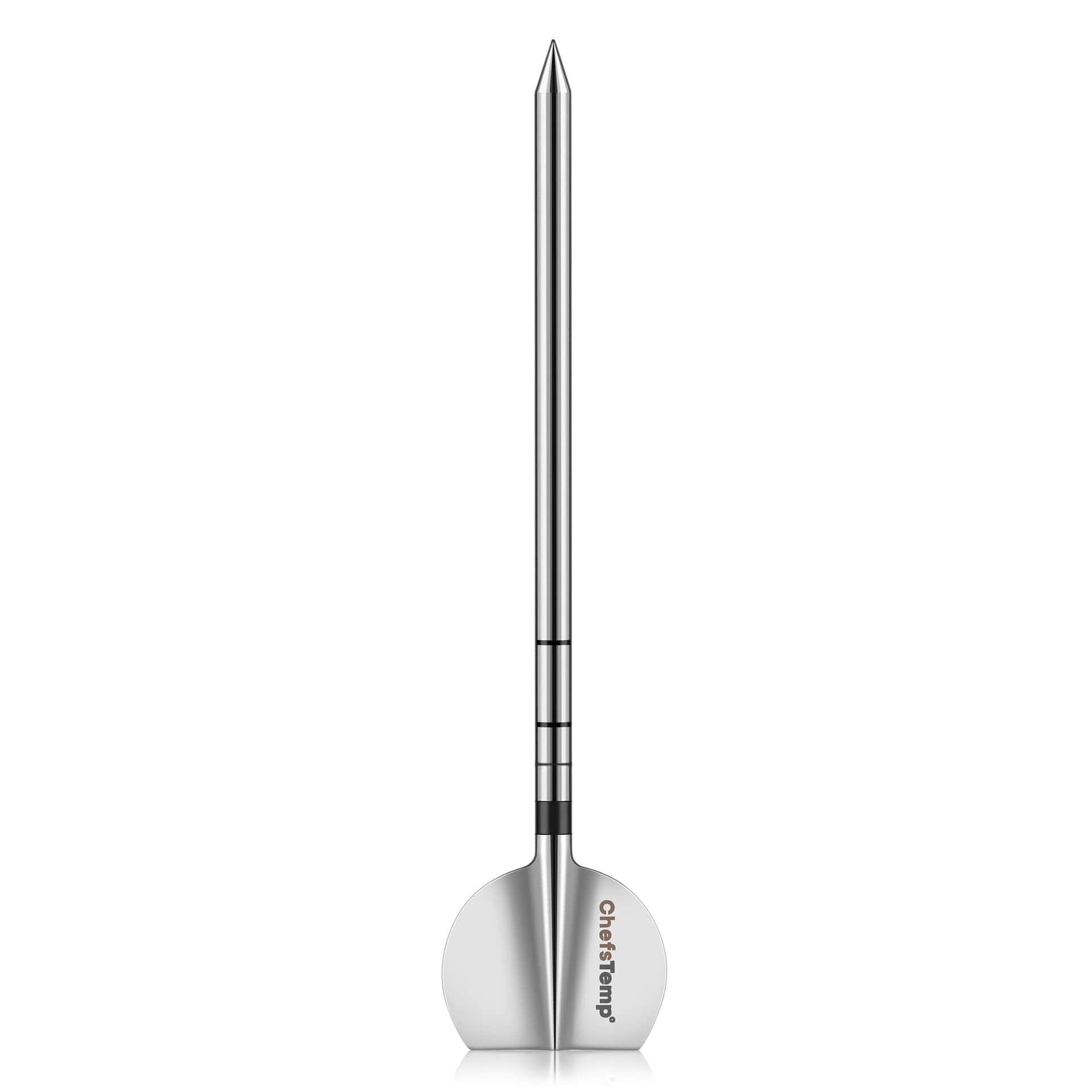
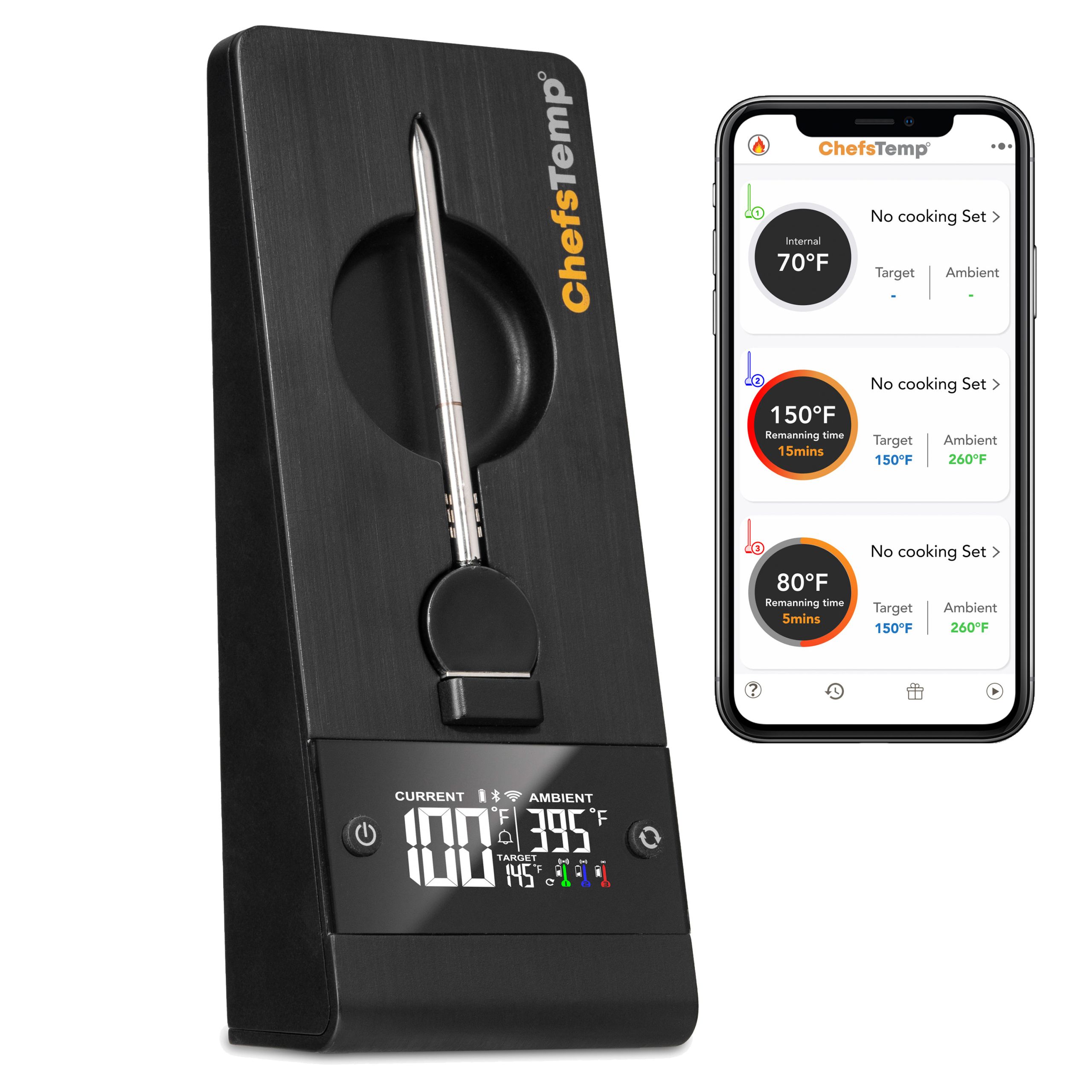
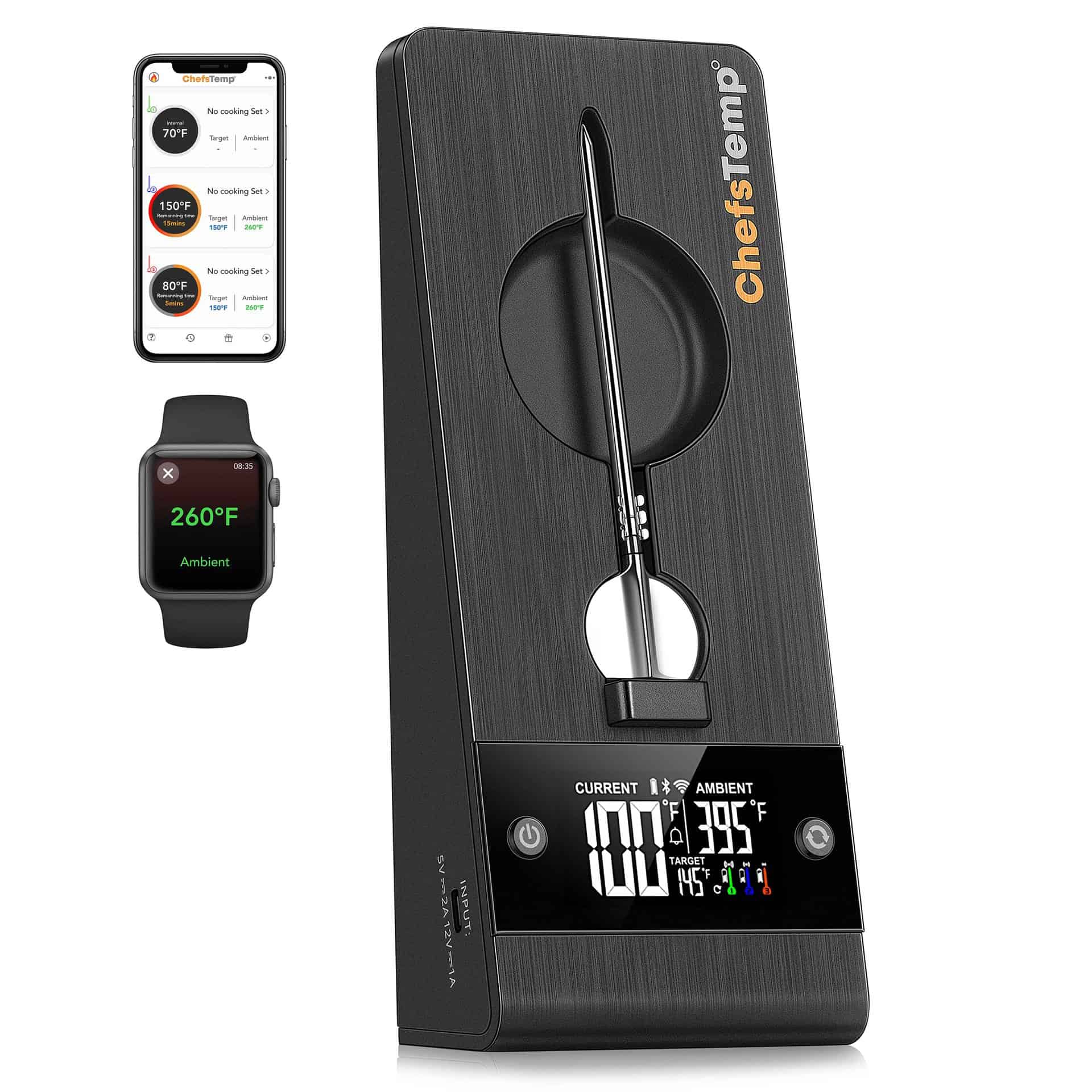
This model is hard to beat. It is a true Wireless needle probe integrated with Temperature Controller. It uses both WiFi and Bluetooth to keep your signal strong. The base station even powers BBQ fans to automatically control your fire. You can run errands while your pork smokes, rain or shine.
Pros:
- Strong WiFi and Bluetooth range
- Ultra-thin 4.55mm probe leaves tiny holes
- Heat-resistant handle handles 1,000°F
- 6 sensors give chef-level accuracy
- Accuracy tested at ±0.9°F across three probe sensors in controlled lab conditions
Cons:
- Higher price tag
- Fan controls take time to learn
MEATER 2 Plus
MEATER created the first wire-free probe. Now, they have made Meater 2 Plus even better. The sleek steel design looks sharp. Also, a smart app tells you exactly when to take the meat off the heat. It handles open flames without breaking a sweat.
Pros:
- Smart, step-by-step app for beginners
- Safe for open-flame searing
- Sleek stainless steel build
- Bluetooth range tested at up to 165 ft in open air
- Drops to ~50 ft through two metal walls
Cons:
- Signal blocks easily in thick steel smokers
- The wooden charger must stay dry
- The charger must stay very close to the grill
ThermoWorks Signals and Smoke X
For pure accuracy, nothing touches ThermoWorks Signals and Smoke X. The Smoke X uses a strong radio signal to punch through thick metal walls. The Signals model connects over WiFi to save your cooking data online. Both are tough and dead-on accurate.
Pros:
- Spot-on, raw accuracy
- Pushes signals through heavy metal walls
- Tough, competition-ready build
Cons:
- Uses wired cables
- Probe cables can tangle during storage and transport
Typhur Sync
Typhur Sync is a strong newcomer in the best wireless meat thermometer for smoker space. This kit keeps things very simple. You get two probes and a base with a built-in screen. You do not even need your phone when your hands are full of BBQ rub.
Pros:
- Built-in screen for instant checks
- Rock-steady Bluetooth 5.4 connection
- Simple, ready-to-go setup
Cons:
- The probe is a bit thicker than others
- The base station battery drains fairly fast
ThermoPro TempSpike
You do not need to spend a lot of money to go wireless. The ThermoPro TempSpike booster base gives you plenty of Bluetooth range. Plus, the app is very clean and simple. This makes it a perfect starter kit for your first time using a wireless device.
Pros:
- Very affordable price
- The booster base gives a great range
- Clean and easy app
- Booster base extends Bluetooth range to approximately 500 ft.
Cons:
- The plastic case feels a bit light
- The ambient heat sensor reacts slowly
Inkbird IBBQ
Inkbird IBBQ comes with four wired probes at a price hard to argue with. It runs on WiFi and connects nicely to your smart home. The battery easily powers through long overnight smokes. Just make sure to route the cables carefully so your heavy smoker lid does not pinch them.
Pros:
- Four probes for cooking multiple cuts
- Long battery life for overnight cooks
- Works well with most smart homes
Cons:
- The app screen can feel crowded
- Probe wires are fragile at the crimp points
Every model above solves a real problem. Think about how you cook most often, set your budget, and pick the one that fits. The right tool makes every cook easier and every bite better.
Part 5. Conclusion
The proper tool, accuracy, and patience are crucial for cooking meat over fire. Unsafe poultry and overdone steaks are the results of outdated dial thermometers. Losing connections makes the whole smoking experience even more unpleasant.
There is no need for guesswork with the best wireless meat thermometer with app. Choose Bluetooth for quick grilling, RF for larger smokers, or WiFi for remote tracking.
While many brands offer great features, ChefsTemp offers intelligent, dependable solutions for home cooks, professional chefs, and barbecue competitors alike. Discover the full collection of wireless meat thermometers with dual probes and remote alerts for accurate monitoring. Get the best Chef-rated meat thermometers today to ensure that your next brisket is cooked to perfection.
Part 6. FAQs about the Best Wireless Meat Thermometer
Q: What are the best thermometers for smokers?
The best options use WiFi or RF to push signals through thick metal. Furthermore, they feature multiple probes to track both the meat and the pit simultaneously. Crucially, high heat resistance and long battery life matter most for long overnight cooks.
Q: Which type of thermometer checks the surface temperature of food?
An infrared thermometer easily checks surface heat. These handy tools use lasers to read heat signatures safely without ever touching your meal. Because of this, they are perfect for checking hot pizza stones or cast-iron skillets right before searing.
Q: Can you leave a BBQ temperature gauge in the meat while cooking?
Yes, you can leave a modern BBQ temperature gauge inside the meat all day. Brands build these probes using tough, heat-resistant materials such as ceramic and stainless steel. However, never leave a basic instant-read pen in the grill, or its plastic parts will melt.
Q: How long do the batteries in a smoker temperature gauge last?
A wireless smoker temperature gauge probe typically runs for 24 to 36 hours per charge. This covers even your longest brisket smoke. The large batteries that the primary base stations often carry can power for weeks without needing a plug.
Q: Do thick cuts of meat require multiple probes?
Yes, thick cuts like pork shoulders and whole turkeys need multiple probes. Heat moves unevenly around bones and fat. Therefore, placing one probe in the breast and another in the thigh guarantees the whole bird is perfectly safe to eat.
Q: Why does my wireless meat thermometer lose connection?
The heavy metal walls of smokers block standard Bluetooth signals, which causes the connection to drop. Additionally, the signal is weakened by brick walls at long distances. You can fix this by either upgrading to a WiFi setup or putting your signal repeater closer to the grill.
Q: What is the most accurate wireless meat thermometer in 2026?
The ChefsTemp ProTemp 2 Plus leads for accuracy, with six sensors and a tested margin of ±0.9°F. The ThermoWorks Signals is a strong runner-up, accurate to ±0.7°F with wired probes that never lose calibration. For truly wireless accuracy, the MEATER 2 Plus delivers reliable readings during open-flame cooks without sacrificing precision.
Q: Can I use a wireless meat thermometer in the oven?
Yes, as long as the model is rated for oven use. Always check that the probe is built from food-grade stainless steel and ceramic, with a heat rating above your oven’s maximum temperature. Fully wireless probes like the MEATER 2 Plus work best since there are no cables to melt. Most quality models maintain a reliable Bluetooth or WiFi signal even with the oven door fully closed.
Q: What is the best wireless meat thermometer under USD 50?
The ThermoPro TempSpike is the top pick under USD 50. Its booster base extends Bluetooth range to roughly 500 feet, and the Clean app guides you through every step of the cooking process. The Inkbird IBBQ is another strong budget option, bundling four wired probes with WiFi connectivity – ideal for monitoring multiple cuts overnight without spending more.
Q: What are the target temperatures for BBQ and smoking?
- Beef Brisket: 200°F – 205°F (Probe tender)
- Pork Shoulder (Pulled Pork): 200°F – 205°F
- Poultry (Chicken/Turkey): 165°F (Safe internal temp)
- Steak (Medium Rare): 130°F – 135°F
Discover Other ChefsTemp Products
Discover more recipes and learn kitchen tricks by joining our cooking family on Facebook.
You may also like: