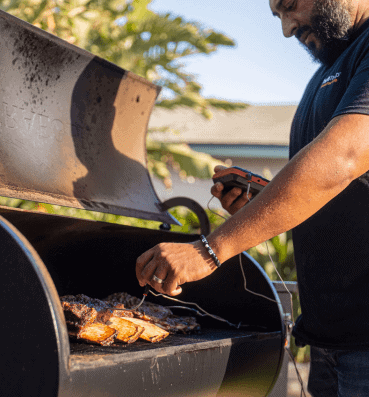
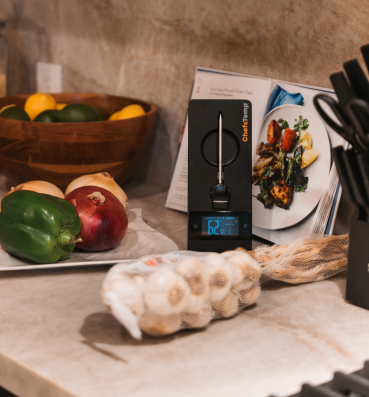
Cooking on a ceramic kamado grill is an art form. You invest serious time and money into choosing the best brisket or ribs. Yet, trusting the factory dial on the lid is risky. It can spoil your meal in minutes.
Why Your Stock Dome Thermometer is Inaccurate
Dome vs. Grate Temperature: The 50°F Gap
Why NTC Sensors Fail in High-Heat Ceramic Grills
| Feature | Stock Analog Gauge | ProTemp S1 Digital Replacement |
| Sensor Type | Bi-metal Coil (Mechanical) | High-Precision Digital Sensor |
| Response Time | Slow (Minutes to stabilize) | Instant (Seconds) |
| Readability | Hard to read at angles | Large, Backlit LCD Display |
| Connectivity | None (Must stand by grill) | Bluetooth/Wi-Fi capable |
| Accuracy | +/- 20°F (Drifts often) | +/- 1.8°F (Lab calibrated) |
| Versatility | Dome Temp Only | Dome & Food Temp |
Wired vs Wireless Connectivity
Temperature Probe Accuracy
Professional-Grade Durability
Step 1: Unboxing
Step 2: Set Up the Unit
Step 3: Install the ProTemp S1 on the Grill
Step 4: Start the Cooking Process
1. Heat Deflectors
2. Charcoal Baskets
3. Airflow Tools
4. Wireless Meat Thermometer Probes
It turns out Blackstone is the US’s most-loved grill brand, with 21 states naming it their favorite.
Meanwhile, the iconic Weber – the brand that practically invented backyard grilling – is getting pushed to the coasts.
And Big Green Egg, the cult-favorite kamado? It only wins two states.
The grill wars are real. And we have the map to prove it.
We pulled 12 months of Google Trends data (January 2025 – January 2026) for six major grill brands: Weber, Blackstone, Traeger, Big Green Egg, Pit Boss, and Kamado Joe.
Then we mapped which brand dominated search interest in each of the 50 states.
Blackstone wins America. The griddle brand that exploded during the pandemic now dominates 21 states – more than any other brand. Weber, the longtime market leader, comes in second with 18 states. But here’s the thing: they barely overlap.
This isn’t a close race in most places. In Montana, Blackstone scores a perfect 100 while Weber sits at just 54. In Illinois (Weber’s home state), Weber scores 100, while Blackstone sits at 52.
The brand loyalty runs deep – and it runs regional.
Bonus: To get the best grilling results, don’t miss the ChefsTemp smart grill gauge thermometer hub to control temperature everywhere.
Blackstone owns Middle America. From Montana to West Virginia, from the Dakotas down to Arizona, the griddle brand dominates a massive swath of the country.
Blackstone’s territory: Arizona, Arkansas, Colorado, Indiana, Iowa, Kansas, Kentucky, Michigan, Missouri, Montana, Nebraska, Nevada, New Mexico, North Carolina, Ohio, Oklahoma, Pennsylvania, South Dakota, Tennessee, West Virginia, Wyoming
If you’re in a state where Friday night football matters more than farmers’ markets, you’re probably in Blackstone country.
Montana leads with a perfect 100 score. Nebraska (94), Wyoming (89), and South Dakota (85) follow close behind.
The Mountain West and Great Plains have spoken: griddles are the future.
Weber’s stronghold tells a different story. The brand dominates the Northeast, much of the West Coast, and the Upper Midwest – essentially, the places with the highest cost of living and the smallest backyards.
Weber’s territory: California, Connecticut, Delaware, Florida, Hawaii, Illinois, Maine, Maryland, Massachusetts, Minnesota, New Hampshire, New Jersey, New York, Rhode Island, Utah, Vermont, Washington, Wisconsin
Illinois gives Weber its highest score (100) – no surprise, since Weber-Stephen Products is headquartered in Palatine, just outside Chicago. Utah (95), New Hampshire (90), and Wisconsin (89) round out Weber’s strongest states.
Tip: Click here for the smoked beef chuck roast recipe, if interested.
Here’s where it gets interesting. Kamado Joe – not Big Green Egg – wins the South.
Kamado Joe’s territory: Alabama, Louisiana, South Carolina, Texas, Virginia
Alabama gives Kamado Joe a perfect 100 score, making it one of only 6 states where any brand has reached that mark. The ceramic cooker brand has carved out a Southern stronghold that we’d assumed belonged to Big Green Egg.
Kamado Joe has been aggressive with innovation (the rotisserie insert, the SloRoller, the divide-and-conquer system) while Big Green Egg has largely stuck to its classic formula.
Tip: Click here for the thermometer tips for Kamado grilling if interested.
For a brand with such a devoted following, Big Green Egg’s map presence is shockingly small.
Big Green Egg’s territory: Georgia, Mississippi
Georgia makes sense – Big Green Egg is headquartered in Atlanta. Mississippi is the only other state where the iconic green kamado beats all competitors. That’s it. The brand that launched a thousand Reddit threads about “Eggheads” and spawned a cult-like following wins just 4% of states.
The data doesn’t mean Big Green Egg isn’t popular. It means that in state-by-state comparisons, other brands generate more search interest.
Traeger, the company that invented the pellet grill, holds onto its home turf.
Traeger’s territory: Alaska, Idaho, Oregon
Idaho gives Traeger a perfect 100 – fitting, since the company was founded in Oregon and is now headquartered in Salt Lake City, Utah (though Weber wins Utah).
Pit Boss, the value-oriented pellet grill brand, wins exactly one state: North Dakota.
And it’s not even close – Pit Boss scores a perfect 100 there while Blackstone (the runner-up) manages just 82. Something about North Dakota and Pit Boss just clicks.
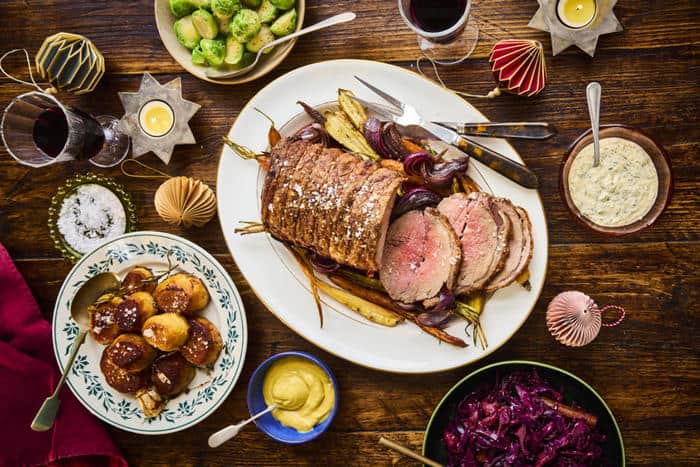
Imagine this: the lights are twinkling, the table is set with your best china, and everyone is gathered around, hungry and excited for dinner. At the centre of this festive tableau stands an elegant roast beef Christmas dinner; turkey often steals the spotlight at holidays; however, those looking for rich flavours with an air of elegance usually opt for this dish as their centrepiece.
Let’s face it–roasting an expensive cut of meat can be intimidating. No one wants their Christmas Day meal to end in grey-tinged disappointment or raw, chewy residue. To create an unforgettable roast beef recipe with ChefsTemp’s precision, this guide helps craft an extraordinary Christmas roast beef recipe, ensuring it comes out perfect every time.
Preparing an exquisite Christmas roast beef doesn’t require culinary prowess – all it needs are high-quality ingredients and an approach that showcases its beauty. Our favourites are standing rib roast (prime rib), though for less indulgent celebrations, tenderloin is another elegant option for Christmas roasts. Tenderloin requires less butter when marinating, while still looking delicious on Christmas Day!
Gather these essentials for an elegant Christmas dinner featuring roast beef.
The base:
The beef:
The rub:
For optimal results, bake at 450°F for 20 minutes to brown the crust. In contrast, to ensure optimal slow-cooking results, reduce the oven temperature to 325°F (165 °C) and continue cooking until your internal thermometer indicates it’s time to pull your pie from the oven (see the temperature guide below!).
One of the most stressful aspects of making a roast beef Christmas dinner menu is knowing when it is done. Simply relying on cooking times alone will leave you guessing; each oven varies, as do each roast’s shape and thickness – only the internal temperature can provide a definitive measurement.
Remind yourself that the internal temperature will rise 5-10 degrees while resting (carryover cooking), so pull the meat from the oven before it reaches your target temp.
Here is your guide for making a perfect beef roast for Christmas:
Rare (Cool Red Centre):
Medium-Rare (Warm red Centre) – Highly Recommended:
Medium (Warm pink Centre):
Well-Done (Little to no Pink):
Tip: click here to learn more about Tenderloin beef steak if interested.
Step 1 – Season and Dry the Roast
Large roasts require time for salting to penetrate. Salting beef a day ahead can help the seasoning move toward its centre and boost moisture retention, while leaving it uncovered in the refrigerator helps dry its surface for superior browning.
Set your roast on a rack over a rimmed tray, patting it dry, and season liberally with kosher salt, black pepper, and your preferred herbs (Rosemary or Thyme are popular choices). Refrigerate for 12-24 hours, turning once or twice. This “dry brining” step works similarly to turkey: its surface browns more quickly at high heat, so a crust forms before the centre overcooks.
Step 2 – Why Time Alone Is Insufficient
Time-per-pound charts should only serve as a general guideline; oven temperatures vary, and starting temperature, marbling, and roast shape all influence how quickly the centre heats. Cutting into your roast to check on its progress would waste precious juices; simply looking at its colour alone cannot give an accurate representation.
Accurate thermometers are essential for understanding what’s happening inside an expensive Christmas roast, which is why professional kitchens rely on instant-read thermometers such as ChefsTemp Finaltouch X10 for quick spot checks, as well as continuous monitoring systems such as ProTemp 2 Plus or S1 for real-time tracking of their operations.
Step 3 – ProTemp 2 Plus Probe Placement
For the ProTemp 2 Plus to work effectively, the wireless probe must be placed at the thermal centre of your roast — where it heats most gradually. For cylindrical roasts, this typically means roughly the middle of the thickest section, without bones, and not touching any pan surface.
Hold the probe along the outside of a roast to estimate its depth, then insert from either end into its centre until its tip sits near that midpoint. Thanks to ProTemp 2 Plus’s 4.55 mm needle and multiple-sensor design, it allows simultaneous tracking of internal meat temperature and oven ambient temperatures around your roast, for a much clearer picture than with traditional dial gauges, timer gauges, or timers.
Use ChefsTemp to set an alarm for the pull temperature you desire – say, 130°F (54 °C) for medium rare after resting. Once set, step away from your oven while still getting instantaneous alerts on your phone or watch.
Step 4 – Two-Stage Oven Strategy or Smart Grill with S1
A Christmas roast should be both beautiful and delectable! A two-step cooking strategy ensures a deep, flavorful crust with a perfectly cooked interior texture, whether using an oven or a grill.
Unfortunately for them, though, life does sometimes get in the way. With that being said, here is some great content from my collection to get you through your day in style!
Preheat to 450°F (232°F), then roast the beef for 20-30 minutes until its outside browns. Reduce the temperature to 300-325°F (149-163 °C). Briefly open the door to vent heat before closing again as necessary until your ProTemp 2 Plus alarm rings with its target pull point temperature alarms – but avoid frequent door-opening, which could increase cooking times further!
If you’re roasting or reverse searing on a charcoal grill, mount the ProTemp S1 instead of its original dome gauge (or on an appropriate port), pair it with a Breezo fan, and set your target pit temperature in the ChefsTemp app. Its platinum sensor S1 reads up to 1000°F, while the Breezo fan adjusts airflow to maintain an ideal cooking temp; the ProTemp 2 Plus probe tracks the roast itself.
Once your ProTemp 2 Plus alarm sounds, it’s time for verification. Enter Finaltouch X10: its 1-second, ±0.5 °F readings let you check multiple points near the centre before slowly pulling the probe tip through your roast until it reaches the lowest number – your accurate doneness indicator!
Christmas can be stressful enough; guests arriving, side dishes competing for oven space, and tight schedules all add up to anxiety-inducing concerns about whether everything has been finished yet. One surefire way to alleviate those tensions and enjoy your party more fully is to eliminate that question from your list of worries!
What cut of beef would make the ideal Christmas Dinner meal?
Without question, the “King of Roasts” would have to be Standing Rib Roast (Prime Rib), featuring outstanding marbling and flavour. For some easier, tenderer cuts with excellent marbling, Beef Tenderloin (Chateaubriand) makes a fantastic Christmas roast choice if lean meat is desired.
How can I keep roast beef juicy?
Follow two guidelines to achieve optimal results: Don’t overdo it, and allow it to rest. Use a thermometer to prevent overcooking; once out of the oven, tent the beef loosely with foil to allow its juices to redistribute within the muscle fibres rather than spilling onto your cutting board.
What are the ideal sides for roast beef at Christmas dinner?
Traditional pairings include Yorkshire puddings (great for sopping up gravy!), roasted potatoes with rosemary, honey-glazed carrots, and creamed spinach as accompaniments – plus horseradish sauce as an essential finishing touch!
Holiday hosting should be about joy, connection, and delicious food – not stress or burnt offerings. By selecting high-quality cuts of roast beef to season properly and trusting ChefsTemp’s precision to serve as the centrepiece for your Christmas roast beef guide success story, your holiday celebration can go off smoothly and worry-free.
There is no doubt that a perfectly roasted turkey is the star of a Christmas turkey dinner. The smell of a juicy turkey is bound to please everyone. But how do you cook a turkey without a recipe? The answer is mastering temperature and doneness. This guide walks you through everything you need to know to roast a turkey, ensuring a perfect holiday celebration that garners the admiration of your guests.
This no-fail Christmas turkey recipe will take your holiday dinner to the next level. We will discuss preparation, the importance of temperature, and the most critical step of all, resting. Let’s prepare your best turkey for your Christmas dinner ever.
A delicious Christmas turkey starts before the bird is placed in the oven. The most critical preparation begins as early as the day before.
First things first: you need to thaw your turkey safely so it doesn’t cook unevenly. The best bet is to thaw it in the fridge. Typically, it takes about 24 hours to thaw for each 4 to 5 pounds of turkey. So, for example, a 15-pound turkey will take about 3 to 4 days to thaw in the fridge. The turkey should never be thawed at room temperature, because then dangerous bacteria can grow.
To achieve that golden-brown turkey skin your family will love, and that makes the turkey stand out, you will want to remove excess moisture. Once the turkey is completely thawed, use paper towels to pat it dry, both inside and out. To dry-brine the turkey and let the skin get extra crispy in the oven, you should dry-brine it. About a day before you plan to roast the turkey, rub it with salt, pepper, and your choice of herbs (rosemary, thyme, or lovely sage). The turkey should be left uncovered in a roasting pan with a rack and refrigerated overnight. The skin will then get extra crisp and golden brown.
Being able to tell the temperature is extremely important when cooking a turkey for Christmas. There is no better way to tell when a turkey is cooked to the right temperature than to use a reliable meat thermometer. It is the most effective way to identify the correct cooked temperature for your turkey.
According to USDA guidelines, a turkey must be cooked to a minimum internal temperature of 165°F (74°C) to be safe to eat, as this kills any potentially harmful bacteria. To determine whether the turkey looks cooked, insert the thermometer into the thickest part of the thigh. Note that the thermometer is not touching the bone, as this can give a false temperature reading. Juiciness is the most important thing to achieve when cooking a turkey; this temperature is equally important.
Using this thermometer is the most essential part of cooking the Christmas turkey. It takes away all the guesswork and delivers the correct result every time. To achieve this result, you must possess a high-quality digital meat thermometer.
For the best accuracy, ChefsTemp ProTemp 2 Plus is our recommendation. It is not your regular thermometer, but an advanced thermometer that fits your perfection. This wireless tool combines cutting-edge precision with an ultra-thin 4.55 mm needle probe. And the probe has six sensors to deliver accurate internal and ambient temperatures. Equipped with a 10,000 mAh rechargeable battery, ProTemp 2 Plus lets you cook with enhanced Bluetooth and WiFi so that you can track your cooking from anywhere. If the turkey is the centrepiece, you will find that a good thermometer is well worth it.
Just as crucial as the thermometer is how you place the thermometer probe. It’s best to take the temperature from the part of the turkey that will cook the slowest. This is the thickest part of the leg, where it meets the breast. Be careful not to touch the bone.
For the most accurate location, find the area between the leg and the breast. Stick the probe deeper into the turkey muscle, and as you reach the bone, pull back out slightly. This area is the most accurate for temperature and will indicate whether the entire meat is cooked. Some top chefs would also recommend focusing on the breast’s thickest part, just to be sure.
Having the ProTemp 2 Plus makes it simple and easy to monitor your temperature and get the best-cooked Christmas Day turkey dinner, without adding any stress. It can give you your turkey’s temperature in seconds so that you can check it on the app anywhere. Each app can monitor up to 9 probes. And it keeps the door closed so your oven stays warm. This turkey can be cooked perfectly, accurately, and easily, and prepared without any stress, so you can be confident you’ll have the best turkey possible.
Once your turkey reaches 165°F, you have almost completed the meal. While carving the turkey is your first instinct, you have to wait. This is the most important step to relax and ensure you have a flavorful, juicy turkey.
Turkey roasting is a special time when all the meat juices collect in the middle of the turkey. If you carve the turkey while it is still hot and fully roasted, all the juices will run out, leaving you with only dried meat. Letting the turkey rest is the best way to ensure the meat stays moist and tasty in every bite. The resting time allows the juices to spread out.
After removing the turkey from the oven, cover it with aluminium foil and let it rest for 20 to 30 minutes. If the turkey is larger, you should leave it to rest for even longer. Once you have finished resting the turkey, you should have plenty of time to make the gravy and finish any last side dishes.
How long should I cook my turkey?
The rule of thumb is about 13 to 15 minutes per pound for unstuffed turkey. However, this is just an estimate; always rely on a meat thermometer for accuracy.
Should I stuff my turkey?
Food safety and even cooking are important to consider. Therefore, I recommend cooking your stuffing in a separate dish. Stuffing can slow the turkey’s cooking, and it likely won’t reach a safe temperature of 165°F by the time the turkey is done.
To baste or not to baste?
Porous skin can dry out, so moisture is a good idea; however, it’s not necessary, especially if you dry-brined the turkey. Every time you baste, you lose heat, which increases your cooking time. A good alternative is to rub the skin with butter or oil to retain moisture before baking.
Serving an excellent Christmas turkey dinner is a lot of effort, but it’s an expression of appreciation bordering on love. With the correct methodology, it can be a happy, carefree experience. Every effort counts, even in the meticulous steps in preparation, monitoring the temperature, and, most importantly, the final resting time. This holiday season, turn the fictional “Christmas vacation turkey” catastrophe into an epic and extraordinary dinner that will be a cherished memory for all. With a good thermometer like ProTemp 2 Plus in hand and a few of these Christmas turkey tips, you can go on to serve your family the best turkey meal they’ve ever had: Merry Christmas, and happy cooking!
Are you tired of watching your hard-earned money go up in smoke, literally? Charcoal waste is a common frustration among grillers, and it’s time to put an end to it. You fire up the coals, but the grill isn’t hot enough, so you keep adding more charcoal. Before you know it, half of your grill is filled with charcoal. Even during cooking, as the charcoal burns, you keep adding new ones to ensure the temperature doesn’t drop suddenly – and significantly. It’s a cycle of waste and frustration that we all know too well.
Even if you’re using a thermometer, if it isn’t up to standard, it could be the very thing that’s preventing you from getting the temperature right. Inaccurate readings and constant lid check only add to the woes. More heat loss means your coals burn harder, and you have to keep adding more to your grill.
If this sounds familiar, switching to a smart grill thermometer is the way to go. A well-regulated fire and grill temperature could save you time, money, and wasted charcoal.
Why is charcoal waste no sound? And why should you matter? Let us break down the top reasons why it’s essential to reduce charcoal waste.
Charcoal waste eats up your own money. Using more charcoal than necessary means you’re spending unnecessarily on charcoal and fuel, because it doesn’t cook your food faster or make it taste better. Frequent charcoal use can lead to more waste, whereas efficient temperature and heat management can save you tons of charcoal bags.
Too much charcoal can lead to unstable temperature readings. It is difficult to achieve consistent and high-quality results, making the use of more charcoal a complete waste of time.
Excessive charcoal burning can damage your grill over time. It wears down the grill components more quickly, so consider carefully before adding more bags of charcoal.
More charcoal means more ash to clean up after. Some ash can even clog the vents, affecting airflow in the grill.
One of the primary motivations for reducing charcoal waste is its harmful environmental impacts. Charcoal creates carbon emissions and contributes to deforestation – both can have long-term detrimental impacts on our planet, so think twice before pouring your bag of charcoal onto the grill! As responsible grillers, it’s our duty to minimize our environmental footprint.
Will there be adequate savings with a smart grill thermometer upgrade to justify this investment?
The short answer is yes. However, let us take a closer look at this cost analysis.
For example, the average cost of a sack of charcoal briquettes is approximately $12. Lump charcoal (the kind commonly used for grilling) is more expensive than that, averaging close to $18 per bag (15 lbs).
Each grilling session uses up approximately 3 lbs of charcoal. If you use your grill four times a month, that would be equivalent to 12 kg of charcoal per month. Given the 25% excess charcoal, expect your monthly charcoal usage to increase to approximately 15 lbs. This excess is attributed to frequent lid openings and heat recovery cycles.
If you’re using lump charcoal, the cost is $18 per month ($216 annually). This cost does not even account for the fuel required to ignite the charcoal.
With the inefficiencies of charcoal and the associated costs, it is clear that a smart grill thermometer upgrade is a wise investment. An unreliable thermometer with inaccurate readings results in ‘excess waste’ that is losing you $2.25 per month or $27 annually.
If you grill more often, such as more than once a week, expect the fiscal loss to be much higher than this.
A thorough cost analysis is crucial for understanding how a thermometer upgrade saves money. The cost breakdown above only accounts for the direct cost associated with buying charcoal; you must also consider the indirect costs, such as fuel and food waste (when you overcook your meat).
On the other hand, investing in a smart grill thermometer, such as the ProTemp S1, offers wireless monitoring and higher sensor accuracy. Enjoy better precision up to 1000°F and support up to 4 wireless probes. These features provide excellent control over temperature stabilization, improving fuel efficiency.
Regular or seasoned grillers will find that investing in a smart grill thermometer is more cost-effective in the long run.
The upfront cost of upgrading to a thermometer would be higher. However, you will see its benefits over time, as you won’t spend as much on charcoal and fuel.
The ProTemp S1 thermometer is the most cost-efficient option. However, the savings and efficiency go beyond the cost. It offers precision and consistency, reducing charcoal and fuel waste. With its ability to stabilize temperature throughout the cook, you prevent sudden spikes that cause rapid charcoal or fuel burn.
Another factor that can maximize savings and efficiency is the use of remote monitoring features. Since you can accurately track the temperature in your app, you don’t need to open and close the lid to release heat, and you require minimal intervention to achieve optimal grilling conditions.
It’s not just the lack of lid opening and closing that contributes to the ProTemp S1’s efficiency. The clean, wire-free design provides better sealing to reduce heat loss and waste, helping you reach and maintain the ideal temperature.
Due to its accuracy and reliability, the ProTemp S1 is an excellent grilling companion for long-term performance and fuel savings.
You cannot dismiss the most important reason for investing in a thermometer upgrade for your grill: better, more consistent food quality.
A smart app grill thermometer, such as the ProTemp S1 wireless meat thermometer, features ultra-sensitive, platinum-temperature-sensing technology. It maintains the ideal grill temperature with precise monitoring, ensuring perfect doneness in your meat every time. No more guesswork needed. No more food waste from undercooked or overcooked meat. Therefore, you can save more than just charcoal waste; you can also reduce food waste.
The best part is that you can enjoy consistently delicious grilled meat meal after meal.
Saving time is a benefit you can enjoy when switching to a high-precision, wireless, and smart thermometer. Instead of the traditional method of grilling, where you dump charcoal after charcoal into the grill, you can set up your grill once and then recheck it when you receive a phone alert that the food is done.
You can connect your wireless thermometer to a smartphone app that offers real-time temperature tracking. That means you won’t have to stand in front of the grill or check it every few minutes.
Instead, you can run errands or perform other household chores while the grill and thermometer do the work for you. You can even entertain your friends or family if you’re hosting a grilling party!
Time savings mean you have more time to spend enjoying your family and indulging in your favorite grilled meats.
When you reduce charcoal waste, convenience and savings extend beyond the direct cost of buying charcoal. Consider the time you spend going to the store to buy more charcoal. More frequent trips to the store also add up to your logistics cost. The savings continue to add up, demonstrating how cost-efficient a smart thermometer can be.
Additionally, consider the long-term costs associated with caring for your grill. While the grill components are designed to withstand extreme temperatures, the ash from the charcoal can clog the vents and grates, adding unnecessary stress and significantly shortening their lifespan. To keep your grill in use for years, it’s essential to maintain its components in optimal condition.
The soft value that a smart grill thermometer, such as the ProTemp S1, brings to your grilling experience can be easily overlooked. They won’t always show up on receipts. However, you will notice the difference in your overall grilling experience and results. If you value convenience, performance, consistency, and reliability, then upgrading your thermometer is undoubtedly a worthwhile investment that delivers more than just savings from charcoal waste.
If you become more proficient at grilling and achieve higher efficiency, share your results with other grilling enthusiasts. There are many community forms for ProTemp S1 and grill users wherein you can exchange tips, share new techniques, and find grilling resources. Communities like this are an excellent way to maximize your use of the ProTemp S1 and encourage more users to try this smart thermometer or share their passion for cooking.
Ever spent hours smoking a beef chuck roast only to end up with overcooked meat with dry edges? Or get the surprise of your life when you cut through the middle and find it’s basically raw. We’ve all been there, and it makes you question what went wrong.
Smoked meat isn’t about luck; it’s about precision and control. Even with the best-quality chuck roast, you could easily mess it up without the right tools. The challenge? Getting that beautiful, smoky flavor with a melt-in-your-mouth texture. It doesn’t sound easy, but with the right tools and determination, it’s absolutely achievable.
Brisket is the go-to choice for smoking, but it’s also an expensive cut of meat. Enter the beef chuck roast, a more accessible and budget-friendly alternative that can still deliver a satisfying result when smoked. It’s a testament to the fact that great smoked meat doesn’t have to break the bank.
In terms of flavor, beef chuck roast has an intense beefy flavor, though it isn’t as moist as brisket. Still, it can be tender and soft because of its excellent marbling. Not all beef chuck roasts are created equal, so check the marbling to achieve a smoother texture. If you can find the proper cut, you’ll make the most of the intramuscular fat that ensures that every part cooks evenly.
The most crucial step before smoking a beef chuck roast is choosing the right meat. Ideally, you need a well-marbled beef chuck roast weighing 3 to 4 lbs. Extra intramuscular fat is essential for achieving that melt-in-your-mouth texture. Fat is crucial because it infuses the meat with more flavor during the smoking process. However, trim off any excess fat or any thick fat layers.
Prepare a smoked beef dry rub made with salt, black pepper, garlic powder, and other preferred seasonings. Lightly coat the meat with olive oil, then apply the dry rub. It helps the seasoning adhere and keeps the meat’s exterior moist. After seasoning, let it sit for 30 to 45 minutes before smoking.
Set the smoker or grill to 225-250 degrees F. This temperature is the sweet spot for low-and-slow cooking. For the best smoky flavor, choose hickory and oak wood chunks.
At this point, you can set up the ChefsTemp ProTemp 2 Plus wireless thermometer on the grill and on your app. Use it to accurately monitor the grill’s ambient temperature. The built-in analog gauge on most grills is notoriously unreliable. The needle probe wireless meat thermometer features a patented ambient design that ensures precise, steady readings by minimizing interference from the meat’s cooler surface, especially at the start of the cooking process.
In addition, you can enhance your smoker’s performance with accessories, such as a Breezo fan. It helps to regulate airflow within the smoker to create the perfect smoking environment.
Place the beef chuck roast on the smoker, fat side up. This position allows the fat to render into the meat as it smokes, which is like the beef basting itself. Insert the wireless probe from the ProTemp 2 Plus into the thickest part of the roast. Avoid any bones in the process.
Close the smoker lid and let the meat roast until the internal temperature reaches 160 degrees F. It usually takes 4 to 5 hours to get this temperature, but this varies depending on roast size and smoker type.
If you’ve linked your ProTemp 2 Plus to an app, you can check the internal and ambient temperatures simultaneously. You can even set up an alert to notify you once the meat reaches its recommended internal temperature. If you’re a few minutes too late or too soon, you won’t enjoy a perfectly smoked beef chuck roast. Timing is everything!
Expert or newbie grillers can take advantage of the ProTemp 2 Plus’ multiple built-in sensors and its unlimited range. It enables real-time monitoring and alerts when the temperature rises or dips. This precision tool ensures you can get steady progress on your smoked meat.
If the temperature reads 160 degrees F, you wrap it up. Wrapping the roasted meat locks in moisture and helps to keep the temperature steady until it pushes through the “stall.” The stall is when the meat’s internal temperature stops rising; instead, it remains flat due to evaporation.
Use heavy-duty foil or butcher paper to tightly wrap the roast before returning it to the smoker. Continue cooking until the meat’s internal temperature reaches 200 to 205 degrees F, at which point the meat’s collagen breaks down, yielding that fork-tender texture.
With the ProTemp 2 Plus’ high-heat resistance of up to 1000 degrees F, you can confidently smoke your beef chuck roast to this range. You won’t have to worry about temperatures spiking because the probe’s material is capable of withstanding extreme temperatures.
Tip: click here to learn more about how to reach up to 350 degrees.
Remove the beef chuck roast from the smoker once it reaches the perfect temperature. Keep the roast wrapped while resting it for 30 to 45 minutes. Resting is crucial to redistribute the juices into the roast.
After the resting period, you can unwrap the roast. Slice it against the grain. Enjoy the juicy, tender, smoky flavor of the beef chuck roast, whether you enjoy it on its own or add it to tacos or sandwiches.
Why is the ChefsTemp ProTemp 2 Plus the secret tool to the best smoked beef chuck roast? This one-of-a-kind tool is a grilling enthusiast’s reliable partner, instilling confidence in consistently achieving perfectly smoked or grilled meat.
It starts with the ProTemp 2 Plus’ thin needle probe – the thinnest in the industry at 4.55 mm. Inserting the ultra-thin needle probe into the meat keeps the juice intact while providing more accurate readings. In addition, this wireless meat thermometer has five internal sensors that track temperature changes in the meat, so you know precisely when to wrap it or rest it. No more guessing or eyeballing!
With the ProTemp 2 Plus wireless thermometer, you’re guaranteed to have accurate, precise readings. You’re not just taking the surface temperature, so overcooked or undercooked meat becomes a thing of the past.
Another crucial aspect of smoking the perfect beef chuck roast is to maintain a stable temperature throughout the cooking process. Even the grilling pros find it quite challenging to maintain a consistent temperature in the grill or smoker. Aside from the multiple sensor technology and thin probes, the ProTemp 2 Plus also offers additional accessories to make your grilling experience more convenient and efficient. One example is the Breezo fan, which is available as an upgrade. It helps adjust airflow inside the smoker or grill to regulate ambient temperature so you don’t have to check it constantly. With its built-in 10,000 mAh battery, you can smoke the beef chuck roast for 10 hours or more without any interruption. Consistent ambient temperature inside the grill or smoker ensures even doneness and superior smokiness.
Toward the end of smoking beef chuck roast, you must raise the temperature to facilitate bark formation. Since the ProTemp 2 Plus is made of stainless steel and equipped with a platinum sensor, it can withstand temperatures up to 1000 degrees F (530 degrees C). Its high temperature resistance makes it a formidable tool for high-temperature and low-and-slow cooking methods.
Any other features and benefits of the ProTemp 2 Plus, including the Bluetooth and WiFi connectivity that offer real-time temperature tracking, are just a bonus. They enhance the quality and convenience of your grilling experience, but the above features are directly linked to smoking performance.
A wireless meat thermometer needle probe, such as the ProTemp 2 Plus, is the best upgrade for your grilling or smoking tools. With this tool, you can be more confident in hosting friends and family with your beef chuck roast recipe. Using this BBQ precision tool lets you cook on the pit like a master, even if you’re a beginner.
Amidst the clutter of tangled wires and cables, you finally finish setting up your grill. You have it at the ideal temperature, and the meat is cooking. After all that hassle, you soon realize that the work is not over yet. You have to get up from your seat every 10 minutes to check that the temperature hasn’t dropped or spiked more than it should. That’s not even the worst part: when your cooking time is over, you cut through the meat and find that it has dried out like a brick. You realize all that work and effort isn’t worth it! So now, you end up despising the idea of grilling.
You’re not alone. Many grill owners end up dreading firing up their grill, preferring to order grilled meat rather than go through the hassle. But what if you know one secret tool that will transform your entire grilling experience? Meet the ChefsTemp ProTemp S1 thermometer. It’s recognized as the best in the market. What makes it stand out, and how does it compare to other thermometers?
Let’s dive deeper below to find out if this could be your secret to mastering the art of grilling at home.
Examining the key features of the ProTemp S1 Patented Smart Grill Gauge is critical in understanding why it is a standout choice for grilling. Here is the list of features that make it your ideal grilling partner.
The platinum sensor accuracy is a unique selling point for the ProTemp S1. It is 10x more accurate and precise at measuring temperature than standard dials or NTC sensors.
Why is platinum a superior choice for sensors in meat thermometers?
Platinum, as a temperature-measuring material, is more chemically and physically stable. It has minimal drift even after years of use, with an accuracy of ±0.1°C (or better). This accuracy and precision make it suitable for high-precision applications or those that require repeatable results. On the other hand, traditional NTC sensors have a narrower temperature range and are more susceptible to external factors such as moisture and mechanical stress. You need frequent recalibration to ensure its accuracy.
In terms of sensitivity, platinum sensors are consistent across a wide temperature range. It maintains accuracy up to 200 degrees C, or up to 530 degrees C (its maximum reading capacity). Due to this consistency, platinum sensors offer unparalleled reliability, too.
Within the platinum sensors, there are up to four different tolerance classes. The most superior ones are those specialized PRT sensors that offer the highest accuracy. The calibration standards for this class of platinum sensors range from ±0.01°C to ±0.025°C. It makes the platinum sensors highly reliable, with long-term, repeatable results. This accuracy range is imposing, given that the standards for high-precision applications (medical and industrial) are ±1°C to ±0.1°C or better.
Another research study also supports the claim that platinum sensors are superior in accuracy, especially for long-term use and across a broad range of temperatures, with repeatable results.
As mentioned above, babysitting your grill is such a hassle. It becomes more challenging when you have to deal with the cluttered mess of wires and cables.
With the ChefsTemp ProTemp S1 thermometer, you won’t ever have to worry about dealing with the cables and standing in front of your grill for hours! You can download the app and connect it to the wireless meat thermometer via Wi-Fi and Bluetooth. These built-in features let you track the grill’s ambient temperature in real time. No need to manually check the analogue gauge; you can monitor it right from your phone.
So, if you’re low-and-slow cooking your brisket or smoking meat, you can run errands and do your work without worrying about overcooking or undercooking your meat. Easily set up alerts in your phone’s app to let you know when your grilled meat reaches its ideal temperature. It’s easier to achieve perfect results without the hard work or hassle!
It’s rare to find a wireless thermometer that offers the accuracy and precision of the ProTemp S1. With its 100% wireless setup, you can feel like a grilling or BBQ pro, even if you’re a beginner. Gone are the days of organizing tangled wires and overly complicated BBQ setups. Keep your grilling station organized and clutter-free so you can focus on cooking, not on the setup or cleanup afterward.
Even the probes that are compatible with the ChefsTemp ProTemp S1 are wireless, too. The wireless probes are additional upgrades that enhance the functionality and superior grilling experience you can expect with the ProTemp S1.
This thermometer supports up to four wireless probes. Having multiple probes working simultaneously gives you maximum control over the grilling experience. Use the probes to monitor the ambient grill temperature and the meat’s internal temperature. This setup works best if you’re grilling multiple types of meat at varying temperatures.
Imagine if you had to manage and monitor the temperature manually. You have to check each meat for its internal temperature manually. But using probes lets you see temperature fluctuations at a glance, so you know when certain meats are ready.
The ChefsTemp ProTemp S1 comes with various grilling accessories (although sold separately) to enhance its performance. The Breezo fan is available for purchase with the ProTemp S1, which is an instant upgrade to a standard grill accessory.
Using this accessory regulates airflow in the grill in real time, ensuring a consistent ambient temperature. It is recommended when grilling with charcoal to promote efficient and sustained airflow with hands-free precision. Adding this accessory eliminates the need to constantly reposition the charcoal to ensure even heat distribution and cooking for the meat. The airflow is consistent throughout the grill, facilitating faster, more even cooking in the same amount of time.
The most frustrating part about grilling is that you can cook like a grilling pro one time, and then burn your next meat like it’s your first time working with a grill. Consistency in achieving grilling results is a challenge, even for pro grillers, without the right tool.
The ProTemp S1 comes with an app that collects and stores your cooking data. It syncs that data across all devices to ensure you know the temperature and for how long to cook a certain meat, so you ace the cook every single time. Using technology for data tracking makes you a better grill cook by eliminating guesswork. You know precisely what temperature you need to aim for, giving you more confidence like no other thermometer can.
If you want to simplify grilling, yes. Any grill enthusiast knows that cooking on a grill requires precise temperature control. With the ProTemp S1, you can make grilling thoughtful and effortless. It is more than just a thermometer; it is an upgrade.
As listed above, there are a few things that set the ProTemp S1 apart from its competitors. It starts with a high-precision platinum sensor, a 100% wireless design, and cook data tracking via the app. These features combine to deliver high-precision, repeatable results, giving you more control over the grilling experience.
Since the ProTemp S1 is a wireless grill setup, it is easy to install. Seasoned pitmasters and beginners alike will easily figure out how to set up and use this thermometer. Users also appreciate the mess-free, wireless setup. It makes your grilling area neat and organized. Intuitive features, such as a battery level display, make it much easier to use the probe and thermometer, so you eliminate the hassle of a low battery in the middle of cooking—simple features like that matter for how usable and practical this tool is.
Lastly, the ChefsTemp ProTemp S1 is an instant lifestyle upgrade. BBQ cookouts should be about spending time with family and friends, not about constantly standing over the grill checking the meat every few minutes. You can now be a guest at your own BBQ party, giving you the freedom to enjoy grilling without constantly having to guard the grill. In addition to being relaxed when grilling, it gives you more confidence, as you can guarantee repeatable success. Get rid of stress and anxiety, and achieve consistent results like a pro griller at home.
You’ve been grilling for years, and you thought that you had the ‘instincts’ to know when the meat is ready. However, you soon find out that 9 times out of 10, your instincts are wrong. Why leave the result of your grill to guesswork and chance? Stop guessing and start grilling with confidence with the right kitchen upgrade. Working with BBQ precision tools, such as the revolutionary ChefsTemp ProTemp 2 Plus, ensures you achieve perfect results with any cut, any time. No more uneven doneness, dry and burnt edges, and uncooked centers.
Modern cooks and grillers are lucky to have access to new technologies that enable them to cook with greater precision and temperature accuracy. Therefore, you can leverage modern technology tools to take your cooking to the next level.
The ChefsTemp ProTemp 2 Plus features multiple-sensor technology and an ultra-thin needle probe, delivering temperature accuracy and precision.
The ProTemp 2 Plus wireless meat thermometer features five sensors on its probe. These sensors significantly improve the accuracy of internal temperature readings, ensuring high-precision results with every grilling session, regardless of the cut. Even the handle features its own sensor, making it suitable for ambient temperature readings. This data lets you cook with confidence, knowing you’re getting the most accurate temperature readings possible.
Another distinctive feature of the ProTemp 2 Plus that makes it the modern grillers’ ally is the thin probe. The ultra-thin needle probe measures 4.55 mm in thickness, which is the thinnest in the industry. Due to its thin investigation, it does not leave noticeable marks on the meat or unnecessarily cut through the protein, which would cause the juice to leak out. Every drop counts to keep the meat moist and tender!
Despite the thin probe, the battery life is impressive. The long battery life makes it convenient to use, so you can rely on the probe to monitor your cooking for extended periods. The long battery life works best for low-and-slow cooking that could take several hours of uninterrupted grilling.
The combination of these features makes the ProTemp 2 Plus a reliable partner on the grill. It offers precision and accuracy that no other cooking tool can.
Technology has transformed how modern grillers cook. Gone are the days when you had to sit in front of the grill or get up every 10 minutes to check on your meat.
With an innovative tool like the ProTemp 2 Plus, you can monitor temperature changes without going anywhere near the grill. It’s called a smart wireless thermometer for a reason.
With the ProTemp 2 Plus wireless meat thermometer, convenience and control are at your fingertips. The thermometer connects to an app on your phone or Apple Watch, so you can monitor temperature changes without going anywhere near the grill. The app’s ability to connect up to three devices (or up to nine probes) is especially beneficial when cooking different meats at the same time. It makes it possible and easy to check and manage the temperature of individual pieces of meat.
It redefines the meaning of convenience and control. At the touch of your fingertips, you can monitor if the ambient temperature drops or spikes. You can make the necessary adjustments to ensure your meat cooks at the right time and reaches the desired doneness.
In addition, the ProTemp 2 Plus wireless meat thermometer features Bluetooth connectivity. It allows enhanced connectivity with unlimited range monitoring. Now, even if you have to run errands or do other household chores while your meat is grilling, it’s possible to get real-time temperature tracking and alerts on your phone. Say goodbye to those days when you are tied to your grill for several hours!
Furthermore, the dual WiFi feature provides added stability to the connectivity. You are not limited by physical barriers or weak coverage, allowing you to get lightning-fast temperature readings and track your progress more accurately in real time.
The low-and-slow cooking method is a popular choice among grillers. It ensures tender, juicy meat that is flavor-packed and has a hint of smokiness.
If you want to smoke or cook your meat low and slow, you need BBQ precision tools to enhance your grilling experience. Imagine if you were to manually control the meat’s temperature using the low-and-slow cooking method, you would have to keep an eye on your grill for four to eight hours (some can even last up to 10 hours!). If you do it the old-fashioned way, it would mean you’d have to keep a close eye on your grill for nearly half the day.
Don’t let grilling get in the way of your daily routine. With the ProTemp 2 Plus wireless thermometer, you can stay productive thanks to its smart integrations. The thermometer has a built-in 10,000 mAh battery that lasts up to 40 hours, so it won’t suddenly stop working in the middle of your grilling or smoking session. This long-lasting battery life gives you the confidence to focus on your cooking, knowing that your thermometer won’t let you down.
In addition, faulty batteries can also cause inconsistent or inaccurate temperature readings. A powerful, reliable battery gives you confidence that your readings are accurate.
Another notable integration for the ProTemp 2 Plus that would make it a great addition to your BBQ arsenal is the smart BBQ temperature fan integration. The Breezo fan is available for purchase separately, and it’s a game-changer. It transforms the grill into a smart temperature hub that lets you stabilize the grill’s temperature hands-free. It works by automatically regulating the air intake, eliminating the need to open or close the grill lid for constant adjustments manually. Keeping the BBQ temperature in control allows for more consistent cooking results. And removes the need for manual adjustments.
These future-ready accessories transform your grill into a smart cooking device, minimizing frustration from overcooked or undercooked meat.
The hallmark of an innovative BBQ precision tool is its durability and versatility. Performance is not enough if it isn’t built to withstand the challenging conditions inside the grill.
The ProTemp 2 Plus is a professional-grade wireless thermometer, designed to be versatile enough to adapt to any cooking challenge. It starts with the high-temperature resistance, which allows the wireless thermometer and its probe to withstand up to 1000 degrees F (530 degrees C) in ambient conditions. When you need a reliable tool for high-heat cooking, you can depend on this kitchen upgrade to get the job done.
Since it’s made of durable metal and ceramic material, the ProTemp 2 Plus can handle all kinds of cooking styles. You can rely on it for high-heat and low-and-slow cooking, giving you more flexibility to explore with confidence.
Investing in the ChefsTemp ProTemp 2 Plus, the best cooking thermometer, is more than just adding another grill accessory to your kitchen. It is an upgrade that transforms how you grill and makes it more enjoyable.
The most important reason for investing in this grill upgrade is that you have more control. Instead of letting the cooking process control you, now you have more freedom to choose what meat to cook and plan around it. There is no need to shy away from certain types of meat or cooking styles, as you can guarantee the best, most consistent results every time. Set up alerts on your phone via the app so you know exactly when it is done without being a second too late or too early.
The ProTemp 2 Plus turns stress into confidence. No more second-guessing or questioning if your instincts are correct. You can finally enjoy the results of your cooking and have fun with friends or family in your own BBQ cookout. It is easy to set up so that anyone can use it, whether you are cooking brisket for the entire family on a weekend or grilling steaks for two on a weeknight.
When you purchase the ProTemp 2 Plus, you’re not just buying another grill accessory. You’re upgrading the way you cook and how you enjoy your food! Once you’ve set it, the thermometer takes care of the rest, and you can relax knowing you can read the temperature precisely. You can control all controls from one app on your device, giving you maximum control over your grilling experience instead of letting it control your life.
If you’d like to maximize the features and functionalities of the ProTemp 2 Plus, you can join community groups with other ChefsTemp users. Use these platforms to access further resources, such as grilling tips from other users and other information, to be a more confident cook.
Any grill enthusiast knows that grilling is an art. It’s one that you can hone and master over time. But like any artist who’s perfected their craft, you need the right tools to produce the masterpiece on the grill. Investing in a Big Green Egg is one. Its unique design enhances the flavour and quality of your grilled meat. However, this ceramic grill alone can’t get the job done. You need a reliable thermometer that provides accurate temperature control, especially in a high-temperature cooking setup.
If you’re still using the traditional dome thermometers, it’s time to toss them away for a Big Green Egg thermometer upgrade. You’ll thank yourself later once you’ve tasted the difference in your meat.
Most modern grills feature a stock or dome thermometer. A built-in thermometer is designed to be convenient, allowing users to check the temperature without lifting the lid or inserting probes into the meat. However, the very design that provides convenience and ease to the user also imposes limitations on its functionality, particularly in delivering accurate temperature readings.
Since accurate temperature control is crucial for producing the highest-quality grilled meat, it’s recommended that you upgrade your Big Green Egg with grilling accessories to enhance your grilling results.
Why is there a need to upgrade to a thermometer?
Built-in dome thermometers measure the air above the lid, not the cooking surface. Since heat naturally rises, the air temperature in the dome can vary significantly from the cooking surface.
Another factor that causes inaccurate temperature readings in a dome thermometer is the airflow bias. Since heated air circulates within the dome, it can create uneven “hot spots.” Some areas might be hotter than others. Therefore, it does not read the “average” temperature but rather the temperature of a specific spot.
The ProTemp S1 thermometer effectively replaces the original analogue gauge that comes with a Big Green Egg grill. Therefore, it can measure the temperature on the top, just as the original analogue gauge. However, its capabilities go beyond that because of its longer thermometer stem, which allows it to reach closer to the grate. The ability of the longer thermometer stem to contact the cooking surface provides much-improved accuracy.
Another feature that sets the ProTemp S1 apart from the original analogue gauge is its use of a platinum sensor. In contrast, the built-in thermometers use an NTC sensor.
Platinum sensors are fundamentally more accurate in their temperature readings. The material’s electrical resistance is linear with temperature, making it more predictable and precise. On the other hand, NTC sensors use semiconductor materials that can cause temperature to drop even as temperature rises.
Platinum is more chemically and physically stable, with an accuracy range of ±0.1°C or better. Even after years of use, these sensors remain accurate with highly repeatable results. It makes it ideal for high-precision applications, such as grilling meat or low-and-slow cooking.
Finally, upgrading to the ProTemp S1 for your Big Green Egg allows you to utilise temperature compensation. External temperature changes easily influence most sensors and thermometers. As a result, measurement errors can occur without temperature compensation. You have this capability with the ProTemp S1 via the app, which detects temperature variations and compensates for them accordingly for a more reliable reading.
The next time you fire up the grill and consider using the stock thermometers, think twice. Maximise your grilling performance with the right Kamado grill accessories, such as a Big Green Egg thermometer upgrade.
Temperature control is crucial in all types of cooking, but especially in Kamado cooking. Why so? It’s because Kamado grills, such as the Big Green Egg, are known for their efficiency and heat retention.
The ceramic material is effective at locking in heat and providing airflow within the dome, ensuring consistent, even heating. However, this cooking method is also sensitive to temperature changes. Any minor fluctuations in the grill’s temperature can result in undercooked or overcooked food if you’re not paying attention.
Even if you’re off by two degrees or cooked your steak for just a minute or two more, you cannot enjoy the same flavour or texture. You wouldn’t want that on a pricey piece of meat!
One thing that is particularly challenging with Kamado cooking is that it differs from a typical grill. It is made of thick, ceramic walls. Ceramic is specifically chosen for its insulating properties, working like a heavy-duty thermal blanket that cooks the meat while maintaining steady heat.
In particular, Kamado grills can retain heat for extended periods, providing greater stability during cooking. For example, it can maintain a temperature of 225°F for up to 12 hours without requiring you to constantly add more charcoal. The ceramic does most of the work, distributing the heat inside, and does not cool off easily.
However, the Kamado heat retention capability can be a double-edged sword. It means that the temperature remains consistent throughout, with little room for adjustments as you cook. If you’re not careful with grill heat management, you could easily burn your meat. There is no way to lower the temperature instantly. If you exceed the recommended temperature for your meat, you won’t be able to “cool” the temperature. The trick is getting the temperature right from the start, where it needs to be. This design delivers maximum efficiency, but it requires a high level of timing and mastery to achieve optimal ceramic grill temperature control.
Is a Big Green Egg Kamado grill thermometer upgrade worth the investment?
The Big Green Egg material is chosen for optimal grilling performance. However, this grilling powerhouse is not without its weak points, though, notably the original dome gauge.
The stock thermometer, while functional, may not deliver the accuracy and consistency needed for precise temperature control. It measures the temperature of the dome, rather than the cooking surface. If you want perfectly cooked meat, rough-guessing the grill’s internal temperature isn’t the way to go.
A feature-rich, modern digital thermometer is what you need to achieve real-time, accurate temperature data. One example is a wireless meat thermometer. It lets you monitor and manage the temperature on your Kamado grill from your smartphone or tablet. It is connected to a probe that monitors the internal meat temperature and the grate or cooking surface. Some models have multiple probes, which is ideal for cooking different types of meats or multi-level cooking.
The convenience of tracking the temperature fluctuations across different meats or surfaces ensures precise grilling. You’ll know exactly when the meat is ready without second-guessing yourself!
Modern digital thermometers feature advanced sensor technology that delivers optimum accuracy. Most thermometers have an accuracy range of ±1°F to ±1.8°F. The hyper-sensitive sensors also enable fast detection of temperature changes. It allows you to adjust your timing, making it suitable for various cooking styles, such as baking or smoking. A reliable tool maximises the versatility and full potential of a Big Green Egg!
Are you ready to transform your Kamado grill results from good to professional quality? Here is a detailed look at the must-have Kamado grill accessories that enhance its quality, versatility, and cooking efficiency.
There’s no question that Kamado grills are highly versatile. However, they cannot do this on their own. They require proper setup for optimal results, regardless of whether you’re baking, smoking, grilling, or reverse-searing.
Heat deflectors control indirect heat and convection by acting as a barrier between the heat and the food. The ceramic dome provides insulation, while heat deflectors allow even heat distribution. This process also creates more individual cooking zones that sustain longer cooking periods.
Use it in conjunction with an accurate grill thermometer to determine the optimal placement of deflectors for improved temperature management. A ceramic plate setter is one example of a heat deflector for Kamado grills. It is ideal for smoking, baking, and low-and-slow cooking, as it offers even, indirect heat. Some Kamado grill brands already include this as an accessory, but it’s a worthwhile investment if you don’t have one.
A cast-iron griddle is also a notable heat deflector, especially when searing or cooking at high temperatures. For baking, a pizza stone or pizza steel can enhance heat retention and ensure even heat distribution. Both options are excellent for baking pizzas or breads on the Kamado grill.
A charcoal basket is another essential grilling accessory for the Big Green Egg. The basket positions the charcoal to allow tighter, more efficient placement. This setup enables better airflow, ensuring consistent cooking, which is ideal for low-and-slow cooking methods.
Why is proper charcoal placement important in Kamado cooking? It helps to build a more stable fire. When the fire is stable, it means the temperature remains stable. You need this predictability for precise ceramic grill temperature control, especially when cooking for extended periods. A consistent heat source also eliminates unnecessary hot spots that can skew your temperature readings.

You can do this by adjusting the exhaust vent damper on the top or the air intake vent damper on the bottom. Proper airflow is essential to stabilise the grill’s temperature.
Multiple wireless probes are a lifesaver when cooking with a Kamado grill. It is beneficial when cooking different types of meat, such as ribs, chicken, or brisket.
Depending on the specific model, some thermometers can come with up to six probes. You can insert those probes into each meat, allowing you to track internal temperature changes as the cooking progresses remotely. Some even have modern features that let you enter the target temperature and set an alarm when the meat reaches that temperature.
Tip: click here to learn more about proper probe placement.
A Big Green Egg thermometer upgrade isn’t just about ditching the built-in dome thermometer. It unlocks the grill’s full potential for the best results. However, there are numerous options available: which one should you choose?
The first decision you’ll need to make is whether to choose a wired or wireless thermometer.
Wired thermometers have probe wires that connect to the central display unit. It is a simple setup that offers excellent accuracy in most cases. The downside of wired thermometers is the lack of remote monitoring, so you need to stay close to the grill to check the temperature.
The other option is a wireless thermometer. It utilises Bluetooth to transmit temperature data to a remote device, such as a phone or tablet, within the specified range. These thermometers typically come in a compact design and can send alerts directly to the device, ensuring the food is neither overcooked nor undercooked. The strength of the Bluetooth signal may be affected by the Kamado grill’s thick ceramic walls, so consider this when making your choice.
Investing in premium components is non-negotiable with thermometers. They are exposed to extreme heat, fire, smoke, and moisture. Anything less than premium could break down easily, resulting in inaccurate readings.
Speaking of accuracy, look for thermometers with an accuracy range of ±1°F to ±1.8°F. Achieving the perfect level of doneness is crucial to ensuring food safety.
Accuracy varies based on the type of sensor used. The best options are those made with high-grade RTD sensors, which are thin and highly responsive, enabling real-time temperature detection.
Aside from temperature accuracy, check the thermometer’s heat resistance. The components must withstand up to 500 degrees F (indirect heat), and the ProTemp S1 can withstand up to 1000 degrees F. The best materials for Kamado cooking techniques are silicone or braided stainless steel. You should steer clear of those made with plastic or cheap rubber components; they are not suitable in high-heat environments.
There’s no question: pro-grade thermometers, such as the ProTemp S1, are the best choice for upgrading from a traditional analogue thermometer on the grill dome or other wired models.
Those built-in analogue dome thermometers rely on basic NTC sensors, which can drift by ±10°F or more under heat and smoke, leading to guesswork that risks overcooked brisket or underdone poultry. Wired thermometers aren’t much better—they tether you to the grill with cumbersome wired probes and displays, offering spotty accuracy without the freedom to roam.
The ProTemp S1 changes the game with its lab-calibrated Platinum sensor, delivering ±0.5°F accuracy—10 times sharper than NTC setups. It’s this precision in readings that’s ideal for professional cooking techniques, such as sous vide and searing steaks to exact doneness.
Compared with entry-level options, the ProTemp S1 packs a robust wireless technology suite. Its advanced Bluetooth capability punches through thick ceramic walls without signal dropouts, ensuring real-time readings and alerts straight to your device. It even withstands temps up to 1000°F for those marathon low-and-slow smokes. Plus, features like cloud-synced cook history and estimated cooking times let you nail the perfect temp and timeline, delivering consistent results every time.
But the ProTemp S1 isn’t just a thermometer—it’s your all-in-one controlling hub that turns your grill into a smart setup. Wirelessly connect it to a temperature-controlled fan for automated airflow adjustments and up to four wireless probes to monitor internal meat temps across multiple cuts at once. Everything stays wireless and clutter-free, so your cooking station remains tidy and focused, not tangled in a web of cords.
If you’re cooking with the Big Green Egg Grill, you know it’s versatile and easy to use. It makes outdoor cooking easy and takes your grilling game to the next level.
The ProTemp S1 is one of the must-have accessories for the Big Green Egg Grill and a smart upgrade.
With the ProTemp S1, you can enjoy remote monitoring with the S1 automation system. Keep an eye on your cook even when inside the house or when running errands. It’s perfect for low-and-slow cooking, so you don’t have to go running back and forth to the grill to check if the meat’s done.
Another notable reason to upgrade to the ProTemp S1 for the Big Green Egg Grill is the ability to pair it with various accessories. You can attach the Breezo fan to stabilise the temperature throughout the cooking process.
The ProTemp S1 is an entirely wireless setup. You no longer have to work with a jumbled mess of cables and wires. Set up is effortless, and you will enjoy the grilling process even more.
And finally, the wireless probe temp tracking lets you see the food’s internal temperature in real-time. It tells you exactly when the food has reached its recommended internal temperature, eliminating the need for guesswork.
Upgrading to the ProTemp S1 is more than just a fancy investment. It lets you take control of your grilling journey so that you can enjoy the process and cook with more confidence. It’s much better than babysitting your grill for hours!
Follow this detailed guide to install and start using your thermometer for the Big Green Egg.
Open the package and verify contents: ProTemp S1 unit, Type-C charging cable, and fixing nut. Ensure all parts are present. Watch ChefsTemp’s instructional videos on YouTube for guidance. Charge the device using the provided cable and a high-power socket; avoid wetting the port. The battery lasts 20 hours on Wi-Fi or 300 hours on Bluetooth—charge every 2 months if stored long-term.
Charging: Connect the Type-C cable to a 5V 2A adapter and charge fully before first use (about 4 hours).
App and Pairing:
Download the ChefsTemp app (iOS 11+ or Android 9.0+) and create an account.
Tap “Add Device” > “ProTemp S1.”
Hold the Power On/Off button (4 seconds) to turn on, then “Next” in the app.
Long-press the Pairing button until “C-1” shows; complete Bluetooth pairing.
Connect to the 2.4 GHz Wi-Fi network (enter the password; no special characters); confirm the connection.
Remove Original Thermometer:
Loosen the fixing nut on the back of the lid and pull out the thermometer.
Install S1:
Insert S1 through the lid hole from the outside.
Tighten the fixing nut from inside—display faces out.
Step 4: Start the Cooking Process
Power on S1 and connect via app for ambient monitoring (32–1022°F). For food temps, add optional probe:
Add Optional Probes: Charge on stand, then pair in app (“Add Probes”).
Optional Breezo Fan: Connect via Type-C; auto-pairs—control via app or Power button. Warnings: Probes max 212°F internal/662°F ambient; avoid flames/searing. Wear gloves; clean gently.
Why invest in a thermometer upgrade when the Big Green Egg already has one built in? It all comes down to three reasons:
Investing in a Big Green Egg means you’re serious about grilling or entertaining. Sharing a delicious meal with friends and family is a cherished memory that will last a lifetime. Make those moments count with a perfectly cooked meal, without stressing. No more missing out on family moments while you stand on the grill for hours.
With a Big Green Egg thermometer upgrade, you have more control over the grill, rather than the other way around. If you’ve already invested in a premium grill, a precision thermometer upgrade completes your grill setup.
Got a special occasion coming up? Don’t fret, because you can cook up the perfect meal for your family and friends, whether you are roasting, smoking, or frying. Find the best techniques to cook like a pro, using a thermometer, and achieve the most perfectly succulent meat to impress your guests.
Before you discover the best tips for roasting your meat to perfection, first, what is roasting? It involves cooking with dry heat, such as in the oven. The hot air inside the stove circulates to ensure the food cooks evenly. Many households prefer roasting because the oven does most of the work. You set the oven to the right temperature and the timer, and you’re all set.
However, the actual work begins before the actual roasting. Make sure you know the proper roasting techniques to achieve results like a pro.
Set your oven temperature according to the type of meat you want to roast. Roasting uses high temperatures, such as 350 to 420°F. However, certain types of meat are better roasted at lower temperatures of no more than 320°F.
As a rule, roast premium cuts at higher temperatures and secondary cuts at lower temperatures. High-heat roasting works for more minor, tender meat cuts because they cook in a relatively shorter amount of time.
You need a good roasting pan, especially if you like roasting often. A heavy pan is the best choice as the low sides allow even heat distribution since more heat comes into contact with the food.
Another must-have piece of roasting equipment is a roasting rack. It suspends the meat, especially that with a lot of drippings, so it doesn’t soak in the liquid.
You will also need butcher’s twine to keep the shape of your food intact as it cooks in the oven. Choose a food-safe twine, which is readily available in most supermarkets.
Lastly, you need a meat thermometer. It is the secret to perfectly roasted meat, especially if you don’t want to overcook your food. An instant-read thermometer makes it easy to check the food and see if it’s done.
Using the thermometer, you must cook your meat to the recommended internal temperature when roasting. Again, it differs from one cut of meat to another. Use this guide to find the ideal roasting temperature for each type of meat.
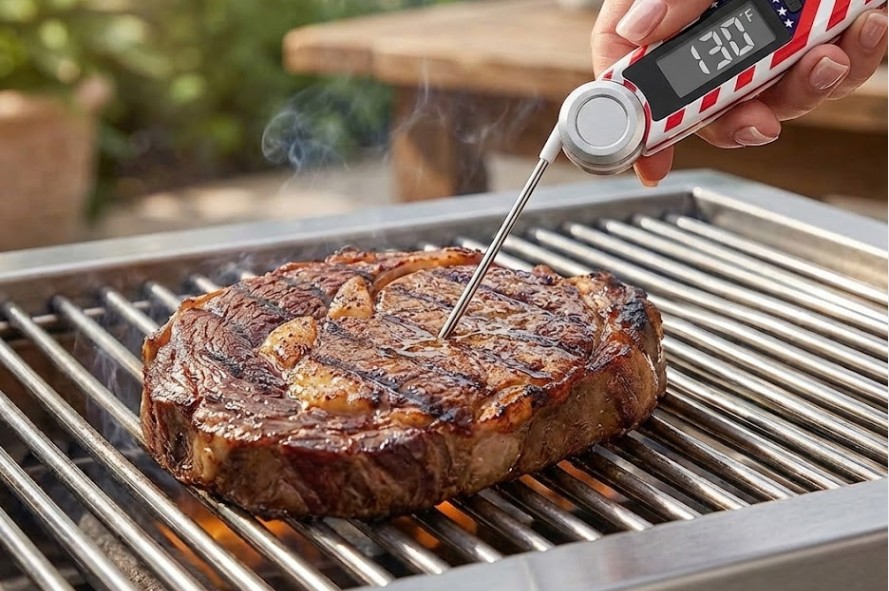
For beef cuts, let us explore the different cuts and their recommended internal temperatures. A boneless ribeye roast should be cooked at 350°F and is done when it reaches 135-145°F, depending on the thickness and weight of the cut.
For a bone-in ribeye roast, cook it in a 350°F oven to 135°F to 145°F for medium to medium-rare doneness. Meanwhile, a tri-tip roast must be cooked at 425°F until the internal temp reads 150°F (about 40-50 minutes at medium rare).
Lastly, a tenderloin beef roast weighing 4-6 lbs must be cooked at 425°F for up to 60 minutes to reach an internal temperature of 140°F for medium-rare doneness.
When cooking with poultry, a whole chicken roast weighing approximately 3-4 lbs should be cooked in an oven at 350°F. Cooking time is about 1 to 1 ½ hours. The internal temperature should read 165-175°F when it’s done.
And for a whole turkey roast, its internal temperature should be 165°F in the breast or 175°F in the thigh. For roasted turkey with stuffing, make sure the stuffing reaches 165°F at the centre. For the best results, start cooking your turkey at 425°F for 1 hour, then lower it to 325°F for the rest of the cooking time.

If you prefer smoking to roasting your meat, check out these handy tips to smoke like a pro.
Smoking is a low-and-slow cooking method. It uses a much lower temperature than roasting or grilling. The steps you take to prepare the meat before smoking are critical for food safety and for the best quality smoked meat.
First, ensure the meat is completely thawed before placing it in the smoker. If you are going to marinade the meat, never reuse the raw marinade.
And as always, follow the USDA recommendations on the internal temperature for smoking meat.
One challenge in taking the temperature of smoking meat is that it is easy to misread the smoker’s temperature instead of the meat’s. Two factors are crucial for achieving the best smoked meat: maintaining a consistent smoking temperature and knowing when to remove the meat from the smoker.
Here is a temperature guide when checking your smoked meat for doneness with a thermometer:

Want to become a frying expert? Follow these thermometer and temperature tips to ace your frying every single time.
You should never deep fry without a thermometer. It is essential for various reasons. The first reason is that a food thermometer ensures your food is cooked to the right temperature.