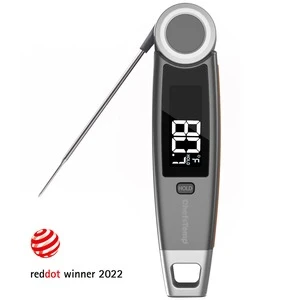
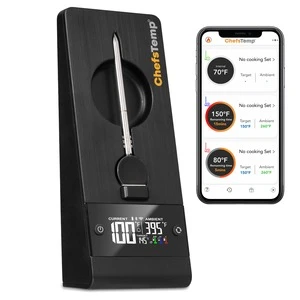
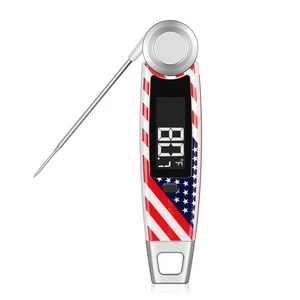
Thermometers are vital to food preparation. However, you can only enjoy the benefits of a thermometer if the tool is reliable. Knowing how to calibrate a thermometer is the best way to ensure that the tool accurately reads the food temperature. If this is your first time calibrating a thermometer, this guide will show you how.


Part 1. What Does it Mean to Calibrate Your Thermometer?
Most kitchen appliances and tools deteriorate as they age and with repeated use. The same is valid with thermometers. They lose accuracy over time, especially when exposed to extreme temperature changes and moisture. So even if you take care of them, they will eventually lose effectiveness and become prone to inaccuracies. Calibrating is the process of reconfiguring a thermometer’s settings to check its accuracy. Even if you invest in a high-quality thermometer, it may degrade in quality and performance over time. Therefore, you must train food handlers and cooks to calibrate a thermometer to ensure food safety. However, the calibration process for each model or brand is unique, as the manufacturer specifies it for each thermometer kit.
Part 2. Testing Your Thermometer’s Accuracy
Before you calibrate a thermometer, you must test it for accuracy first. The best way to test a thermometer is to check it against a substance with a known, fixed temperature. If your reading matches that temperature, you have an accurate thermometer. If not, it’s time to calibrate your thermometer. While not all thermometers are 100 percent accurate, you should aim for an accuracy range of 2 F (1 C) degree or less. If the gap is bigger than that, it’s time to adjust your thermometer. There is also a limit on how many times you can calibrate your thermometer. After some time, you have to replace it with a new one. If you are a food business, you could be fined for using uncalibrated thermometers. Each thermometer is different. Therefore, you should always refer to the product’s instruction label for proper calibration. The following section shows you how to calibrate your thermometer based on its type.Part 3. How to Calibrate a Thermometer
Two methods for calibrating a food thermometer are the freezing-point method and the boiling-point method. You can use these methods daily, weekly, or as often as you need.No.1 Freezing Point Method
The Freezing Point or Ice Point method is one of the techniques available to calibrate a thermometer. This process is ideal for checking the accuracy of a thermometer in measuring low temperatures. To do this calibration method, follow these steps:- Take a tall glass that fits the thermometer probe. Fill it about halfway with crushed ice.
- Add water to the glass filled with ice, then stir to let it cool.
- Submerge the thermometer probe in the iced water. Make sure not to touch the bottom of the glass with the probe. Leave it there for at least 30 seconds to enable the reading to stabilize. The temperature reading should be 32°F (0°C). If not, adjust the nut on your thermometer until you get the correct reading.
- Repeat the entire process using the calibrated thermometer. Do it two to three times, and make sure to wash the thermometer between each reading. Your goal is to get the exact reading for all attempts.
No.2 Boiling Point Method
The Boiling Point or Boiling Water method is a calibration technique for measuring the accuracy of your thermometer in reading high temperatures. Here are the steps for this calibration method:- Take a glass beaker or a deep pan. Fill it with water and place it over medium heat.
- Wait for the water to boil, and place the thermometer into the boiling water.
- Please wait for 30 seconds for it to show the temperature. Ensure the thermometer does not touch the bottom or sides of the pan.
- The temperature reading should register as 212°F (100 °C). If not, adjust the nut on the thermometer and test it again.
- The thermometer should register the boiling temperature. Try it two to three times to make sure you have consistent readings. Take time to wash the thermometer between each reading.
- Bimetal thermometers require more frequent calibration than other types.
- Digital thermometers should be calibrated weekly or monthly.
- Calibrate a thermometer after dropping it.
- Calibrate a thermometer whenever needed and test it at various temperature settings.
Related Posts
Using a Smoker Thermometer for Accurate Assessment
If you want to cook safe meat, you need the best BBQ thermometer. The best one provides accurate readings over...