From Kitchen to Campsite: The Ultimate Guide to Choosing a Food Thermometer
Whether you’re cooking in a kitchen or on a campsite, it is crucial to prioritize food safety. A food thermometer is a must-have tool for serious cooks who want to achieve perfectly cooked meat. If you cook with different types of meat, it can be challenging to keep track of the internal temperature requirements for each cut and type. It is even more difficult to achieve the best cooking results every single time, especially when cooking a large volume of meat.
Investing in a food thermometer provides greater accuracy without compromising flavor or texture. Read on for our essential guidelines on choosing a food thermometer for your specific needs.
Table of Contents
How to Choose Food Thermometers
This guide to choosing food thermometers covers the essential information and factors you should consider to find the right fit for your cooking needs.
Food Type
When buying a food thermometer, the first thing you should ask is this: What type of food am I cooking? Your answer will broadly influence your choice of thermometer, as different food types require different internal temperatures and reading requirements.
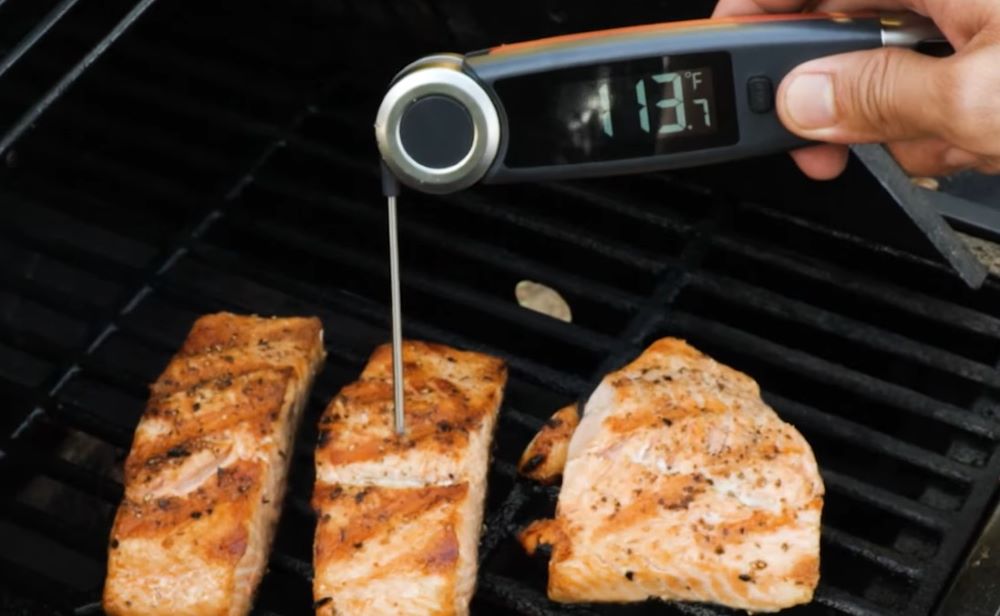
For example, if you are cooking meat, you need a meat thermometer equipped with essential tools that facilitate reading different meat cuts, such as probes. This probe should be inserted into the thickest part of the meat to ensure it is cooked evenly, as the concept of a temperature gradient makes it unreliable to take the temperature externally.
Even different cuts of meat require different thermometer features, such as pork chops, burgers, steaks, and more. You should adjust the type of features you’re looking for in a thermometer to suit the different cuts of meat you’re working with.
Conversely, you need a different thermometer when you are deep-frying or making candy. These types of cooking involve extremely high temperatures, and most food thermometers don’t have such a long range. Therefore, you need a specific thermometer for these types of food or cooking styles.

Measuring Technology
Buying food thermometers means choosing between two common types of measuring technology: probe and infrared.
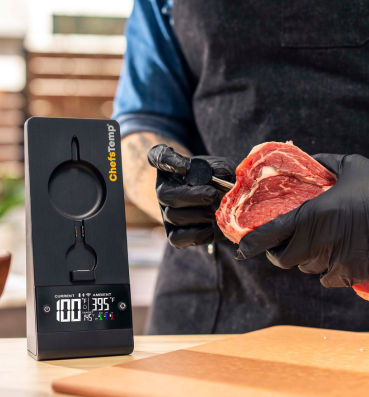
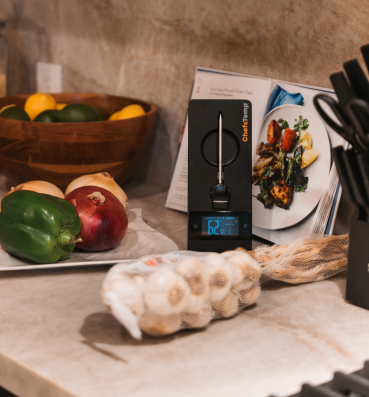
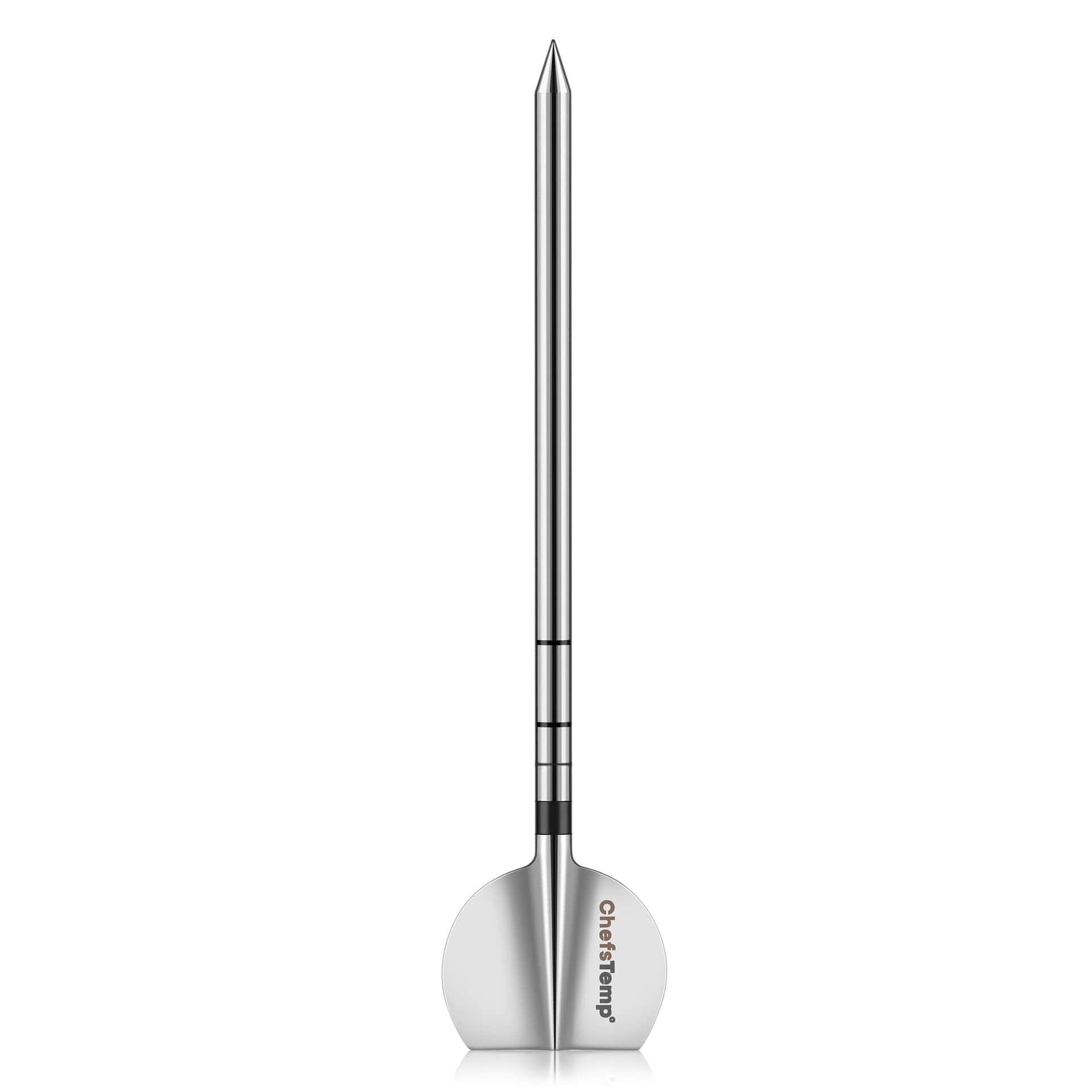
A probe food thermometer comes with a long, sharp metal probe that you need to insert into the meat or food. The probe tip has a sensor that takes temperature readings, which are displayed on a corresponding display. It is connected to the display directly on the base or via a long wire.
Infrared thermometers are also becoming increasingly popular. Infrared technology was initially applied to radar guns and to measuring the temperature of various surfaces. Over time, it was adapted into thermometers so that you can check the temperature of the food without even touching it. It is ideal for surface-only measurements, and you can use the laser pointer to guide the thermometer to the optimal angle for a reading. Unfortunately, it cannot read internal temperature, so it is not suitable for checking doneness on poultry and other types of meat.
Cooking Method or Location

The cooking method or location where you’re preparing your food can be a significant factor in choosing the best food thermometer. For this, you can choose between a grill or oven thermometer.
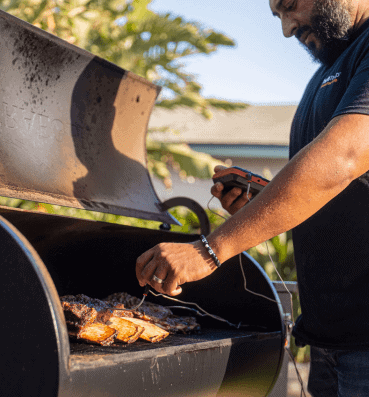
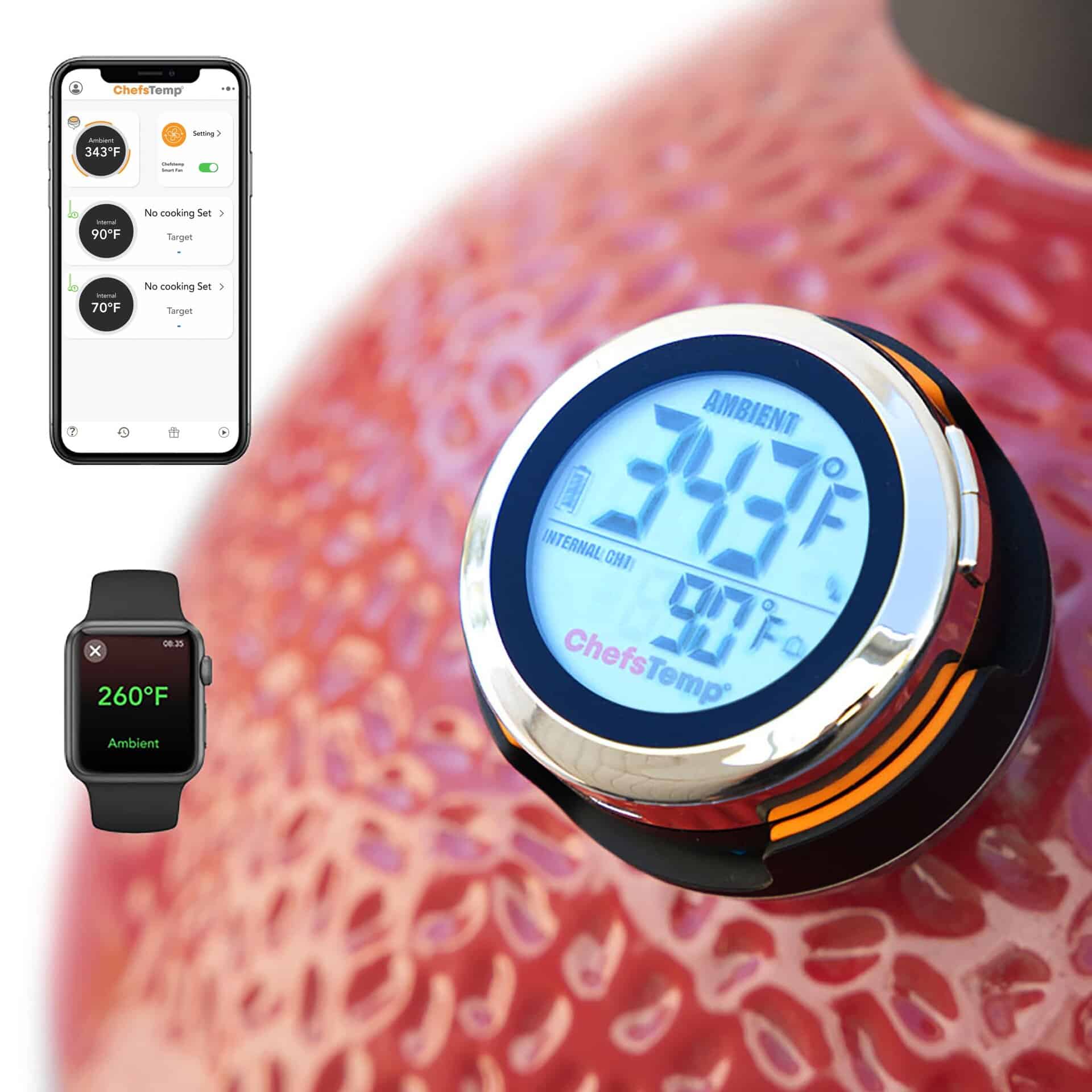
A grill thermometer is designed to measure the internal temperature of grilled meat. There are other models you can leave on the grill to monitor the meat in real time. The latter feature is crucial because it lets you accurately determine when the meat is ready to be removed from the grill, preventing overcooking.
Grill thermometers are also suitable for outdoor cooking. For example, if you are camping, you can bring one to your campsite to monitor your meat while grilling on-site. It is a handy tool that allows you to enjoy the best BBQ no matter where you are cooking.
On the other hand, you can also buy an oven thermometer. As the name implies, you can use this thermometer when baking in the oven. But not all thermometer models are oven-safe, so be sure to check the model you are buying to confirm it is oven-safe so you can leave it in the oven as your food cooks. An oven thermometer is a must-have because it lets you accurately check the food’s temperature rather than relying on the oven’s temperature. This discrepancy in the temperature reading can be the difference between cooked and undercooked meat.
Display Type
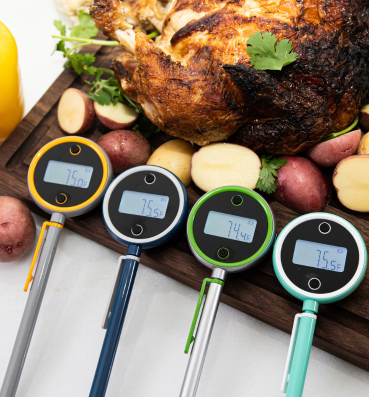
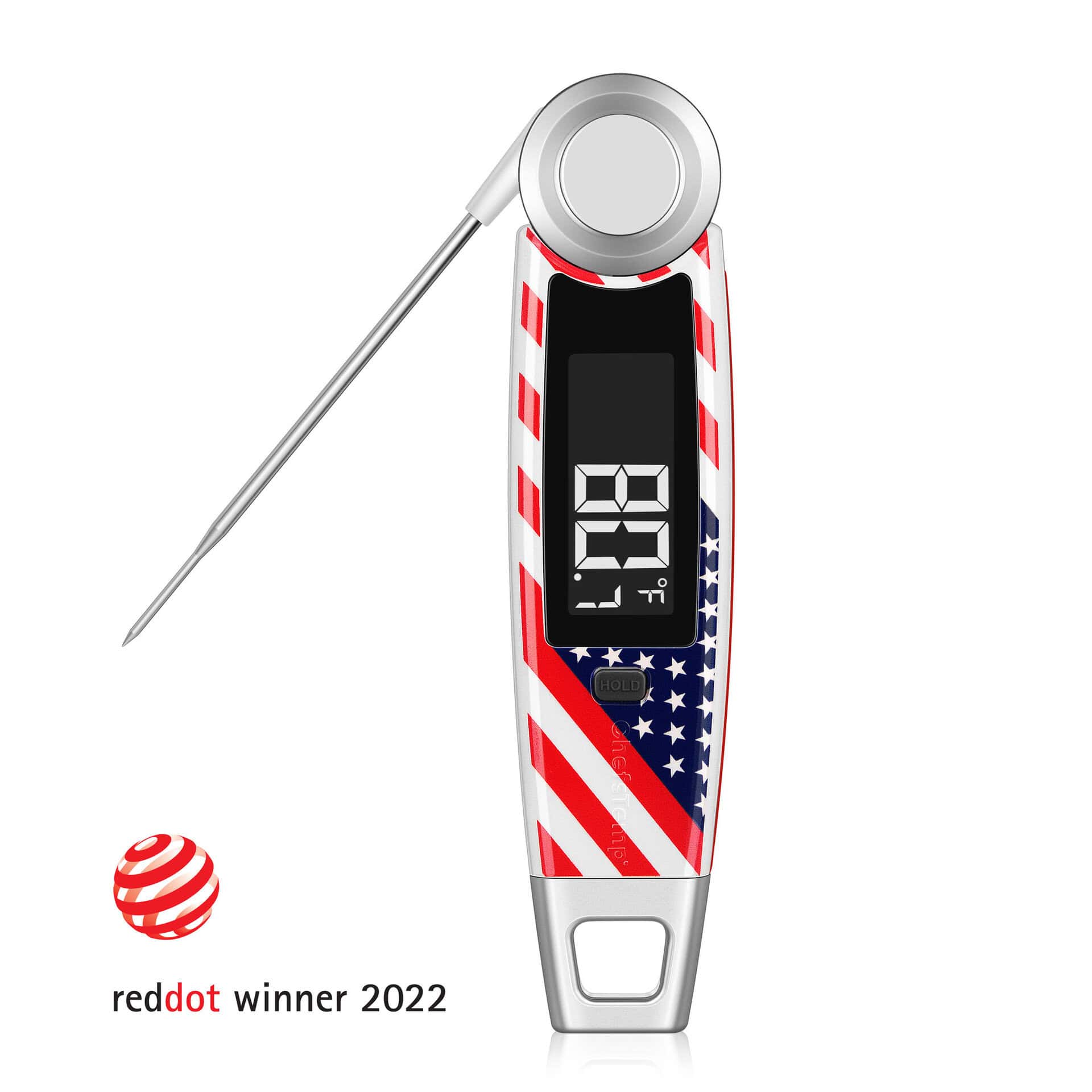
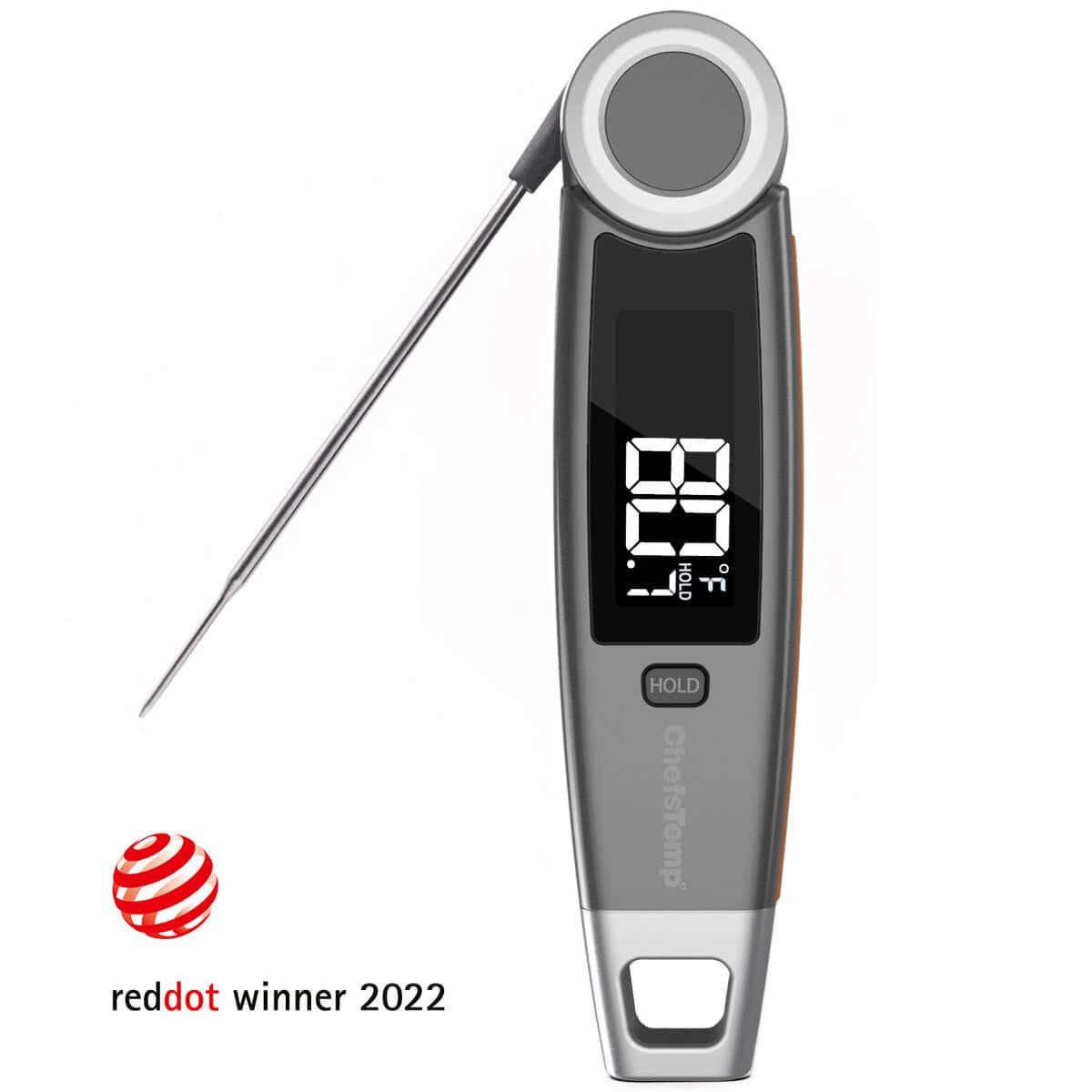
Consider the display type when buying a food thermometer, as it can vary significantly by model and type. Most modern thermometers have a digital display with a small screen showing the temperature reading. There are instant-read thermometers that can show you the temperature reading in 20-30 seconds, which is excellent for doing quick temperature checks.
However, digital thermometers are not ovenproof, so you cannot insert them into the food as it cooks. You can only check the temperature after you take it out of the oven or off the grill. Some models come with long-wire probes for easy temperature monitoring as it cooks.
Meanwhile, you can find thermometers with dial display types. They are also called analog food thermometers. This type of thermometer has a long metal probe that reads the temperature and displays it on a moving dial. One advantage that dial food thermometers have over digital ones is that you can place them in your food as it cooks, and they can give a broader range of temperature readings. They offer more flexibility in the types of food you cook and monitor.
Other Features to Consider
In addition to the above features and factors, you should also check for additional features that will help you make an informed decision when buying a food thermometer. For example, some modern thermometers have advanced features that let you program temperature settings for specific types of meat. It makes it easier to achieve the ideal cooking of your meat based on the preset temperatures.
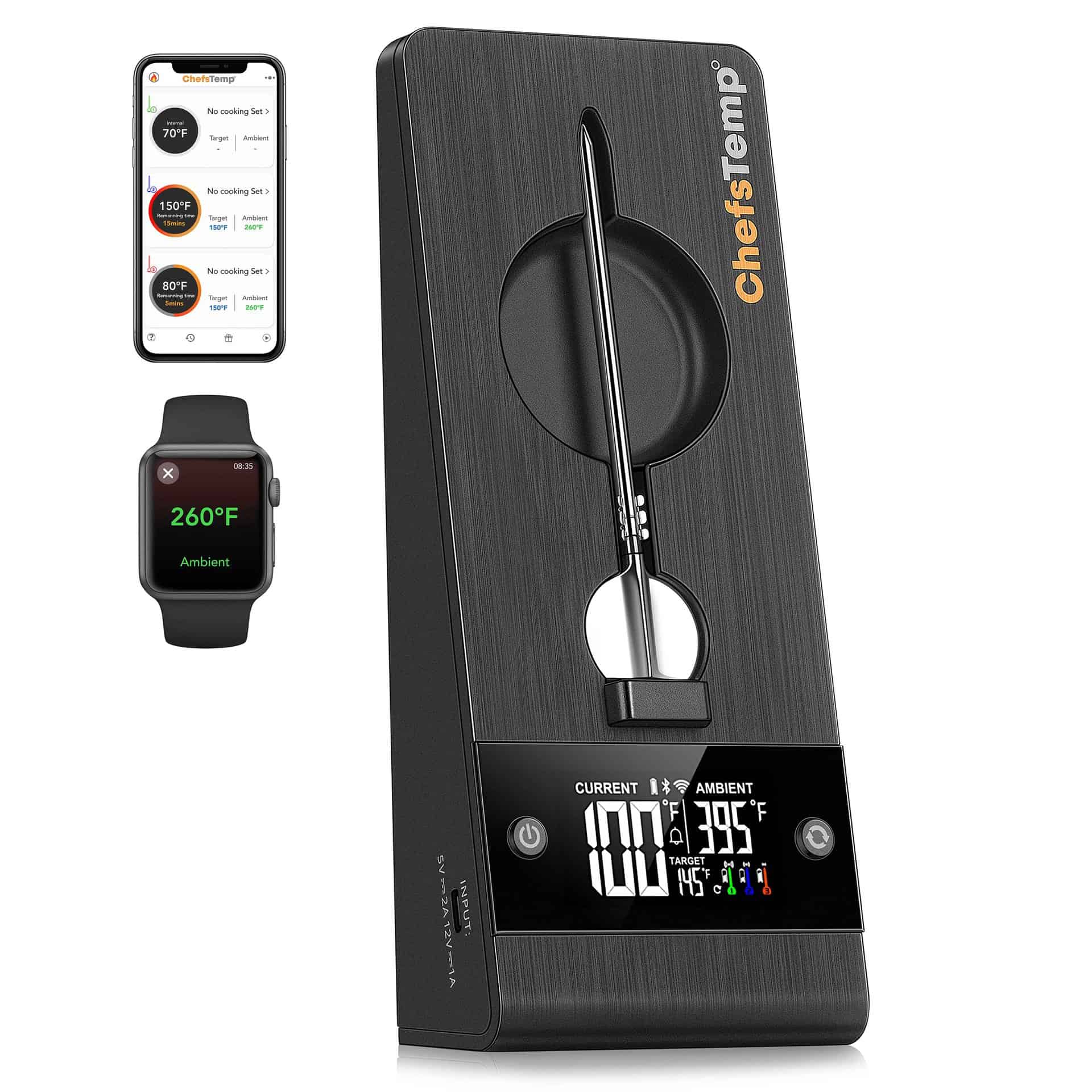
Wireless connectivity is another factor to consider, as it will be significant in choosing which food thermometer to buy, depending on your needs. Despite their name, though, wireless thermometers have probes that connect to an external unit outside the oven. It allows remote monitoring of food temperature, so you can step away from the oven and do other chores. Since they have a limited range, you can use either the probe or the external unit, depending on the available range.
Thermometers have come a long way since they were introduced for cooking. Take advantage of the many features and options available to pick the most reliable tool for cooking and get the best results every time.
Discover Other ChefsTemp Products

Discover more recipes and learn kitchen tricks by joining our cooking family on Facebook.
You may also like: