CHEFSTEMP HELP CENTER
All FAQs
Find answers, product video tutorials, and support for your next cook.
230 answers
Browse all FAQs →Why is my Receiver displaying “—” instead of a temperature?
Why is my Receiver displaying “—” instead of a temperature?
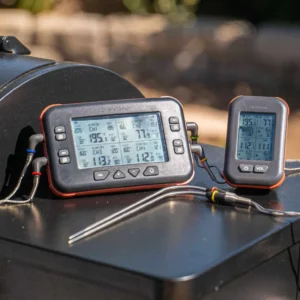
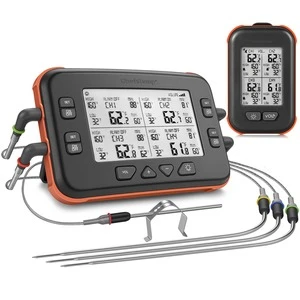
If you’re seeing this code on your Receiver, it means it is not receiving the signal from your Main Unit. Follow your device’s instructions for syncing the units.
Step 1: Hold ”VOL” on the Receiver to enter the signal receiving state. After one beep, all data of the Receiver will be reset and the radar icon will begin flashing.
Step 2: Press the ”Signal” button on the back of the Main Unit to send signals manually.
Note:
When the Receiver loses signal for 30 seconds, the alarm will automatically ring, the backlight will be flashing and the Receiver will be vibrating. Press any button on the Receiver to turn off the alarm.
If the Receiver fails to receive the signal for 8 minutes, the signal receiving function will be turned off automatically. Press and hold the ”VOL” button of the Receiver for 2 seconds to restart the signal receiving function.
How do you know if meat is undercooked?
How do you know if meat is undercooked?
You should always refer to the meat cooking chart and follow the FDA guidelines for cooking meat to specific temperatures. The only true way to know if the meat is undercooked is with an instant read thermometer. Without one of these, you are guessing, and guessing isn’t part of the temperature chart for cooking. Always refer to the cooking temperature chart and make sure you have an instant read thermometer to check temperatures.
Can you eat lamb cooked rare?
Can you eat lamb cooked rare?
Rare lamb is actually the Chefs preferred way to serve lamb, not everyone likes rare, 125⁰F, but most people will eat a medium rare lamb chop. Two things about cooking lamb rare which are important when deciding what temperature range to cook the lamb to. First is lamb cooked rare has a milder flavor because the fat in the chops hasn’t melted and incorporated into the meat, second is the meat hasn’t cooked long enough for the protein strands to shrink and solidify, making a more tender chop. If you can eat it rare, I recommend you do so, if you can’t, then don’t cook it past medium rare, and pull it as soon as it gets to temperature.
Can infrared thermometers see through glass or clear plastic?
Can infrared thermometers see through glass or clear plastic?
Infrared thermometers do not “see through” glass, liquids, or other transparent surfaces even though visible light (like a laser) passes through them—i.e. if you point an IR thermometer out a window, you will be measuring the surface temperature of the window itself.
Do infrared thermometers see through water?
Do infrared thermometers see through water?
No. Infrared thermometers can only measure the surface temperature of water.
What is spot size, spot ratio, or distance-to-target ratio?
What is spot size, spot ratio, or distance-to-target ratio?
The “spot size” of any given measurement is controlled by two variables:
The distance-to-target ratio (or spot ratio) of your particular infrared thermometer
The distance between your infrared thermometer and the target
Typically listed on the thermometer itself, the distance-to-target ratio (DTR) – or spot ratio – tells you the diameter of the circle of surface area an IR thermometer will measure at a given distance.
For example, an infrared thermometer with a 12:1 DTR ratio will measure the temperature of a 1-inch diameter circle of a surface area from 12 inches away.
Do I need to clean my infrared thermometer?
Do I need to clean my infrared thermometer?
To be accurate, infrared thermometers must be kept free of dirt, dust, moisture, fog, smoke, and debris. Always take the time to clean your infrared thermometer after exposure to dirty, dusty, smokey, or humid conditions. You should also plan a regular cleaning every six months or so. Particular care should be taken to keep the infrared lens and tunnel clean and free of debris.
To clean your infrared thermometer:
Dip a soft cloth or cotton swab in medical alcohol (never use soap or chemicals).
Carefully wipe the lens first and then the body of the thermometer.
Allow the lens to dry fully before using the thermometer.
Never submerge any part of the thermometer in water.
How do I turn the laser on?
How do I turn the laser on?
It depends upon the particular model of infrared thermometer. Consult the user’s manual that came with your thermometer for the full range of features and how to use them.
Why am I getting weird readings on shiny metal?
Why am I getting weird readings on shiny metal?
Substances with very low emissivity ratings, like highly-polished metals, tend to be very reflective of ambient infrared energy and less effective at emitting their own electromagnetic waves. For example, if you were to point an infrared thermometer with fixed emissivity at a stainless steel pot, the reading will be incorrect because shiny metal is better at reflecting the ambient radiation of the room than it is at emitting its own infrared radiation.
Some infrared thermometers have fixed emissivity settings (usually of 0.95 or 0.97) to simplify their operation while leaving them suitable for most organic materials, including almost all foods. Other infrared thermometers come with adjustable emissivity settings, so you can more accurately prepare your thermometer for the type of surface being measured, particularly when measuring non-organic materials.
Can I calibrate my infrared thermometer myself?
Can I calibrate my infrared thermometer myself?
Infrared thermometers can be calibrated for accuracy, just like other thermometers. In calibration labs technicians use industrial black bodies (like the IR-500 Portable IR Calibrator) to calibrate infrared thermometers.
Why are infrared thermometers used?
Why are infrared thermometers used?
The primary use of infrared thermometers is in measuring the temperature of a subject from a distance. The device is beneficial in situations where it is difficult to reach the object to record the temperature.
What affects infrared thermometer?
What affects infrared thermometer?
Infrared temperature measurement is affected by three main things; emissivity, distance and surroundings. Depending on what you're pointing your infrared thermometer at you're going to get a variation in emitted infrared energy. Emissivity is a measure of a material's ability to emit infrared energy.
Can an infrared thermometer measure temperature through water?
Can an infrared thermometer measure temperature through water?
No. An infrared thermometer will only measure the surface temperature of the water, not the object's temperature.
Do IR thermometers work on oil?
Do IR thermometers work on oil?
Infrared thermometers are ideal for recording fryer oil temperature (350℉), giving you the ability to perfectly gauge when your batter-dipped chicken is ready to fry.
What are the advantages and disadvantages of infrared thermometer?
What are the advantages and disadvantages of infrared thermometer?
They are gun-shaped and take measurements by using lasers to point at the surface. The pros of this type are the same as the cons of probe thermometers: they can measure those objects that cannot be measured using direct contact. Pros of general-purpose infrared thermometer: No-contact option is safer.
What is an IR thermometer and how is it used?
What is an IR thermometer and how is it used?
Infrared (IR) thermometers enable you to measure temperature quickly, at a distance, and without touching the object you're measuring. They are so useful, easy, and even fun to use that they have become as common in kitchens as they have on factory floors.
Can I check my meat or other foods for doneness with an infrared thermometer?
Can I check my meat or other foods for doneness with an infrared thermometer?
When using an infrared thermometer with liquids like soups and sauces, be sure to stir vigorously before taking a measurement to more closely approximate the internal temperature of the liquid. Be aware that steam, even when a liquid is not boiling, can condense on your thermometer and affect the accuracy of your measurements.
What is emissivity?
What is emissivity?
Emissivity is a measure of a material’s ability to emit infrared energy. It is measured on a scale from just above 0.00 to just below 1.00.
Generally, the closer a material’s emissivity rating is to 1.00, the more that material tends to absorb reflected or ambient infrared energy and emit only its own infrared radiation. Most organic materials, including the byproducts of plants and animals, have an emissivity rating of 0.95.
Can I check my grill temp with an infrared thermometer?
Can I check my grill temp with an infrared thermometer?
If you aim an infrared thermometer at a porous surface like a grill or grate, it will factor in the surface temp of whatever surfaces are visible through the holes of the grill or grate when calculating a final temperature for your reading.
To accurately measure the temperature of a porous grate or grill, place a solid surface like an iron plate or skillet on the grill, let it come to temperature, and measure the plate or skillet. Spray a little cooking oil on the plate or skillet to ensure proper emissivity.
Is BBQ food really unhealthy?
Is BBQ food really unhealthy?
It can be! If you want a healthier barbecue, lower the temperature of your grill to prevent the meat from burning. You can use Chefstemp instant read thermometer to make sure the meat won’t be overcooked. Always marinate the meat to generate a barrier between it and the development of HCAs. You can always switch to seafood, which forms fewer HCAs and involves a briefer cooking time. Choose leaner meats and cut the fat off before grilling. This will reduce the fat dripping and flare-ups
Reduce grill time by oven-roasting or pan-searing your meat first. Make sure that you always wash your grill after use to evade shifting leftover chemicals Chop your meat into smaller helpings to decrease the cooking time.
WE’RE HERE TO HELP
Still need help?
Contact our support team for help with your ChefsTemp products.