FAQs
If you have any questions about your preferred items that aren't covered here or your order, you can start a chat using the message icon in the lower‑left corner for faster assistance. You're also welcome to contact our Customer Support Team at [email protected].
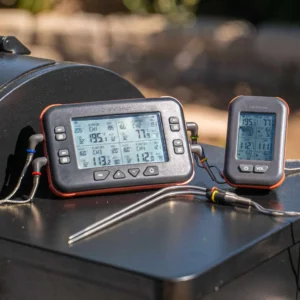
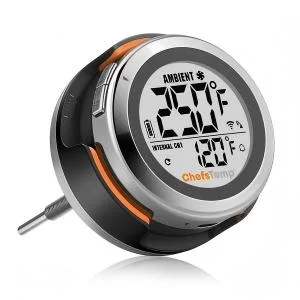
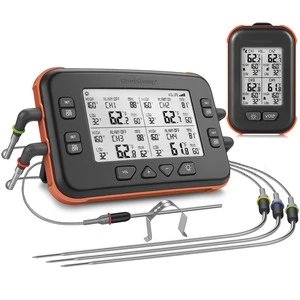
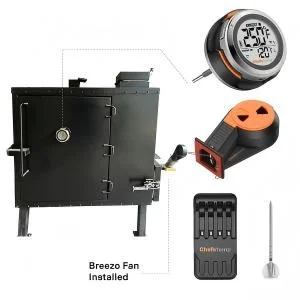
Can I attach the Quad Xpro thermometer body to the smoker door, or will it break it due to the heat?
Although it has a magnet affixed to the back, the housing is made of plastic and could potentially melt, therefore, it is not recommended to attach it to the smoker door.
What are some easy go-to recipes for someone who hates cooking but loves food?
We have a lot of recipes that don’t need hours of prep or cooking.
See more at: https://www.chefstemp.com/best-cooked-chicken-recipes/
I’ve tried using my thermometer while cooking Italian Porchetta and it will register that the meat is done, but actually the meat isn’t cooked, why?
If the tip of the thermometer probe is too near the surface of the meat cut or near a bone, you will not get an accurate reading. Experiment with the temp probe placement – it is most accurate when the tip is in the center of the meat portion. If you have several cuts of meat, move the thermometer to several portions to compare how even everything is cooking.
What is the best way to make a crispy fried chicken that stays moist on the inside?
Getting the right temperature is a top priority when it comes to cooking chicken to ensure safety. It is also crucial to make sure that the meat stays juicy, tender, and succulent. It takes a balance between both but once achieved, you can enjoy your chicken however you like to prepare it.
https://www.chefstemp.com/chicken-internal-temp/ In this guide, you will learn the secret to a perfectly cooked chicken.
How to measure your grill’s temperature with an infrared thermometer?
- First, place a solid surface such as a cast iron plate or skillet on the grill and let it preheat for 5-10 minutes.
- Next, spray a little cooking oil on the cast iron’s surface to ensure proper emissivity.
- Finally, measure the surface temperature of the plate or skillet with your IR thermometer.
Do you have a table showing with cooking temperatures of different foods?
ChefsTemp has a full table of cooking temperatures available online that uses the approved FDA Food Guidelines and covers every thing from beef to candies.
See more at: https://www.chefstemp.com/steak-chicken-meat-temperature-chart/
Why does my thermometer show a reading higher than 32°F (0°C) when I put it in ice water?
This mainly happens because the temperature is higher than the ice point unless you take the time to create a properly made ice bath. If you do however find that, in fact, the thermometer is outside of its published specification, adjust it accordingly based on the instruction manual or contact our Tech Support team for help by emailing [email protected].
What is an IP rating?
An IP rating is a common added feature for electronic thermometers, particularly electronic cooking thermometers. It is a standard for rating instruments based on their ability to protect their electronic components from corrosion by water or dust created by the International Electrotechnical Commission (IEC). The International Protection Rating code (or IP code) consists of the letters “IP” followed by two numbers.
The first number tells you how protected an instrument’s electronics are from penetration by solids (like dust) and the second number tells you how they stand up against liquids according to the following table:
| First number: Protection against solid objects | Second number: Protection against liquids | ||
|---|---|---|---|
| 0 | No protection | 0 | No protection |
| 1 | Protected against solids objects over 50 mm (e.g. accidental touch by hands) | 1 | Protected against vertically falling drops of water |
| 2 | Protected against solids objects over 12 mm (e.g. fingers) | 2 | Protected against direct sprays up to 15° from the vertical |
| 3 | Protected against solids objects over 2.5 mm (e.g. tools and wires) | 3 | Protected against direct sprays up to 60° from the vertical |
| 4 | Protected against solids objects over 1 mm (e.g. tools, wires and small wires) | 4 | Protected against sprays from all directions – limited ingress permitted |
| 5 | Protected against dust – limited ingress (no harmful deposit) | 5 | Protected against low pressure jets of water from all directions – limited ingress permitted |
| 6 | Totally protected against dust | 6 | Protected against strong jets of water e.g. for use on ship decks – limited ingress permitted |
| 7 | Protected against the effects of temporary immersion between 15 cm and 1 m. Duration of test 30 minutes | ||
| 8 | Protected against long periods of immersion under pressure |
Can you test meat cooking temperatures with a laser thermometer?
Laser IR Thermometers measure the amount of heat being put out by the food; the laser is used to help you point it to a specific spot to take a temperature. They only measure the surface temperature though. A laser thermometer has no way of reaching the internal portion of the meat where you need to measure the cooking temperature. Laser thermometers are great for measuring the temperature of liquids, soups, water, and pan surface temperatures for things like dry toasting herbs, seeds, chilies, and nuts. A probe thermometer, whether digital or manual, is required to get an accurate internal cooking temperature.
Where should I place my probe tip to gauge doneness?
When testing doneness in most cooked foods, the coldest part will be the very center of the thickest portion. With larger foods, you can take quick readings with your thermometer in several locations to verify that the entire portion is done. If you are chilling food, the center of the thickest part will be the last to cool. Most digital thermometers have small sensors at the probe’s tip. Penetrate the food you are checking with the probe and place the very tip of the probe where you want to measure.